
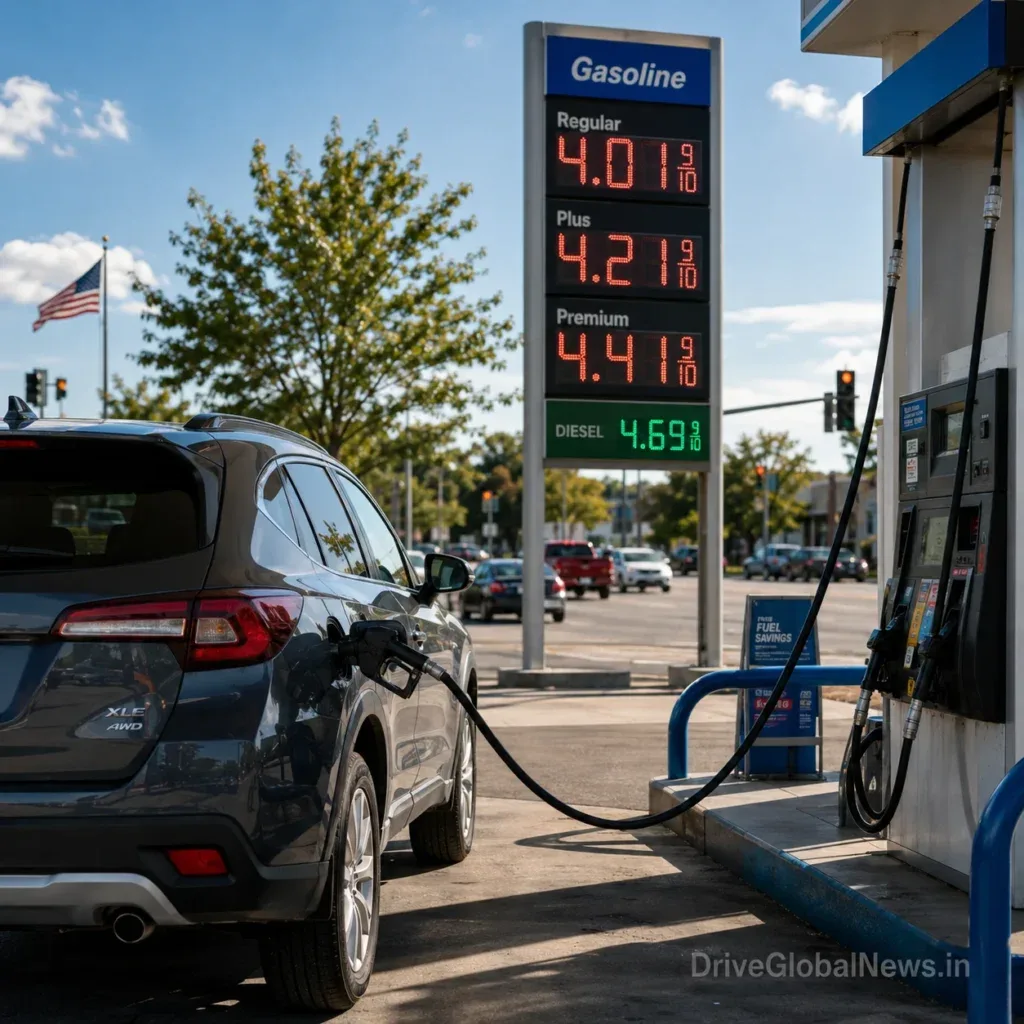
The national average for regular gasoline just slipped again. As of August 10, AAA has it at roughly $4.01 a gallon — down almost 9 cents from a week earlier.
It’s not a dramatic collapse. But after weeks of prices hovering near or above $4, any real movement lower gets people’s attention. Especially if you’re shopping for a car right now or planning late-summer travel.
Here’s the clear-eyed take on what this drop actually changes — and what it doesn’t.
The Numbers Right Now
A gallon of regular sits around $4.01 nationally. That’s still nearly 90 cents higher than a year ago, but the weekly direction is finally down. Diesel remains expensive, still well above $5 in many areas.
State differences remain huge. Drivers in places like Indiana, Texas, and parts of the South are seeing prices in the mid-to-high $3 range. California, Hawaii, and Washington are still stuck well above $5.
The drop comes as crude oil has eased somewhat and some of the earlier geopolitical pressure has cooled. Seasonal demand is also starting to soften as the peak summer driving period winds down.
What This Means If You’re Buying a Car
Lower gas prices take a little pressure off monthly ownership costs. For someone considering a traditional gas or hybrid vehicle, that extra breathing room can make the decision feel less stressful.
It doesn’t erase the long-term math, though. Fuel is only one piece of the ownership puzzle. Insurance, maintenance, depreciation, and interest rates still matter more for most buyers than a 8- or 9-cent swing at the pump.
Buyers who were already leaning toward efficient vehicles or hybrids won’t suddenly change their minds over a one-week drop. The ones who might feel the biggest short-term relief are people who drive a lot of miles or who were on the fence about a bigger, thirstier truck or SUV.
The EV Question Doesn’t Disappear
Cheaper gas always softens the pure cost argument for electric vehicles a bit. When fuel is $3.50, the savings from going electric look larger. When it’s $4.01 and heading slightly lower, the gap narrows for some drivers.
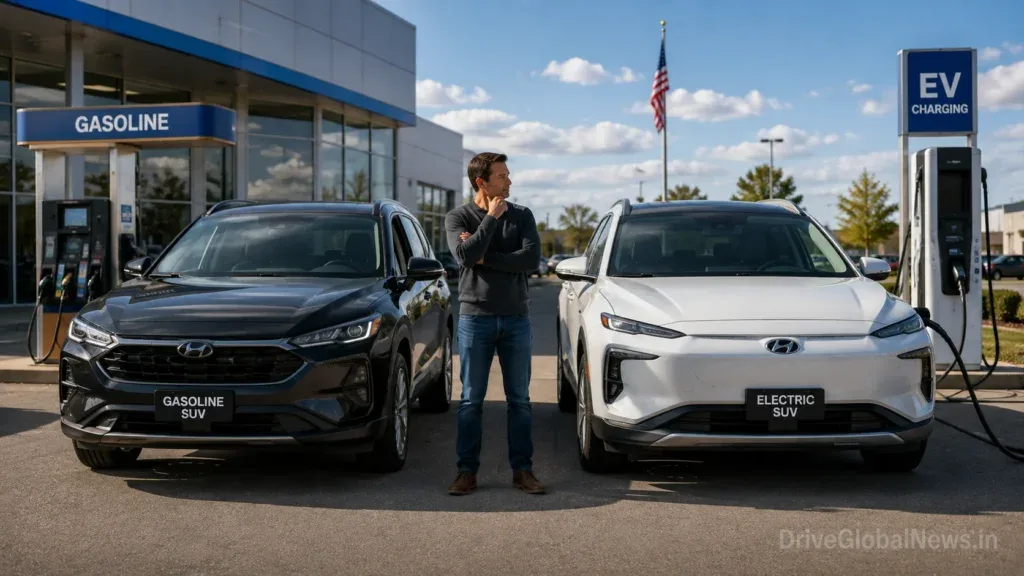
But most people shopping EVs in 2026 aren’t making the decision solely on today’s pump price. They’re looking at total cost of ownership, home charging convenience, available incentives (where they still exist), and the simple fact that electricity prices have been more stable than gasoline for a long stretch.
A modest drop in gas doesn’t suddenly make a gas vehicle the smarter long-term play for someone who already prefers electric.
Should You Change Your Buying Timeline?
Probably not. Gas prices move. They’ve been volatile all year because of global oil markets and regional supply issues. A single week of relief is welcome, but it’s not a signal that prices are heading back to $3.20 and staying there.
If you need a vehicle, the better questions remain the usual ones: How many miles do you drive? What’s your budget for the full payment plus insurance? Do you have a place to charge an EV? How long do you plan to keep the car?
Those factors matter more than whether the national average is $4.09 or $4.01 this particular Monday.
Bottom Line
Gas got a little cheaper this week. That’s good news for anyone filling up regularly. It takes a small amount of pressure off the monthly budget for gas and hybrid drivers.
It doesn’t rewrite the bigger picture for car buyers. The vehicles that made financial sense last month largely still do. The ones that didn’t still don’t.
Watch the trend over the next few weeks. If prices keep easing into the fall, the conversation around fuel costs will shift again. For now, it’s a modest break — not a game-changer.
What are you seeing at the pumps in your area