
Adding a new driver to your policy is one of the fastest ways to watch your car insurance bill climb. Whether it’s a teenager getting their license, a spouse moving in, a college student home for the summer, or an adult child returning home, the impact is real and often bigger than people expect.
Here’s what actually happens in 2026 and what you can do about it.
Your Rate Will Almost Always Go Up
Insurance companies base rates on risk. A new driver — especially a young or inexperienced one — represents higher risk. That risk gets priced into your premium.
How much it rises depends on:
- The new driver’s age and driving record
- How long they’ve been licensed
- The type of car they’ll primarily drive
- Your current coverage levels and location
- Whether the insurer rates them as a principal or occasional driver
Teen drivers typically cause the biggest jump. Adding a 16- or 17-year-old can increase a household premium by 50% to well over 100% in many states. Adding an adult with a clean record usually costs less, but it still raises the rate.
The Company Will Recalculate the Entire Policy
When you add a driver, the insurer doesn’t just tack on a small fee. They re-underwrite the policy. That means they look at every vehicle, every current driver, and the new person’s record together. The new rate reflects the combined risk of the whole household.
If the new driver has any tickets, accidents, or a short driving history, the increase is steeper. Even a clean adult driver can push the rate up because the company now has one more person who could potentially file a claim.
You Must Report the New Driver — Or Risk Denial
Most policies require you to list every household member of driving age or anyone who regularly drives the cars. Failing to add a new driver can lead to a claim denial later. If an unlisted driver causes an accident, the insurer may argue the policy was written under false information and refuse to cover the loss.
Some companies give a short grace period for temporary drivers (for example, a college student home for a few weeks). Longer stays or permanent household members almost always need to be listed.
Ways to Limit the Damage
You can’t avoid the increase entirely, but you can reduce it:
- Shop around after adding the driver. Some companies price young or new drivers more aggressively than others.
- Raise deductibles on collision and comprehensive if you can afford the higher out-of-pocket cost.
- Ask about good-student discounts, driver training discounts, or telematics programs that monitor safe driving.
- Consider putting a high-risk new driver on their own policy if it ends up cheaper (this is rare but worth checking).
- Make sure the new driver is assigned to the lowest-risk vehicle in the household when possible.
What About Temporary Drivers?

Short-term situations (a relative visiting for two weeks, a friend borrowing the car for a weekend) are usually covered under the existing policy as permissive use. Longer stays or household members need to be added. When in doubt, call your insurer and ask — get the answer in writing if possible.
The Bottom Line
Adding a new driver in 2026 will raise your premium. The size of the increase depends mainly on the driver’s age, experience, and record. Teen drivers cost the most. Adult drivers with clean records cost less but still move the number upward. Report the change promptly, shop rates if the jump is steep, and look for every available discount.
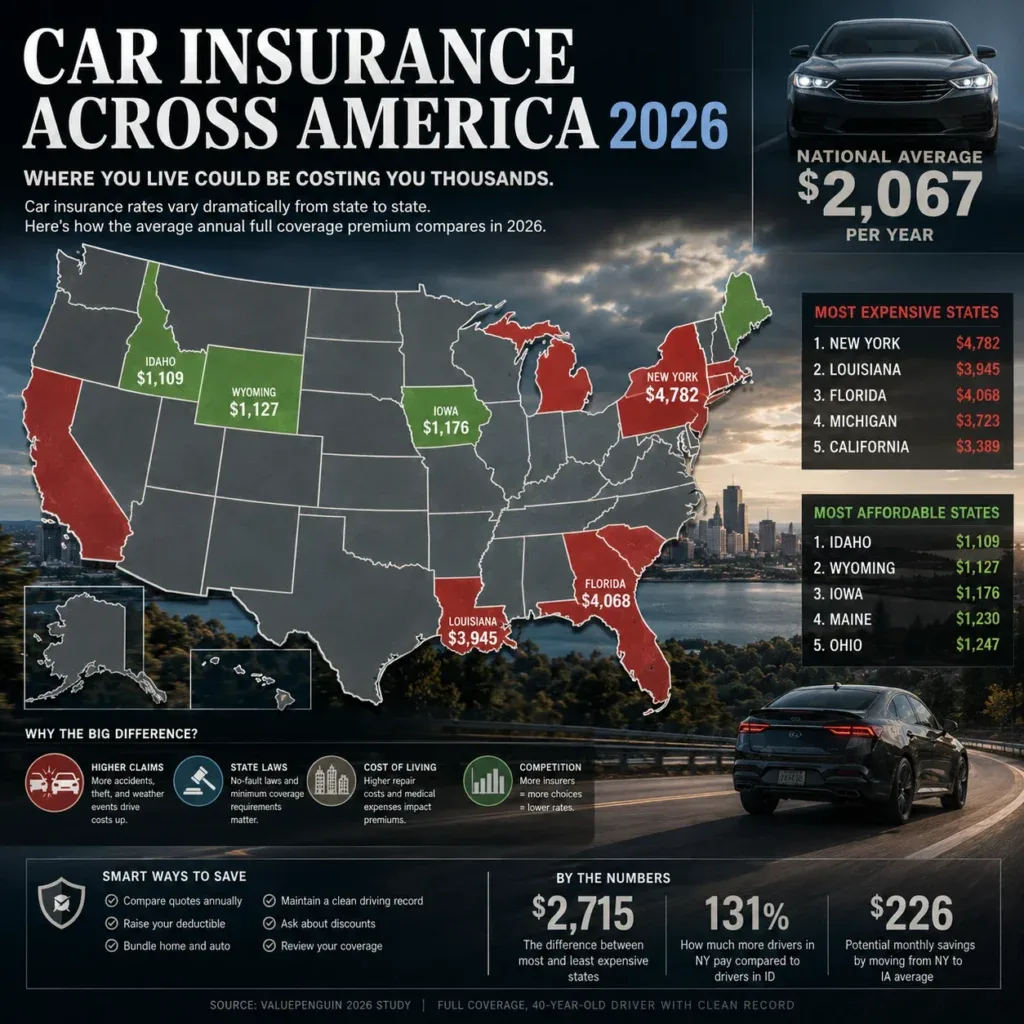
Rates still vary widely by state and ZIP code, so location matters a lot. For more context, see our guide on car insurance rates by state in 2026 and the checklist of things to check before your next insurance renewal.
Have you added a new driver recently, and how big was the rate jump? Share your experience in the comments.