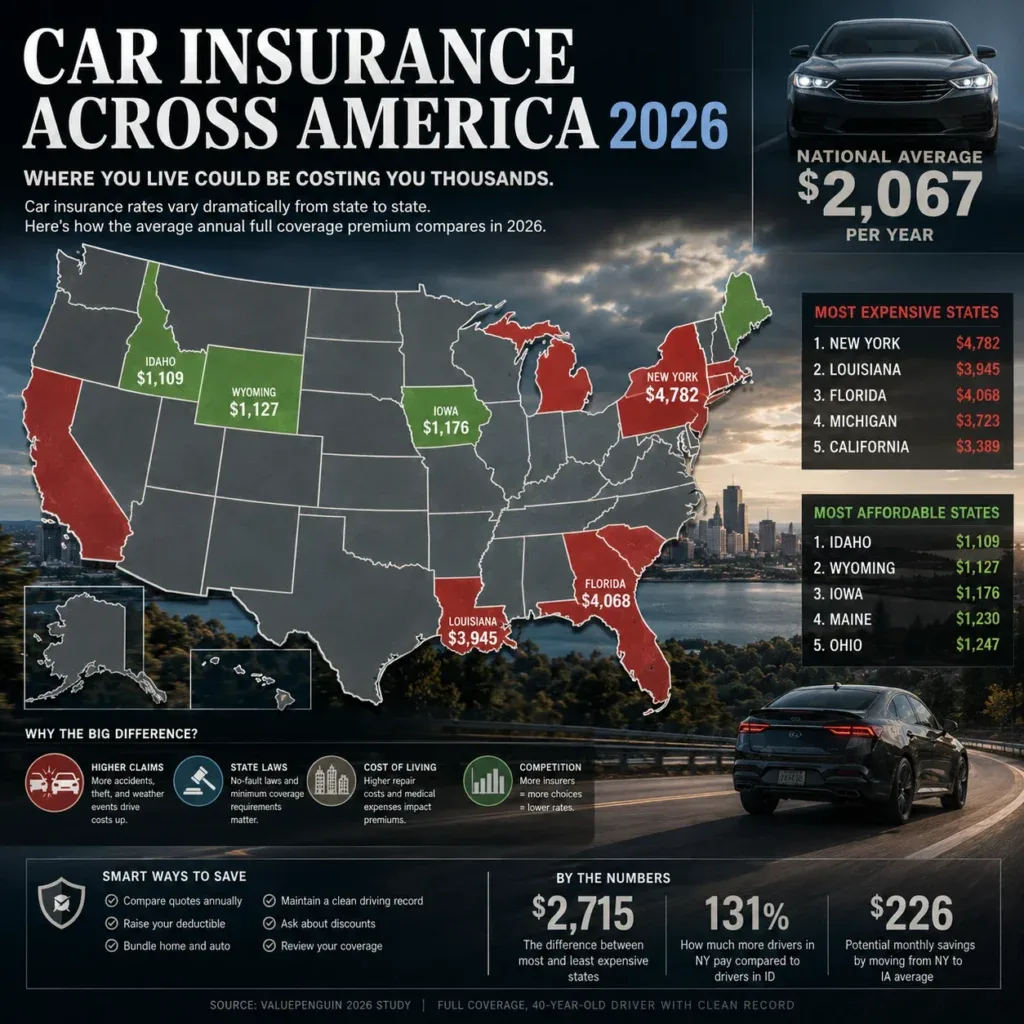

Car insurance costs are no longer moving in one direction nationwide. By mid-2026, data from major comparison and industry sources show premiums rising in dozens of states while declining or stabilizing in others. National averages for full coverage sit in the low-to-mid $2,200s annually, but the state-level picture varies widely.
Here is what the latest available data shows about rate movement heading into and through August 2026.
The National Picture After some relief in parts of 2025, rates began climbing again in many markets during the first half of 2026. One major analysis projected that full-coverage premiums would finish the year roughly 1% higher overall, with increases expected in around 32 states by year-end. Another found that 27 states already saw higher rates in the first six months of the year. At the same time, a meaningful group of states recorded declines, particularly in some previously high-cost markets.
Repair costs, claim frequency, weather-related losses, litigation trends, and insurer competition continue to drive the differences.
States Seeing Notable Increases Several states have posted clearer upward movement:
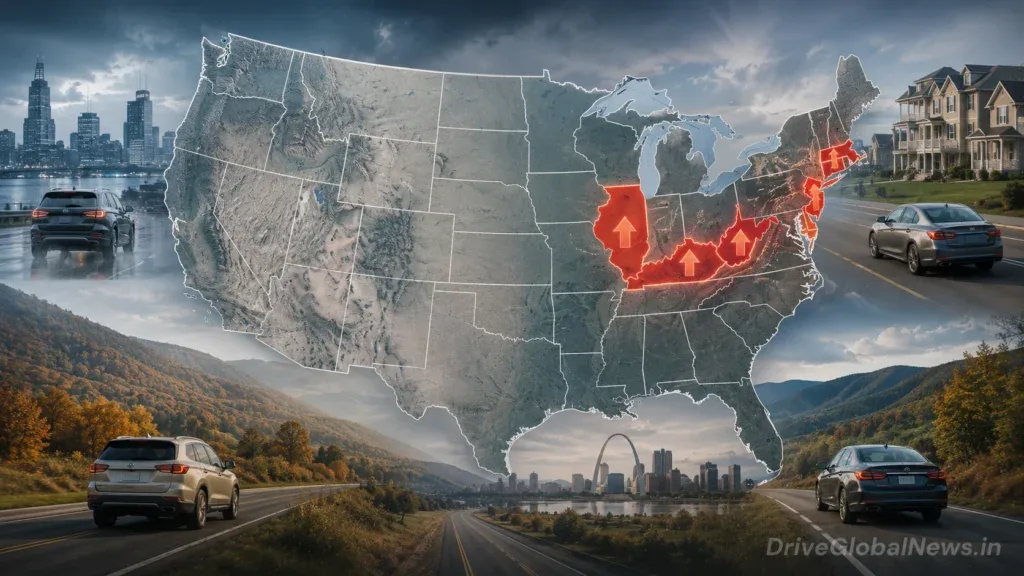
- Connecticut has shown some of the largest recent percentage gains, with reports of double-digit increases in the first half of the year in certain datasets.
- Kentucky, West Virginia, and Illinois have also ranked among states with stronger projected or observed rises.
- New Jersey appeared in multiple analyses with meaningful year-over-year or period-to-period increases, though some later data showed mixed short-term movement.
- Other states with upward pressure in recent reports include parts of the Northeast and selected Midwestern and Western markets.
These increases do not hit every driver equally. Your own rate still depends heavily on driving record, credit (where allowed), vehicle, coverage level, and ZIP code.
States Seeing Declines or Stabilization Not every market is getting more expensive:
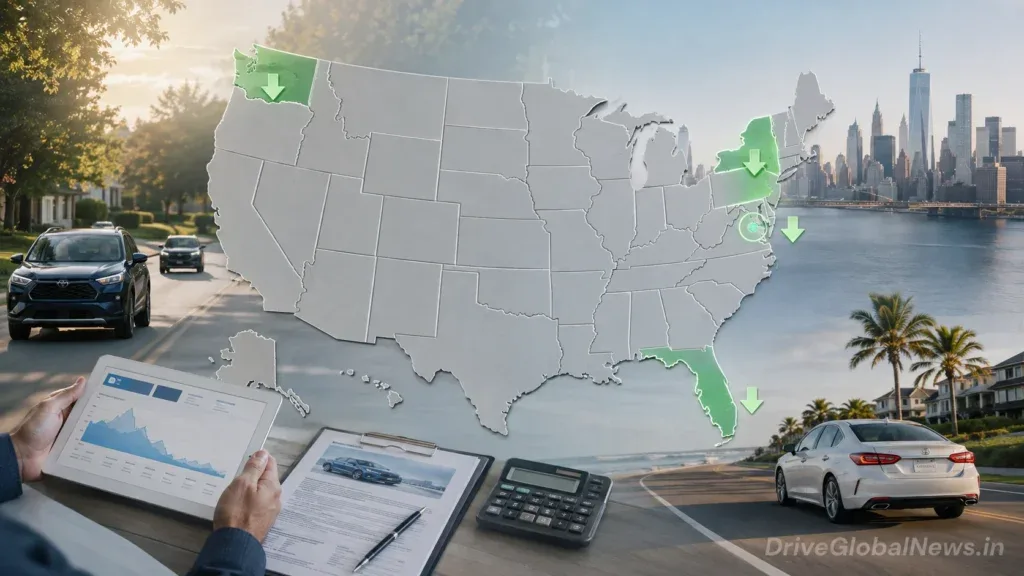
- Washington, D.C., New York, and New Jersey appeared in mid-year data with notable declines in some full-coverage averages after earlier high costs.
- Florida has shown significant drops in certain transaction-based analyses, with some reports citing double-digit percentage declines for periods of 2025–2026.
- Arkansas, Colorado, and several other states recorded decreases in the first half of 2026 in at least one major projection.
- Additional states with reported moderation or declines in recent studies include parts of the South, Midwest, and West depending on the exact data set and time window.
Even in states with falling averages, individual renewals can still rise if a driver’s risk profile changes or if a specific insurer files for higher rates.
Most Expensive and Least Expensive States High absolute costs remain concentrated in places such as Louisiana, Florida, parts of the Northeast (including D.C., Maryland, Rhode Island, and Michigan in various rankings), and other dense or high-claim states. Lower-cost states continue to include several in the Mountain West and New England, such as Vermont, Wyoming, and others that regularly appear near the bottom of national rankings.
What Drivers Should Do in August 2026 Rate trends are statewide averages. Your personal premium is still controllable to a meaningful degree:
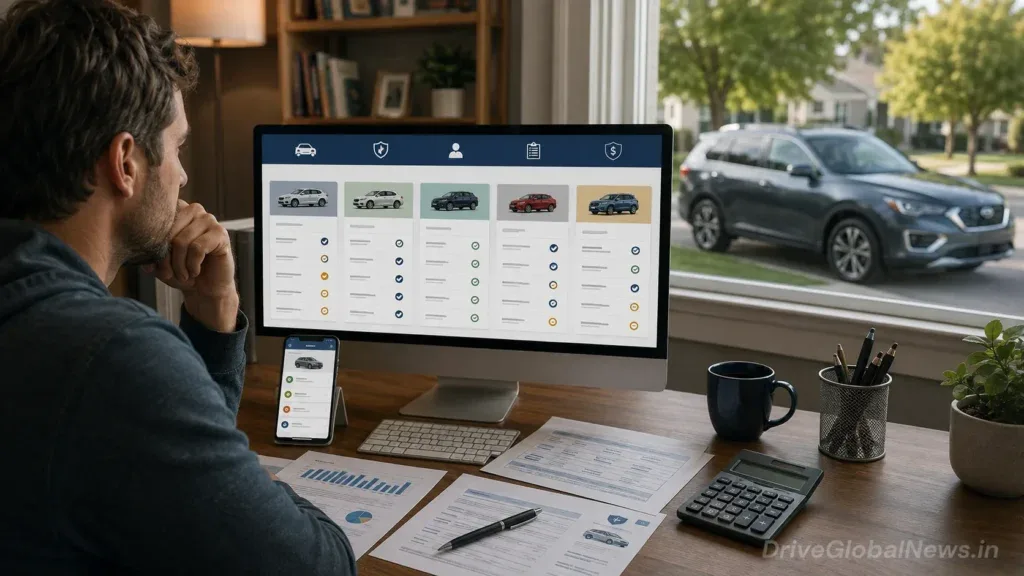
- Shop multiple quotes before renewal. Differences between insurers for the same driver often exceed the statewide average change.
- Review coverage limits and deductibles. Raising a deductible or adjusting unnecessary coverages can offset increases.
- Ask about every available discount (bundling, telematics, good driver, multi-car, paperless, etc.).
- Maintain a clean driving record and, where credit is used, keep utilization and payment history strong.
- If you recently moved or changed vehicles, re-shop immediately — rating territories and vehicle symbols matter.
The Bottom Line In August 2026, car insurance rates are rising in a majority of states and falling or holding steadier in a smaller but important group. Connecticut, Kentucky, West Virginia, and several others have shown clearer upward pressure, while places such as parts of Florida, New York, D.C., and selected other states have recorded declines in recent data. National averages remain elevated compared with a few years ago, but the direction is no longer uniform.
The smartest response is the same regardless of your state: treat renewal as a shopping event rather than an automatic acceptance of the new price. A few competitive quotes and a quick coverage review still produce the largest savings for most drivers.
Is your renewal coming up soon, or have you already seen a noticeable change in your premium this year?