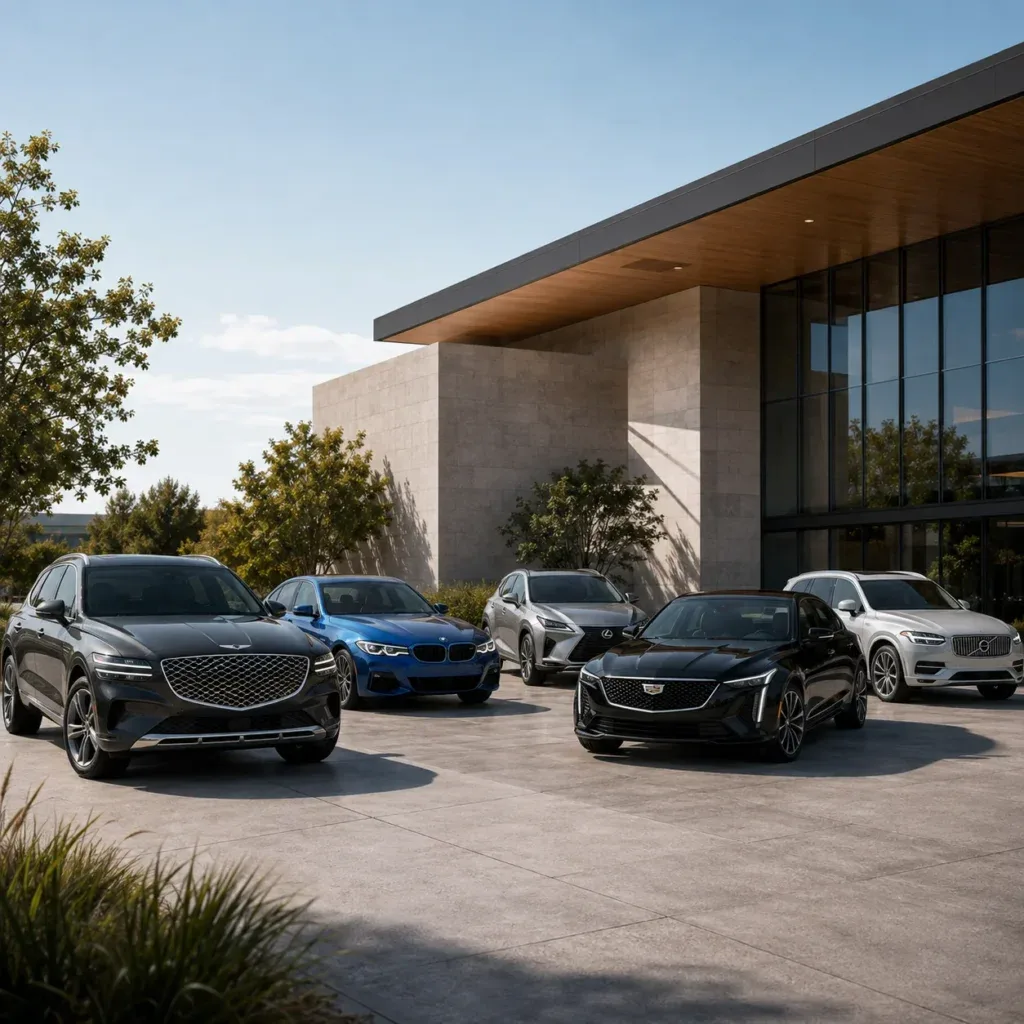
German brands still dominate luxury conversations. In 2026 they do not automatically dominate value. Several Korean, Japanese, and American models now start well under $60,000 and deliver cabin quality, features, warranties, and driving manners that force a second look at a base 3 Series, X3, or Q5.
Here are ten strong choices that can be had new for under $60,000 before destination and options.
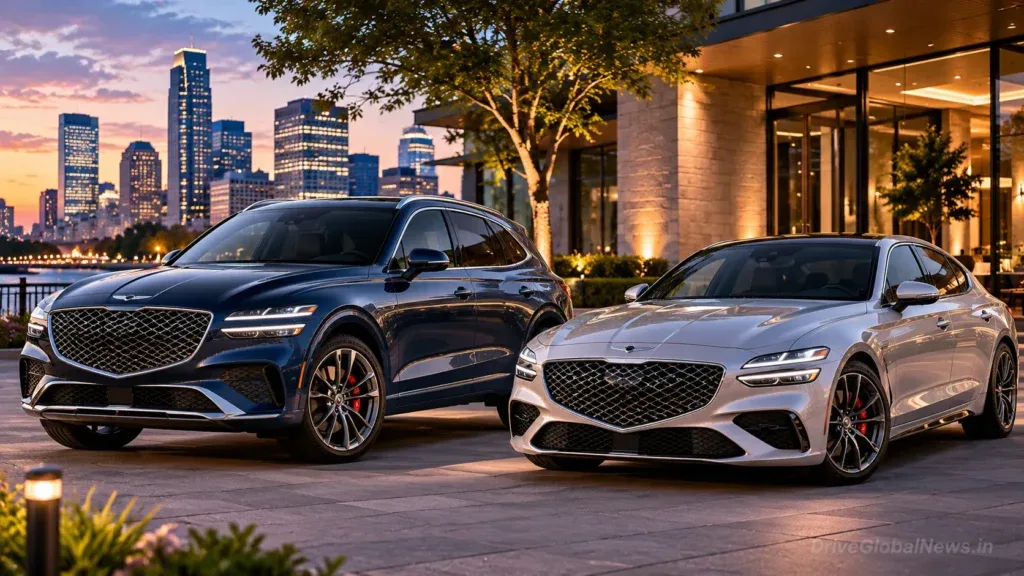
1. Genesis GV70 Starting in the high $40,000s to low $50,000s, the GV70 is the clearest value statement in the class. It offers more standard power and equipment than many German rivals at the same money, a distinctive design, and a long warranty. Loaded examples still stay near or under $60,000 depending on configuration. It regularly ranks at or near the top of luxury compact SUV comparisons.
2. Genesis G70 The G70 starts in the mid-$40,000s and delivers a proper sport-sedan experience with a premium interior. It undercuts equivalent BMW and Mercedes compact sedans on price while matching or exceeding them on features and warranty coverage. For drivers who want a sedan rather than an SUV, it is one of the strongest arguments against paying extra for a German badge.
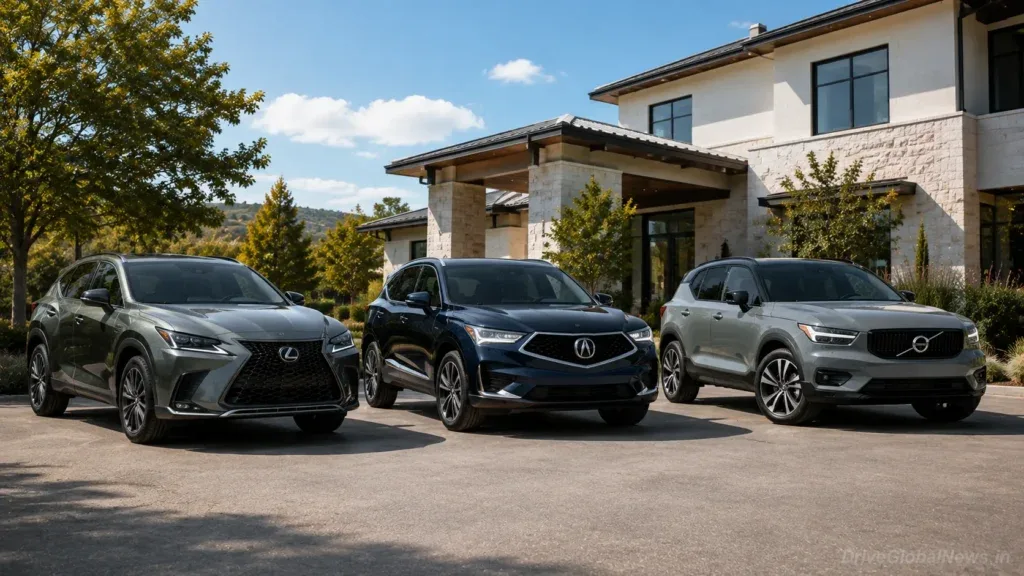
3. Lexus NX 350 / NX 350h Lexus reliability and resale remain unmatched in this segment. The NX starts in the mid-$40,000s (hybrid versions are similarly positioned) and offers a quiet, well-built cabin, strong safety scores, and hybrid efficiency that German rivals rarely match at this price. It will not be the most exciting to drive, but ownership costs and long-term confidence are excellent.
4. BMW 3 Series (330i) The 3 Series still belongs on the list because it remains the driving benchmark. Base models start in the high $40,000s to around $50,000. Keep the options list under control and it stays under $60,000. If how the car feels on a back road matters more than maximum features per dollar, this is still the one many enthusiasts choose.
5. Genesis G80 The G80 starts right around $60,000 on some trims and can be configured near that number. It offers a larger, quieter, more opulent sedan experience than most compact Germans. Material quality and standard equipment are competitive with cars that cost more. It is the stealth luxury pick for buyers who want presence without the badge tax.
6. Acura RDX The RDX starts in the mid-$40,000s and delivers Honda reliability wrapped in a more upscale package. Super Handling All-Wheel Drive and a well-tuned chassis make it engaging. It will not wow with the latest screens, but it is a durable, practical luxury compact SUV that holds value well.
7. Volvo XC40 / EX30 Volvo’s small SUVs start well under $50,000 and bring distinctive Scandinavian design, strong safety credentials, and a generous feature set. The XC40 remains a stylish daily driver; the EX30 adds an electric option at an accessible luxury price. Both question whether you need a German compact SUV.
8. Cadillac CT5 / CT5-V (base) American luxury with real power. The CT5 and especially CT5-V variants can be had under $60,000 with strong performance, Magnetic Ride, and a more distinctive character than many imported sedans. Warranty and dealer experience vary, but the driving product is competitive.
9. Audi A3 / A5 (carefully optioned) Audi’s smaller models can still be configured under $60,000. The A3 starts much lower; a reasonably equipped A5 can stay in range. Interior design and tech remain strengths. They prove that German engineering is available without jumping to the midsize flagships.
10. Lincoln Aviator (select trims) A three-row luxury SUV with a standard twin-turbo V6 that can undercut some two-row German rivals on price while offering more space and power. It will not have the same cachet, but it delivers a lot of vehicle for the money and questions whether badge prestige is worth shrinking the cabin and the engine.

How to Think About the Decision German brands still win on driving dynamics (BMW), interior tech polish (Audi), or brand prestige (Mercedes). What they often lose at this price is content, warranty length, and the feeling that you bought the top of the range rather than the middle. Genesis in particular has made a habit of giving buyers a near-flagship experience for mid-tier German money.
Test the Genesis GV70 or G70 against an equivalently priced X3 or 3 Series. Sit in a Lexus NX after a Q5. The differences in materials, features, and long-term ownership costs are larger than the badge difference for many shoppers.
The Bottom Line In 2026 you can buy genuine luxury under $60,000 without defaulting to BMW, Mercedes, or Audi. The Genesis GV70 and G70, Lexus NX, Acura RDX, and several others deliver design, equipment, and warranties that make the German alternatives look expensive for what they actually include at this price. The 3 Series remains the driver’s choice if that is your priority.
Shop the cars, not the badges. The list above exists because the product gap has closed even if the perception gap has not.
Which matters more to you — the badge on the hood or what you actually get for $60,000?