One of the biggest remaining objections to buying an electric vehicle has been simple: public chargers that do not work when you need them. That problem is not gone, but the data in 2026 shows it is getting measurably better.
The latest J.D. Power U.S. Electric Vehicle Experience Public Charging Study found that the industry “non-charge visit” rate — the share of times a driver arrives at a public charger and cannot complete a charge — fell to 12 percent in the most recent quarter. That is down from 14 percent a year earlier and well below the 21 percent recorded in 2023. It is the lowest failure rate in the study’s history.
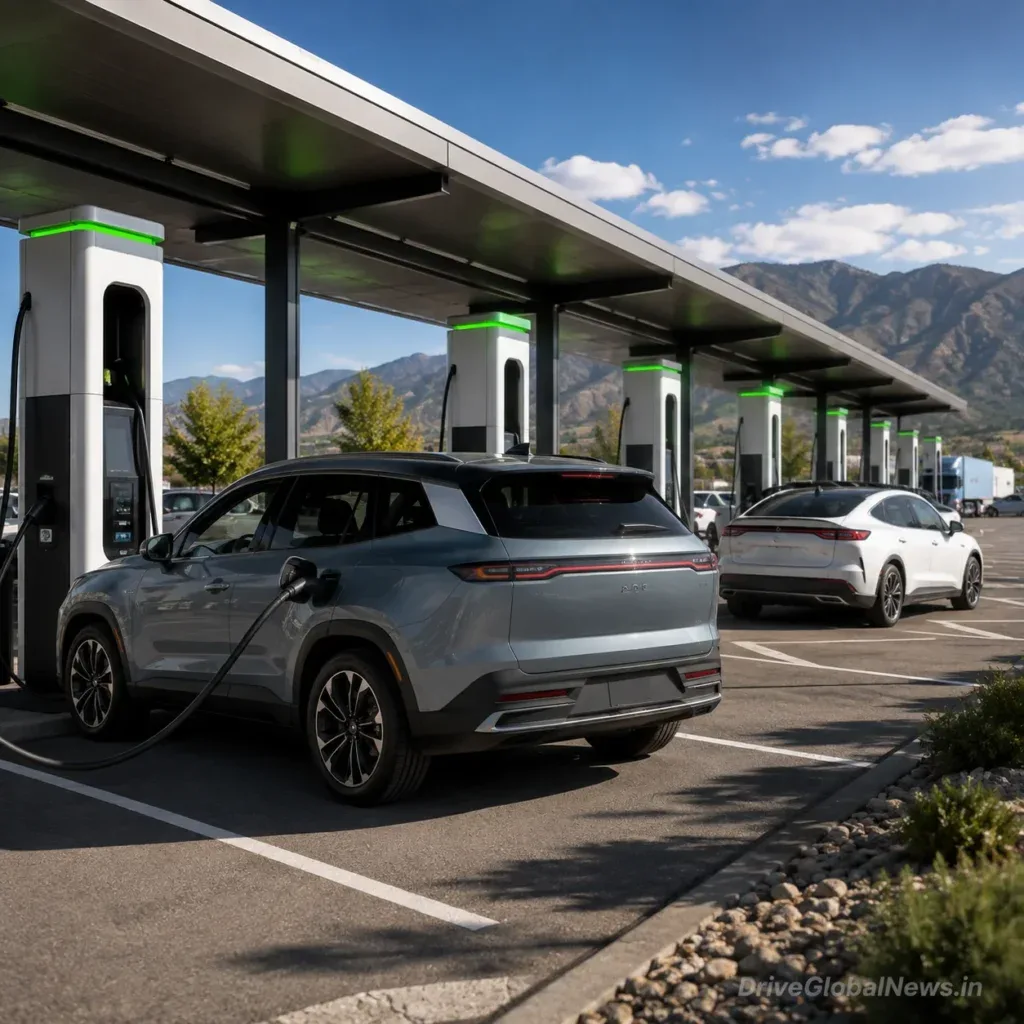
What Improved The gains are concentrated in DC fast charging, the high-power stations that make highway travel possible. 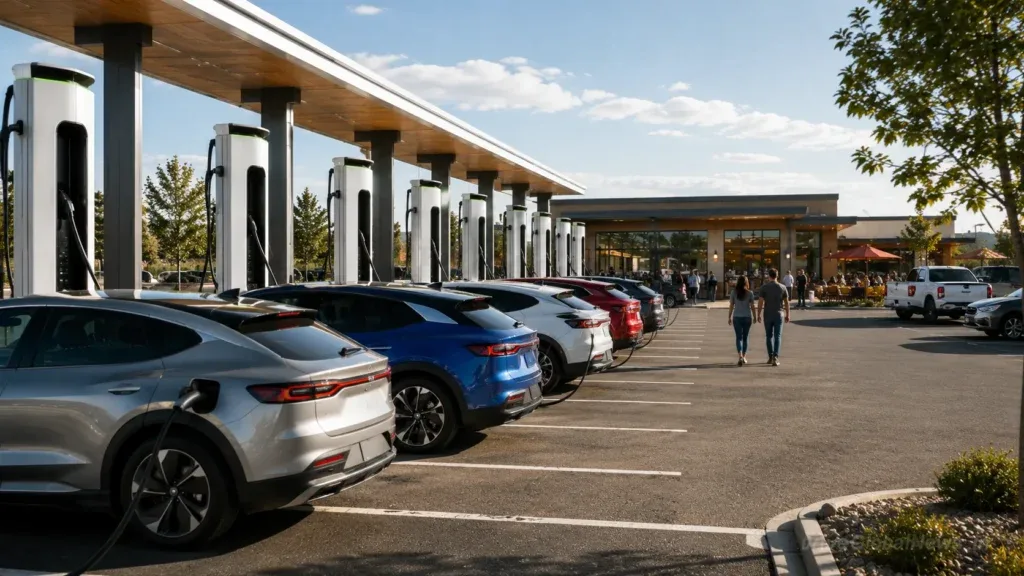
Satisfaction with those chargers rose 12 points year over year. Improvements showed up across availability, perceived safety, cost, and charging speed. Newer, higher-power hardware, larger sites, better payment systems, and more destination-style locations (hotels, convenience stores, restaurants) are reducing failed attempts.
OEM-backed networks that have expanded recently posted some of the strongest results and the lowest failure rates. Legacy networks also improved, though they still lag the newest operators in many satisfaction measures. Tesla’s Supercharger network remains among the most reliable by uptime, while several newer automaker-supported networks scored highly on the overall experience.
Level 2 public charging, by contrast, saw a dip in satisfaction, largely tied to payment and ease-of-use issues rather than raw hardware failure. Most daily charging still happens at home, so the public Level 2 experience matters less for many owners than the reliability of fast chargers on longer trips.
Why This Matters for Buyers A 12 percent failure rate is still too high. No one would accept that level of unreliability at a gas station. But the direction is what changes the practicality argument. Three years ago, nearly one in five fast-charging attempts failed. That kind of uncertainty made road trips stressful and discouraged some buyers entirely. A drop to roughly one in eight, combined with more stations and faster repairs on newer hardware, makes planning a trip more realistic. 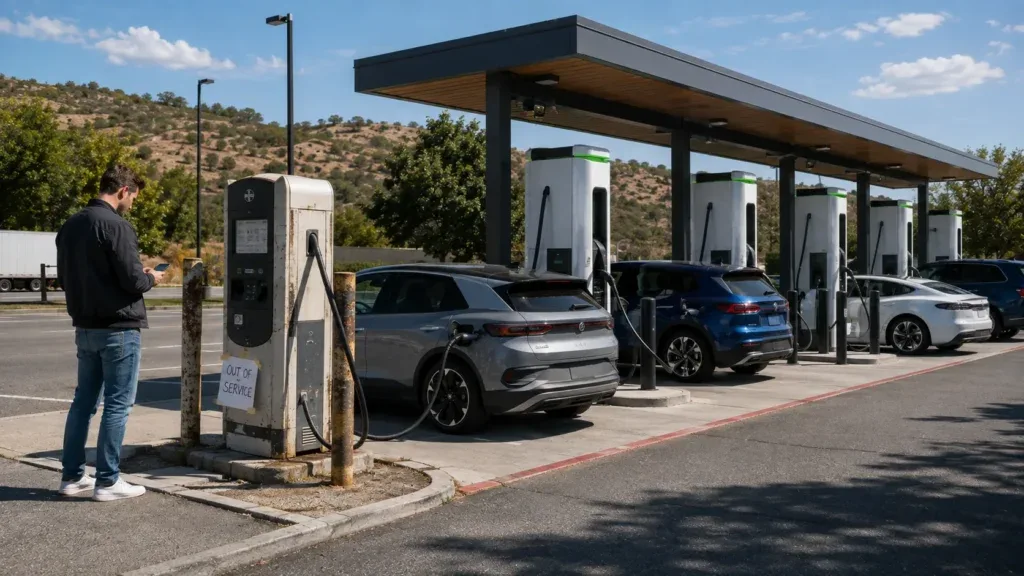
Other 2026 data points in the same direction. Independent analyses of network uptime have shown averages in the mid-90s percent range, with manufacturer-operated and newer DC fast networks performing better than older independent sites. Hardware less than two years old succeeds on the first attempt far more often than aging equipment. Repair times have also shortened on the better-run networks.
What Still Needs Work Failures have not disappeared. Hardware problems, payment or authorization issues, and sessions that stop early remain common causes.
Older chargers fail more often. Coverage is still uneven by region, and some high-traffic corridors can still see wait times or multiple out-of-service stalls. Drivers who rely only on public charging without a home hookup feel these problems most.
The improvement is also uneven. Fast-charging corridors and well-funded new networks are pulling ahead. Destination and workplace Level 2 sites have not seen the same lift.
The Bottom Line Public EV charging in 2026 is more reliable than it was a year or three years ago. Failed fast-charging visits have fallen to a record-low 12 percent in the latest J.D. Power data, DC fast-charger satisfaction is up, and newer networks are setting a higher bar. That does not make every road trip effortless, but it does make electric vehicles more practical for a larger group of drivers.
If you have been waiting for charging infrastructure to “get better” before considering an EV, the data now supports a more optimistic view — especially if you can charge at home most of the time and use public DC fast chargers mainly for longer trips. Check current station status in your apps, favor newer or highly rated networks, and still have a backup plan. The trend, however, is finally moving in the right direction.
Have charger failures been a reason you have delayed buying an EV, or has your recent experience already improved?