Tesla Cybercab: Tesla’s latest manufacturing reveal for the Cybercab promises a 50% reduction in assembly line footprint, but that engineering sleight of hand doesn’t put a single self-driving car on the road before 2026—and it certainly doesn’t answer the $30,000 question hanging over your potential purchase. The company’s “unboxed” manufacturing strategy, which runs parallel assembly lines for different vehicle sections instead of one long conveyor, is a fascinating industrial pivot, yet it leaves consumers staring at a two-door coupe with no official range, no battery size, and a regulatory path that remains as murky as a fogged-up windshield. So, does this modular magic actually translate into a robotaxi you can afford to hail, or is it just a clever way to build a car that still can’t drive itself without a human minder? Let’s dig into the nuts and bolts of what Tesla just showed us and what it means for your garage or your ride-hailing app.
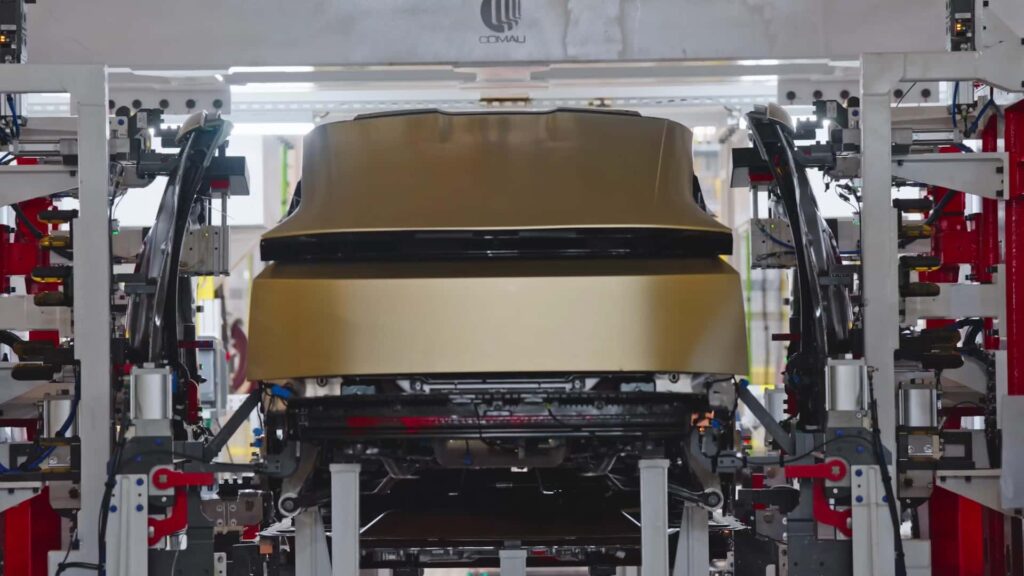
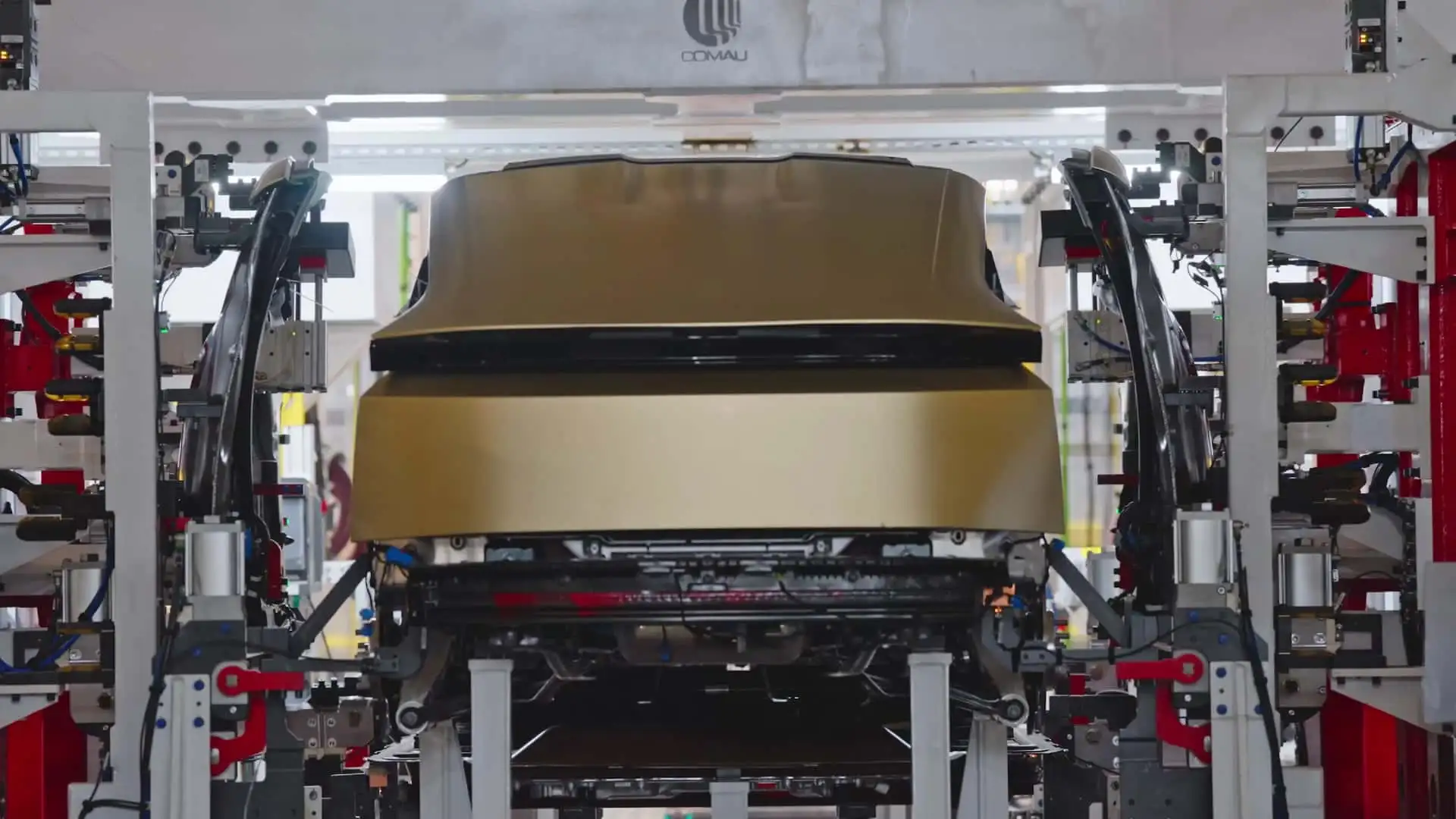
Tesla’s “unboxed” manufacturing approach is a radical departure from the century-old assembly line model, where a car chassis travels down a single line and parts are bolted on sequentially. Instead, the Cybercab will be built on four parallel sub-assembly lines—one for each corner of the vehicle—that produce complete sections before they’re joined together in a final, streamlined marriage step. This cuts the factory floor space needed by roughly half, which Tesla claims will slash capital expenditure and speed up production throughput, potentially allowing the company to build the Cybercab in existing facilities with minimal retrofitting.
But here’s where your inner engineer should start asking pointed questions: how do you maintain panel gaps, structural integrity, and crash safety when you’re mating four independently built quadrants? Tesla’s track record with traditional assembly has been rocky, with early Model 3 production plagued by quality issues, so a modular system demands even stricter tolerances and robotic precision. The company insists this method reduces part count and simplifies logistics, but it also means any defect in one sub-assembly could cascade into a full vehicle teardown, which is a quality-control nightmare that could delay your 2026 delivery date faster than a supply chain hiccup.
Range, Battery, and the Specs Tesla Won’t Share
Here’s the uncomfortable gap in the sales pitch: Tesla has revealed zero official figures for the Cybercab’s range, battery capacity, or charging speed, leaving early adopters to guess whether this two-door will make it from Columbus to Pittsburgh without a pit stop. The company has hinted at a sub-$30,000 price point, which would make it one of the cheapest EVs on the market, but that number assumes the “unboxed” process delivers the promised cost savings—and that’s a big assumption given R&D amortization and initial tooling expenses.
Let’s put this in daily driving terms: if the Cybercab lands with a 250-mile range, that’s fine for urban robotaxi duty, but it’s marginal for a personal car owner who wants to escape the city on weekends. Tesla’s own Model 3 starts around 272 miles of range for $38,990, so a cheaper Cybercab with less range might not be the bargain it appears once you factor in the lack of rear seats and cargo space. You’re essentially paying for a tech demo that doubles as a commuter pod, and until Tesla publishes the battery specs, you’re buying blindfolded with a reservation deposit.
Regulatory Roadblocks and the Autonomous Elephant
The manufacturing breakthrough doesn’t move the needle on the Cybercab’s biggest hurdle: getting federal and state approval for fully autonomous operation without a steering wheel or pedals. Tesla plans to sell this vehicle to consumers, but it’s also positioning it as a robotaxi for its upcoming ride-hailing network, and that dual role creates a regulatory tangle that no assembly line innovation can untangle. The National Highway Traffic Safety Administration (NHTSA) has no framework for approving a passenger car without manual controls, and Tesla would need a special exemption that could take years to secure.
So, what happens if you buy a Cybercab in 2026 and the autonomous software isn’t ready for prime time? You’d own a two-door EV that requires a human driver, which defeats the entire purpose of the robotaxi concept and leaves you with a less practical version of a Model 3. Tesla’s Full Self-Driving (FSD) software has been in beta for years and still requires driver supervision, so the leap to unsupervised operation in a new vehicle architecture is a monumental technical and legal challenge that no modular factory can solve.
Who Should Reserve One and Who Should Walk Away
If you’re a tech enthusiast with a second car and a willingness to gamble on Tesla’s vision, the Cybercab could be an exciting addition to your garage—provided you’re comfortable with the risk that it might launch with limited autonomy or delayed features. Early adopters who want to be first on the block with a futuristic pod and who can absorb potential depreciation will find the sub-$30,000 price tag tempting, especially if Tesla delivers on its promise of lower operating costs and over-the-air updates that improve the vehicle over time.
But if you need a practical daily driver with rear seats, cargo versatility, or the ability to take road trips without meticulous charging planning, the Cybercab is a hard pass. Traditional car buyers should stick with a Model Y or a conventional EV from another automaker, because the Cybercab’s two-door layout and robotaxi focus make it a niche product that prioritizes urban efficiency over personal convenience. The financial stakes are real: a $30,000 base price could balloon with mandatory FSD packages or subscription fees, and resale value is a complete unknown for a vehicle with no steering wheel and a service network that’s still figuring out how to repair it.
The Verdict: A Clever Factory, But a Questionable Car
Don’t hand over your $100 reservation fee until Tesla publishes the full spec sheet and secures regulatory approval for the autonomous features that define this vehicle’s reason to exist. The “unboxed” manufacturing process is genuinely impressive from an industrial engineering perspective, but it doesn’t guarantee a cheaper car for you—initial production costs, R&D amortization, and the premium for autonomous hardware could easily push the final price past $35,000, erasing the promised savings. If you’re an early adopter who wants to be part of automotive history and can afford the risk, the Cybercab might be worth the wait, but for everyone else, let Tesla prove the technology works before you commit your cash to a car that can’t yet drive itself.