
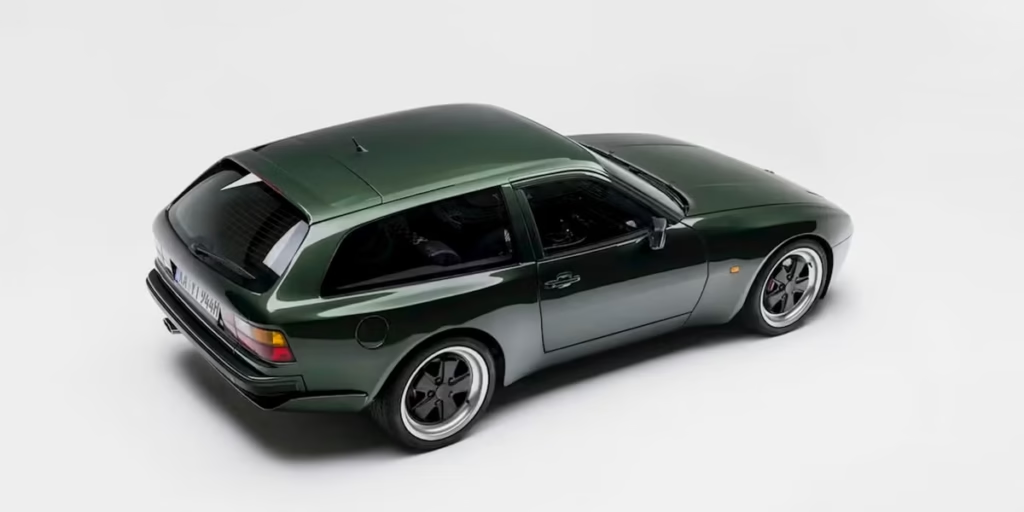
The Porsche 944 Conversion has become the unlikely hero of a growing argument among enthusiasts who claim a modified 1980s front-engine coupe can outshine a brand-new 911. That headline-level claim, circulating without a press release, build sheet, or dyno graph, frames a decades-old transaxle platform as the superior modern sports car. However, no confirmed specifications, no pricing, and no named builder accompany the assertion. Therefore, every performance figure attached to this idea remains unverified.
Inside the Porsche 944 Conversion Debate
What makes this claim intriguing is the platform itself. The 944 carried a near-perfect 50/50 weight balance thanks to its rear transaxle layout, a 2.5-liter inline-four up front, and pop-up headlights that vanished from Porsche design language decades ago. Enthusiasts have long argued the chassis deserved more power than the factory ever gave it. Moreover, the turbocharged 944 variants of the late 1980s proved the body could handle serious boost.
The comparison to a new 911 is where the argument gets murky. According to the headline framing, the conversion allegedly delivers a purer driving experience than Porsche’s current flagship. Yet the base 911 Carrera now produces 388 HP from a twin-turbo flat-six, sprinting to 60 mph in roughly 4.0 seconds. A stock 944 Turbo made about 247 HP when new. Therefore, any conversion claiming superiority must involve substantial powertrain work that nobody has documented.
What Remains Unconfirmed About This Build
No engine swap details have surfaced. A common route involves fitting a Chevrolet LS V8, while others retain Porsche’s own flat-six or turbocharged four-cylinder architecture. Each path changes weight distribution, cooling demands, and cost dramatically. Additionally, no transmission choice, no suspension specification, and no brake upgrade list has been confirmed by any credible source.
Cost figures are equally absent. Well-executed 944 restomods with modern engine management, refreshed interiors, and sorted suspension routinely exceed $40,000 in parts and labor alone, according to Hagerty market commentary on transaxle Porsche values. A turnkey build from a reputable shop can climb past $80,000. Without receipts or a builder’s name, the financial stakes stay unknown. Buyers should treat every performance claim as alleged until documentation appears.
Why Enthusiasts Keep Circling Back to This Idea
Front-engine Porsche models occupy a strange space in the brand’s history. The 924, 944, and 968 line kept the company solvent through the 1980s, yet purists dismissed them for decades because the engine sat ahead of the driver. That stigma has faded. Consequently, clean 944 examples have appreciated, and restomod interest has followed. The same pattern appeared with the Citroen 2CV EV revival, where a humble classic gained new life through modern reinterpretation.
Modern safety and emissions compliance complicate any conversion, however. A 1980s chassis lacks the ADAS features, airbags, and crash structure that a new 911 delivers as standard. Enthusiasts seeking a factory warranty or daily-driver reliability should walk away from this path entirely. The conversion appeals to a narrow audience willing to trade convenience for character.
The Real Cost of Chasing This Claim
Comparing a modified classic to a new flagship ignores what each vehicle actually delivers. A new 911 arrives with a warranty, dealer support, and documented performance. A Porsche 944 Conversion arrives with unknown provenance unless the buyer verifies every component. Therefore, the claim that one beats the other depends entirely on criteria nobody has defined.
Pricing for the hypothetical build remains unannounced. Availability depends on finding both a donor car and a competent shop. Power output stays unverified across every configuration. Until a builder publishes a spec sheet, this stays an opinion, not a measurable result.
Frequently Asked Questions
Q: What is a Porsche 944 Conversion?
A Porsche 944 Conversion is a modified version of the classic front-engine 944, typically upgraded with modern engine, suspension, and interior components. Builders aim to combine vintage styling with improved performance and reliability, creating a restomod that stands out from factory models.
Q: Is a Porsche 944 Conversion better than a new 911?
It depends on your priorities. A conversion offers unique character, classic design, and potentially lower entry cost. A new 911 provides modern safety, warranty, and performance. Enthusiasts who value individuality often prefer the conversion, while daily drivers may choose the 911.
Q: How much does a Porsche 944 Conversion cost?
Costs vary widely based on engine choice, labor, and parts. A basic build can start around $20,000, while high-end conversions with modern powertrains can exceed $80,000. Always request a detailed breakdown from the builder before committing. For more details, check our recent coverage on Tesla Robotaxi Night Limits Exposed: Musk Blames Lidar.
What Buyers Should Do Now
Option One, demand documentation before committing money. Ask for the engine source, dyno results, and a full parts list. Option Two, budget for a pre-purchase inspection by a Porsche specialist familiar with transaxle models, because hidden rust and tired electrics can double a project’s cost. Option Three, if a factory warranty and modern safety matter more than nostalgia, buy the new 911 instead.
The Porsche 944 Conversion remains an intriguing idea wrapped in unverified claims. Enthusiasts should enjoy the debate, but they should not write checks until a real build with real numbers shows up.