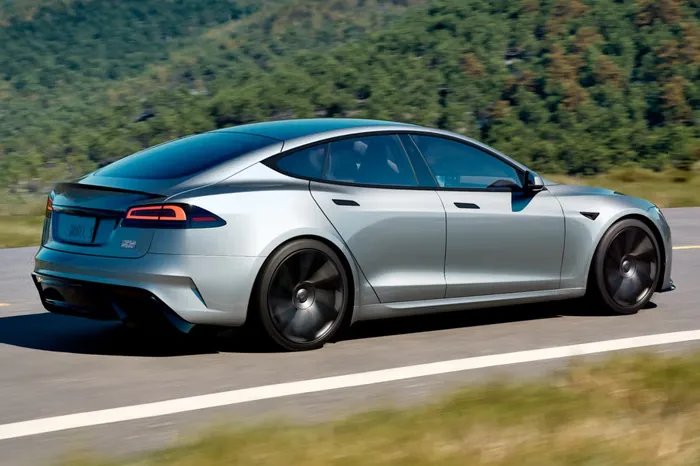
Elon Musk now says the Tesla Robotaxi cannot operate in some nighttime conditions because it lacks lidar, a claim that directly contradicts more than a decade of company messaging about sensor strategy. The statement surfaced as a headline only, with no accompanying press release, no technical filing, and no verified transcript, which leaves a wide gap between what was allegedly said and what Tesla has confirmed.
That gap matters because Tesla built its entire autonomy pitch on the idea that cameras alone could outperform lidar. Musk called lidar a “crutch” in 2019 and a “fool’s errand” before that. Now, according to the reported remark, the absence of that same hardware explains why the robotaxi fleet stays parked after dark in certain situations. Reuters has documented Tesla’s long-running camera-only approach and the regulatory scrutiny it draws, and buyers weighing any autonomous vehicle promise should read that history carefully.
Tesla Robotaxi Nighttime Limits and the Lidar Reversal
| Engine | Electric |
| Power | Unknown |
| Price | TBA |
| Availability | TBA |
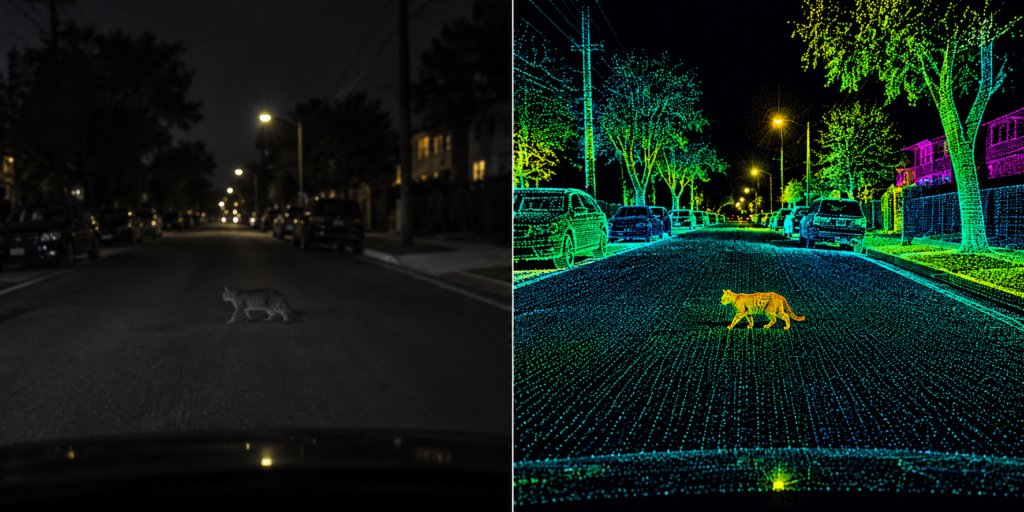
The reported explanation is simple on its surface. Cameras struggle in low light, glare, and rain, while lidar fires its own laser pulses and measures return time, so it does not depend on ambient light. Waymo pairs lidar with radar and cameras, and its vehicles operate around the clock in Phoenix, San Francisco, and Austin. Cruise ran nighttime service with lidar before its 2023 shutdown. Therefore, the comparison is not theoretical. Two rivals logged real nighttime miles with the hardware Tesla now says it needs.
However, nobody at Tesla has published the specific conditions that trigger the limit. Is it unlit residential streets? Heavy rain at 2 a.m.? Fog? Construction zones with mismatched lane markings? Musk allegedly pointed to lidar absence, but that is a cause without a threshold. Without a documented operating design domain, the claim remains unverified and functionally useless to anyone trying to plan a trip.
Moreover, Tesla has not released disengagement data for the robotaxi program, no NHTSA filing describes the nighttime restriction, and no pricing or launch date has been announced. The company also faces a crowded field of skeptics, as our report on New York City’s driverless taxi questions shows, and regulators in several states are already asking harder questions about camera-only fleets.
Why Cameras Alone Struggle After Dark
Engineers who work on perception stacks describe a basic physics problem. A camera needs light to form an image, and a headlight beam falls off with distance. At highway speed, that shrinking cone of illumination cuts reaction time. Lidar does not care. It sends out pulses at 905 or 1550 nanometers and times the bounce, so it maps obstacles in total darkness with centimeter accuracy.
Consequently, a camera-only system must lean harder on prediction. It guesses what a shadow, a puddle, or a pedestrian in dark clothing might be. Neural networks have gotten good at this, but “good” is not the same as “proven at 3 a.m. in the rain.” Waymo publishes safety reports that break out lighting conditions. Tesla does not. That asymmetry is why fleet operators, insurers, and city planners treat the robotaxi nighttime limit as a real operational constraint rather than a software bug.
Additionally, the reversal carries reputational weight. Tesla spent years telling investors and customers that lidar was unnecessary cost. Now the company’s own founder, per the reported quote, treats its absence as the reason the service stops at sunset. That is not a small pivot. It is an admission that the sensor suite may be incomplete for full-time commercial operation.
What This Means for Tesla Owners and Investors
Anyone holding TSLA shares should separate the robotaxi narrative from the car business. The Model 3 and Model Y sell on range, charging, and software, not on autonomy promises. Those vehicles remain unaffected by the nighttime limit, and Tesla’s recent Model 3 update with quicker acceleration and a larger screen shows where near-term revenue actually comes from. Therefore, a robotaxi delay does not change the daily driving experience for existing owners.
Prospective robotaxi customers, by contrast, face a service with no published price, no confirmed coverage map, and an admitted nighttime restriction. That combination makes it impossible to compare against a Waymo fare or a traditional rideshare trip. Investors who bought the autonomy story should also note that Tesla has not announced a hardware retrofit path. Adding lidar to a camera-only fleet is not a software update. It is a redesign.
Frequently Asked Questions
Q: Why can’t Tesla Robotaxi operate at night?
Elon Musk attributes the nighttime operational limits to the absence of lidar on Tesla vehicles. Without lidar, the camera-based system struggles in low-light conditions, according to his explanation. This admission contrasts with Tesla’s long-standing position that lidar is unnecessary for full autonomy.
Q: Does Tesla plan to add lidar to Robotaxi?
Tesla has not announced any plans to add lidar to its Robotaxi fleet. Musk’s comment appears to explain current limitations rather than signal a hardware change. The company continues to rely on cameras and neural networks, though no timeline for resolving nighttime operation has been provided.
Q: How does Waymo handle nighttime driving without this issue?
Waymo uses lidar and radar alongside cameras, which allows its vehicles to operate at night. This sensor suite provides redundant depth perception that cameras alone may lack in darkness. Cruise previously used a similar approach before suspending operations, highlighting a key technical difference. According to Reuters industry coverage, the broader market context remains important to track.
What Buyers Should Do Now
Option One is to wait for Tesla to publish an operating design domain. Until the company states exactly which hours, weather conditions, and cities the robotaxi serves, any purchase decision or investment thesis rests on a headline, not a specification. Demand the document, not the quote.
Option Two is to compare against Waymo directly. Waymo confirms 24-hour operation in multiple metros using lidar, radar, and cameras, and it publishes safety data. If nighttime availability matters to you, that is the benchmark the Tesla Robotaxi must beat, and right now it does not.
Option Three is to treat the lidar reversal as a signal about timelines. When a company changes its core technical argument, schedules usually slip. Keep your current vehicle, watch for an official Tesla statement, and do not price autonomy into anything you buy today. The Tesla Robotaxi may eventually deliver, but the verified facts available now support patience over speculation.