Chevy Bolt vs Nissan LEAF in 2026 : Electric vehicles used to come with an unwritten rule.
If you wanted to save money on gas, you had to spend a lot of money upfront.
That rule is finally disappearing.
And two familiar names are helping make it happen.
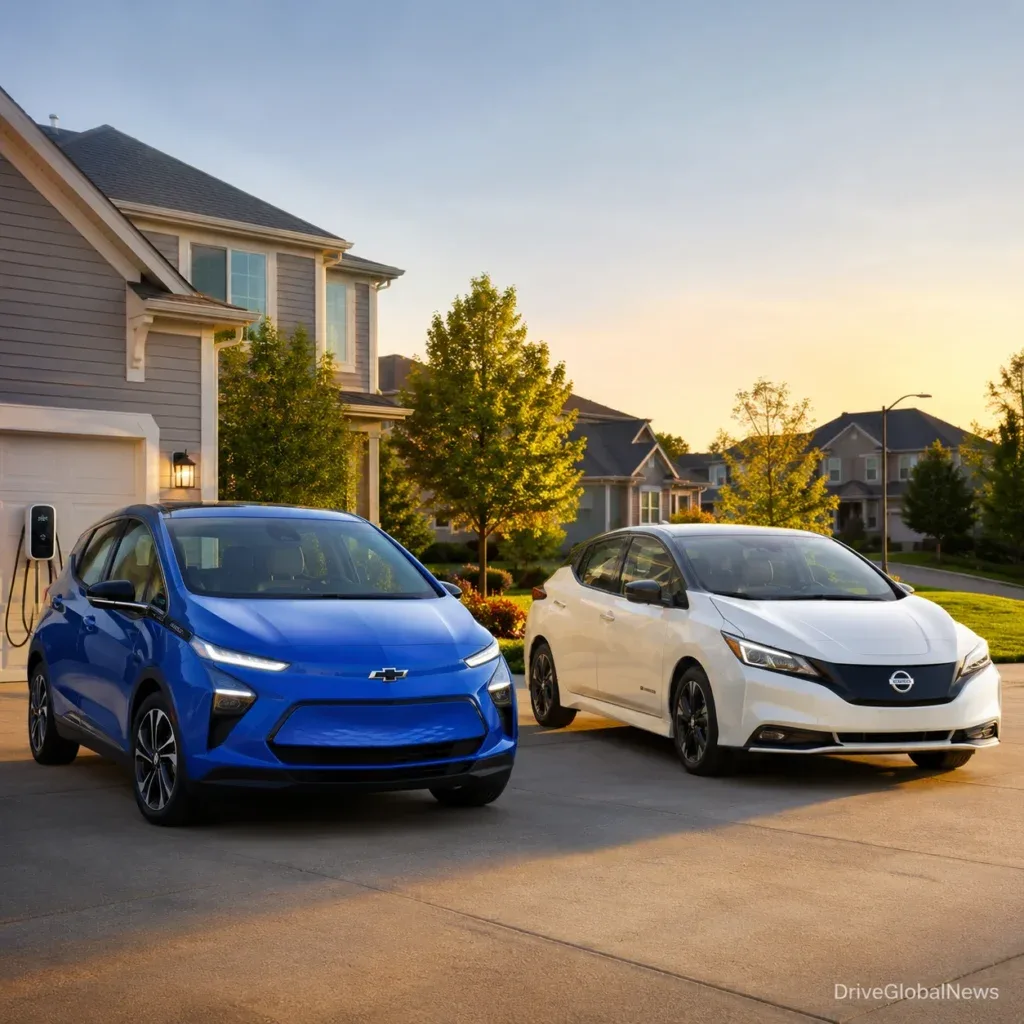
The Chevrolet Bolt is back.
The Nissan LEAF is evolving.
Both promise something many Americans have been waiting for.
An electric vehicle that doesn’t cost luxury-car money.
In a market full of six-figure electric SUVs and high-performance sedans, that’s refreshing.
Because most people don’t need 500 horsepower.
They don’t need massive touchscreens.
They don’t need a vehicle that can outrun a sports car.
They need something affordable.
Reliable.
And easy to live with.
That’s exactly what this battle is about.
The Nissan LEAF Has Experience On Its Side
The LEAF has been doing this longer than almost anyone.
For many Americans, it was their first introduction to electric vehicles.
Nissan deserves credit for taking EVs seriously before most competitors.
That experience matters.
The company understands what entry-level EV buyers want.
Simple ownership.
Predictable costs.
Familiar design.
The LEAF doesn’t try to reinvent transportation.
It focuses on making the transition to electric feel comfortable.
The Bolt Returns With Something To Prove
Chevrolet ended production of the original Bolt just as it started gaining momentum.
Now it’s returning.
And expectations are high.
The new Bolt arrives with updated technology, a modern battery platform, and access to an expanding charging ecosystem.
More importantly, it understands its mission.
Affordability.
The Bolt isn’t trying to be aspirational.
It’s trying to be attainable.
That’s an important difference.
Charging Could Decide The Winner
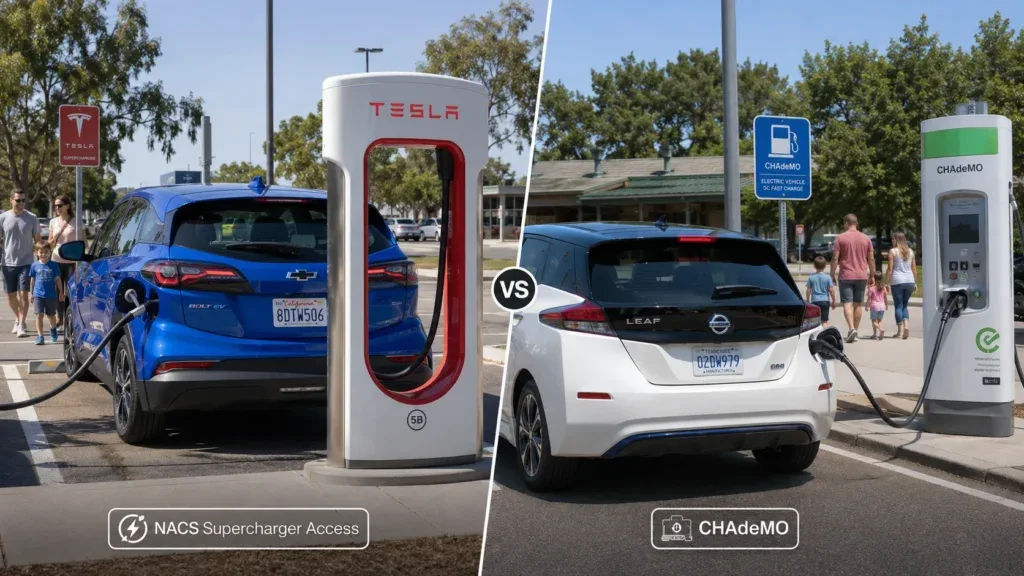
For many EV buyers, charging matters more than range.
And in 2026, this category heavily favors Chevrolet.
The new Bolt adopts Tesla’s North American Charging Standard.
That means easier access to Tesla’s extensive Supercharger network.
That’s a major advantage.
The LEAF still faces challenges here.
Its aging charging technology has become increasingly difficult to ignore.
For buyers planning regular road trips, charging convenience can completely change the ownership experience.
Interior Design Reflects Their Priorities
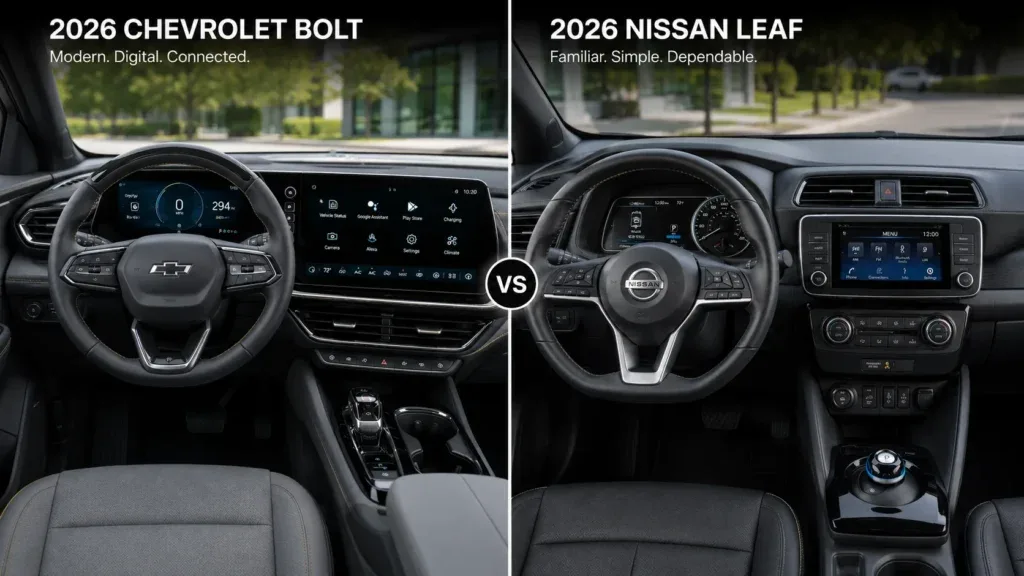
The LEAF feels familiar.
Traditional controls.
Straightforward design.
Minimal learning curve.
Some buyers appreciate that.
The Bolt takes a more modern approach.
Updated software.
Contemporary technology.
A cabin that feels designed for today’s EV buyers.
Neither approach is wrong.
But they appeal to different personalities.
The LEAF eases the transition.
The Bolt embraces it.
Also Read:
https://driveglobalnews.in/hyundai-ioniq-5-vs-tesla-model-y-2026/ – How charging infrastructure can influence the entire ownership experience.
Range Anxiety Has Changed
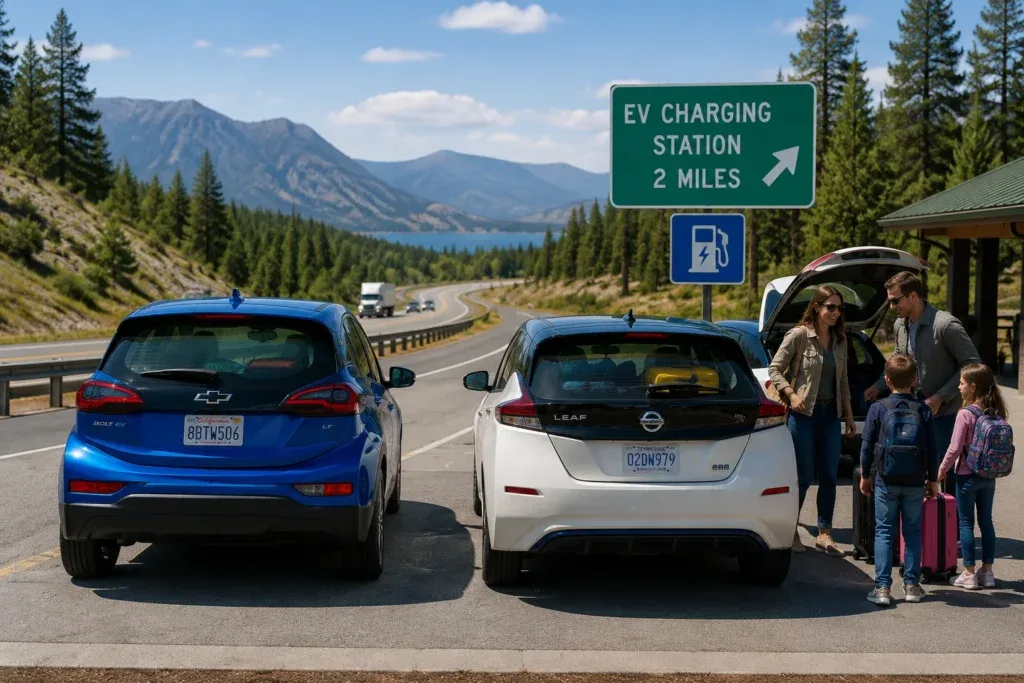
Most Americans drive fewer miles each day than they realize.
For commuting, errands, and school drop-offs, both vehicles offer more than enough range.
The real difference appears during longer trips.
That’s where charging speed and network access matter.
The Bolt enters 2026 with a stronger long-distance story.
The LEAF remains an excellent city car.
Understanding your lifestyle matters more than comparing specifications.
Which One Would I Buy?
If I wanted the lowest possible purchase price and planned to use my EV primarily around town, the Nissan LEAF still deserves consideration.
It’s simple.
Practical.
Proven.
But if I wanted the better all-around ownership experience in 2026, I’d choose the Chevrolet Bolt.
The charging advantages alone make a difference.
Add updated technology and improved long-term flexibility, and the decision becomes easier.
Also Read:
https://driveglobalnews.in/ev-sales-are-recovering-3-signs-the-market-is-finally-turning-around/ – Why affordable electric vehicles could drive the next phase of EV growth.
The Real Winner Is Affordability
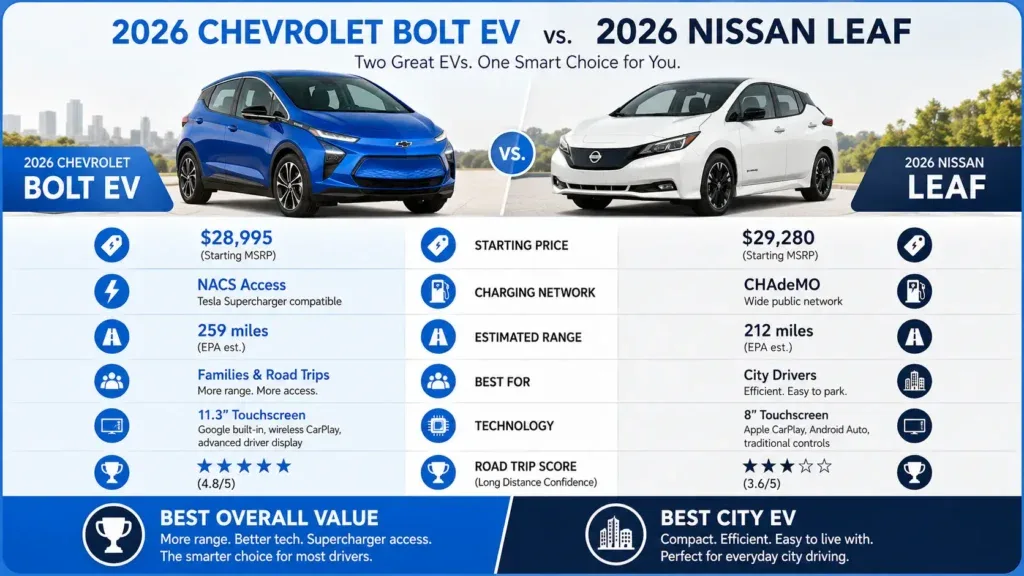
For years, critics argued electric vehicles would never become mainstream until prices dropped.
They were right.
That’s why this comparison matters.
Not because the Bolt or LEAF is the fastest EV.
Not because they’re the most luxurious.
Because they make electric ownership realistic for more families.
And that’s how real change happens.
One affordable vehicle at a time.
Because the future of electric cars won’t be decided by the people spending $100,000 on their next vehicle.
It will be decided by the families shopping under $35,000 and asking a simple question.
Can I finally afford to make the switch?
For the first time in a long time, the answer is starting to look like yes.