General Motors has put some of its most important family SUVs on ice more than once — and the company has not always said why.
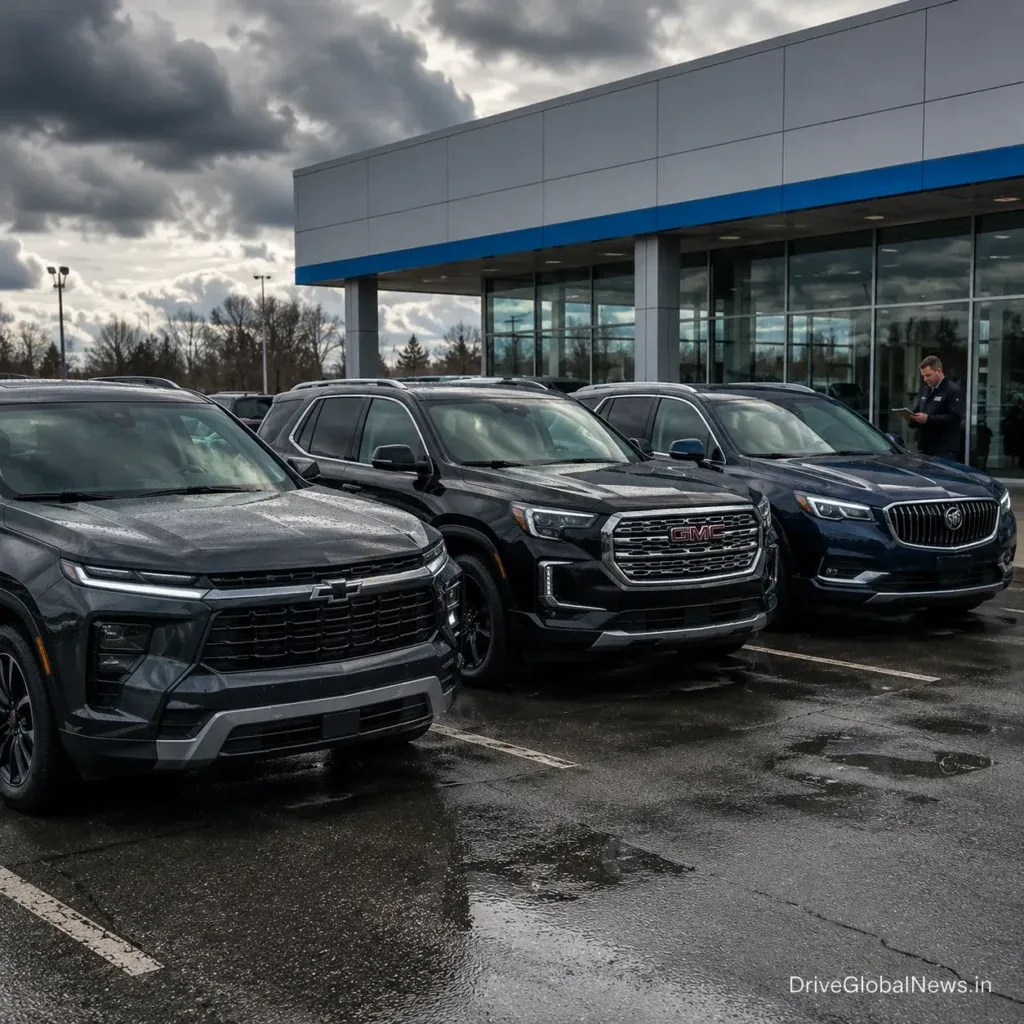
The vehicles in question are the Chevrolet Traverse, GMC Acadia, and Buick Enclave. They share a platform, a three-row layout, and a large share of GM’s midsize family business. The Acadia in particular has been ranked among the best midsize three-row SUVs you can actually buy. When GM tells dealers not to sell them, it is not a niche problem. It hits the exact vehicles a lot of American families were about to take home.
What GM Did
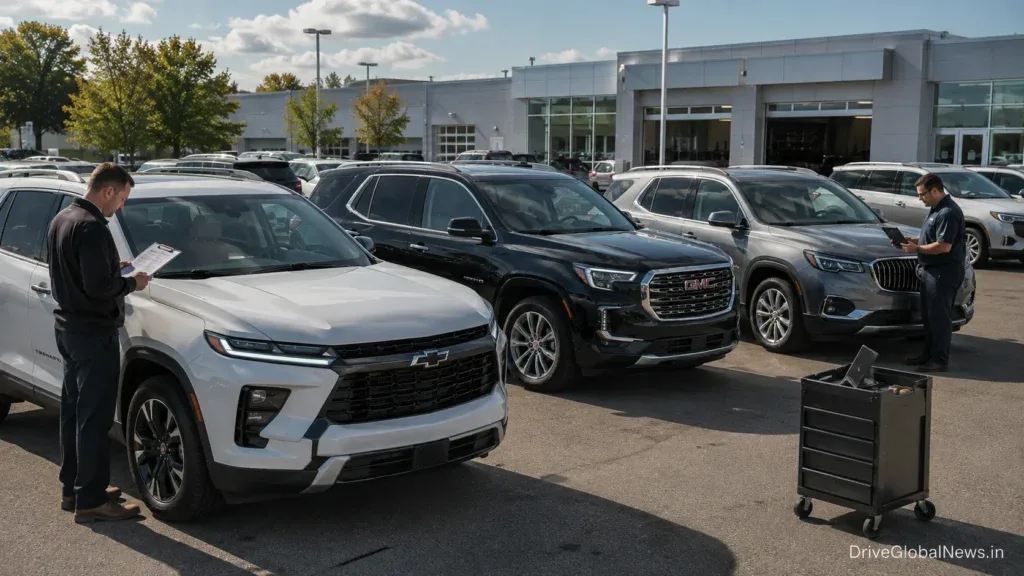
Dealers received stop-sale / stop-delivery orders covering specific VINs of the 2026 Traverse, Acadia, and Enclave. The instruction is blunt: do not sell, trade, auction, or use the listed vehicles as demos until GM clears them.
One earlier hold, issued in mid-2025, cited an undisclosed quality issue. GM later said a dealer-installed software update resolved it and that the order covered a relatively small number of units. The company never published a detailed public explanation of the defect.
A later inventory hold on the same three nameplates required an engine replacement on certain 2026 vehicles still at dealers before they could be delivered. That is not a software patch. That is a full powertrain swap on unsold stock.
Separately, technicians have been dealing with an 8-speed transmission condition on 2024–2026 Traverse and Acadia models and 2025–2026 Enclaves that can leave the vehicle stuck in first gear. GM’s bulletin says shifting to Park can reset it and that the output speed sensor is the typical fix. That issue is documented. The earlier “mystery” stop-sale was not.
Why the Silence Matters
Automakers issue stop-sales when they believe a vehicle should not leave the lot. That can be the right call. What frustrates buyers is the gap between “do not sell this family SUV” and “here is exactly what is wrong.”
These three models were redesigned as GM’s modern three-row crossovers — roomy, feature-heavy, and aimed straight at Palisade, Telluride, Pilot, and Grand Highlander shoppers. A quiet hold on that group reads like a platform-level problem even when only certain VINs are listed. Families who already signed papers want to know whether their truck is affected. Families still shopping want to know whether to wait.
GM’s public language has tended toward “abundance of caution” and “quality issue” without a clear owner-facing description of symptoms, risk, or how many vehicles were involved beyond dealer VIN lists.
What This Means If You Own One or Are Buying One
If you already own a 2024–2026 Traverse, Acadia, or Enclave, check the VIN with a GM dealer and on NHTSA.gov. Ask specifically about open stop-sale, service-update, and recall campaigns — not just “is there a recall.” A stop-sale and a customer recall are not always the same thing.
If you are shopping now, do not take a 2026 unit off the lot until the dealer confirms in writing that the VIN is clear of open holds. Get the campaign numbers on the invoice. If the vehicle was sitting during a stop-sale, ask what work was performed before delivery.
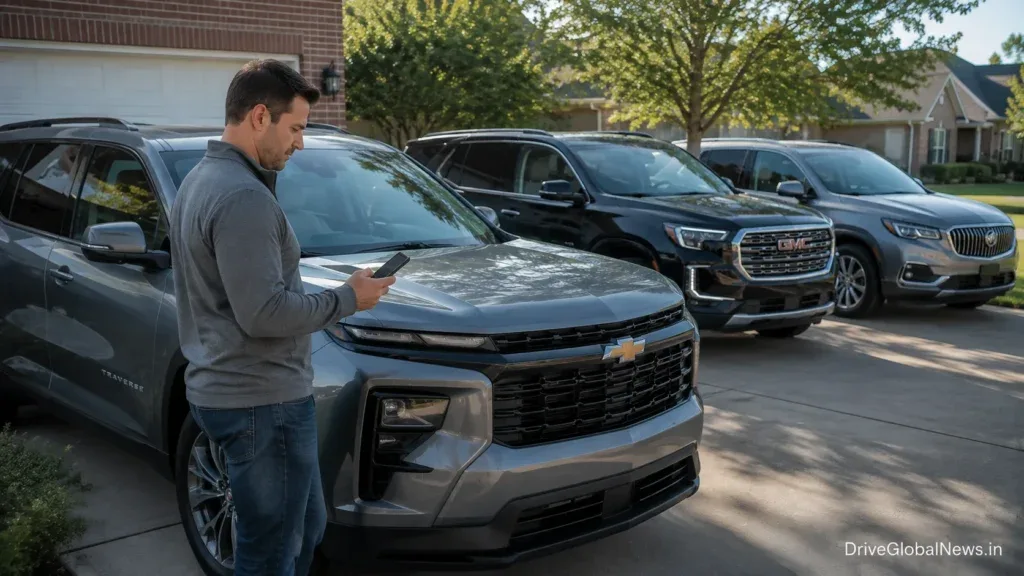
These SUVs can still be good family vehicles. The redesigned Traverse in particular has sold well when inventory is available. A stop-sale does not automatically mean the design is a lemon. It does mean you should treat delivery paperwork as part of the inspection.
Cadillac’s three-row story is separate but related in timing: the electric Vistiq had shipments halted over power third-row seats that may not detect an occupant and could trap a passenger, especially a child. That one was explained to NHTSA. The midsize gas trio’s earlier hold was not explained with the same clarity.
The Bottom Line
GM froze sales of some of its best-selling three-row crossovers — Traverse, Acadia, and Enclave — over quality problems it has not fully described to the public. Later campaign work included software updates and, on some unsold 2026s, engine replacement. A transmission sensor issue on the same family is now documented.
The vehicles are not gone. The trust problem is the silence. If you are buying one of these SUVs, verify the VIN is released from every open hold before you sign. If you already own one, run the VIN and ask what campaigns apply. “We can’t sell it right now” is a serious sentence for a family hauler. Buyers deserve the reason, not just the pause.
Has your dealer told you a Traverse, Acadia, or Enclave is on hold — and did they say why?