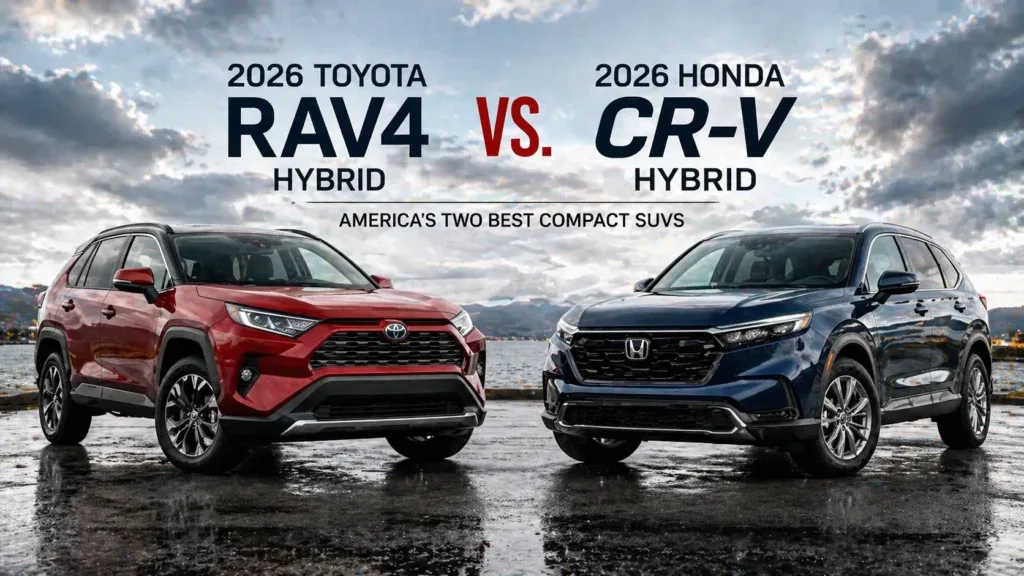
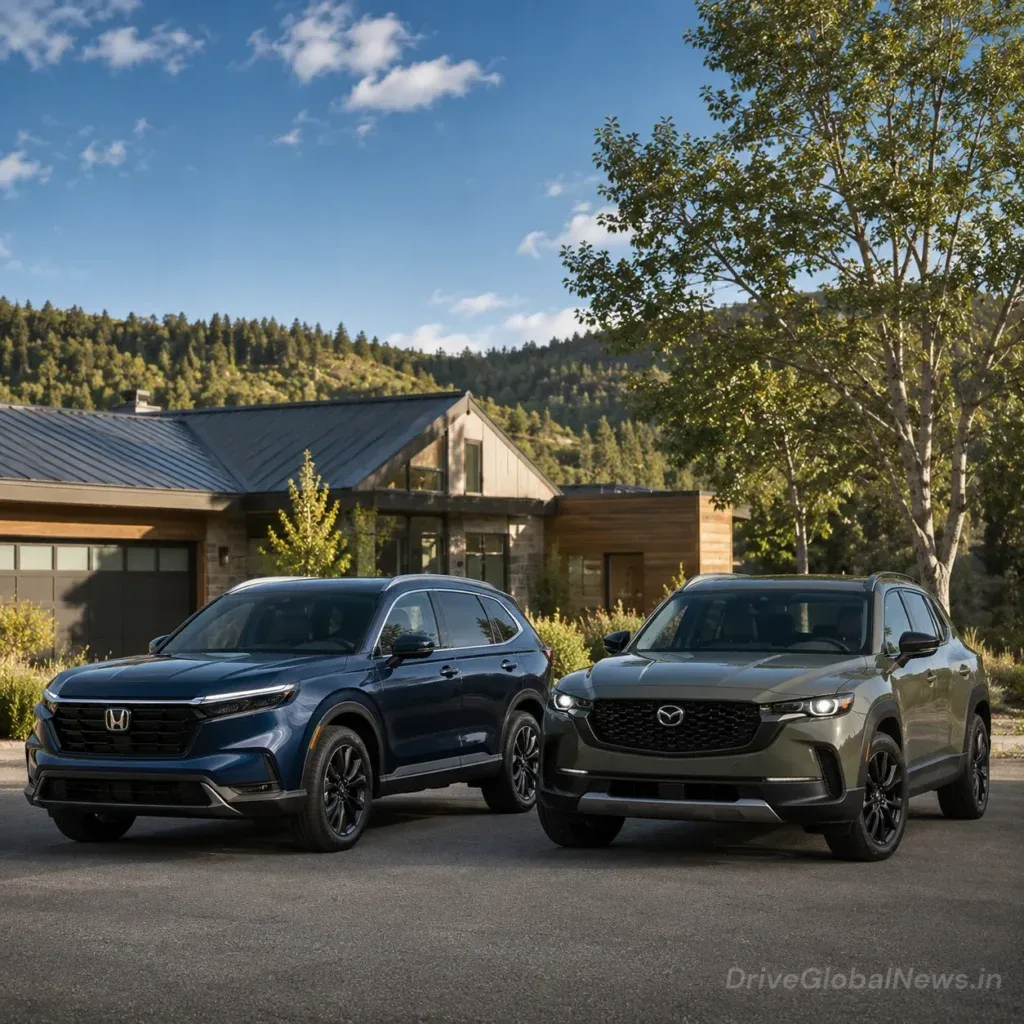
The compact hybrid SUV segment is dominated by a few big names. Quietly sitting just behind them are two excellent options that many shoppers overlook: the 2026 Honda CR-V Hybrid and the 2026 Mazda CX-50 Hybrid. Both deliver strong real-world efficiency, practical packaging, and refined daily manners without the highest sales volume or loudest marketing. One prioritizes space, smoothness, and proven hybrid refinement. The other prioritizes driving engagement and a more premium feel.
Here is how they compare.
Price and Positioning The 2026 Honda CR-V Hybrid starts in the mid-$35,000s for the Sport Hybrid and climbs into the low-to-mid $40,000s for higher trims such as Sport Touring. Front-wheel drive is available on some models; all-wheel drive is widely offered.
The 2026 Mazda CX-50 Hybrid starts slightly lower in many configurations, around the mid-$34,000s to mid-$36,000s for the Preferred, with Premium and Premium Plus trims reaching the low $40,000s. All-wheel drive is standard. Both vehicles sit in the heart of the compact hybrid price range and frequently undercut more heavily optioned rivals once you compare real transaction prices.
Power and Efficiency The CR-V Hybrid uses Honda’s two-motor hybrid system paired with a 2.0-liter engine for 204 combined horsepower. EPA ratings reach 43 city / 36 highway / 40 combined on the most efficient front-wheel-drive models and 40/34/37 on most all-wheel-drive versions. The TrailSport hybrid sits a bit lower. Real-world efficiency is consistently strong, and the system is refined in daily driving.
The CX-50 Hybrid uses a Toyota-derived 2.5-liter hybrid system with electric motors for 219 combined horsepower and standard electric all-wheel drive. It is rated at 39 city / 37 highway / 38 combined. That puts it close to the CR-V on paper and competitive in real-world mixed driving. The Mazda feels a touch stronger off the line in many situations thanks to the extra power and the way the system delivers torque.
Both will easily clear 500 miles of range on a full tank under careful driving. Neither is the absolute efficiency champion of the class, but both are excellent.
Driving Experience This is where the two diverge most clearly. The CR-V Hybrid is composed, quiet, and easygoing. It prioritizes comfort and predictability.
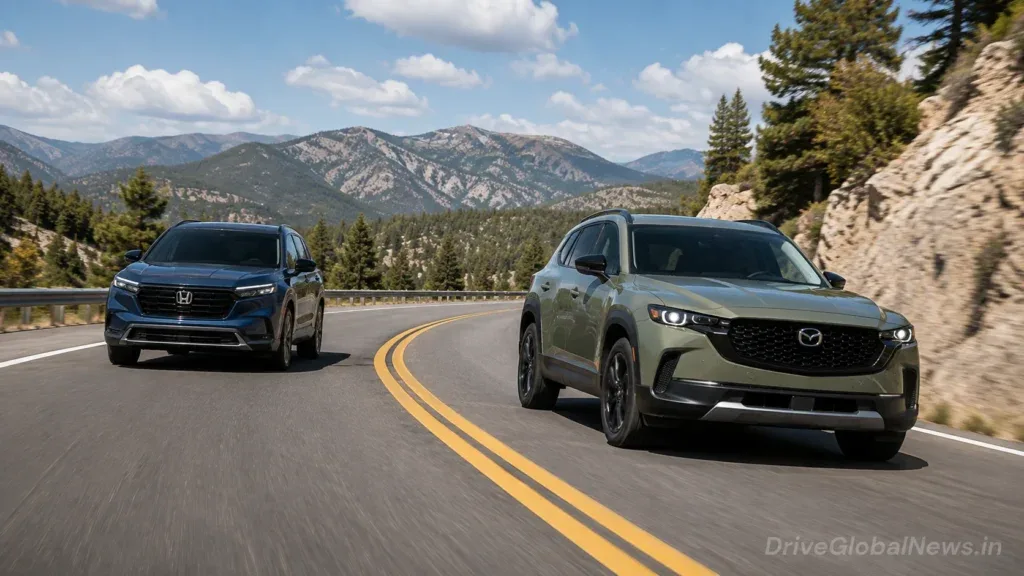
Steering is light, the ride is absorbent, and the hybrid system transitions smoothly. It is the vehicle you forget about in the best way — it simply works.
The CX-50 Hybrid retains more of Mazda’s signature driving character. The steering has better weight and feedback, body control is tighter, and the overall experience feels more engaging even though it is still a practical family crossover. Some drivers notice the CVT’s character under harder acceleration, but the chassis makes the Mazda the more enjoyable daily driver for those who care about how a vehicle feels on a back road or in everyday traffic.
Interior, Space, and Features The CR-V Hybrid offers a roomier, more practical cabin for most families.
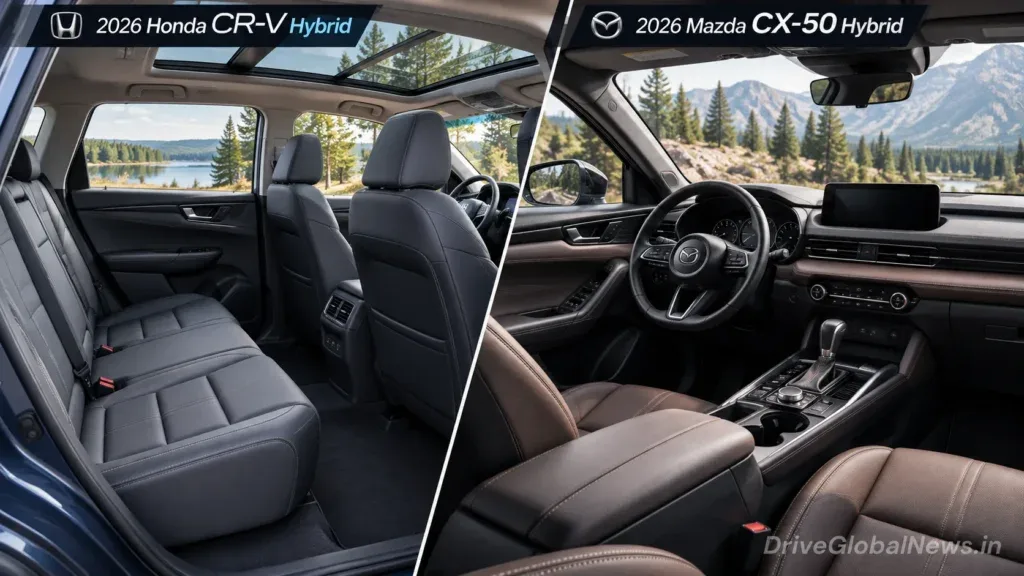
Rear-seat space is generous, cargo volume is competitive, and the overall packaging favors passenger and grocery-hauling usability. Honda’s latest larger touchscreen improves the tech experience, and materials are solid if not luxurious.
The CX-50 Hybrid counters with a more upscale interior feel. Materials, design, and seating position give it a near-premium atmosphere that many reviewers prefer. Cargo space is adequate but generally trails the CR-V, and the sloping roofline can limit rear headroom for taller passengers. Standard and available features are competitive on both; Mazda often feels richer inside at a given price, while Honda feels more spacious and versatile.
Reliability and Ownership Honda’s hybrid systems have a strong long-term reputation, and the CR-V consistently ranks well for durability and resale. Mazda has improved dramatically and the CX-50 Hybrid benefits from proven Toyota hybrid hardware, which bodes well. Both should prove reliable; the CR-V edges ahead on historical data and residual values for many buyers.
Which One Should You Buy?
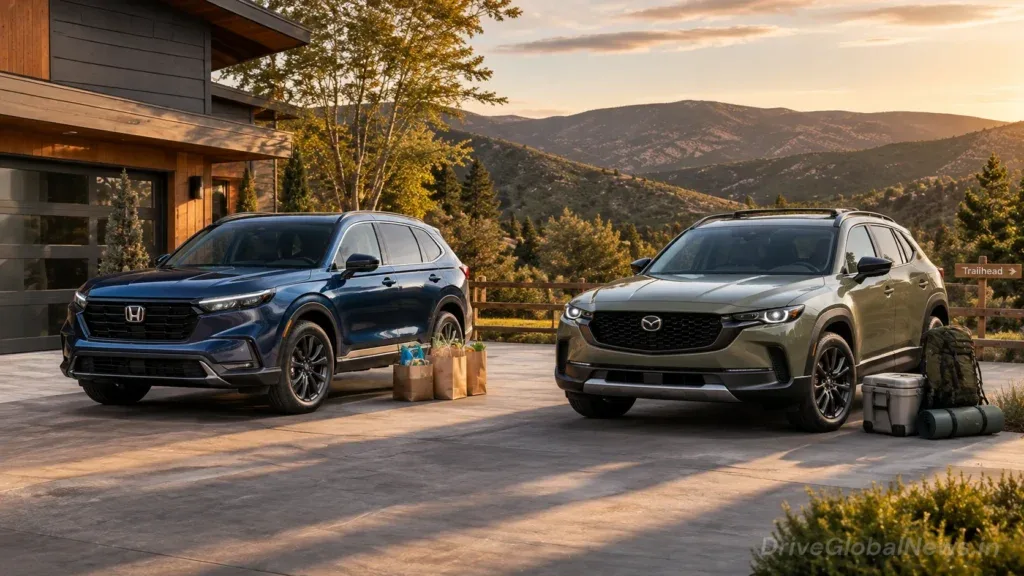
Choose the Honda CR-V Hybrid if:
- Maximum passenger and cargo space matter
- You want the smoothest, most refined hybrid experience
- Long-term reliability and resale are top priorities
- You prefer a slightly more efficient FWD option when available
Choose the Mazda CX-50 Hybrid if:
- You want a more engaging drive and a nicer-feeling cabin
- Standard all-wheel drive and a sportier character appeal to you
- You value design and material quality over maximum cargo room
- You like the idea of Toyota hybrid tech in a more distinctive package
The Bottom Line These two hybrids deserve more attention than they often receive. The 2026 Honda CR-V Hybrid is the practical, refined, space-efficient choice that does almost everything well and should hold its value. The 2026 Mazda CX-50 Hybrid is the more enjoyable and upscale-feeling alternative that still delivers excellent efficiency and standard all-wheel drive.
Neither is the absolute sales leader, which is part of why they remain underrated. Both are excellent daily drivers that undercut some flashier rivals on real-world ownership costs while delivering the efficiency most hybrid buyers want. Test them back-to-back. The CR-V will feel roomier and more effortless. The CX-50 will feel more special to drive and sit in. Your priorities will decide the winner quickly.
Do you value maximum space and refinement, or would you rather have the more engaging drive and premium cabin feel?