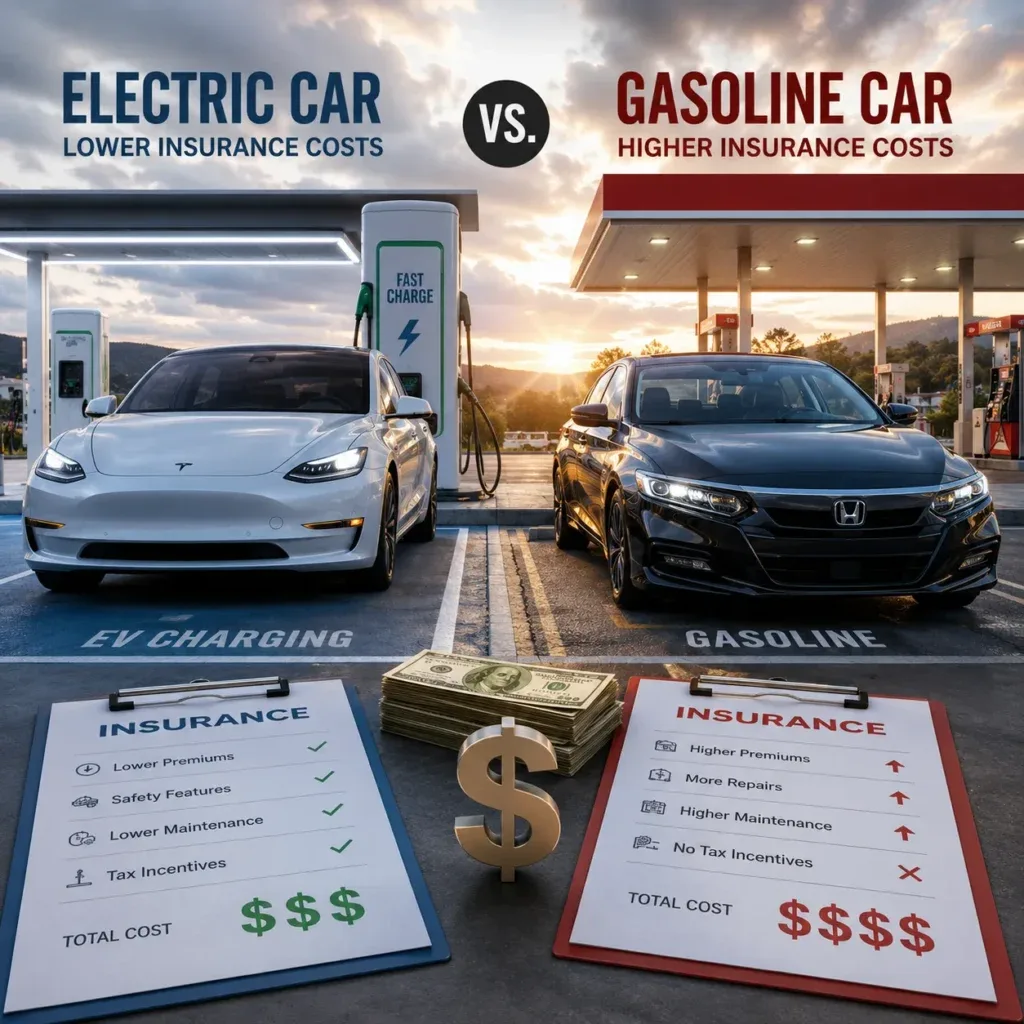

The surprise is not that financed cars cost more to insure.
The surprise is that the loan itself is not a rating factor. GEICO does not add a “you still owe Bank of America” surcharge. Progressive is not punching your APR into the algorithm.
What the bank punches is the coverage list.
What a Lender Makes You Buy
State law asks for liability. Your loan contract asks for the car.
Collision. Comprehensive. A lienholder on the declarations page. Often GAP — the policy that pays the hole between actual cash value and the remaining note when a 72-month SUV is totaled in month 14.

Skip it and the lender can buy force-placed insurance and bill you. That product is priced like a punishment.
Cash buyers can legally carry state-minimum liability the day the title is in their name. That is the entire difference.
The 2026 Dollar Gap
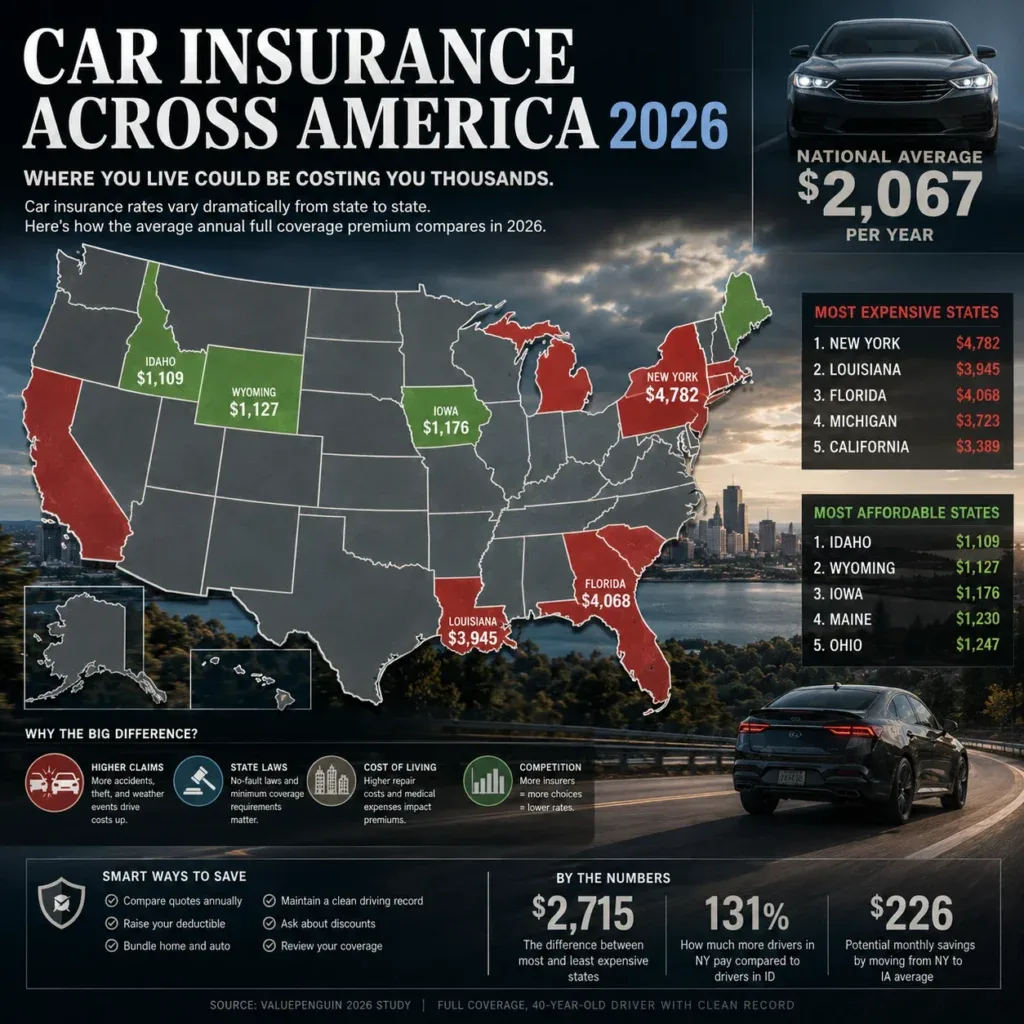
Quadrant-style 2026 averages put full coverage around $2,578 a year at common 100/300/100 limits with a $500 deductible. Liability-only at the same liability limits sits near $1,102. That is a $1,476 annual spread — almost all of it buying protection for your sheet metal, not the other driver’s.
Other 2026 write-ups cluster the savings from dropping comp and collision at $1,300 to $1,900 a year. MoneyGeek’s monthly frame is roughly $136 full coverage versus $67 liability-only.
On a $50,000 financed family SUV, you do not get a vote. On a $6,000 paid-off Civic, you do.
GAP through an insurer is often $2–$20 a month. Through the dealer it is a $400–$900 box rolled into the loan. Cash buyers do not buy GAP. There is nothing to gap.
When Cash Is Not Cheaper
Paying cash for a 2026 RAV4 Hybrid and then keeping full coverage means your premium looks like the financed neighbor’s. Ownership status did not move the needle. The coverages did.
Dropping comp and collision on a car still worth $22,000 to save $1,500 a year is not clever. It is betting you can write a $22,000 check after a hailstorm. The 10% rule still works: if annual comprehensive-plus-collision is 10% or more of the car’s actual cash value, the coverage is eating the asset. A $4,000 beater paying $600 a year for full coverage has already lost.
Raise the deductible before you strip the policy. $500 to $1,000 is the first clean cut.
What to Do at the Desk
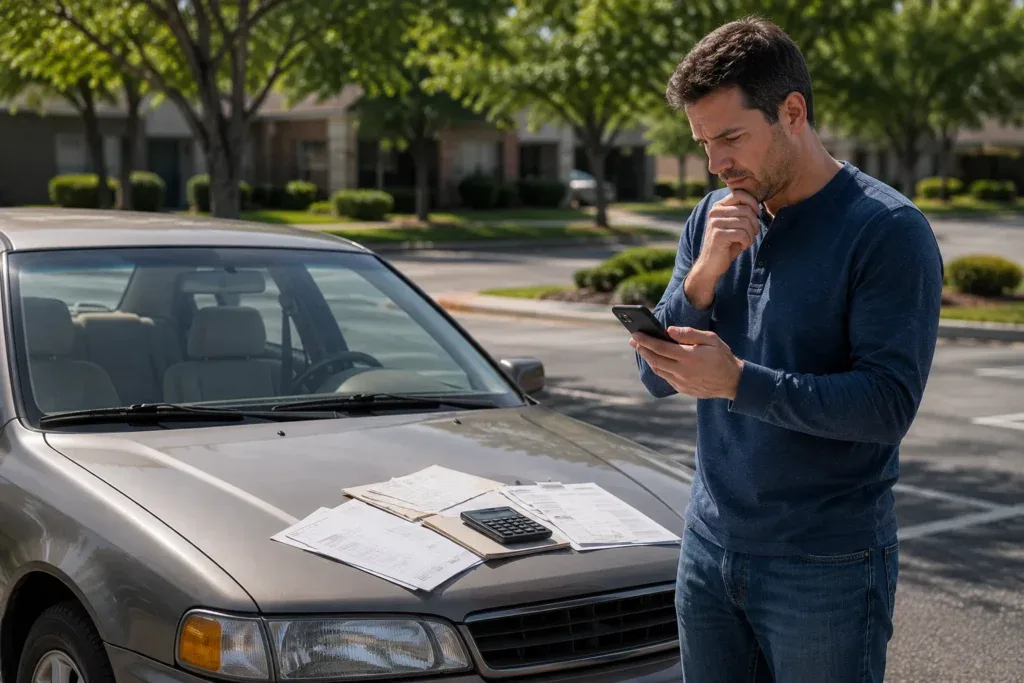
Financing a new car in September 2026: budget full coverage and GAP before you fall in love with the payment. A $812 average new-car note plus $200-plus a month in insurance is the real payment.
Paying cash: get the title, call the carrier, remove the lienholder, then ask for a requote with and without comp/collision. Do not assume the premium falls because you brought a cashier’s check.
Shop anyway. The loan did not make you expensive. The required boxes did. Two quotes still beat loyalty.
Would you keep full coverage on a paid-off car worth $12,000 — or is that the year you finally self-insure the dent?
Related: Car Ownership Cost Calculator