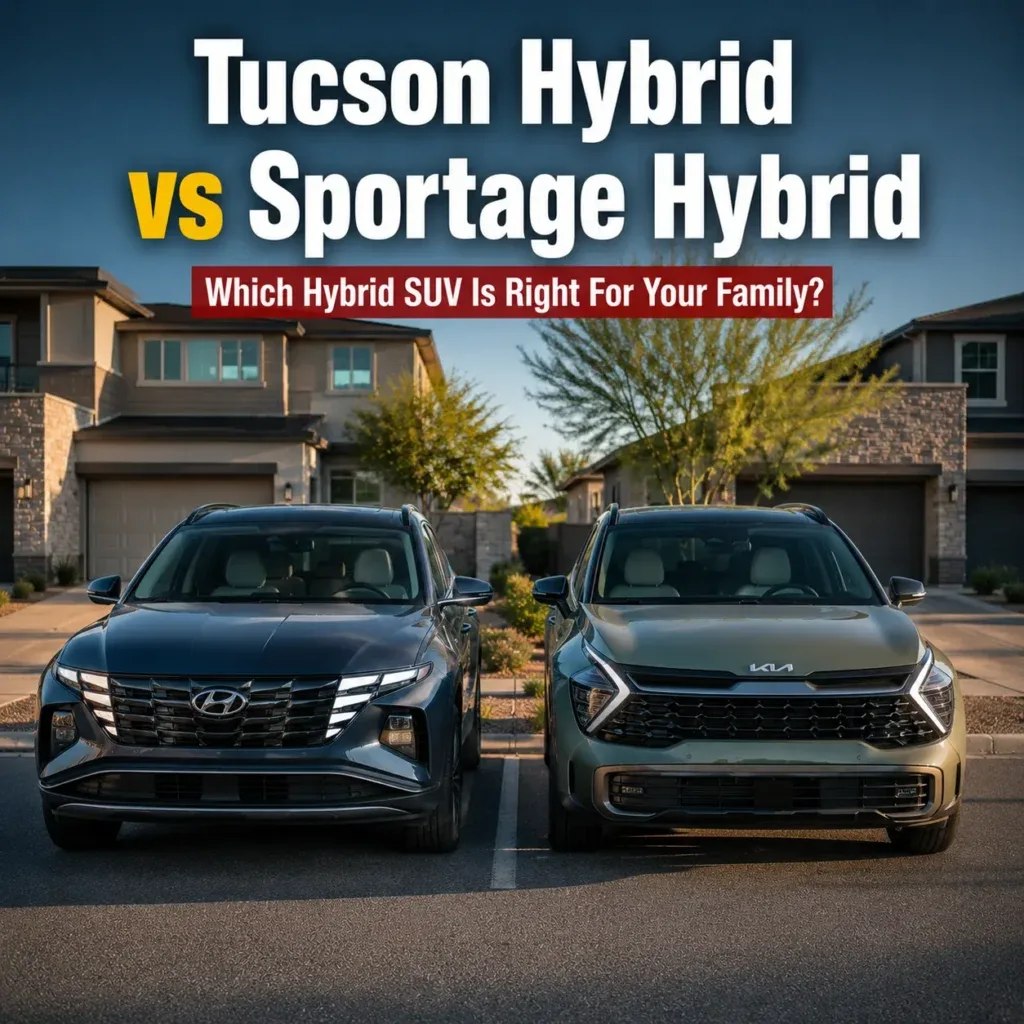
Hyundai Tucson Hybrid vs Kia Sportage Hybrid : A funny thing happens when people start shopping for a hybrid SUV.
They usually begin with a long list.
Toyota.
Honda.
Hyundai.
Kia.
Maybe Mazda.
Maybe Ford.
Then they start researching.
Reading reviews.
Watching YouTube videos.
Comparing fuel economy.
Checking prices.
And eventually many buyers find themselves staring at two vehicles that seem almost impossible to separate.
The Hyundai Tucson Hybrid.
And the Kia Sportage Hybrid.
At first glance, it feels like choosing between two versions of the same answer.
They’re built by sister companies.
They share technology.
They’re priced similarly.
They’re aimed at the same families.
Yet after spending time with both, you realize something important.
They may share the same DNA.
But they have very different personalities.
And that’s exactly what makes this comparison so difficult.
The Similarities Are Almost Unfair
Let’s get this out of the way first.
These SUVs have a lot in common.
Both offer excellent fuel economy.
Both provide impressive warranties.
Both deliver family-friendly practicality.
Both come loaded with technology.
Both represent strong value compared to many rivals.
That’s why this isn’t a comparison between a good SUV and a bad SUV.
It’s a comparison between two very smart decisions.
The challenge is figuring out which one fits your life better.
The Tucson Feels Like It Grew Up
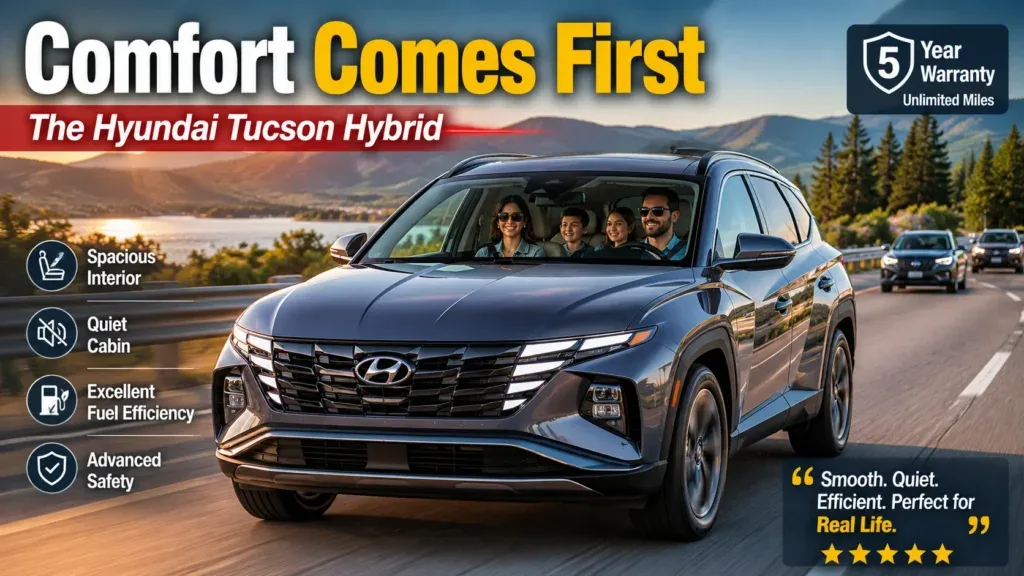
The first thing many people notice about the Tucson Hybrid is how mature it feels.
Everything is calm.
Everything feels organized.
The ride is smooth.
The cabin is quiet.
The overall experience feels relaxed.
It’s the kind of SUV that makes long drives seem shorter than they actually are.
Parents often appreciate that.
Especially after spending hours transporting children, groceries, luggage, and everything else family life throws into a vehicle.
The Tucson doesn’t try too hard.
And that’s part of its appeal.
The Sportage Feels Younger
The Sportage Hybrid takes a different approach.
It’s a little bolder.
A little more playful.
A little more willing to stand out.
The styling is more distinctive.
The interior design feels more adventurous.
The overall personality feels younger.
That’s not necessarily an age thing.
It’s an attitude thing.
Some buyers want a vehicle that quietly blends into life.
Others want one that feels a bit more interesting every time they walk toward it in a parking lot.
The Sportage understands those buyers.
Interior Space: The Surprise Winner
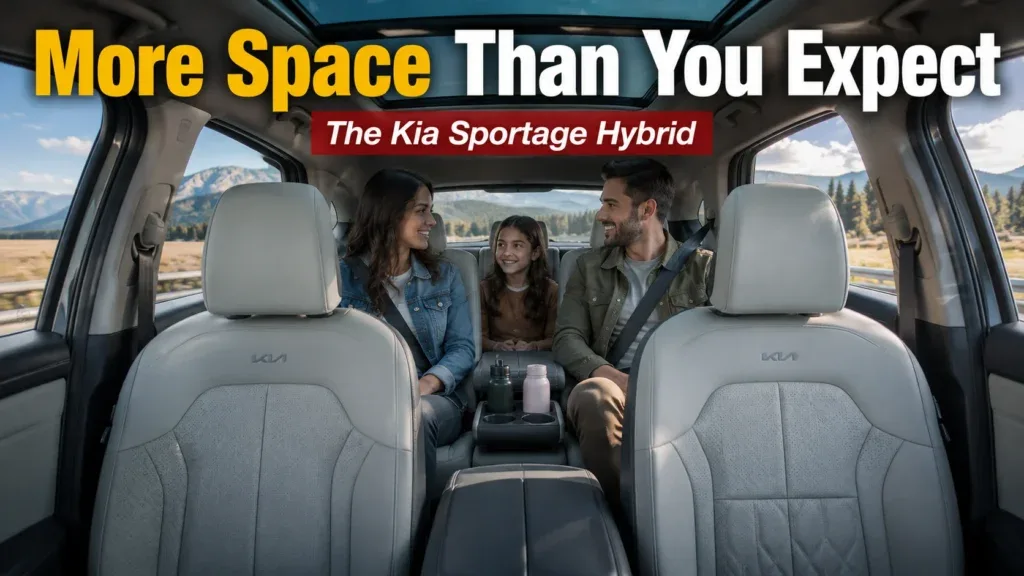
Numbers on a specification sheet rarely tell the full story.
Cabins do.
And one of the biggest surprises in this comparison is how spacious both vehicles feel.
The Sportage Hybrid deserves special credit here.
The rear seat is enormous for a compact SUV.
Adults fit comfortably.
Teenagers fit comfortably.
Road-trip passengers fit comfortably.
That’s harder to achieve than most people realize.
The Tucson isn’t cramped.
Far from it.
But if rear-seat space is a top priority, the Sportage often leaves a stronger impression.
Fuel Economy Matters
Because Gas Stations Still Exist
Hybrid buyers usually have one goal.
Spend less money on fuel.
The good news is that both SUVs perform well.
The Sportage Hybrid generally holds a slight advantage in fuel economy.
Not enough to completely change the ownership experience.
But enough to notice over years of driving.
The difference won’t make one vehicle feel cheap and the other expensive.
It simply gives the Sportage a small edge in one of the reasons people buy hybrids in the first place.
Also Read:
https://driveglobalnews.in/best-hybrid-cars-for-families-in-america/ – The family-friendly hybrids that deliver the best balance of comfort, practicality, and fuel savings.
Hyundai’s Secret Weapon
If you’ve spent time in modern Hyundai products, you’ve probably noticed something.
The company understands comfort.
Really well.
The Tucson Hybrid rides beautifully.
Road noise is controlled.
The seats are supportive.
Everything feels designed around reducing stress.
That’s not something buyers always notice during a short test drive.
It’s something they appreciate after three years of ownership.
Maybe five years.
Maybe ten.
Comfort ages well.
Kia’s Secret Weapon
Kia understands value.
Not cheapness.
Value.
The Sportage often feels like you’re getting more than you paid for.
The design feels upscale.
The technology feels modern.
The interior punches above its price class.
That’s one reason the Sportage continues attracting attention.
People enjoy feeling like they discovered something smart.
The Sportage creates that feeling.
Which One Feels More Expensive?
This is where things get interesting.
The Tucson feels expensive because of refinement.
The Sportage feels expensive because of design.
Those are different experiences.
One impresses you while driving.
The other impresses you while looking at it.
Neither approach is wrong.
It simply depends on what matters to you.
Which One Would I Buy?
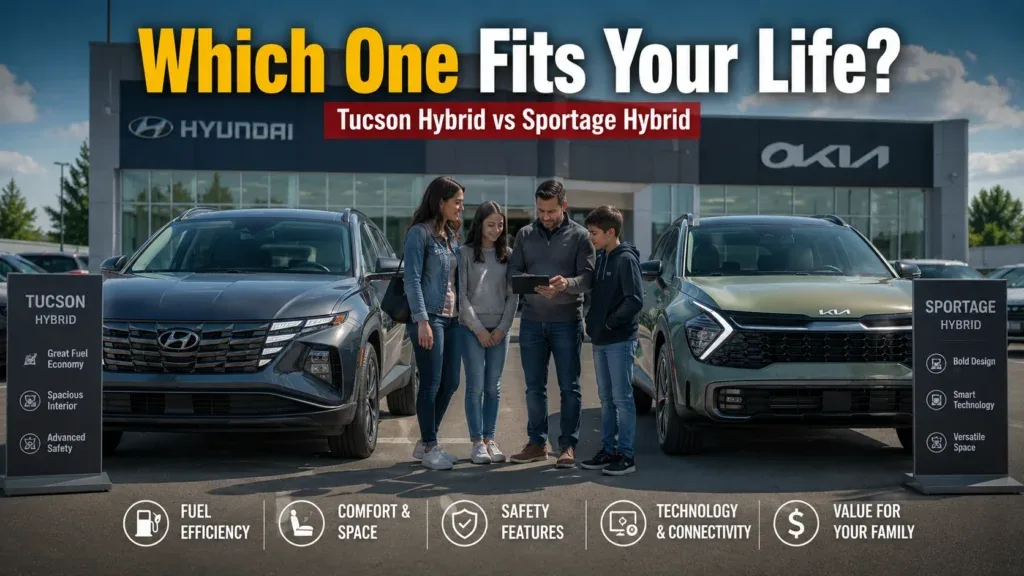
This is the question everyone skips ahead to find.
And honestly, it’s closer than many people expect.
If I spent most of my time commuting, driving long distances, and prioritizing comfort above everything else, I’d probably choose the Tucson Hybrid.
It feels calm.
Confident.
Effortless.
But if I wanted the vehicle that gave me the strongest overall value for the money, I’d lean toward the Sportage Hybrid.
The interior space is outstanding.
The fuel economy is excellent.
And it consistently feels like you’re getting a little more than you paid for.
That’s a powerful combination.
Also Read:
https://driveglobalnews.in/the-suv-trend-nobody-expected-to-take-off/ – Why more Americans are rethinking what they actually need from an SUV.
The Better SUV Isn’t The Point
The interesting thing about this comparison is that it reveals something about modern car buying.
People often assume there must be a winner.
A clear answer.
A perfect choice.
Real life doesn’t work that way.
The Tucson Hybrid and Sportage Hybrid are both products of the same idea.
Give families efficiency, comfort, practicality, and value.
Then let personality decide the rest.
And that’s why this comparison is so difficult.
Not because one SUV is clearly better.
Because both are good enough to make the decision personal.
Years from now, most owners won’t remember the horsepower figures or cargo measurements.
They’ll remember how the vehicle fit into their lives.
The family vacations.
The school runs.
The grocery trips.
The ordinary moments.
And that’s usually where the best vehicle reveals itself.
Not on a specification sheet.
But somewhere in the middle of everyday life.