
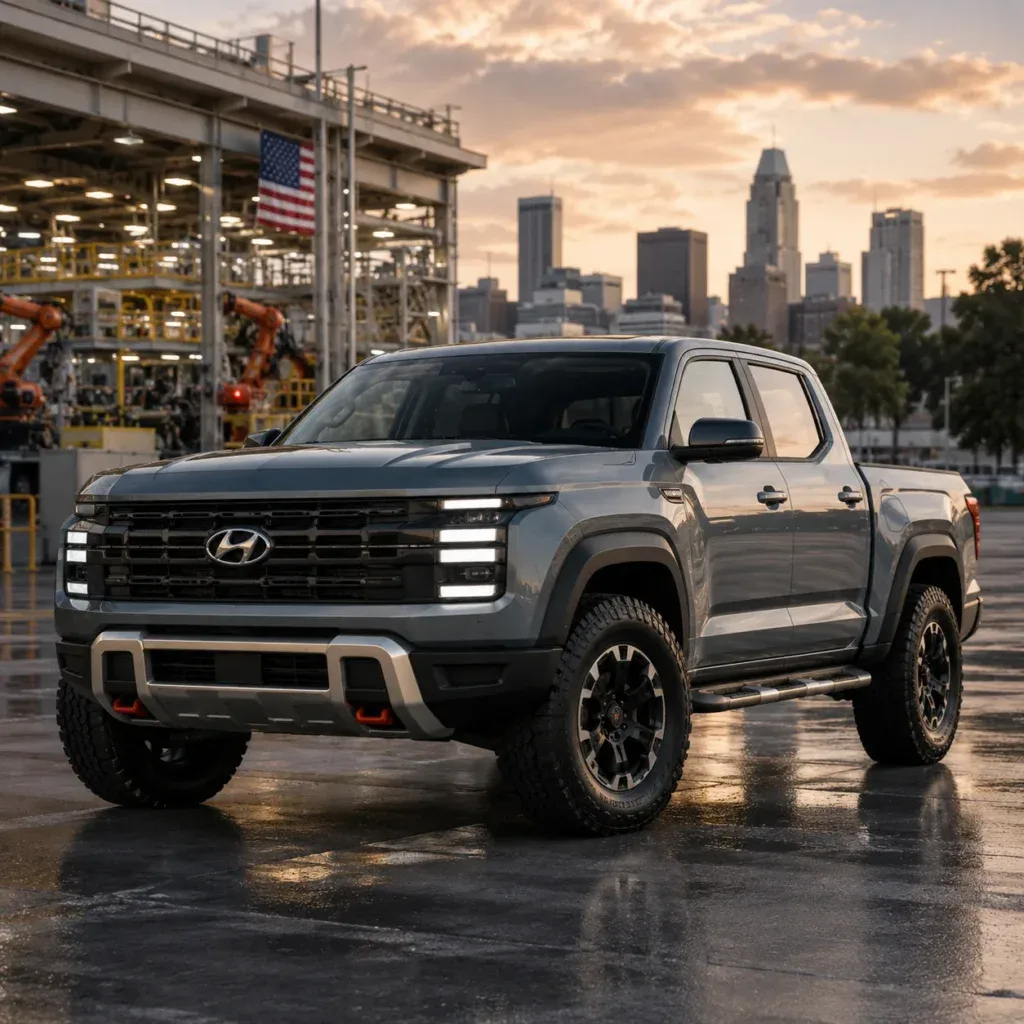
Hyundai does not have a real truck.
Santa Cruz is a crossover with a bed. Santa Fe is a unibody family hauler. The company built its American business on cars and crossovers while Toyota, Ford, and GM kept the ladder-frame money.
On August 26 in Seoul, CEO José Muñoz said that era is closing. Hyundai wants a family of body-on-frame pickups and SUVs — not one halo concept — as part of a push to grow global sales 35 percent, to about 5.55 million vehicles by 2030.
The first North American shot is a midsize pickup targeting 2029. Think Tacoma fighter, not another Santa Cruz. Hybrid or range-extender power is on the table. A plain gas-only truck is not the pitch Muñoz is selling to investors.
Then he said the sentence that matters in Georgia and Alabama more than in Seoul.
“Definitely the United States could be not only the place to produce for domestic but also for export.”
Korean brands have spent decades shipping cars into the United States. Muñoz is talking about shipping trucks out.
Where They Would Be Built
The easy assumption is Hyundai Motor Group Metaplant America in Ellabell, Georgia — Ioniq 5, Ioniq 9, Kia Sportage Hybrid, more Genesis volume coming. Capacity there is slated to climb toward 500,000 units.
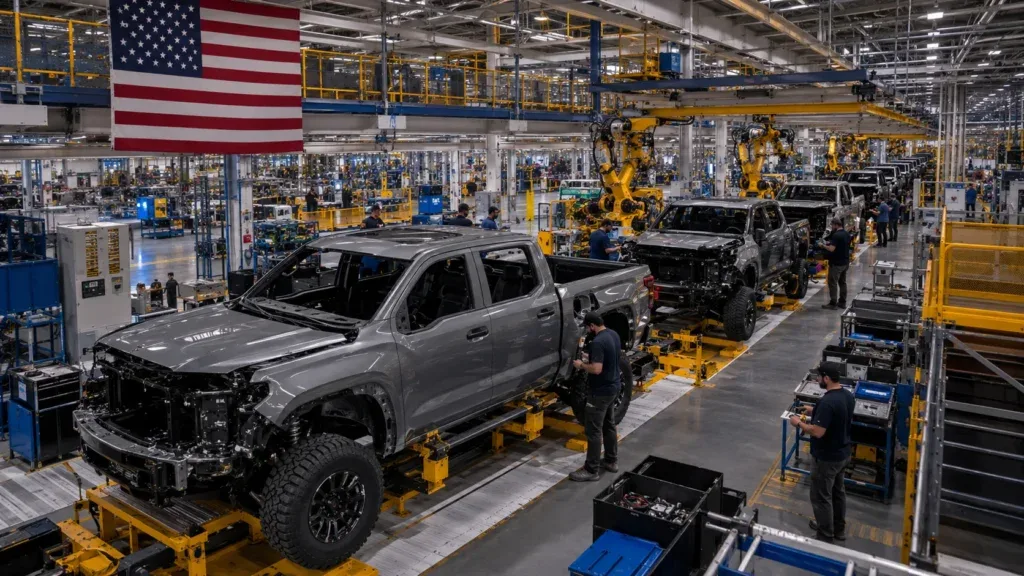
Muñoz also told CNBC Hyundai is studying a separate pool of investment, outside that EV-heavy campus, specifically for body-on-frame trucks and SUVs. He would not name the site or the dollar figure. So the plant is not locked. The intent is: U.S. steel, U.S. line, global invoice.
Tariffs are the accelerant. Muñoz said they are speeding localization. Hyundai’s target is at least 80 percent of U.S. sales built here by the end of the decade, up from roughly 40 percent in 2024, inside a $26 billion U.S. investment plan through 2028.
A truck built in Georgia or a second U.S. plant is not just a tariff hedge for American buyers. It is a product Hyundai can send to markets that want a Hilux / Ranger rival without waiting on a Korean export slot.
A Family, Not One Bed
Boulder and Crater were the show-stand teasers. Muñoz’s investor-day language went past those two names. Ladder-frame SUVs sit in the same plan. Light commercial vehicles too. Shared frame, multiple badges across Hyundai, Kia, and Genesis if the economics work.
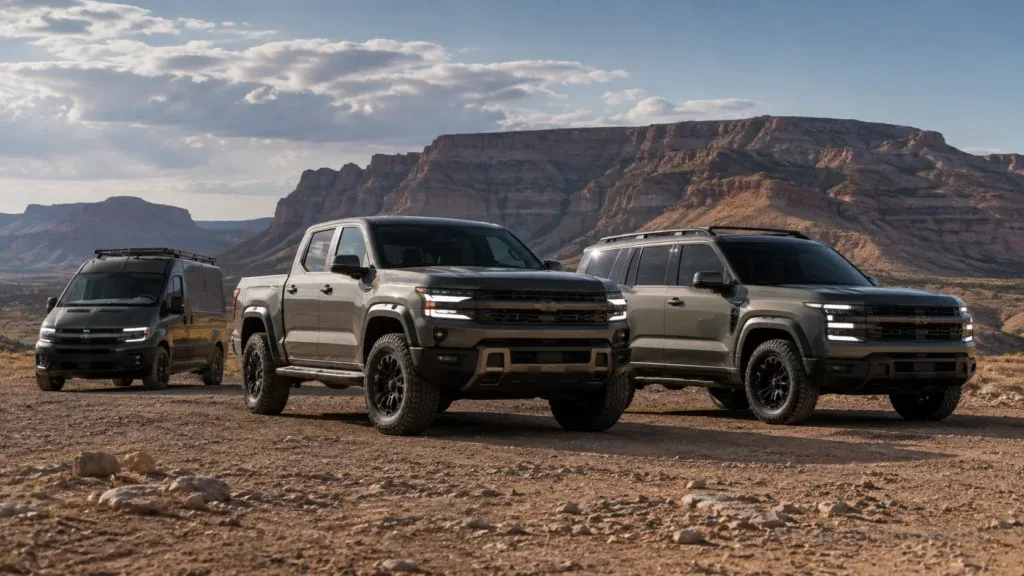
That is how you justify a new architecture. One midsize pickup does not pay for a factory. A truck, a rugged three-row, and a commercial variant might.
America already pays full-size pickup averages near $67,000. Midsize is the volume fight Hyundai can actually enter. Tacoma, Ranger, Colorado, Frontier — Frontier dealers are already sitting on 70-day inventory and 0% paper. Hyundai would be walking into a discount war, not an empty lot.
What It Means If You Want a Hyundai Truck
Do not wait until 2029 with a deposit check. There is no order book. There is a CEO quote, a 2029 target, and a plant question.
If you need a truck this year, the deals are on Ram, Silverado, and Frontier. If you want a Korean badge with a bed today, Santa Cruz is still the only Hyundai with a tailgate.
The story worth watching is the reverse trade flow. If the first Hyundai ladder-frame leaves an American gate bound for Australia or the Middle East, that is a different company than the one that used to fill U.S. lots from Busan.
Would you buy a Tacoma-sized Hyundai built in Georgia — or does a real truck still need a Detroit or Toyota badge?
Related: New Car Prices Just Crossed $50,000 · Best Cars to Buy in September 2026