
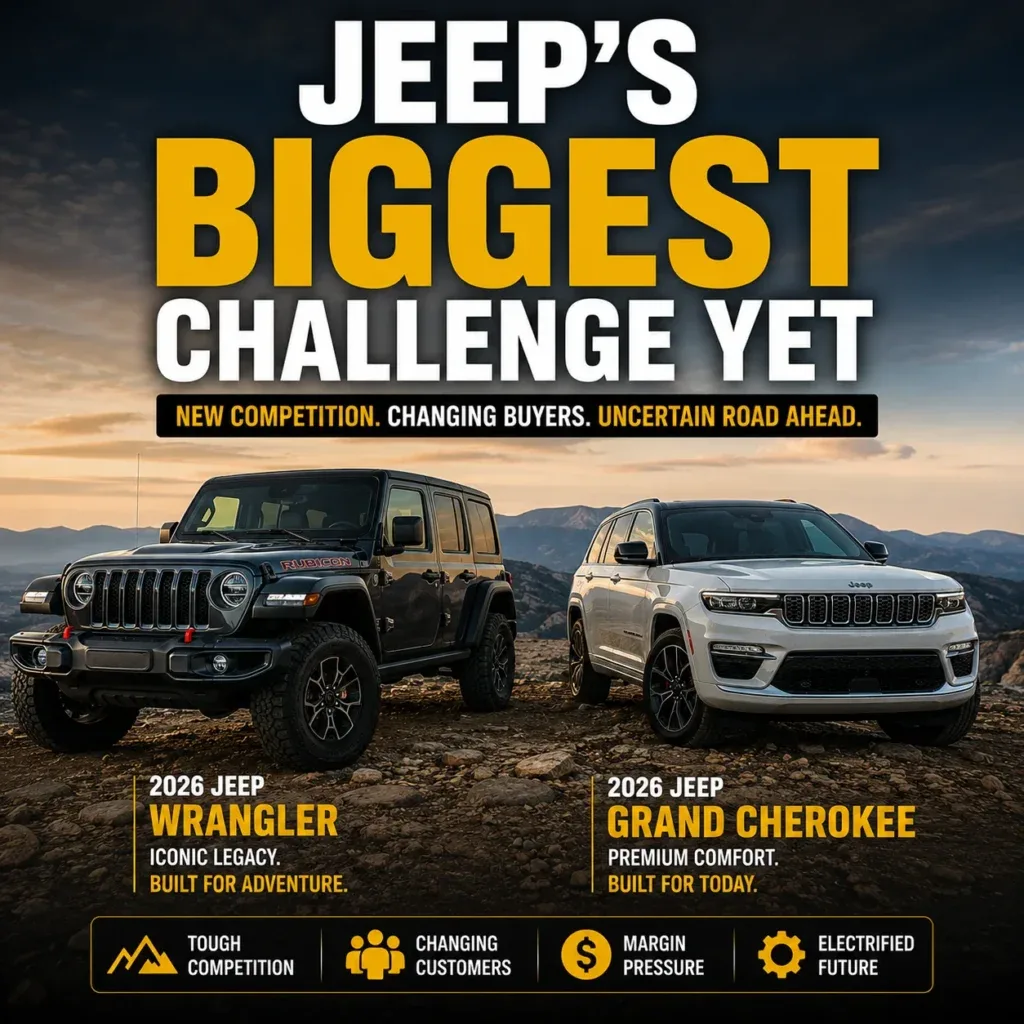
Jeep Is Facing a Problem It Never Had to Worry About Before : There are two kinds of SUV brands in America.
The first group spends decades trying to build an identity.
The second group already has one.
Jeep belongs firmly in the second category.
The brand doesn’t need to explain what it stands for.
People already know.
Adventure.
Freedom.
Off-road capability.
The ability to go places most vehicles never even attempt.
For decades, that identity helped Jeep stand apart from almost every competitor in the market.
Today, however, something interesting is happening.
The SUV market is changing.
And Jeep is facing a challenge it never really had to think about before.
What happens when customers still love the brand but start wanting something different?
Jeep Built One Of The Strongest Brands In America
Very few automakers have what Jeep has.
Instant recognition.
People who have never owned a Jeep know exactly what one looks like.
That’s incredibly valuable.
The Wrangler remains one of the most recognizable vehicles on American roads.
The Grand Cherokee continues attracting families.
The Gladiator created an entirely different audience.
Brand loyalty remains strong.
And that’s a major advantage.
But loyalty alone doesn’t guarantee future growth.
Especially when consumer priorities begin evolving.
The SUV Market Isn’t The Same Market Anymore
A decade ago, capability dominated many SUV conversations.
Today, buyers are asking additional questions.
Fuel economy.
Ownership costs.
Technology.
Hybrid options.
Insurance costs.
Monthly budgets.
Those topics matter more than they once did.
And that’s creating a complicated environment for traditional SUV brands.
Because many consumers still love rugged SUVs.
They simply want them to be more efficient.
More affordable.
And easier to live with every day.
That’s not criticism.
It’s reality.
Jeep Is Trying To Balance Two Different Worlds
This is where things become interesting.
Jeep can’t abandon what made it successful.
That would be a mistake.
Nobody wants a Wrangler that forgets how to be a Wrangler.
Nobody wants a Grand Cherokee that stops feeling like a Jeep.
At the same time, the company understands that modern buyers expect more.
Better fuel economy.
Electrification.
Advanced technology.
Lower ownership costs.
The challenge is finding a balance.
Protecting the brand’s identity while adapting to changing customer expectations.
That’s much harder than it sounds.
The Wrangler Still Matters More Than Most People Realize
When people think about Jeep, they usually picture the Wrangler.
And honestly, that’s understandable.
The Wrangler isn’t just a vehicle.
It’s the face of the brand.
The challenge is that not every SUV buyer wants what the Wrangler offers.
Many consumers admire it.
Far fewer actually need its capabilities.
That’s where Jeep’s broader lineup becomes important.
The company needs vehicles that attract both enthusiasts and everyday buyers.
That’s a difficult balancing act.
Buyers Are Becoming More Practical
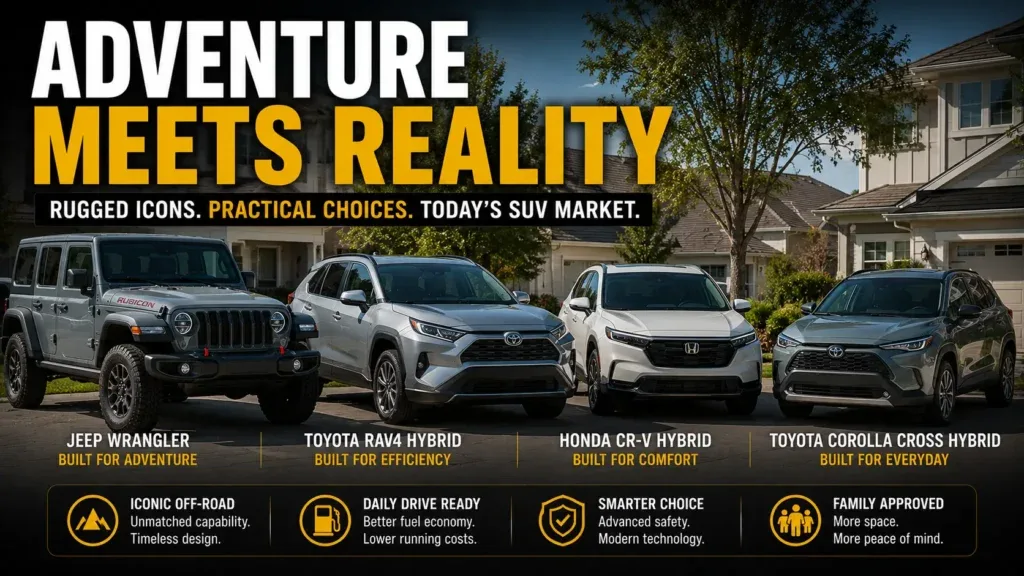
One of the biggest trends in the automotive market right now isn’t about technology.
It’s about practicality.
Consumers are becoming more careful.
They’re paying closer attention to fuel costs.
Insurance costs.
Ownership costs.
Long-term value.
That doesn’t mean people stopped wanting SUVs.
Far from it.
It simply means buyers are evaluating them differently.
And every SUV brand is being forced to adapt.
Jeep included.
Also Read:
https://driveglobalnews.in/the-hidden-cost-of-owning-a-large-suv/ – The ownership expenses many buyers don’t calculate until years later.
Why Jeep Still Has A Major Advantage
Despite the challenges, Jeep possesses something many competitors would love to have.
Authenticity.
When Jeep talks about off-road capability, people believe it.
Because the brand earned that reputation over decades.
That’s difficult to copy.
Many companies can build SUVs.
Very few can build a lifestyle around them.
Jeep has already done that.
The question now is how the brand evolves without losing what made it special in the first place.
The Industry Is Moving Toward Flexibility
The future probably isn’t one-size-fits-all.
Some buyers want EVs.
Some want hybrids.
Some still want traditional gasoline SUVs.
The smartest automakers appear to be preparing for all three possibilities.
Jeep seems to understand that.
The company is working toward offering more choices while maintaining the adventurous identity customers expect.
That’s likely the right strategy.
Because today’s automotive market rewards flexibility.
Not rigid thinking.
The Bigger Story
The most interesting Jeep story isn’t about one vehicle.
It’s about adaptation.
Every successful company eventually reaches a point where it must evolve.
The challenge is evolving without losing itself.
That’s where Jeep finds itself today.
Still one of the strongest brands in America.
Still one of the most recognizable names in the SUV market.
But also navigating an industry that’s changing faster than it has in decades.
Also Read:
https://driveglobalnews.in/7-suvs-americans-regret-buying/ – The common SUV-buying decisions that often lead to owner regret.
The Real Story
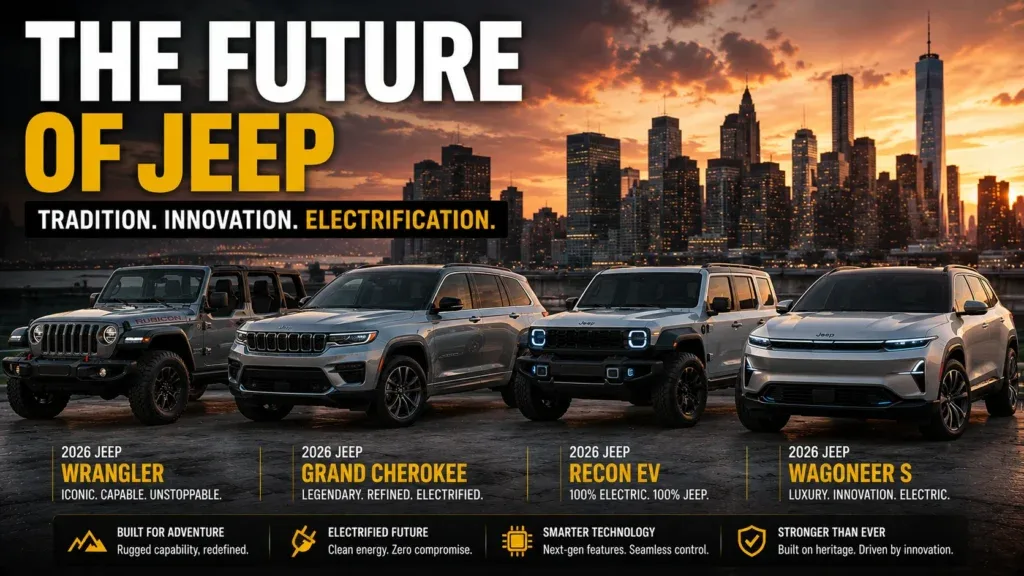
Many people assume the future belongs only to companies chasing the newest trends.
History suggests something different.
The brands that survive usually combine innovation with identity.
They adapt.
But they don’t forget who they are.
That’s exactly what Jeep is trying to do.
The company knows buyers still want adventure.
Still want capability.
Still want vehicles that feel different from everything else on the road.
But buyers also want efficiency.
Value.
And practicality.
The brands that successfully combine those things will be the ones that thrive over the next decade.
Jeep has one major advantage entering that challenge.
It already knows who it is.
And in an automotive market full of companies searching for direction, that may be more valuable than ever.