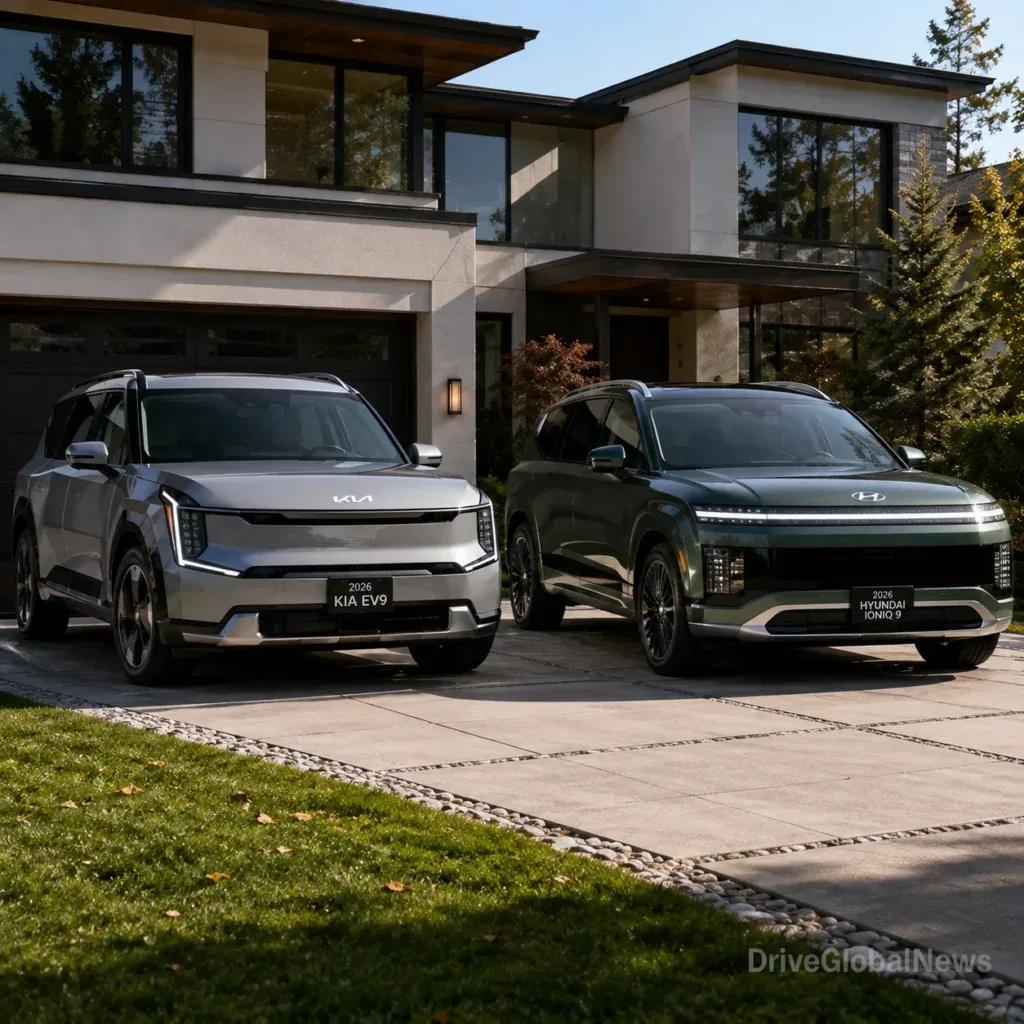
Hyundai and Kia share the same parent company and the same E-GMP electric platform. So when both put three-row electric SUVs on the market, the question is never “which one is good?” Both are. The real question is which one makes more sense for most American families in 2026.
Here’s the clear-eyed comparison.
Price and Value
The Kia EV9 starts lower. Base models begin around $54,900–$56,500 before destination. The Hyundai Ioniq 9 opens closer to $58,955–$60,500. Fully loaded versions of both climb into the mid-to-high $70,000s.
That early price gap matters. The EV9 gives you a fully usable three-row electric SUV for less money, which leaves more budget for a home charger, road-trip planning, or simply keeping the monthly payment lower.
Range and Battery
This is where the Ioniq 9 pulls ahead on paper. It uses a larger 110.3-kWh battery pack versus the EV9’s maximum 99.8 kWh. EPA estimates for the Ioniq 9 reach as high as 335 miles on the rear-drive S trim. Most AWD versions land in the 311–320 mile range.
The EV9 tops out around 305 miles on its Light Long Range rear-drive model. Dual-motor versions typically sit in the 280–283 mile zone. Real-world numbers for both will be lower in cold weather or at highway speeds, but the Hyundai’s extra battery capacity gives it a measurable edge for longer trips.
Power and Driving Feel
Top dual-motor versions of the Ioniq 9 produce 422 horsepower. The EV9’s dual-motor setup peaks at 379 horsepower. Both feel strong in daily driving, and both can tow up to 5,000 pounds when properly equipped.
In independent tests the EV9 has often felt a touch more composed and engaging on the road. The Ioniq 9 prioritizes a quieter, more lounge-like experience. Neither is a sports car, but the Kia edges the “fun to drive” conversation for many reviewers.
Space and Practicality
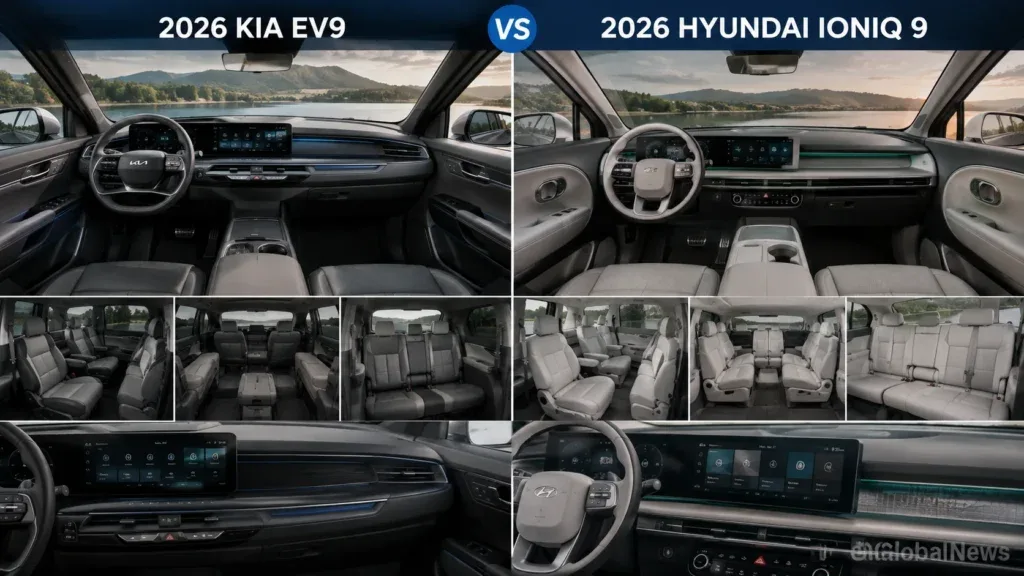
Both seat six or seven depending on second-row configuration. The Ioniq 9 is slightly larger overall and generally offers a bit more cargo volume behind the third row and with seats folded. The difference is noticeable but not dramatic. Second-row comfort and third-row usability are competitive in both.
Interior materials and tech are strong across the board. Hyundai leans a little more premium in higher trims; Kia feels modern and well-executed without trying as hard to look expensive.
Charging and Everyday Ownership
Both use 800-volt architecture and support fast DC charging. The Ioniq 9 is rated for higher peak rates (up to 350 kW) and can add significant range in roughly 24 minutes under ideal conditions. The EV9 is also quick, typically in the 210–235 kW range. Both now support NACS ports for better Supercharger access.
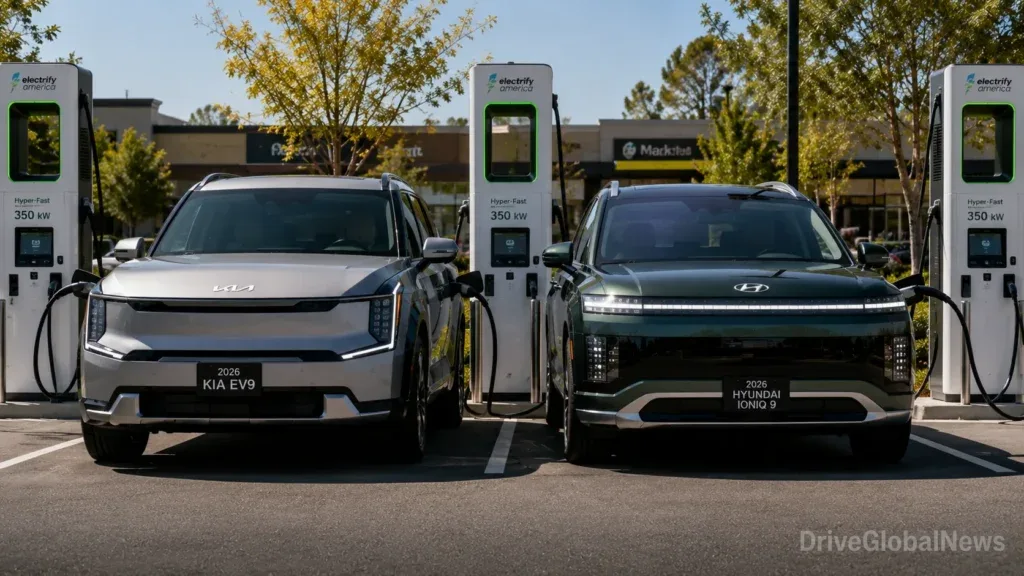
Warranty coverage is excellent on both — 10 years/100,000 miles on the battery is standard for Hyundai Motor Group products.
The Verdict
Winner for most families: Kia EV9
The EV9 starts thousands of dollars lower, still delivers strong range in its best configurations, feels a bit more engaging to drive, and has already proven itself in the market. The Ioniq 9 is the newer, slightly more spacious, higher-range option with more peak power. Those advantages are real, but they come at a higher starting price.
If maximum range and a slightly more premium cabin are your top priorities and the budget stretches, the Ioniq 9 is excellent. For the majority of shoppers who want a practical three-row electric SUV without overpaying for the last few percentage points of capability, the EV9 remains the smarter everyday choice in 2026.
The Bottom Line
These two vehicles are close enough that personal preference on styling, dealer experience, and exact trim pricing will decide many sales. On pure value and overall balance, the Kia EV9 still edges its corporate cousin. Both are among the best three-row electric SUVs you can buy right now.
If you’re cross-shopping electric family haulers, also factor in insurance costs — they can differ by model and location. Check our guide on car insurance for hybrid and electric vehicles and the latest best cars to buy with current discounts for more context.
Which one are you leaning toward — the EV9 or the Ioniq 9? Share your thoughts in the comments.