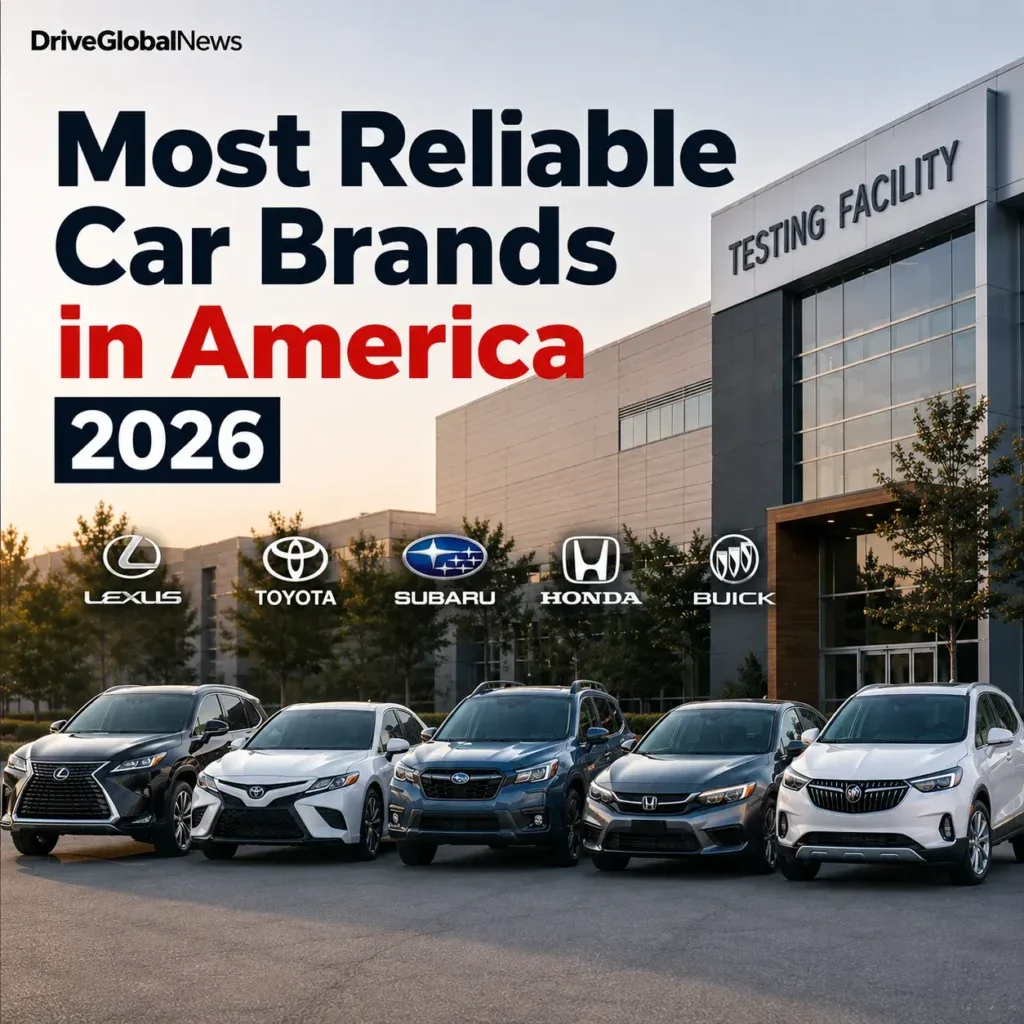
Two studies. 380,000 vehicles surveyed. Three years of ownership data. Real problems reported by real owners.
The 2026 reliability rankings from Consumer Reports and J.D. Power are in — and the results are both expected and surprising at the same time.
Expected because the brands at the top have been there for years. Surprising because one American brand nobody talks about finished in the top five. And because overall vehicle dependability hit its worst level since 2022 — despite cars being more technologically advanced than ever.
Here’s the complete picture — what the data actually says, which brands deserve your trust, and which ones you should approach carefully regardless of how good their marketing looks.
Why Vehicle Reliability Got Worse in 2026 — Despite Better Engineering
Before the rankings: the context is important.
The industry average in J.D. Power’s 2026 Vehicle Dependability Study landed at 204 problems per 100 vehicles — the highest since the study was redesigned in 2022. Every year since then, problems have gone up, not down.
The reason isn’t that cars are being built worse. It’s that cars are being built with more software. And software fails in ways that carburetors never did.
Four of the five most common problems in J.D. Power’s study are technology failures: Android Auto and Apple CarPlay connectivity issues, Bluetooth problems, wireless charging pad failures, and app connectivity problems. These are not mechanical failures. They’re software failures. And they’re affecting owner satisfaction at every brand — including the most reliable ones.
The practical message: the car that’s most reliable in 2026 is often the one with the most proven, mature technology stack — not the one with the most impressive feature list. Every new touchscreen, every OTA update system, every voice assistant is a new failure point. The brands that win reliability rankings understand this and add complexity slowly.
The Rankings
Consumer Reports Brand Reliability — Top 5:
- Lexus
- Subaru
- Toyota
- Honda
- BMW
J.D. Power 2026 Dependability Study — Top Brands:
- Luxury segment: Lexus (#1 for the 4th consecutive year)
- Mass market: Buick (#1 for the 2nd consecutive year — 160 PP100)
- #2 mass market: MINI (168 PP100)
- #3 mass market: Chevrolet (178 PP100)
1. Lexus — America’s Most Reliable Car Brand. For Four Straight Years.
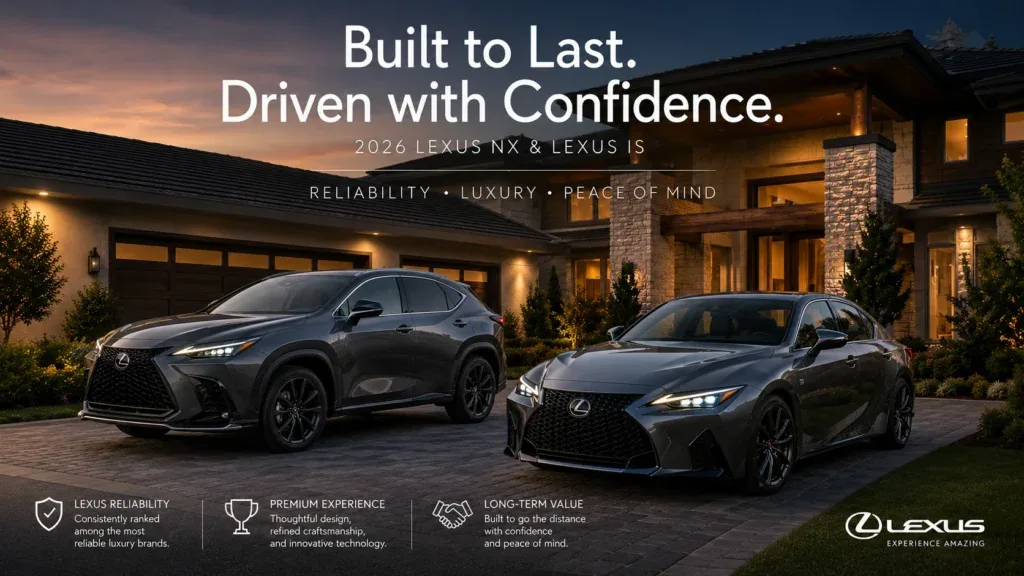
J.D. Power’s most reliable luxury brand. Consumer Reports’ most reliable luxury brand. Four consecutive years at the top of both studies simultaneously.
The Lexus IS took J.D. Power’s Most Dependable Model award for 2026. The NX compact SUV was among the highest-ranked models in Consumer Reports’ survey. Toyota Motor Corporation — Lexus’s parent — received eight model-level awards in J.D. Power’s study, more than any other manufacturer. Lexus IS, Lexus UX, Lexus GX, Toyota Corolla, Toyota Camry, Toyota Tacoma, Toyota Sienna, and Toyota 4Runner all won in their respective categories.
The reason Lexus wins is the same reason Toyota wins: they add technology slowly. A new Lexus interior looks premium and well-designed because it is — but the technology underneath is tested and proven, not cutting-edge and experimental. The multimedia system that frustrates owners of other brands just works in a Lexus. The OTA updates that confuse owners elsewhere are infrequent and reliable at Lexus.
For buyers who want the absolute safest bet on reliability — Lexus is the answer that three decades of data supports without equivocation.
2. Toyota — Six Models in Consumer Reports’ Top 10 Most Reliable
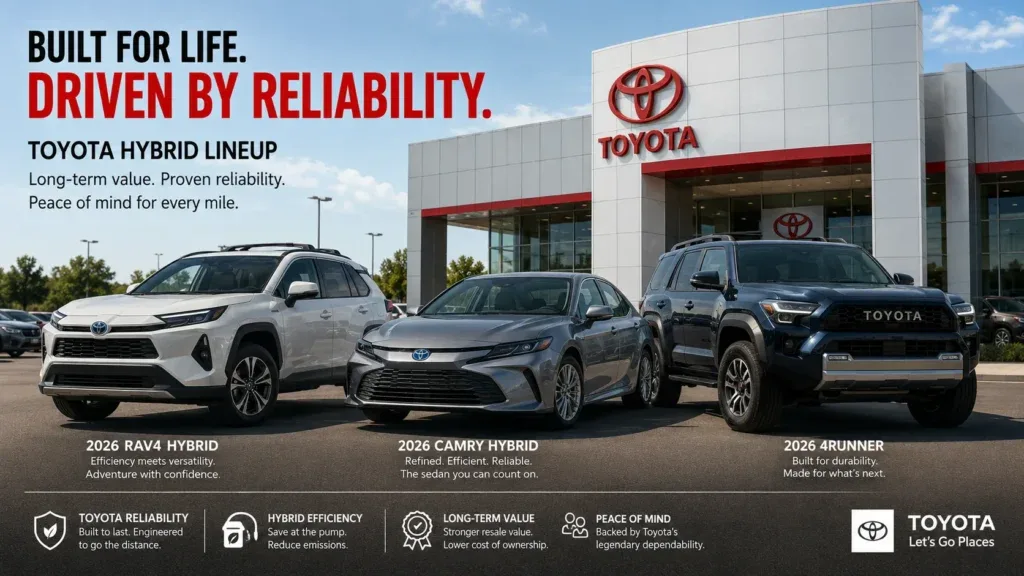
Toyota moved to the top of Consumer Reports’ rankings this year after a two-year period where the Tacoma and Tundra held the brand back. Both pickups have now addressed their issues — the Tundra moved to average predicted reliability, the Tacoma to above average. With those corrections complete, Toyota’s lineup reliability depth is unmatched.
Six Toyota models appear in Consumer Reports’ top 10 most reliable vehicles for 2026. Six. No other brand comes close to that volume of reliable models across different segments.
The J.D. Power model awards — Corolla, Camry, Tacoma, Sienna, 4Runner — confirm what CR found: Toyota builds reliable vehicles consistently across categories, not just in one segment where they’ve focused engineering resources.
The 2026 RAV4 Hybrid’s absence from reliability rankings is worth noting. Consumer Reports specifically said the new-generation RAV4 wasn’t tested in time for inclusion. This isn’t a red flag — it’s a procedural gap. The RAV4 Hybrid’s previous-generation reliability was excellent. The new hybrid-only platform has every reason to perform similarly.
3. Subaru — Consistent, Quiet, Genuinely Reliable
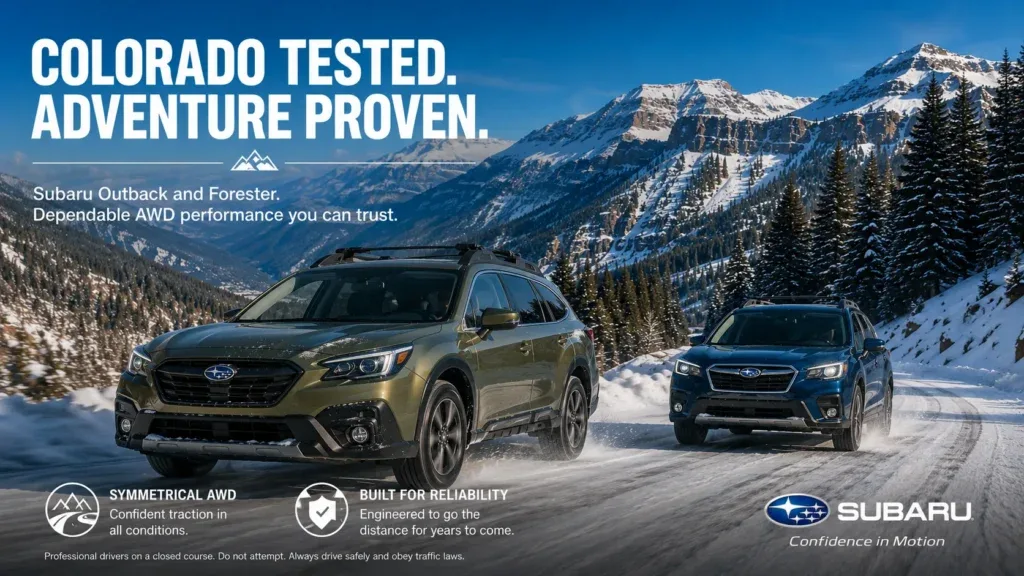
Consumer Reports ranked Subaru second overall — behind Lexus, ahead of Toyota. That result would have been unthinkable fifteen years ago when Subaru was known for head gasket problems and cabin noise.
The transformation is real and documented. Subaru fixed the head gasket issues. They simplified their lineup around proven platforms. They standardized Symmetrical AWD across almost every model. And they stopped adding technology for technology’s sake — the Outback’s returning physical climate controls for 2026 is a perfect example of Subaru listening to owners rather than chasing trends.
The Subaru Impreza earned impressively high scores in Consumer Reports’ survey — one of the few non-SUV options for AWD from a mainstream brand, and a car that’s been doing the same basic thing well for years.
For buyers in winter states who need AWD reliability — Subaru is the answer that doesn’t require spending Lexus money.
4. Honda — Top 5 Consumer Reports, Fifth Year Running
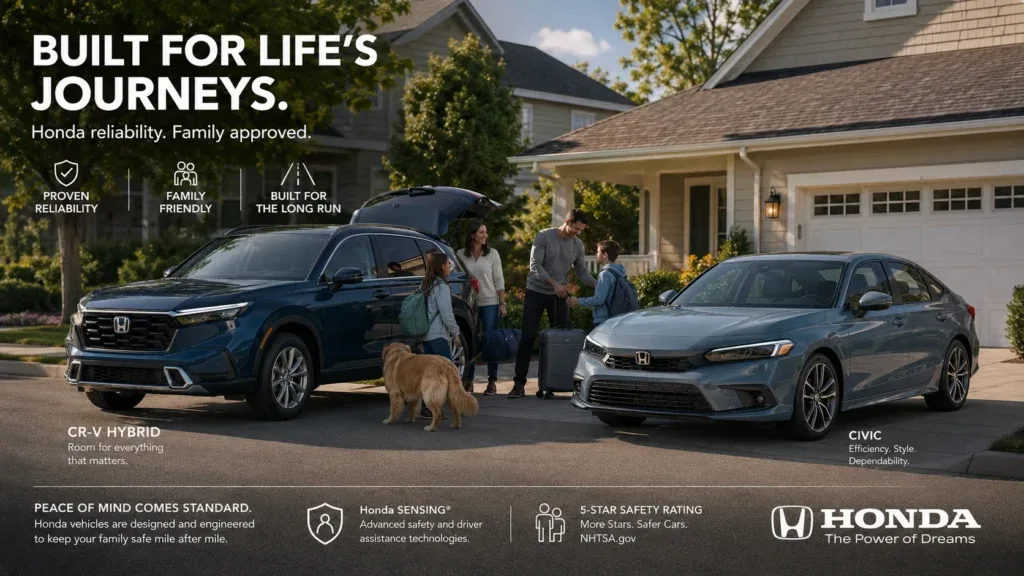
Honda averages $583 per year in maintenance — lower than Toyota’s $633 on a per-year basis. The Elantra Hybrid was actually ranked among the top sedans in CR’s reliability survey. But Honda’s own Elantra Hybrid is — wait, that’s Hyundai. Honda’s positioning is the CR-V and Civic.
The CR-V and Civic both benefit from what makes Honda reliable: enormous production volumes that create competitive parts markets, mechanics who’ve worked on these vehicles for decades, and engineering that prioritizes refinement of existing solutions over introduction of new ones.
The one caution from CR this year: the Honda Prologue — the GM-platform EV that’s since been discontinued — scored below average. New platform, new technology, below-average reliability. The pattern continues: new models struggle, proven models excel.
also read : https://driveglobalnews.in/best-electric-cars-to-buy-in-america-right-now/
5. Buick — The American Brand Nobody Expected
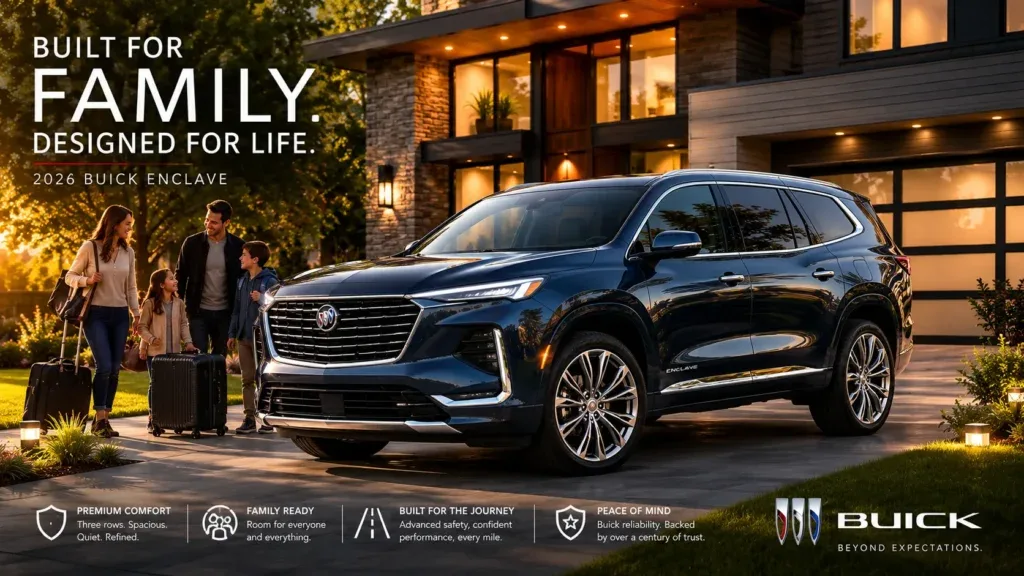
Here’s the surprise result that deserves more attention than it gets.
Buick ranked highest among all mass market brands in J.D. Power’s 2026 study — for the second consecutive year — with a score of 160 PP100. The industry average is 204. Buick is scoring 22% fewer problems than the average American car.
The Buick Enclave won a model-level award. The brand consistently outperforms Chevrolet, Ford, Ram, Jeep, and essentially every other American mass-market brand on long-term dependability.
The reason is counterintuitive: Buick’s lineup is small and stable. They don’t launch new models constantly. They don’t introduce unproven technology aggressively. The vehicles they sell are refined versions of known platforms with mature technology stacks. Fewer experiments means fewer failures.
For buyers who specifically want an American brand and want reliability — Buick is the answer that most people never consider.
The Brands to Approach Carefully
PHEVs from any brand: 281 PP100 — 38% more problems than the industry average. Two powertrains fighting each other creates twice the failure points.
Any first-year redesigned model: Consumer Reports specifically warned: “Don’t be first on the block.” New Cadillac Lyriq, Honda Prologue, redesigned GMC Terrain — all below average. Wait for the second model year of any redesign.
Premium brands overall: J.D. Power found premium vehicles scored 217 PP100 this year — worse than mass market average at 204. You’re paying more and getting less reliability. BMW is the exception in Consumer Reports’ top 5 — but the general premium trend is concerning.
The Bottom Line
Buy a Toyota, Lexus, Subaru, or Honda and you’re making a decision that decades of data supports.
Buy a Buick if you want an American brand with a genuinely impressive reliability track record.
Wait a year before buying any redesigned model. Don’t buy a PHEV if reliability is your primary concern. And understand that the technology failures driving J.D. Power’s rising problem numbers — connectivity, Bluetooth, wireless charging — affect every brand differently but nobody completely.
The most reliable car in 2026 isn’t the one with the biggest screen. It’s the one that’s been doing the same thing right for the longest time.
Check long-term maintenance costs for any vehicle with our Car Ownership Cost Calculator.