
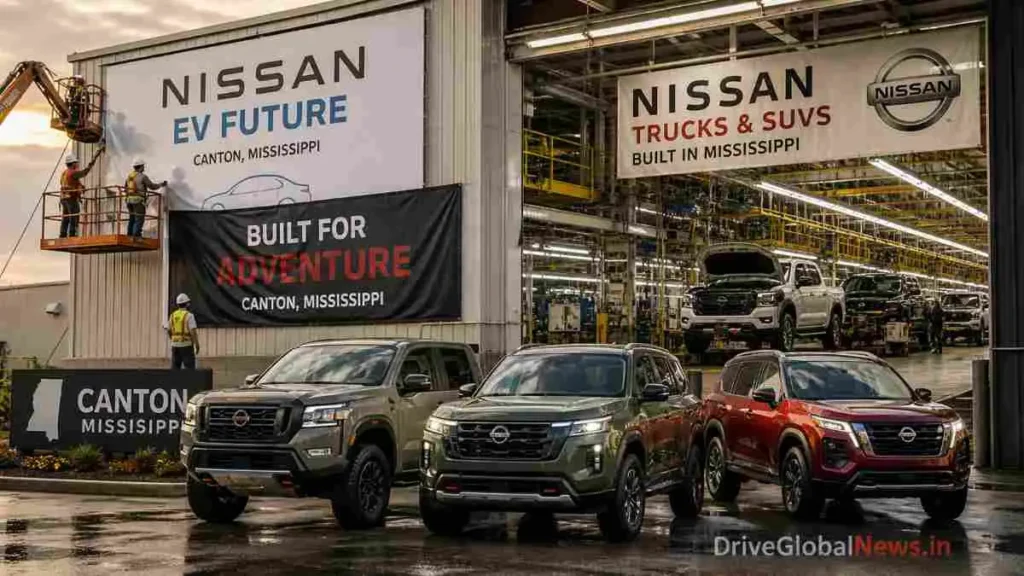
Nissan Promised Mississippi a $500 Million EV Factory : In 2021, Nissan made a big announcement. The Canton, Mississippi plant — a sprawling 4.7 million square foot facility — would become the company’s American hub for electric vehicles. $500 million invested. 200,000 EVs per year by 2028. The future, right there in the middle of Mississippi.
On May 1, 2026, Nissan cancelled all of it.
Not delayed. Not restructured. Cancelled.
The company will not build EVs at Canton. Instead, the plant will produce body-on-frame trucks and SUVs — starting with a revived Nissan Xterra, expected in 2028.
It’s a nearly 180-degree reversal. And it’s one of the clearest signals yet of how dramatically the American EV market has changed in five years.
also read : https://driveglobalnews.in/bmw-x5-vs-mercedes-gle-vs-hyundai-palisade/
What Actually Went Wrong 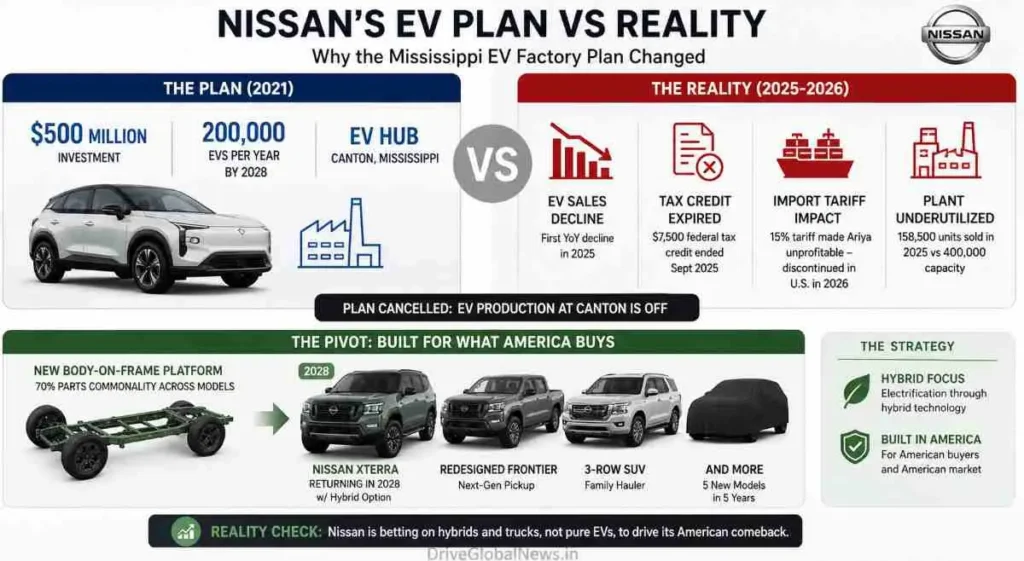
The logic behind the 2021 announcement made sense at the time. EV sales were accelerating. The $7,500 federal tax credit was intact. Every analyst forecast showed electric vehicles taking over the mainstream market by 2028-2030.
Then reality intervened.
EV sales in the U.S. actually fell in 2025 — the first year-over-year decline since the modern EV era began. The federal tax credit expired in September 2025. Nissan’s own Ariya electric crossover, once a flagship for the brand’s electric future, became nearly unprofitable thanks to 15% import tariffs. It’s being discontinued in the U.S. later this year.
The Canton plant was building the Frontier pickup and Altima sedan — but selling only 158,500 combined units in 2025 against a factory capable of 400,000 per year. That is a deeply underutilized plant, burning overhead with no path to profitability under the EV plan.
Something had to change.
What’s Coming Instead
Nissan is developing an entirely new body-on-frame platform — designed with 70% parts commonality across models to slash engineering costs. That platform will underpin at least five vehicles over the next five years:
The Nissan Xterra — returning in 2028 as an affordable body-on-frame SUV with a hybrid option. This is the centerpiece of the pivot, aimed directly at the booming off-road SUV segment.
A redesigned Frontier pickup — the truck that already sells reasonably well, now on a more modern platform.
A three-row SUV — competing in the segment that Hyundai, Kia, Toyota, and Subaru are all chasing with their own products.
The hybrid emphasis across all these models is important. Nissan isn’t abandoning electrification — it’s just choosing the technology that American buyers are actually buying: hybrids, not battery-electric vehicles.
also read : https://driveglobalnews.in/april-auto-sales-are-down-again-but-he/
The Bigger Picture
Nissan joins a growing list of automakers that bet heavily on EV volume projections from 2021-2023 and are now recalibrating: Ford, GM, Stellantis, and now Nissan have all scaled back pure EV plans in the U.S. 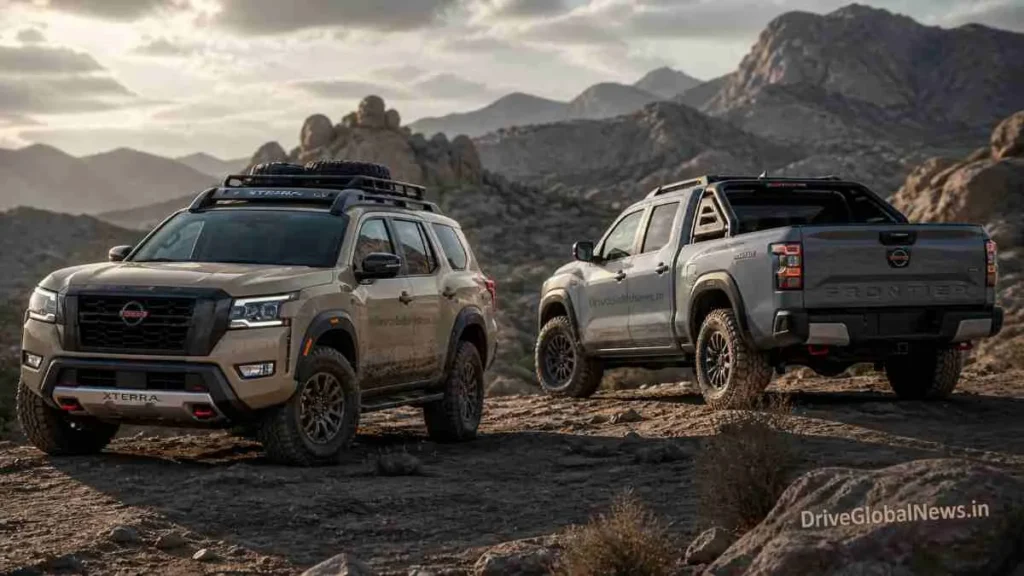
The ones holding firm — Hyundai, Kia, Tesla, Rivian — are succeeding because they paired EV ambition with competitive pricing, domestic manufacturing, or both. Nissan had neither. The Ariya at full import tariff was difficult to justify against a $35,000 Ioniq 5 built in Georgia.
For buyers interested in Nissan products: the Rogue Hybrid arriving late 2026 is still on track. The Xterra in 2028 is real and confirmed. The Ariya is going away. And the Leaf — the original mainstream EV — is in an uncertain position as the brand resets.
Nissan’s recovery plan requires patience. The Mississippi pivot is honest and probably correct. But execution over the next two years will determine whether this is a smart strategic reset or the beginning of a longer decline.