
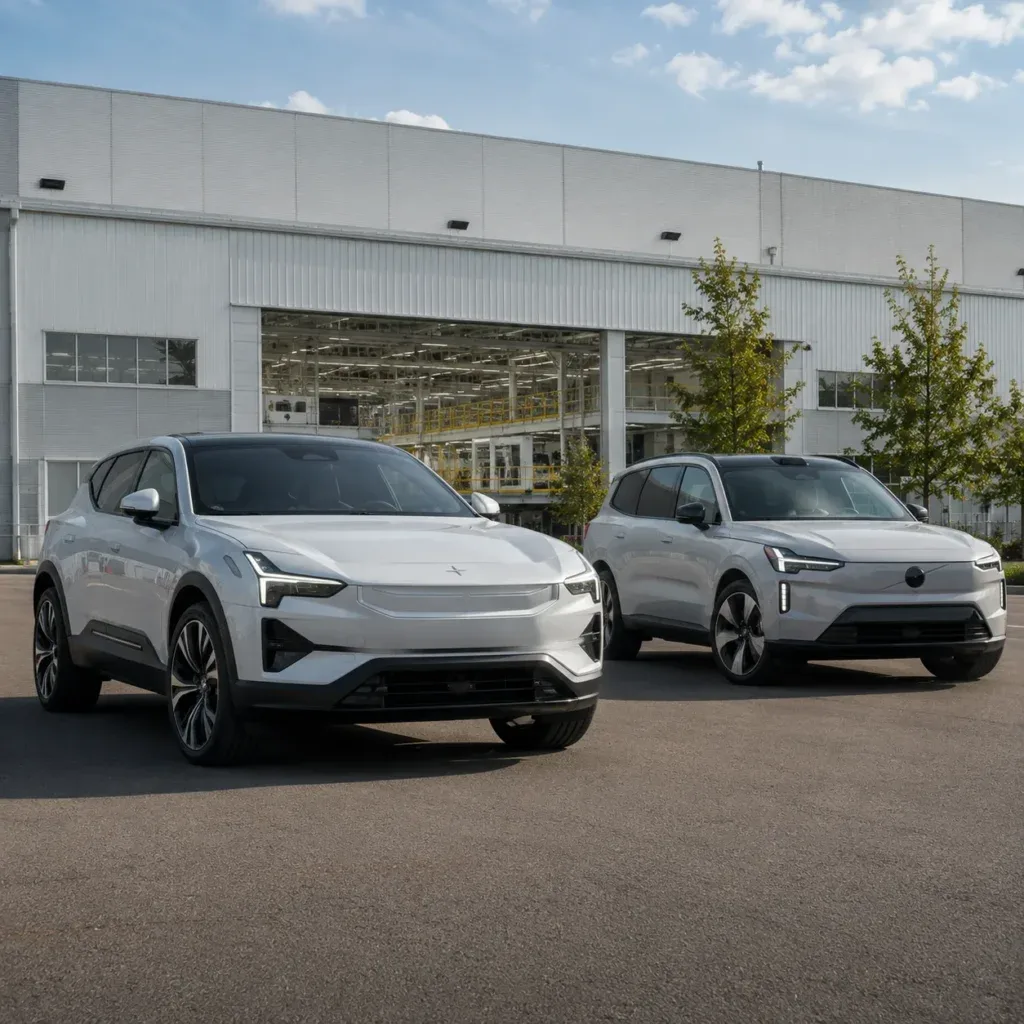
Polestar is not being kicked out of America because the Polestar 3 is built in China. It isn’t. Ridgeville, South Carolina. Same Volvo plant that builds the EX90.
That is why the August letter to dealers landed like a slap.
Two months after Commerce’s Bureau of Industry and Security refused authorization under the Connected Vehicles Rule, Polestar told U.S. dealers it still did not have a clean explanation for why it is out and Volvo is in. Same Chinese majority owner — Geely. Same factory. Nearly the same skateboard under two badges. Automotive News summed up the charge as “disparate treatment.” The Wall Street Journal said the company felt strung along before the denial.
What the Rule Actually Bans
The Connected Vehicles Rule is not a Trump original. Biden’s Commerce Department finalized it in January 2025. It stays under Trump. Starting with model year 2027, it blocks import and sale of vehicles whose connected stack — Bluetooth, Wi-Fi, cellular, some satellite — is tied to China or Russia, on the theory those systems can vacuum up location and owner data.
Polestar asked for authorization to keep selling. BIS said no. From 2027 metal forward, no new Polestars on U.S. lots. Existing Polestar 3 and 4 stock can still sell. Service network stays, the company says. Planned U.S. 2027 Polestar 4 and Polestar 7 do not.
U.S. volume was already small — about 6% of first-quarter 2026 retail. Polestar said it will lean harder on Europe. Shares dropped the day of the June announcement.
The Volvo Problem
Volvo, also Geely-controlled, received authorization in May. That is the entire political argument in one sentence.
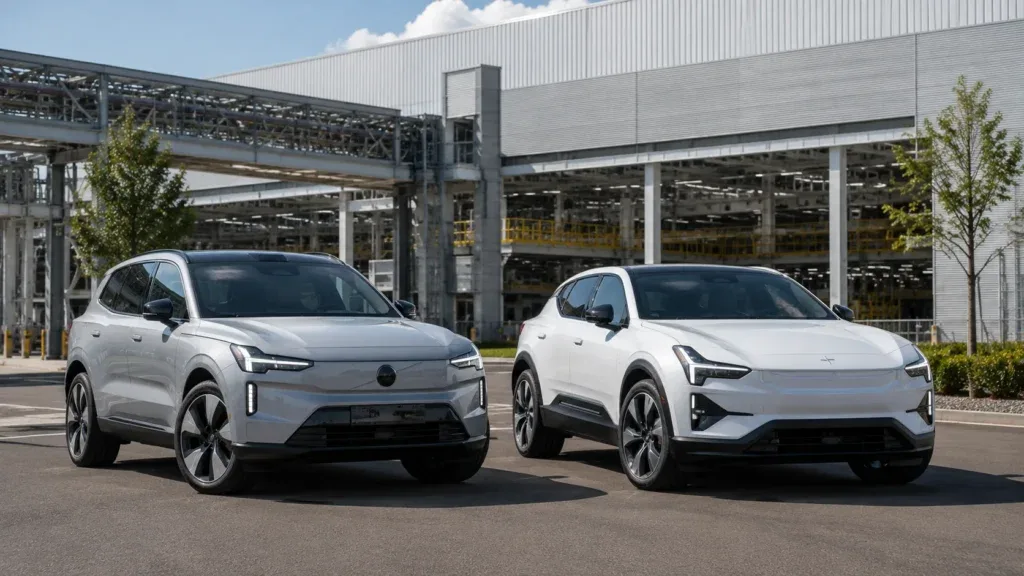
Washington’s public line is national security and corporate control, not the stamp on the engine block. Volvo reportedly showed enough operational separation. Polestar, spun as the EV specialist, did not clear the same bar — or, if you believe a Florida dealer now suing for $25 million, did not try hard enough and used the denial as a convenient exit from a money-losing U.S. network.
Senator-level chatter put the U.S. per-car hole around $30,000–$35,000. That is a separate fight. It does not erase the inconsistency buyers see: two Geely children, one plant, two federal answers.
What Owners Should Do
If you already have a Polestar 3 or 4, the company says updates and service continue. Resale is the open wound. A brand that cannot sell next year’s car is a brand appraisers haircut.
If you are shopping leftover 2026 stock, price the warranty like the brand might shrink, not like Tesla Supercharger maps. Get the service promise in writing from the selling dealer.
This is not “Trump banned a Swedish EV for being electric.” It is a China-control rule written in 2025, enforced in 2026, applied unevenly to two badges that share a parent and a South Carolina line. Polestar calling that unfair is the easy part. Explaining why Volvo’s file passed and theirs did not is the part Commerce has not put in plain English.
Would you still buy a leftover Polestar 3 built in South Carolina — or did the 2027 cutoff just kill the residual?
Related: New Car Prices Just Crossed $50,000 · Hyundai Body-on-Frame Trucks From America