
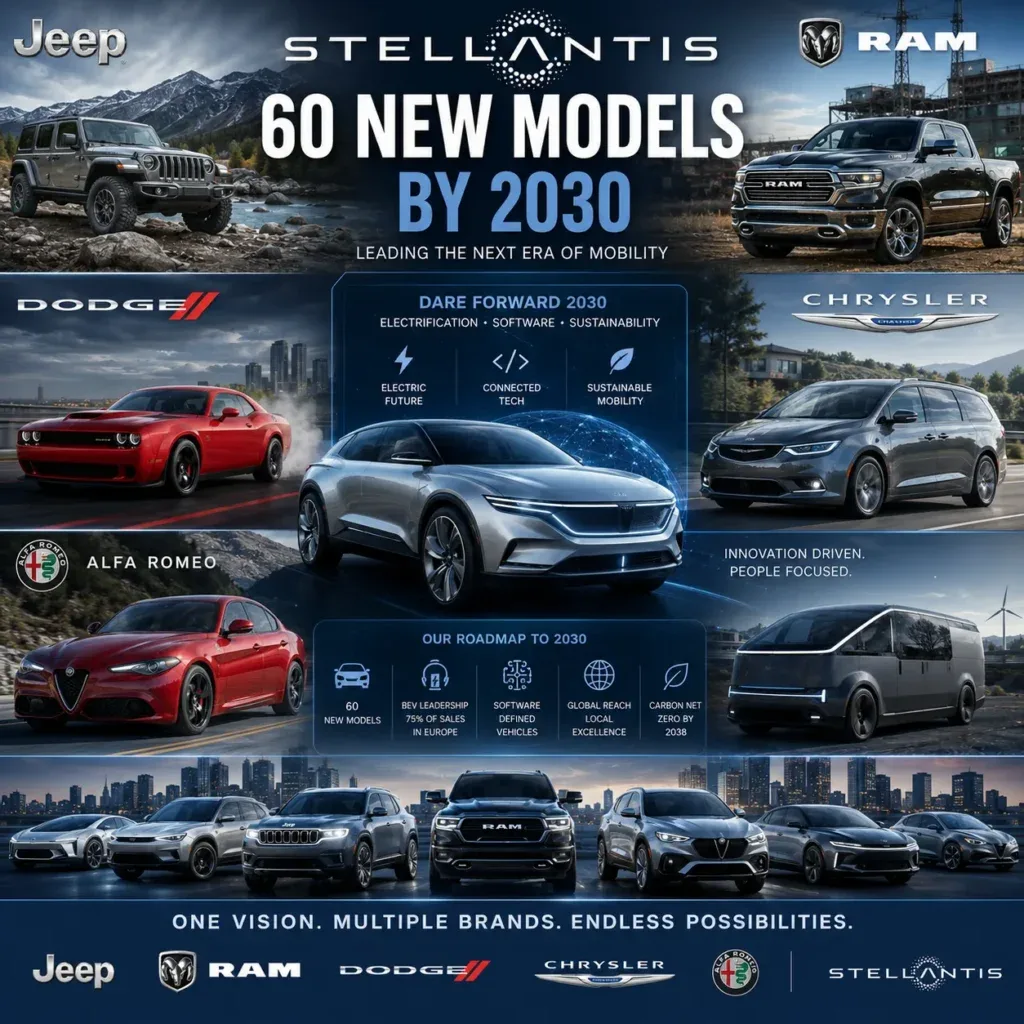
Stellantis Just Confirmed 60 New Models by 2030 : Whenever an automaker promises dozens of new vehicles, two reactions happen almost immediately.
Excitement.
And skepticism.
Both are reasonable.
Because if you’ve followed the auto industry long enough, you know big product announcements don’t always translate into vehicles you can actually buy.
That’s especially true when the company making the promise owns 14 different brands.
So when Stellantis announced it plans to launch more than 60 new models and 50 major refreshes by 2030, it sounded impressive.
But the real question isn’t how big the number is.
It’s what that number actually means.
First, Let’s Translate The Headline
Sixty new models sounds enormous.
And it is.
But don’t imagine 60 completely unique vehicles.
That’s not how modern automakers operate.
Many of these products will share platforms, powertrains, batteries, software, and technology.
One architecture might support several vehicles across different brands.
That’s how companies save money.
And Stellantis needs to save plenty of it.
The company is investing roughly €60 billion through 2030 as part of its new FaSTLAne 2030 strategy.
That means efficiency matters just as much as innovation.
Not Every Brand Will Benefit Equally
This might be the most important detail buyers are missing.
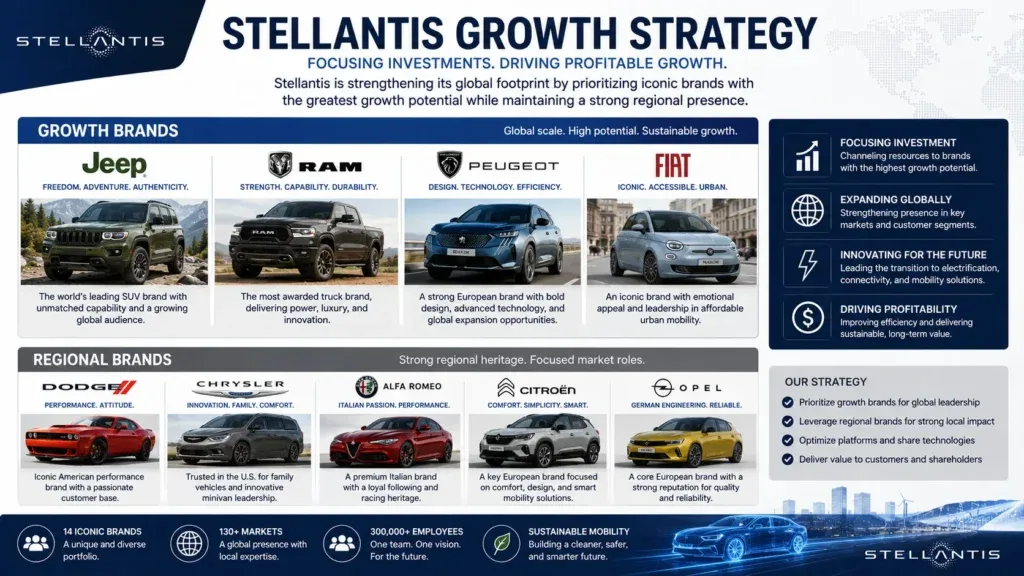
Stellantis has made it clear that four brands will receive most of the attention:
- Jeep
- Ram
- Peugeot
- Fiat
These brands are now considered Stellantis’ global growth engines and will receive the majority of future product investment.
What does that mean for everyone else?
Brands like Dodge, Chrysler, Alfa Romeo, Citroën, and Opel will play more regional roles.
That doesn’t mean they’re disappearing.
But it does mean fewer clean-sheet products and more shared technology.
This Isn’t An EV-Only Strategy
A few years ago, many automakers talked as if gasoline engines were disappearing overnight.
Reality had other plans.
Stellantis’ roadmap reflects that shift.
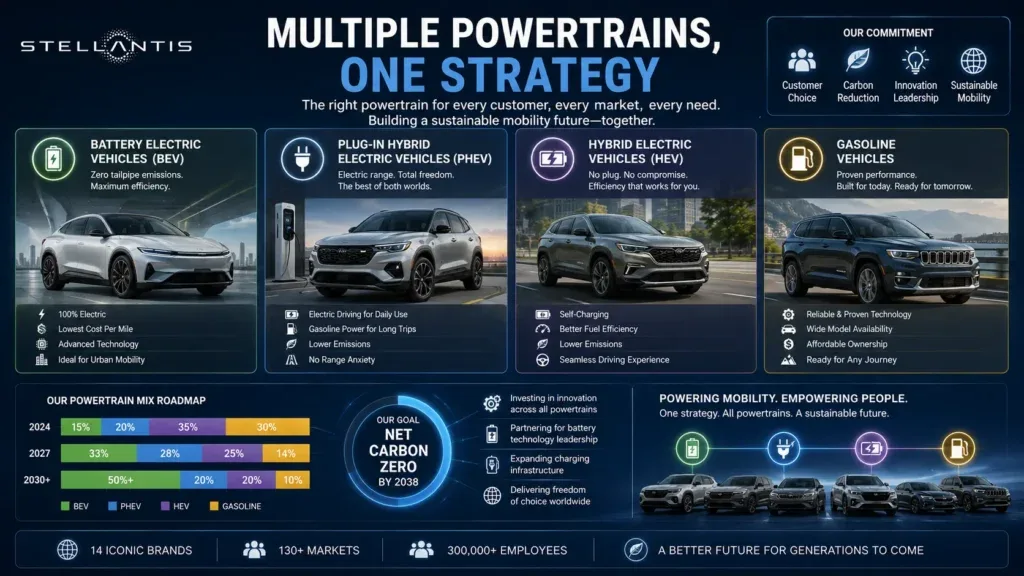
The company says its upcoming launches will include:
- 29 battery-electric vehicles
- 15 plug-in hybrids or range-extended EVs
- 24 traditional hybrids
- 39 gasoline or mild-hybrid models
The message is clear.
Stellantis isn’t betting everything on one future.
It’s preparing for several possible futures at once.
Jeep And Ram Buyers Should Pay Attention
If you live in America, these are the brands that matter most.
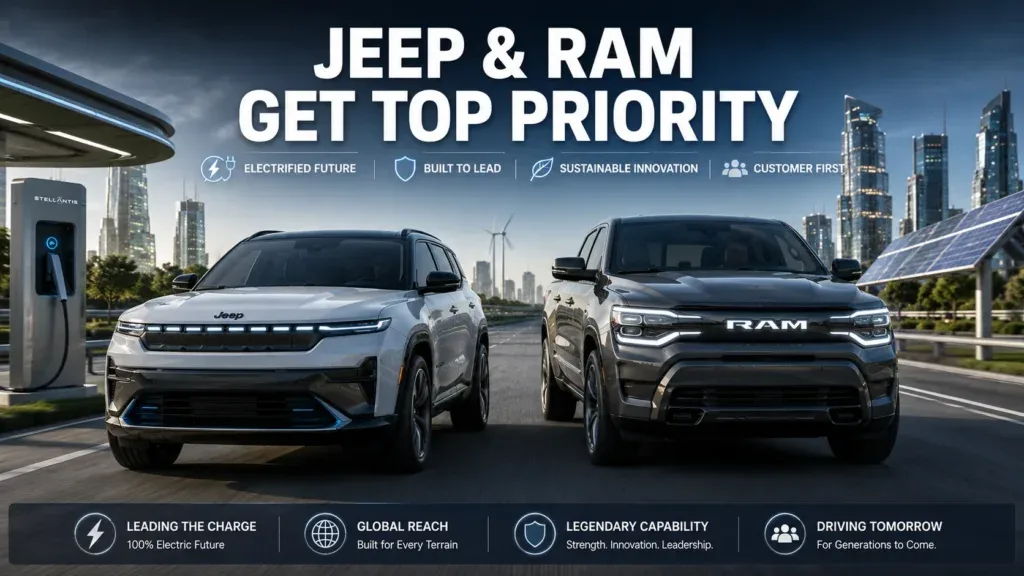
Jeep and Ram sit at the center of Stellantis’ strategy.
Expect more electrified options.
More affordable models.
And faster product updates.
The company says it plans to expand its U.S. market coverage by 50% and introduce several new vehicles priced below $40,000.
That’s important.
Because affordability has become one of the industry’s biggest problems.
What About Dodge And Chrysler?
This is where things get complicated.
Both brands remain important to Stellantis in North America.
But neither appears to be leading the product strategy.
Instead, expect them to borrow heavily from the platforms and technologies developed for Jeep and Ram.
That’s not necessarily bad news.
Shared platforms often lead to better vehicles.
But it does suggest these brands may have less freedom to define their own future.
For longtime fans, that’s a difficult reality.
Maserati Is Still A Question Mark
Stellantis insists Maserati isn’t for sale.
The company has also confirmed that new products are coming, including two large luxury vehicles and a revamped strategy expected later this year.
But luxury brands require more than promises.
They require consistent investment.
And right now, Maserati still feels like the biggest wildcard inside the Stellantis portfolio.
The Biggest Change Isn’t The Vehicles
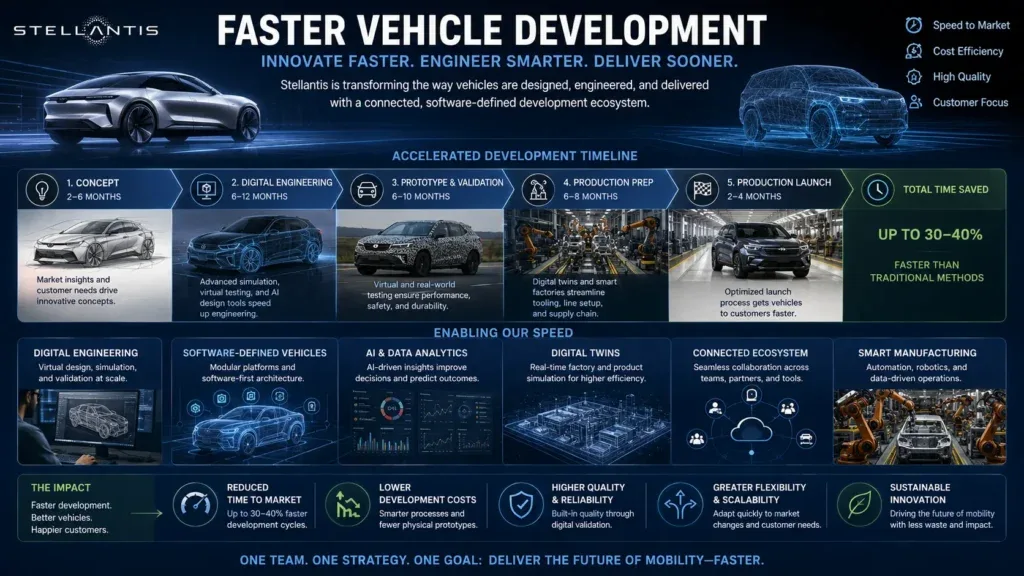
It’s the Speed.
Stellantis wants to cut product development times from roughly 40 months to just 24 months.
That’s a massive shift.
Especially as Chinese automakers continue bringing new products to market faster than traditional manufacturers.
Speed matters.
The companies that adapt quickest will have a significant advantage.
Stellantis understands that.
Now it has to prove it can deliver.
Also Read:
https://driveglobalnews.in/ev-sales-are-recovering-3-signs-the-market-is-finally-turning-around/ – Why automakers are rethinking their EV strategies.
So, What Should Buyers Actually Believe?
Believe that more products are coming.
Believe that Jeep and Ram will receive the most attention.
Believe that electrification will continue.
But don’t believe every brand will suddenly receive a flood of all-new vehicles.
And don’t assume all 60 models will be revolutionary.
Many will share the same foundations.
That’s the modern auto industry.
Smarter engineering.
More shared parts.
Faster development cycles.
The challenge isn’t building more vehicles.
It’s making them feel different.
The Real Story Here
The number “60” makes for a great headline.
But headlines don’t build successful cars.
Execution does.
Stellantis isn’t short on brands.
Or ideas.
What it needs now is focus.
Because over the next five years, buyers won’t remember how many models the company promised.
They’ll remember the vehicles that actually showed up in dealerships.
And whether those vehicles felt like the future.
Or just another press release.