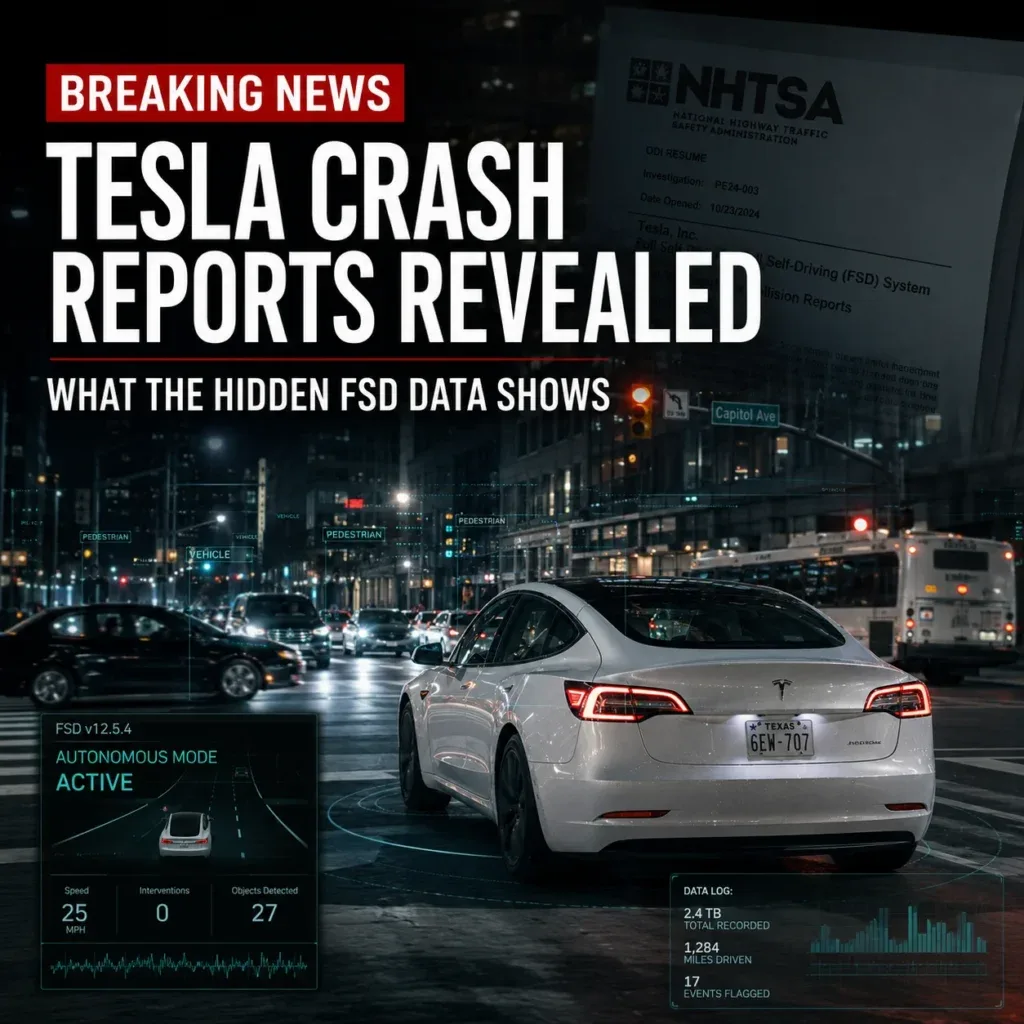
Tesla has been the only autonomous driving company in America that fully redacted its crash reports filed with the government. Every other operator — Waymo, Cruise, Zoox — published detailed narratives of what happened in each incident. Tesla stamped everything “confidential business information” and released nothing.
That changed this week.
Tesla quietly unredacted all 17 of its autonomous driving crash narratives filed with NHTSA. No announcement. No press release. The reports just appeared — publicly readable for the first time.
What they reveal is complicated. And buyers who are considering FSD or any Tesla with Autopilot engaged deserve to know what’s actually in them.
What the Reports Show — The Good Part First
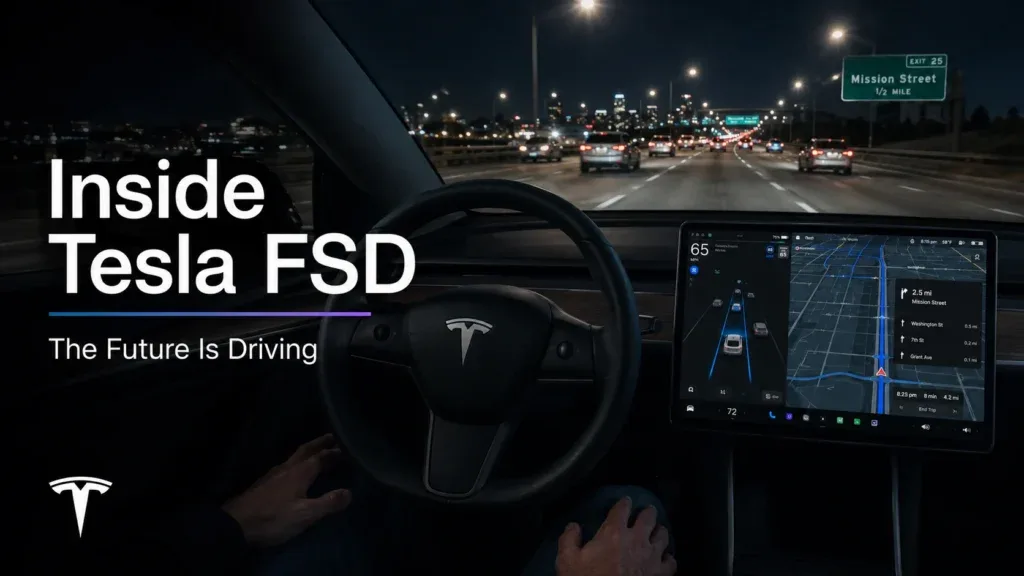
The majority of Tesla’s 17 reported crashes are not the autonomous system’s fault.
Several incidents involve other vehicles running red lights and striking a Tesla in autonomous mode — situations where no autonomous system currently available could have prevented the outcome. One involves road debris. Another involves a vehicle that entered the Tesla’s lane without warning at high speed.
In these cases, the FSD or Autopilot system performed exactly as designed — maintained lane, maintained speed, operated within parameters — and a crash occurred anyway because a human made a catastrophic error nearby. These incidents, read carefully, actually support the idea that the system was operating correctly.
That matters. It means Tesla wasn’t hiding a pattern of the autonomous system making dangerous decisions. Most of what was redacted wasn’t damning.
The Concerning Incidents That Were Buried
But some of what’s now readable is genuinely troubling.
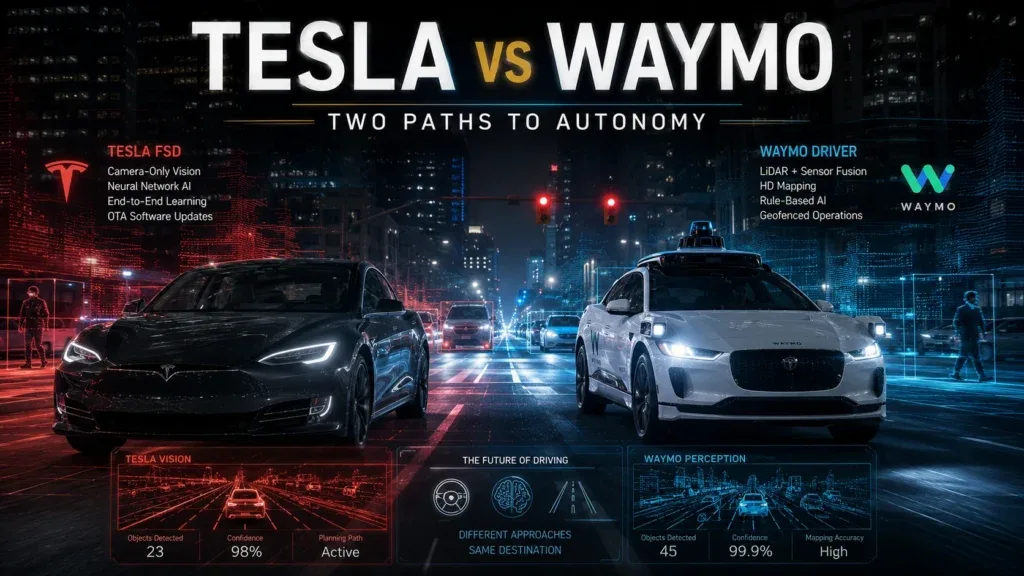
Several incidents reveal the system making decisions that are difficult to explain and harder to defend. In one case, the vehicle in autonomous mode failed to recognize a stationary emergency vehicle on the shoulder despite the presence of active lights — a scenario that Tesla’s own engineers have identified as a known limitation but that the system had been specifically retrained to handle.
In another, the vehicle in FSD mode made a lane change that NHTSA investigators found to be “inconsistent with normal driver behavior” in the specific traffic conditions present. The car wasn’t doing something obviously wrong. It was doing something subtly wrong — the kind of edge case that only becomes visible when you’re reading the detailed narrative of what happened in the seconds before impact.
The question these incidents raise isn’t whether FSD is dangerous overall. The data doesn’t support that conclusion. The question is whether Tesla’s approach of treating autonomous driving as a software product to be iterated in public — on public roads, with real passengers — is the right framework for something this consequential.
Waymo, by contrast, has logged millions of fully autonomous miles with zero fatalities. Their approach is slower, more conservative, and more expensive. Tesla’s approach is faster and less conservative. Both are real choices with real trade-offs.
also read : https://driveglobalnews.in/lucid-air-vs-tesla-model-3-in-2026-one-has-516/
Why Tesla Unredacted Now
The timing is not accidental.
Tesla is pushing aggressively toward its Q4 2026 target for unsupervised FSD availability for consumer vehicles. Regulators, particularly NHTSA, are the primary gate on that timeline. An adversarial relationship with the agency — maintaining confidentiality on crash data while asking for regulatory approval to deploy unsupervised vehicles — was becoming untenable.
Releasing the data now, proactively, shifts the dynamic. Tesla can now say — with evidence — that most of its crashes were not the system’s fault. That the autonomous system didn’t cause a pattern of dangerous decisions. That it deserves the benefit of the doubt from regulators because the data supports it.
It’s a smart move. Whether it’s enough to satisfy NHTSA ahead of the Q4 unsupervised FSD launch target is a question that will be answered over the next six months.
also read : https://driveglobalnews.in/bmw-is-launching-7-new-cars-in-2026-and-one-of/
What This Means for People Who Own or Are Buying Teslas
If you use FSD or Autopilot regularly: the unredacted reports don’t change your daily experience. The system is either improving for you or it isn’t. The crash data is context for the broader question of where this technology is headed, not a reason to immediately disengage the system.
If you’re buying a Tesla specifically because of FSD: the data is a net positive. Most crashes in autonomous mode involved external factors outside the system’s control. The concerning incidents are real but not representative of the typical FSD experience for the average user.
If you’re on Hardware 3 waiting for the unsupervised FSD capability you paid for: nothing in this data changes your situation. The hardware limitation confirmed last month is the issue, not the software’s safety record. Those are separate conversations.
Tesla doing the right thing — releasing data that other companies have published for years — took too long. But the data itself, now that it’s readable, tells a more nuanced story than “Tesla is hiding dangerous crashes.” Most of what was hidden wasn’t damning. Some of what was hidden should have been disclosed years ago.
Both things are true at the same time.