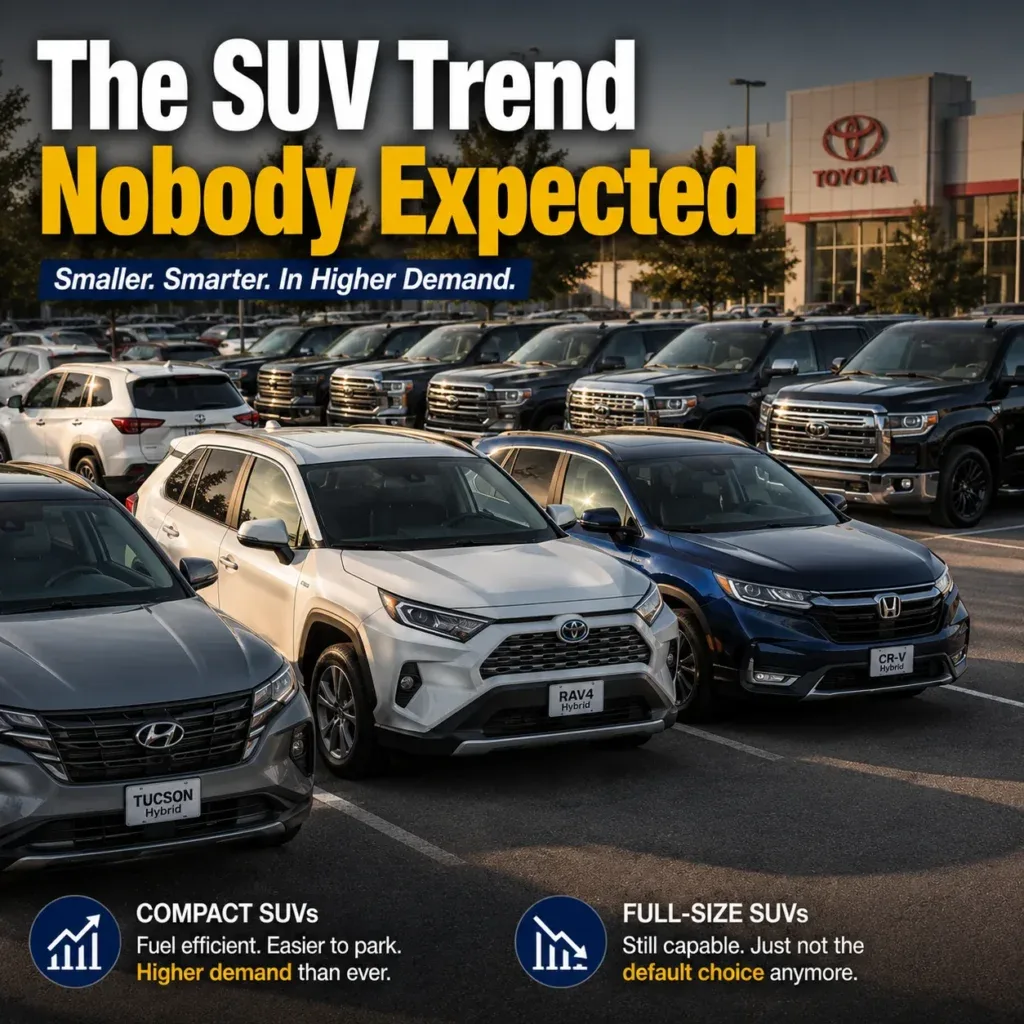
The SUV Trend : Five years ago, if someone told an automaker that Americans would eventually start choosing smaller SUVs after spending decades buying bigger ones, they probably would have laughed.
Why wouldn’t they?
The evidence seemed overwhelming.
Every year SUVs got larger.
Every year families upgraded.
Compact SUV owners moved into midsize SUVs.
Midsize SUV owners moved into three-row models.
Three-row owners started looking at full-size SUVs.
The trend appeared unstoppable.
More space.
More capability.
More vehicle.
That was the formula.
Then something strange happened.
Americans didn’t stop loving SUVs.
They simply started questioning how much SUV they actually needed.
And that question is quietly creating one of the most important automotive trends of 2026.
It Started In The Grocery Store Parking Lot
Not in a boardroom.
Not in an industry report.
Not in a marketing meeting.
In parking lots.
Everyday people started noticing something.
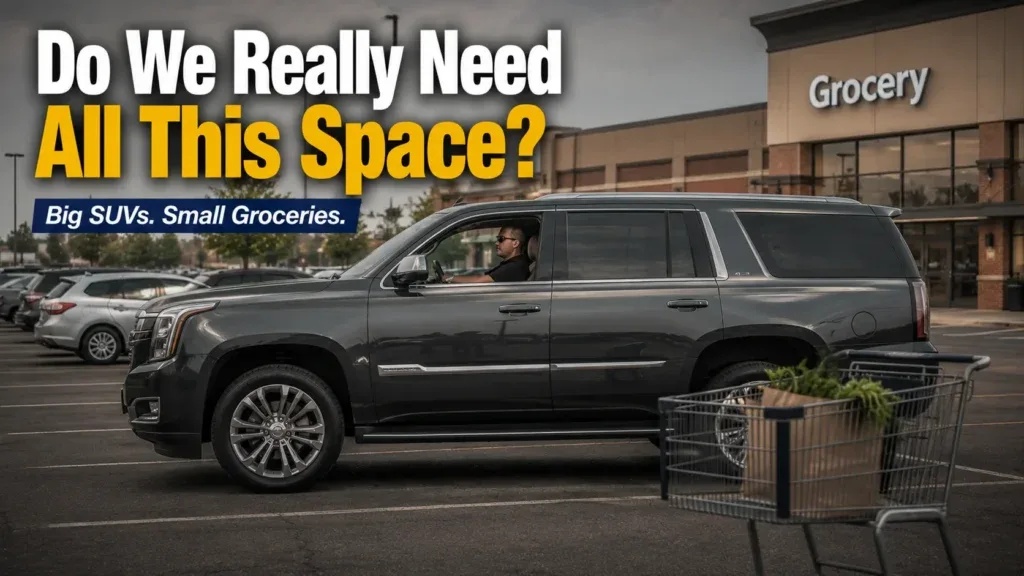
They were driving massive SUVs to buy milk.
Driving three-row vehicles with no passengers in the third row.
Driving vehicles designed for eight people while carrying one.
And once people notice something, it’s difficult to unsee it.
The realization wasn’t dramatic.
It was practical.
“Why am I paying for all this space when I barely use it?”
That’s where the trend began.
Bigger Vehicles Come With Invisible Costs
Most people understand the advantages of larger SUVs.
That’s easy.
More room.
More cargo space.
More seats.
The disadvantages are less obvious.
Higher fuel costs.
Higher insurance premiums.
More expensive tires.
Higher purchase prices.
In many cases, faster depreciation.
These costs don’t show up all at once.
They arrive slowly.
Quietly.
Like a subscription nobody remembers signing up for.
And when Americans started calculating what those costs looked like over five years, many came to an uncomfortable conclusion.
The extra space wasn’t always worth the extra expense.
Families Started Doing Something Unexpected
They got honest.
Really honest.
Not about what they might need someday.
About what they actually use every day.
And that’s where things changed.
Many families discovered that 90% of their driving looked remarkably similar.
School runs.
Commutes.
Grocery trips.
Weekend errands.
Dinner reservations.
The occasional road trip.
None of those activities required a massive SUV.
What they required was a practical SUV.
That’s a different thing entirely.
The Rise Of The “Right-Sized” SUV
This may be the most important phrase in the industry right now.
Right-sized.
Not biggest.
Not smallest.
Right-sized.
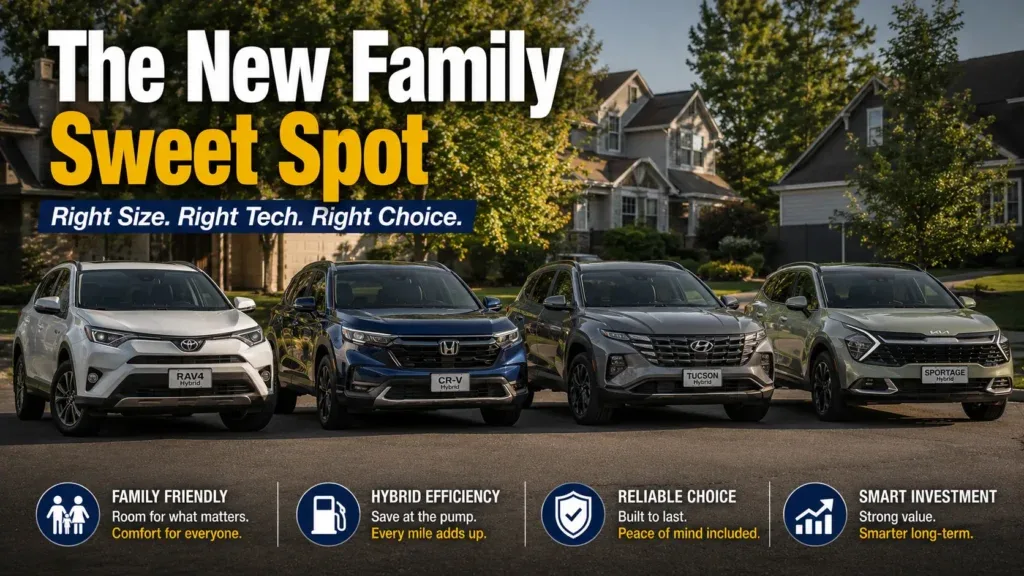
Vehicles like the Toyota RAV4 Hybrid, Honda CR-V Hybrid, Hyundai Tucson Hybrid, and Kia Sportage Hybrid are benefiting enormously from this shift.
They’re large enough for family life.
Small enough to remain efficient.
Comfortable enough for road trips.
Affordable enough for real-world budgets.
They’re becoming the sweet spot.
And buyers are noticing.
Also Read:
https://driveglobalnews.in/hyundai-tucson-hybrid-vs-kia-sportage-hybrid/ – A closer look at two SUVs benefiting from this growing trend.
Hybrids Changed The Conversation
A few years ago, many buyers assumed efficiency meant compromise.
That assumption no longer holds up.
Modern hybrid SUVs deliver excellent fuel economy while still providing the practicality families need.
That combination changed the math.
Suddenly buyers didn’t have to choose between saving money and owning an SUV.
They could have both.
Once that happened, oversized SUVs started losing one of their biggest advantages.
Automakers Didn’t See It Coming
Not entirely.
For years, manufacturers chased size.
The market rewarded them.
Then buyers became more selective.
Instead of asking:
“What’s the biggest SUV I can afford?”
People started asking:
“What’s the smartest SUV for my life?”
That’s a harder question.
Because it requires thinking beyond appearances.
Beyond advertising.
Beyond assumptions.
And when consumers ask smarter questions, markets usually change.
The Economy Played A Role Too
Let’s be honest.
Money matters.
A lot.
Vehicle prices have climbed.
Insurance costs have climbed.
Repair costs have climbed.
Families are paying attention.
The average buyer today is often more financially aware than buyers were a decade ago.
That doesn’t mean people stopped wanting nice vehicles.
It means they want value.
And value often favors efficiency over excess.
Why Compact SUVs Suddenly Feel Smarter
The funny thing about compact SUVs is that they didn’t really change.
The market changed around them.
A modern compact SUV can comfortably handle family life.
Carry luggage.
Transport kids.
Handle road trips.
Deliver strong fuel economy.
And fit into a suburban garage without creating anxiety.
That’s why so many buyers are returning to them.
Not because compact SUVs became better.
Because buyers started appreciating what they already offered.
Also Read:
https://driveglobalnews.in/the-family-suv-americans-keep-buying-even-when-better-options-exist/ – Why one practical SUV continues dominating American driveways.
The Trend Isn’t About Smaller SUVs
That’s the part many people misunderstand.
This isn’t a story about downsizing.
It’s a story about priorities.
Americans still love SUVs.
The market isn’t abandoning them.
What buyers are abandoning is the assumption that bigger automatically equals better.
For decades, those ideas were treated as the same thing.
They’re not.
And consumers are finally separating them.
The Next Time You’re In Traffic
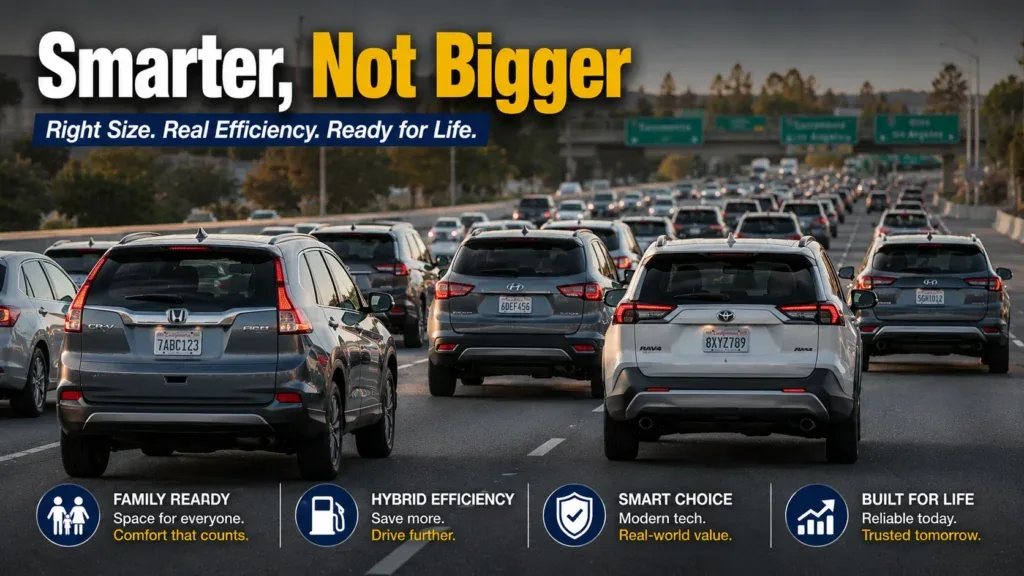
Look around.
Count the vehicles.
You’ll probably notice something.
The fastest-growing SUVs aren’t necessarily the largest ones.
They’re often the vehicles sitting quietly in the middle.
The practical ones.
The efficient ones.
The ones that fit into everyday life without demanding too much money, space, or attention.
That may not sound like a revolution.
But revolutions rarely announce themselves when they begin.
They start with small decisions.
A family choosing a RAV4 instead of a larger SUV.
A buyer choosing efficiency instead of excess.
A driver realizing they don’t need more vehicle.
Just the right vehicle.
And somewhere between those thousands of ordinary decisions, an unexpected SUV trend was born.