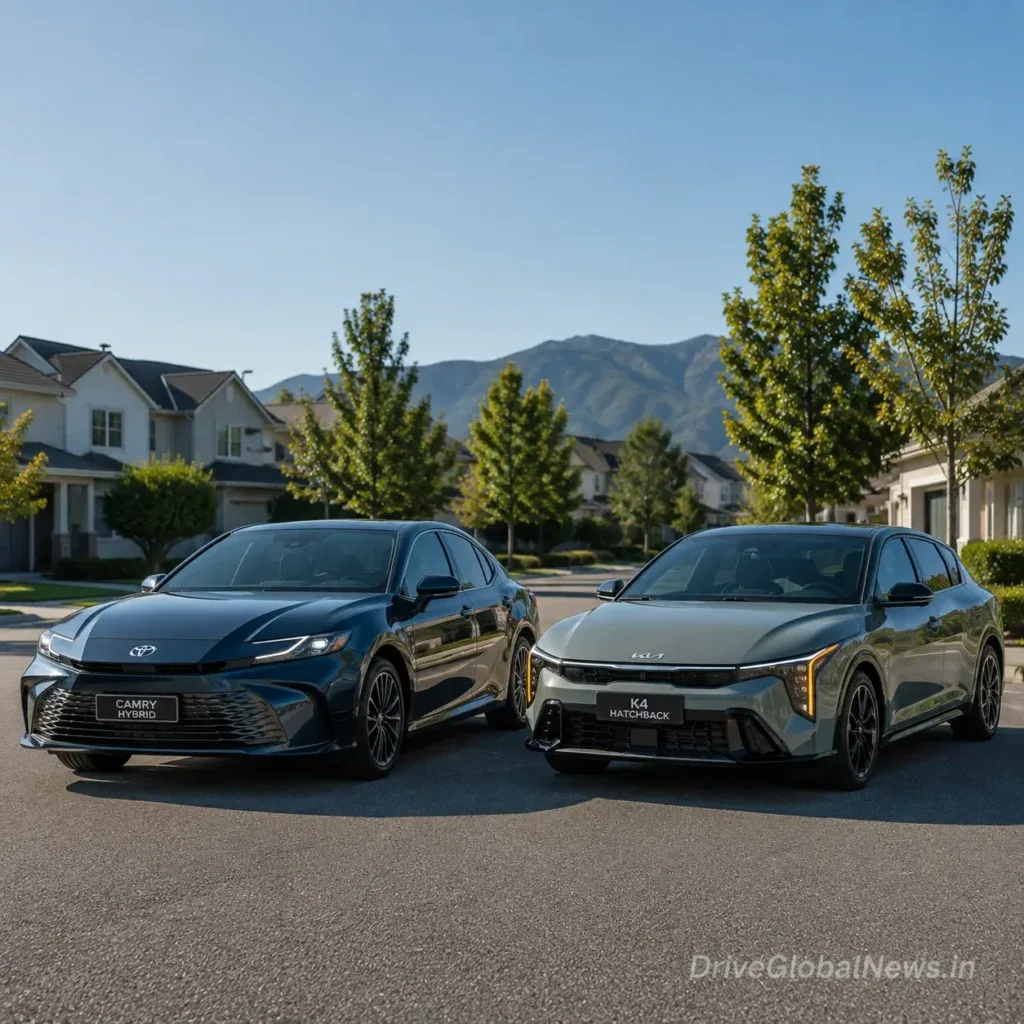
Two very different cars sit in the same price range in 2026. One is a proven midsize hybrid sedan built for maximum efficiency and long-term ownership. The other is a new compact hatchback that prioritizes cargo space, modern features, and everyday versatility.
Here’s an honest look at the Toyota Camry Hybrid versus the Kia K4 Hatchback for buyers shopping under $35,000.
Pricing
The Camry Hybrid starts in the low $30,000s for the LE trim (around $29,300–$30,595 depending on exact destination and configuration). Higher trims and all-wheel drive push it closer to or past $35,000, but many well-equipped front-drive models stay under that mark.
The K4 Hatchback undercuts it significantly. The EX starts near $25,000 (around $24,990–$26,235). The GT-Line and GT-Line Turbo trims top out around $29,000–$30,000 before options. Fully loaded examples can still stay under $35,000.
Efficiency and Power
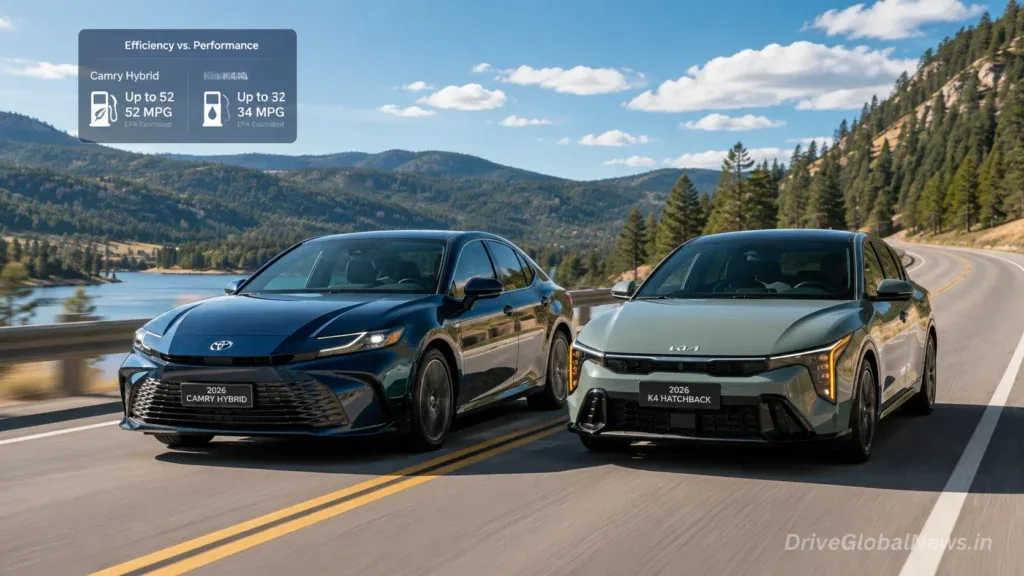
This is the Camry’s clearest advantage. Every Camry is a hybrid. The base LE front-wheel-drive model delivers around 51–53 mpg combined. Even higher trims and AWD versions remain highly efficient in the mid-40s to low 50s. Combined output is 225 horsepower (232 with AWD).
The K4 Hatchback uses conventional gasoline engines. The base 2.0-liter makes 147 horsepower and is rated around 28–30 mpg combined. The available turbo 1.6-liter (GT-Line Turbo) jumps to 190 horsepower and about 28 mpg combined. It feels quicker than the base engine but cannot match the Camry’s real-world fuel savings.
Space and Practicality
Here’s where the hatchback pulls ahead. The K4 Hatchback offers roughly 22 cubic feet of cargo space behind the rear seats — noticeably more than the Camry’s typical 15 cubic feet of trunk space. Fold the seats and the difference grows further. The hatch shape also makes loading bulky items easier.

The Camry is a larger midsize sedan with strong rear-seat legroom and a more traditional trunk. It feels roomier for passengers on longer trips, but the K4’s hatch design wins for versatility when hauling gear, groceries, or occasional larger items.
Driving Character and Ownership
The Camry prioritizes refinement, quietness, and effortless efficiency. It is smooth, composed, and built for high-mileage, low-stress ownership. Toyota’s reputation for reliability remains a major selling point.
The K4 Hatchback feels more modern and feature-rich for the money. Higher trims offer sportier looks and the turbo engine for better responsiveness. Kia’s longer powertrain warranty (typically 10 years/100,000 miles) is also a strong ownership advantage. It is not a hybrid and does not match the Camry’s long-term efficiency edge.
Which One Makes More Sense?
Choose the Toyota Camry Hybrid if: Fuel economy, long-term reliability, and a refined midsize sedan experience matter most. It will cost less to run over time and is the safer bet for high-mileage drivers who want minimal drama.
Choose the Kia K4 Hatchback if: You want more cargo flexibility, a lower starting price, modern tech and features, and the practicality of a hatchback shape. The turbo model adds usable power without jumping out of the under-$35,000 range.
The Bottom Line
These cars serve different priorities. The Camry Hybrid is the smarter long-term efficiency play and the more traditional sedan choice. The K4 Hatchback is the more practical, feature-packed, and affordable daily driver with better cargo versatility.
Test both. Pay attention to how you actually use the rear seats and cargo area, and run the numbers on fuel costs over a few years. The right answer depends on whether you value maximum miles per gallon or maximum everyday usefulness.
Which matters more to you — hybrid efficiency or hatchback practicality?