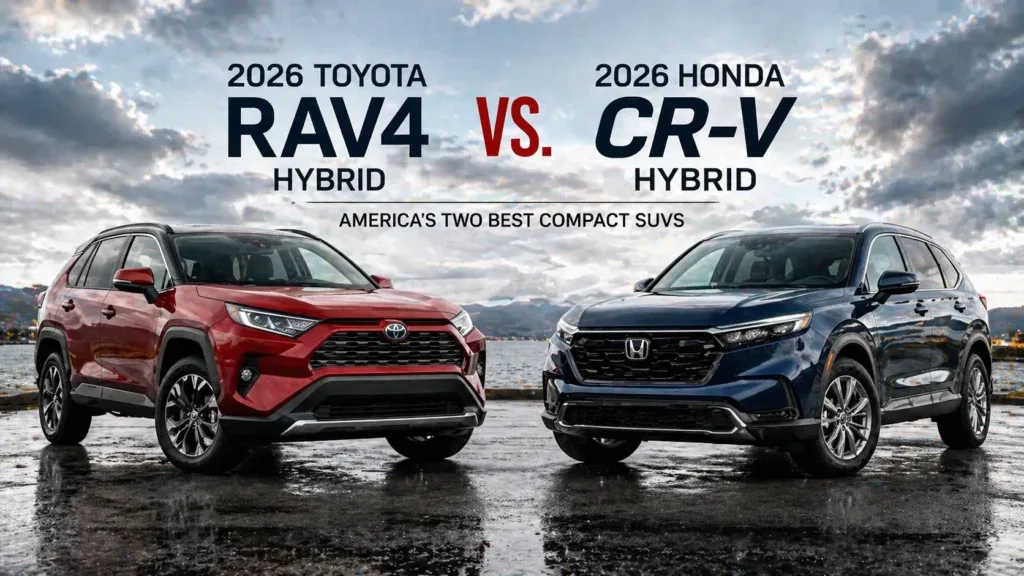
For years, the Toyota RAV4 Hybrid and Honda CR-V Hybrid have been battling it out as America’s favorite hybrid SUVs. Both are reliable, efficient, and practical — but in 2026, which one actually makes more sense for most buyers?
This detailed head-to-head comparison breaks down everything you need to know before choosing between these two popular hybrids.
Fuel Economy and Real-World Efficiency
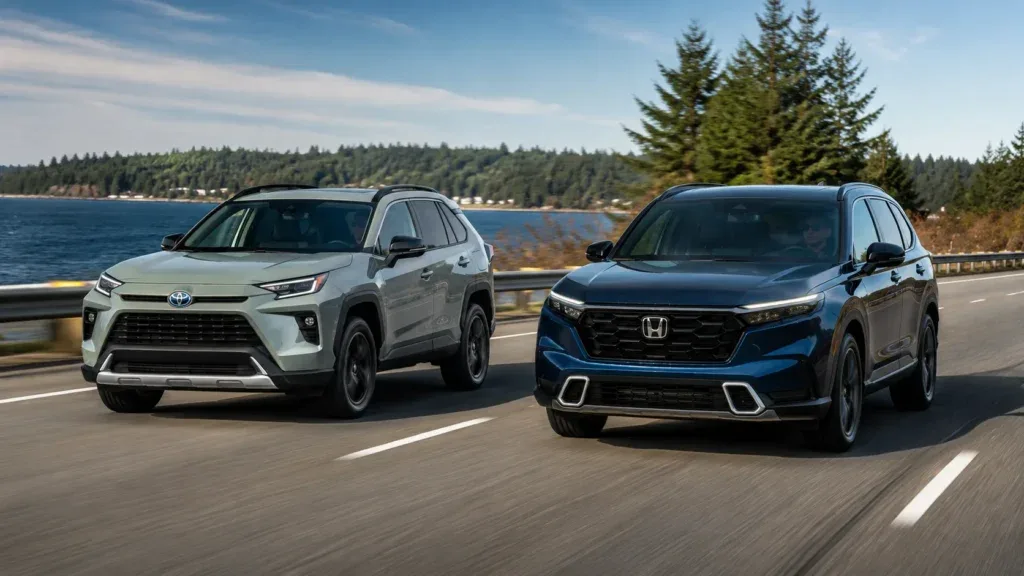
Both SUVs deliver excellent fuel economy, which is the main reason people buy hybrids. The Toyota RAV4 Hybrid continues its strong reputation with official ratings around 41 mpg combined. In real-world driving, many owners are seeing 38-42 mpg depending on conditions.
The Honda CR-V Hybrid is very close, often rated at 40 mpg combined. It feels slightly smoother in city driving thanks to its refined hybrid system. However, on highways, the RAV4 Hybrid usually pulls ahead a bit.
If maximum efficiency is your top priority, the RAV4 Hybrid has a small edge. But the difference is small enough that most families won’t notice it day-to-day.
Performance and Driving Experience
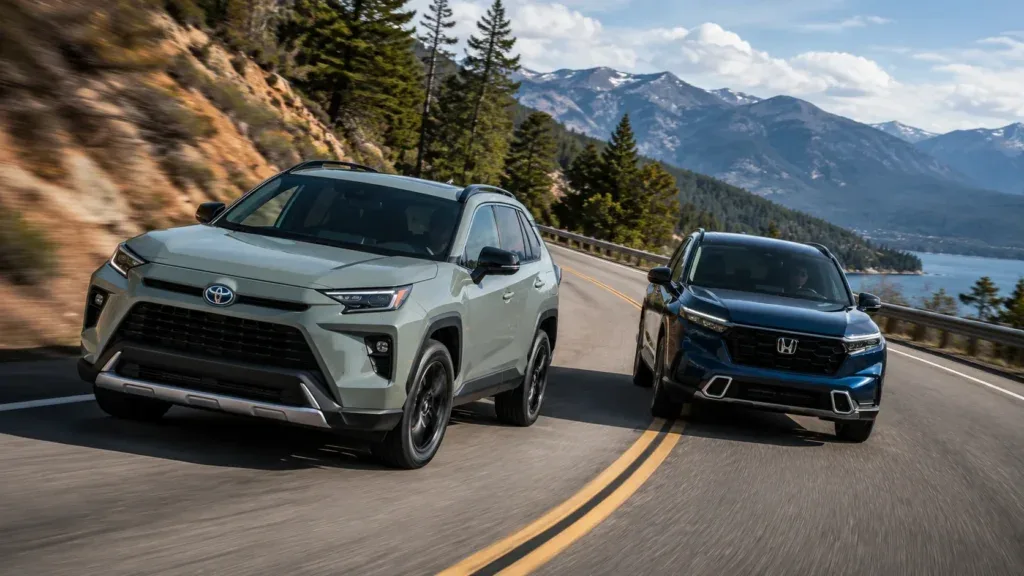
The Toyota RAV4 Hybrid offers peppy acceleration and confident handling. It feels planted on the road and is surprisingly fun for a crossover. The all-wheel-drive system works well in rain or light snow.
The Honda CR-V Hybrid provides a more comfortable and refined ride. It absorbs bumps better and feels quieter on the highway. Steering is light and easy, making it a relaxing daily driver.
For drivers who enjoy a bit more engagement behind the wheel, the RAV4 Hybrid wins. For those who want maximum comfort on long commutes, the CR-V Hybrid feels more polished.
Interior Space and Practicality
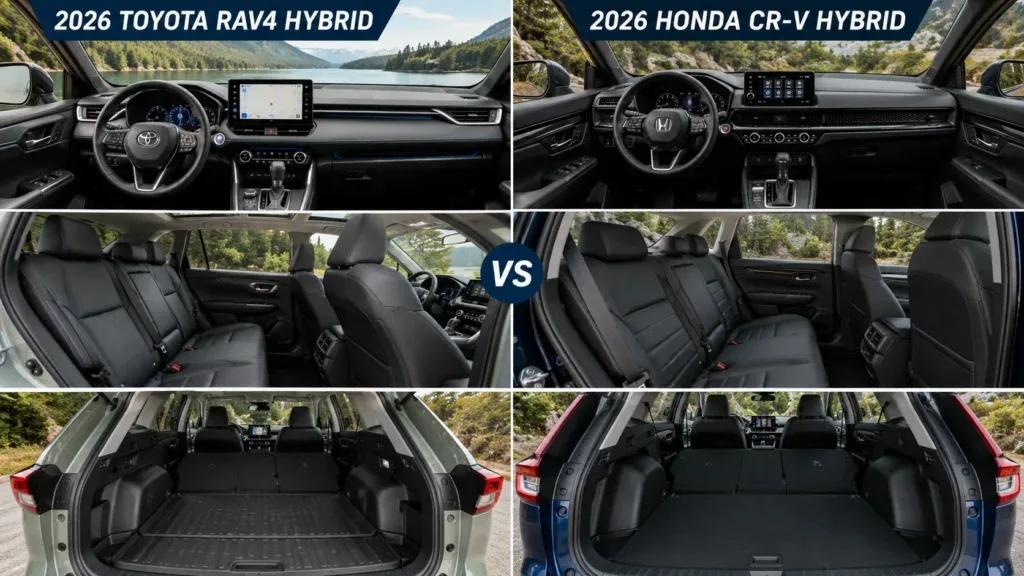
This is where things get interesting. The Honda CR-V Hybrid has a clear advantage in rear passenger space and cargo room. It feels roomier in the back seat, which is important for families with older kids or frequent passengers.
The Toyota RAV4 Hybrid is no slouch, but the CR-V simply offers more usable space. Both have versatile seating and good cargo flexibility, but the Honda edges it out for everyday family use.
Reliability and Long-Term Ownership
Toyota has a legendary reputation for reliability, and the RAV4 Hybrid continues that tradition. Many owners report trouble-free driving well past 200,000 miles. Resale value is also excellent.
Honda is also highly reliable, and the CR-V Hybrid has proven itself as a dependable choice. However, Toyota still holds a slight edge in long-term durability according to many consumer reports.
Price and Value
Pricing is very close between the two. Both start in the low-to-mid $30,000 range, with well-equipped models landing around $35,000-$40,000.
The Toyota RAV4 Hybrid often holds its value better over time, which can save you money when it’s time to sell or trade in. The Honda CR-V Hybrid sometimes comes with more standard features, which can make it feel like a better deal upfront.
Which One Should You Buy in 2026?
Choose the Toyota RAV4 Hybrid if you want:
- Slightly better fuel economy
- Stronger resale value
- Sportier driving feel
- Proven long-term reliability
Choose the Honda CR-V Hybrid if you want:
- More rear passenger and cargo space
- A smoother, quieter ride
- Excellent comfort for daily driving
The Bottom Line
In 2026, both the Toyota RAV4 Hybrid and Honda CR-V Hybrid remain excellent choices. They are easily two of the best hybrid SUVs available in America. The RAV4 Hybrid wins for efficiency and resale value, while the CR-V Hybrid wins for space and comfort.
Your final decision should depend on what matters most to your family — efficiency and fun driving, or maximum space and relaxation.
Before buying any new vehicle, it’s smart to understand how it might affect your car insurance after an accident in 2026. Also check our recent guide on the most American-made cars if supporting U.S. manufacturing is important to you.
Which one are you leaning toward — RAV4 Hybrid or CR-V Hybrid? Tell us in the comments below.