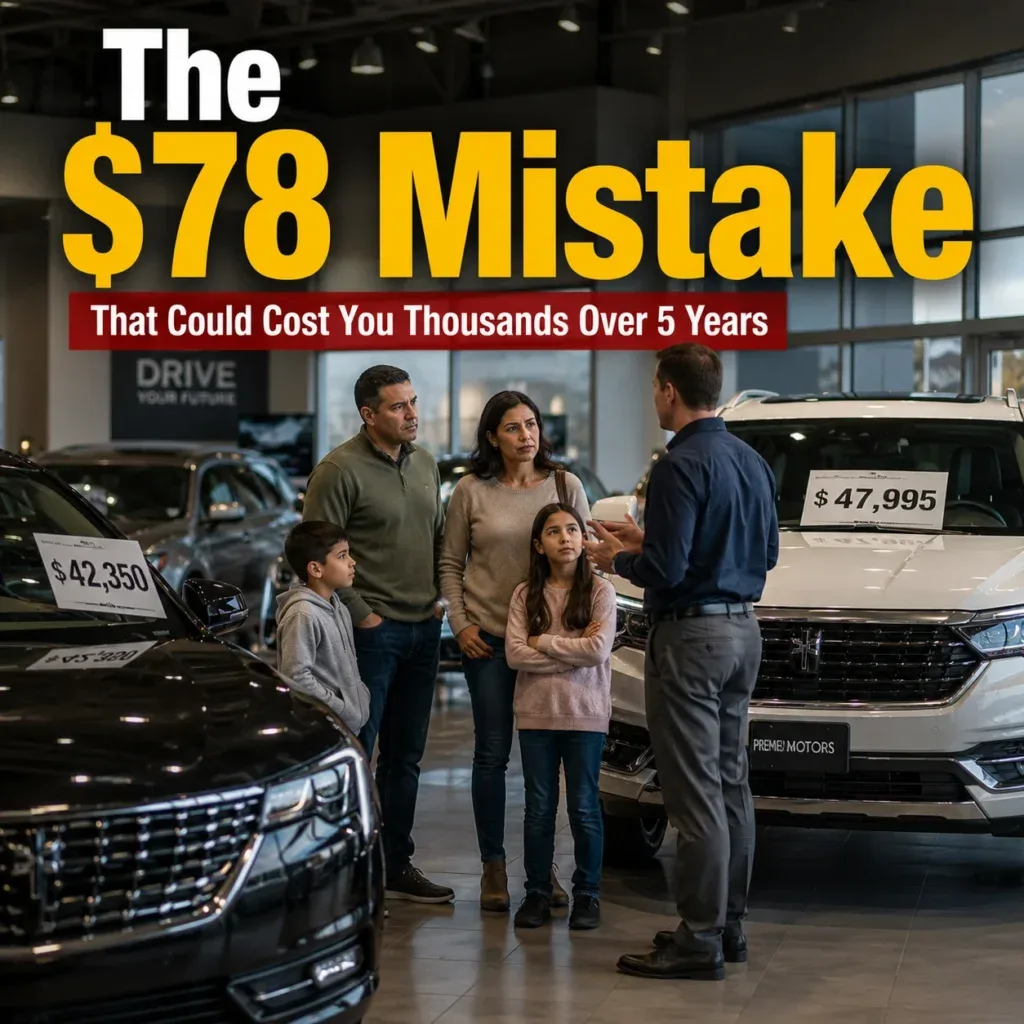
A man walks into a dealership looking for a $35,000 SUV.
An hour later, he’s sitting inside a $47,000 SUV.
What’s surprising is that he doesn’t feel like he spent an extra $12,000.
He feels like he spent an extra $78 a month.
That’s because most people don’t buy vehicles the way they think they do.
They believe they’re shopping by price.
In reality, they’re shopping by payment.
And that simple shift changes almost everything.
The vehicle industry understands it.
Dealerships understand it.
Banks understand it.
Yet many buyers don’t fully realize how powerful it is until years later.
By then, the decision is already parked in the driveway.
The Price Tag Is What You See
The Monthly Payment Is What You Feel
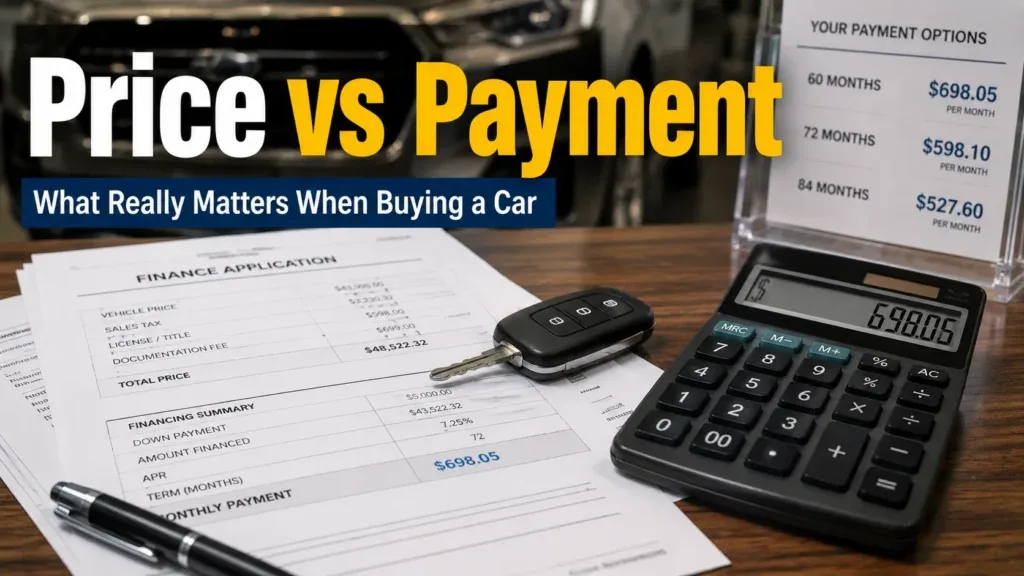
A vehicle’s price appears once.
The monthly payment appears every single month.
That’s an important distinction.
Human beings aren’t naturally wired to think in large numbers.
We’re wired to think in manageable pieces.
A $50,000 vehicle sounds expensive.
A $650 monthly payment feels possible.
That’s why so many buyers focus on the second number instead of the first.
It’s easier to process.
It’s easier to justify.
And sometimes it’s easier to underestimate.
The Industry Learned This Long Ago
Imagine two advertisements.
The first says:
“New SUV — $48,995.”
The second says:
“Drive Home Today For $649 Per Month.”
Which one gets more attention?
Most automakers already know the answer.
Monthly payments feel personal.
People immediately compare them to rent, groceries, utility bills, or other household expenses.
The number becomes relatable.
The total price often doesn’t.
That’s one reason vehicle financing has become such a powerful force in the market.
Why Buyers End Up Spending More Than Planned
Almost nobody enters a dealership hoping to overspend.
Yet it happens every day.
The process is surprisingly simple.
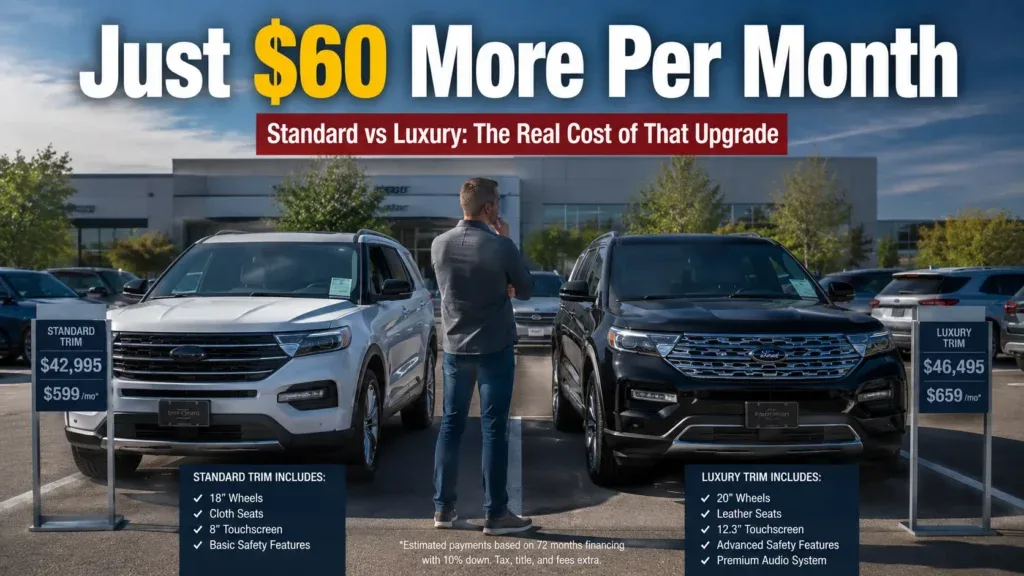
A buyer likes a vehicle.
Then they see a nicer trim.
The payment only increases slightly.
Then they add a package.
The payment barely changes.
Then they upgrade again.
Another small increase.
Individually, each step feels harmless.
Collectively, they can add thousands of dollars to the final purchase.
The payment disguises the size of the decision.
The Family Budget Doesn’t Care About MSRP
This might sound strange.
But your household budget rarely cares what your vehicle cost.
It cares what leaves your bank account each month.
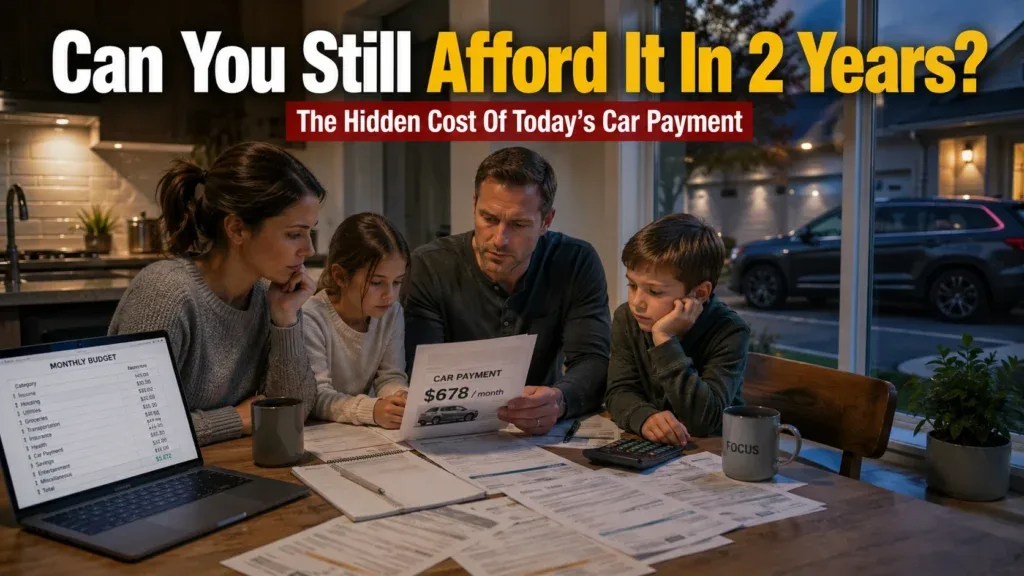
A family managing childcare expenses, groceries, mortgage payments, insurance, and utility bills experiences ownership through monthly cash flow.
Not through sticker prices.
That’s why monthly payments matter so much.
They’re directly connected to daily life.
A vehicle can be affordable on paper and still create financial stress if the payment stretches the household budget too far.
Also Read:
https://driveglobalnews.in/the-biggest-car-buying-mistake-americans-will-make-this-year/ – The expensive mistake many buyers don’t realize they’re making until years later.
The Most Dangerous Sentence In A Dealership
There is one phrase that quietly costs Americans a lot of money.
“I can make that work.”
Not because it’s always wrong.
Because buyers often say it emotionally.
They’re excited.
They like the vehicle.
They don’t want to lose it.
So they stretch.
A little.
Then a little more.
The problem isn’t today’s payment.
It’s tomorrow’s life.
Unexpected expenses arrive.
Jobs change.
Priorities change.
The payment usually doesn’t.
Why Some Buyers Focus On Ownership Instead
Experienced buyers often approach things differently.
They don’t ask:
“What’s the payment?”
First.
They ask:
“What’s the total cost of ownership?”
Fuel.
Insurance.
Maintenance.
Depreciation.
Repairs.
Monthly payment is only one piece of the puzzle.
An important piece.
But still only one piece.
That’s often where the smartest financial decisions begin.
The Payment Isn’t The Problem
The Payment Is The Signal
It’s easy to blame financing.
That misses the point.
Monthly payments aren’t bad.
They’re simply information.
The real question is whether the payment aligns with your life.
A payment that’s comfortable for one family may be stressful for another.
Income matters.
Expenses matter.
Financial goals matter.
Context matters.
That’s why there isn’t a universal “good” payment.
There is only a payment that fits your situation.
Why Americans Are Thinking Differently About Vehicles
For years, bigger vehicles and higher trims felt like obvious upgrades.
Today many buyers are becoming more cautious.
Vehicle prices have increased.
Insurance costs have increased.
Repair costs have increased.
As a result, monthly payments have become more important than ever.
Consumers are paying closer attention.
They’re asking harder questions.
And that’s changing how vehicles are purchased across America.
Also Read:
https://driveglobalnews.in/10-cars-that-save-more-money-than-most-people-realize/ – The vehicles quietly helping owners keep more money in their pockets every year.
The Most Important Number Isn’t On The Window Sticker
The automotive industry spends a lot of time talking about horsepower, technology, range, towing capacity, and performance.
Most families spend more time thinking about something else.
Their budget.
That’s not exciting.
But it’s real.
And reality tends to matter more than marketing.
The vehicle that fits comfortably into your financial life will almost always feel better than the one that constantly stretches it.
The Question Worth Asking
Before signing paperwork, most buyers ask:
“Can I afford this vehicle?”
There’s a better question.
“Will I still feel good about this payment two years from now?”
That’s a tougher question.
And probably a more useful one.
Because nobody remembers the excitement of signing a purchase agreement forever.
Eventually, the vehicle becomes normal.
The payment becomes routine.
Life moves on.
And that’s when the quality of a car-buying decision reveals itself.
Not on delivery day.
Not during the first road trip.
But on a random Wednesday six months later, when the payment comes out of your account, you barely notice it, and you continue with your day.
For most families, that’s what an affordable vehicle actually looks like.