
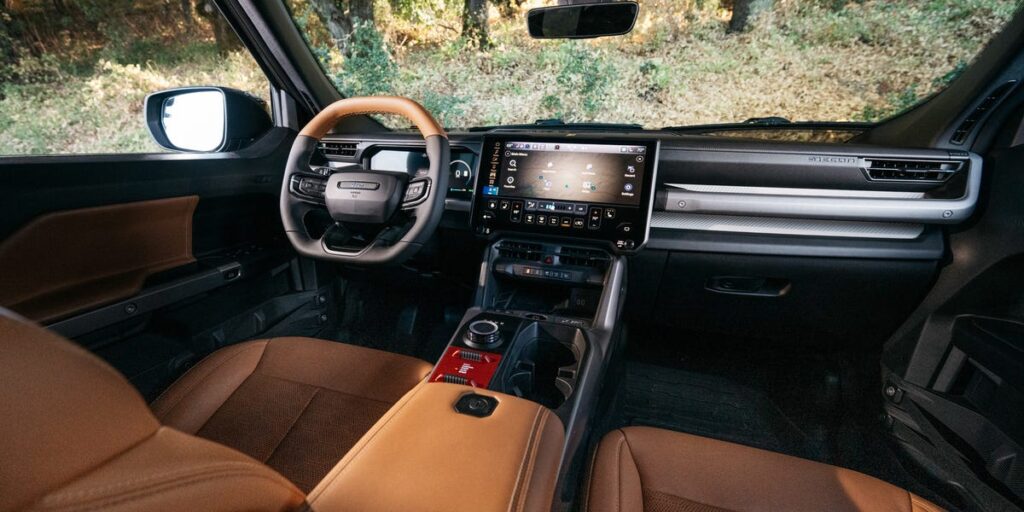
Jeep Recon: The 2026 Jeep Recon has finally shown its interior, and the cabin photos reveal a rugged, tech-forward design that looks ready for trail duty—but here’s the catch: Jeep has released zero numbers to back up the hype, leaving buyers to guess at range, power, and pricing with no official EPA estimate in sight. So, does a handsome dashboard justify locking in a reservation when you don’t know if this electric off-roader can actually make it to the trailhead and back on a single charge? Let’s dig into what these photos tell us, what they deliberately hide, and whether your down payment should wait for the spec sheet.
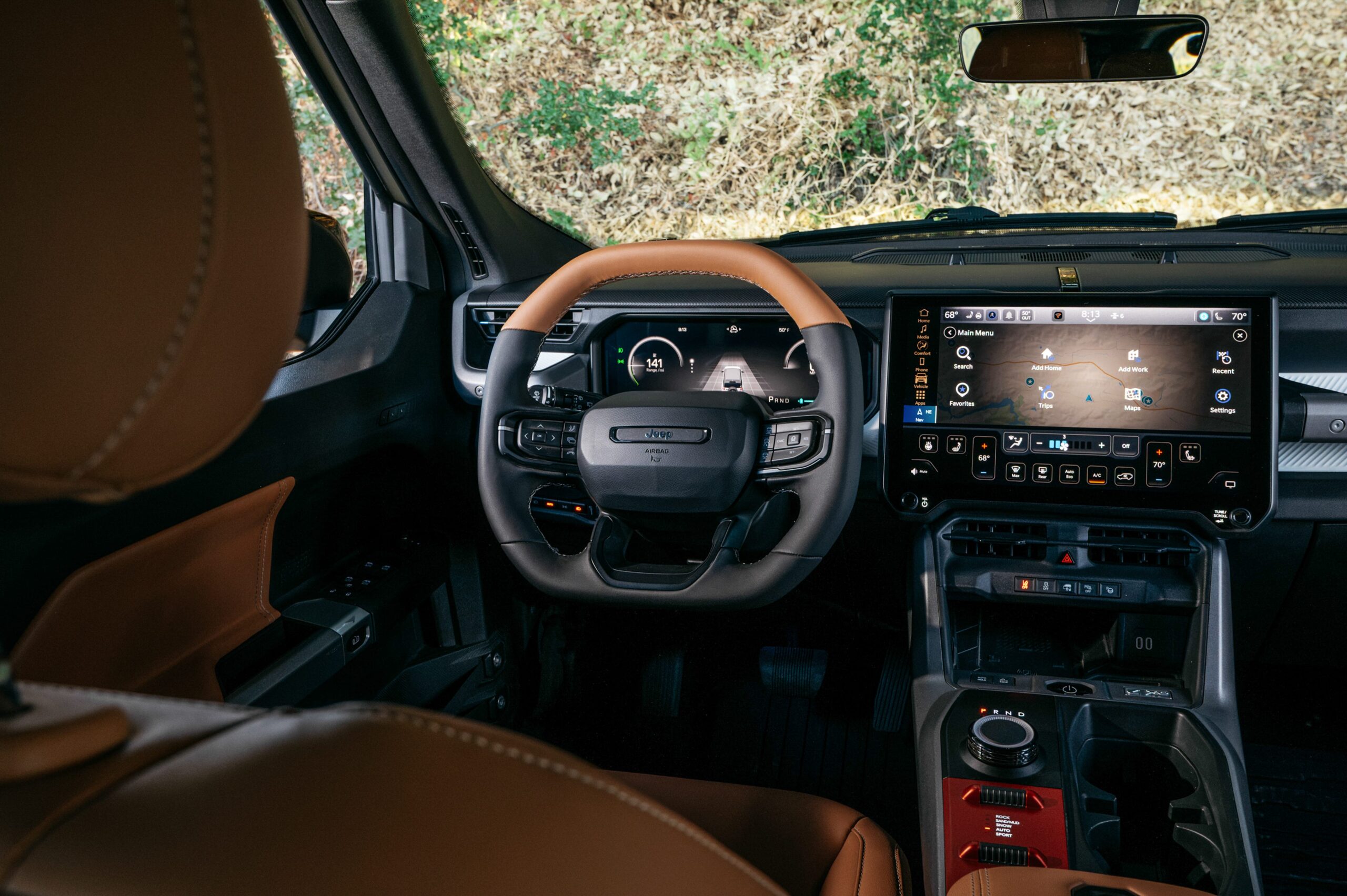
The leaked images show a cabin that borrows heavily from the Wrangler’s utilitarian DNA but layers in modern tech that feels a generation ahead of the aging JL platform. You’re looking at a flat, low-profile dashboard with a large central touchscreen—likely in the 12- to 14-inch range based on proportions—that sits above physical climate controls, a nod to off-roaders who need to adjust settings with gloved hands on bumpy terrain. The steering wheel is thick-rimmed with integrated audio and cruise buttons, and there’s a prominent rotary dial for drive mode selection that includes dedicated off-road settings like Rock and Sand.
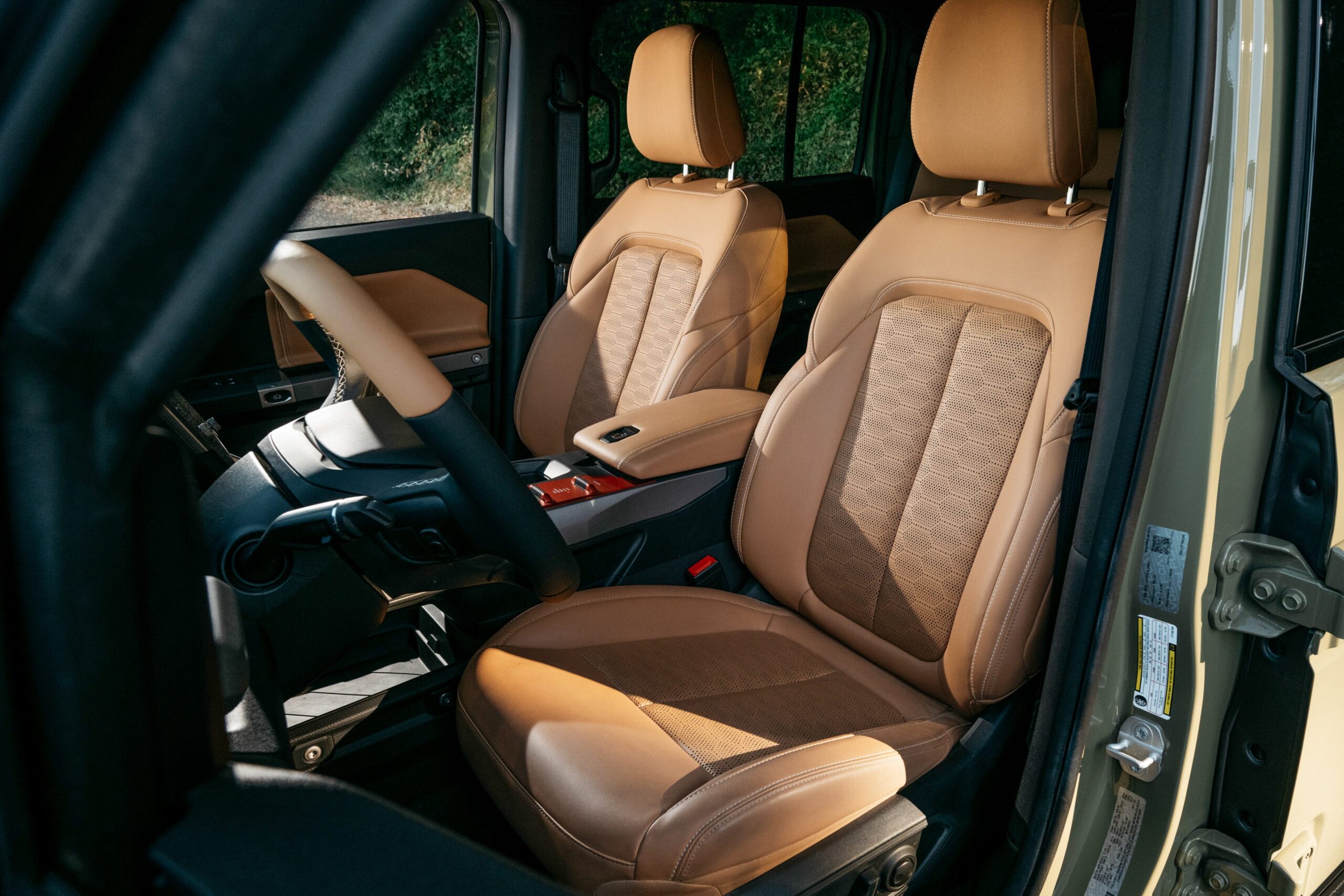
Materials appear to be a mix of durable, wipe-clean surfaces and soft-touch upper panels, with exposed grab handles and rubberized switchgear that suggest Jeep is prioritizing function over luxury. The seats look supportive with prominent bolsters, and the rear bench appears to fold flat for cargo, though the photos don’t show the full layout with seats down. What’s missing from these images is any indication of battery placement, floor height, or headroom—critical factors for anyone who plans to haul gear or sit in the back for long stretches on the way to Moab.
The Missing Numbers That Should Give You Pause
The trade-off is clear: of this reveal: Jeep has shown us the wrapping paper but not the gift inside, and for a vehicle slated to arrive in late 2025 or early 2026, the silence on specs is starting to feel like a red flag rather than a marketing strategy. The Recon is built on the STLA Large platform, which in other applications has delivered anywhere from 300 to 500 miles of range depending on battery pack and motor configuration, but Jeep hasn’t confirmed which setup this off-roader will use. That’s a massive swing—300 miles means you can do a day trip to the mountains and back without charging, while 500 miles opens up cross-country road trips with minimal stops.
Charging speed is equally murky, and that matters more than raw range for real-world usability. If the Recon supports 350-kW fast charging like some STLA siblings, you’re looking at a 10-to-80 percent top-up in around 20 minutes, which is manageable on a road trip. But if Jeep dials it back to 150 kW to save costs, that same charge could stretch to 40 minutes or more, turning every long-distance drive into a logistical puzzle. The photos don’t show the charge port location, the gauge cluster display, or any range readout—details that would tell us far more than the angle of the dashboard vents.
Who Should Get Excited and Who Should Walk Away
If you’re an off-road enthusiast who cares more about approach angles and locking differentials than EPA numbers, the Recon’s interior suggests Jeep is taking the electric Wrangler formula seriously, with dedicated off-road drive modes and a layout designed for visibility over the hood. The flat dashboard and low cowl should give excellent forward sightlines for picking lines on rocky trails, and the physical controls are a smart choice for drivers who don’t want to navigate a touchscreen while bouncing over boulders. For this crowd, the Recon’s cabin looks like a genuine evolution of the Wrangler formula, not a half-hearted EV conversion.
But if you’re a daily driver who needs concrete answers before signing on the dotted line, the lack of data should send you to the sidelines until Jeep publishes the full spec sheet. The financial stakes are real: with no official pricing announced, early adopters could face dealer markups that push the Recon well past the $60,000 mark, and without range or charging numbers, you can’t calculate whether this vehicle makes sense for your commute or your budget. The counterintuitive truth is that these interior photos are generating excitement precisely because they’re light on substance—and that’s a reason to be skeptical, not eager.
The Bottom Line on the Recon’s Cabin Reveal
What we’ve seen of the 2026 Jeep Recon’s interior looks promising, with a design that balances off-road durability with modern tech in a way the current Wrangler struggles to match. The real test will come when Jeep finally releases the range, charging, and pricing figures—and until then, any decision to put down a deposit is based on faith, not facts. If you’re willing to gamble on Jeep’s EV credentials and can afford to wait out potential markups, the Recon could be a compelling choice for trail-ready electric adventure.
But for the majority of buyers, the smart play is to hold off until the spec sheet lands, because a nice dashboard doesn’t tell you whether this truck can get you home on a cold winter night with a dead charger down the road. The Recon’s interior is a solid first impression, but it’s the numbers we haven’t seen that will determine whether this is a genuine off-road revolution or just another EV that looks good in photos and falls short in practice. Keep your wallet closed until Jeep shows its hand.