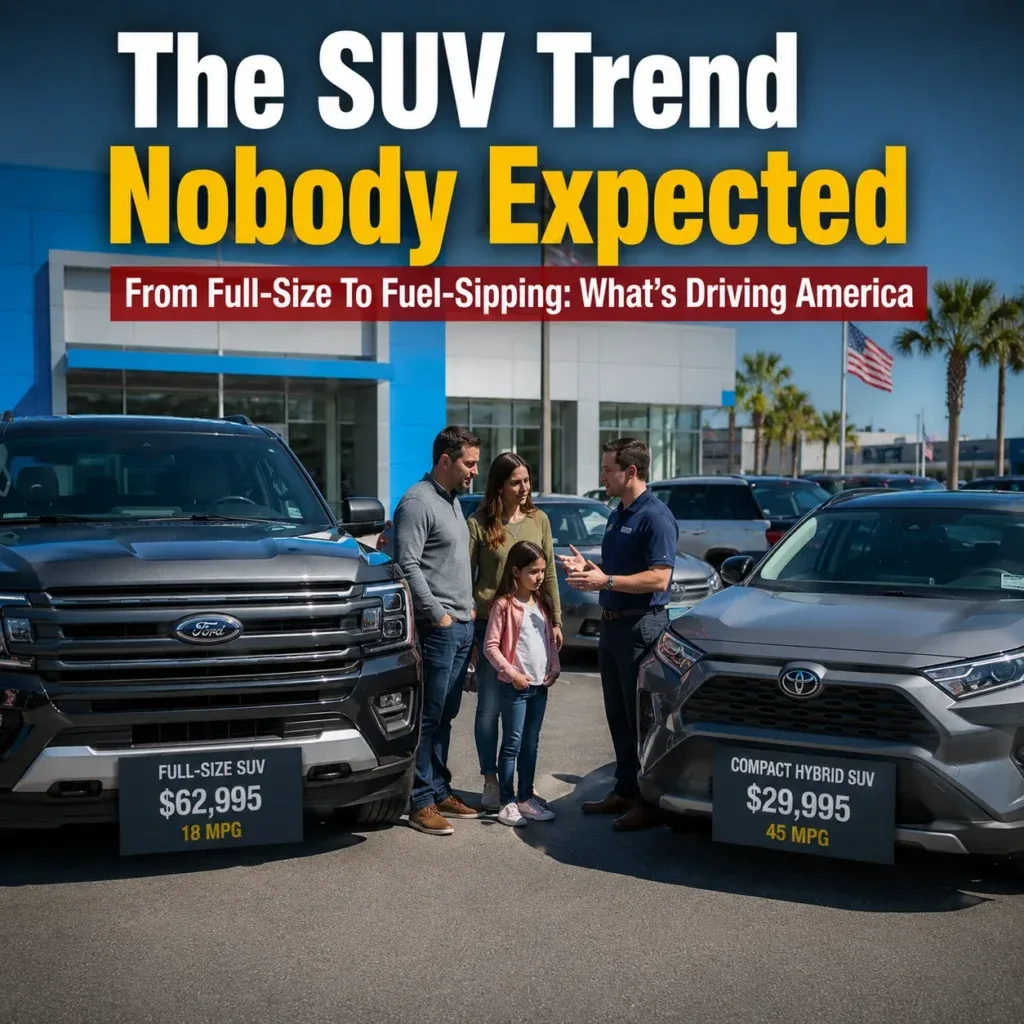
The SUV Trend : Three years ago, if you walked through a dealership parking lot, the message was impossible to miss.
Bigger was better.
Bigger SUVs.
Bigger wheels.
Bigger screens.
Bigger price tags.
It seemed like every new vehicle was larger than the one before it.
And for a while, buyers went along with it.
Families upgraded from compact SUVs to midsize SUVs.
Midsize SUV owners started looking at full-size models.
Manufacturers happily followed the demand.
Then something unexpected happened.
A growing number of Americans started moving in the opposite direction.
Not all at once.
Not dramatically.
But enough to create one of the most interesting trends in today’s automotive market.
People are discovering that they may not need as much SUV as they thought.
The Parking Lot Test
The easiest way to see this trend isn’t by looking at sales charts.
It’s by looking at how people actually use their vehicles.
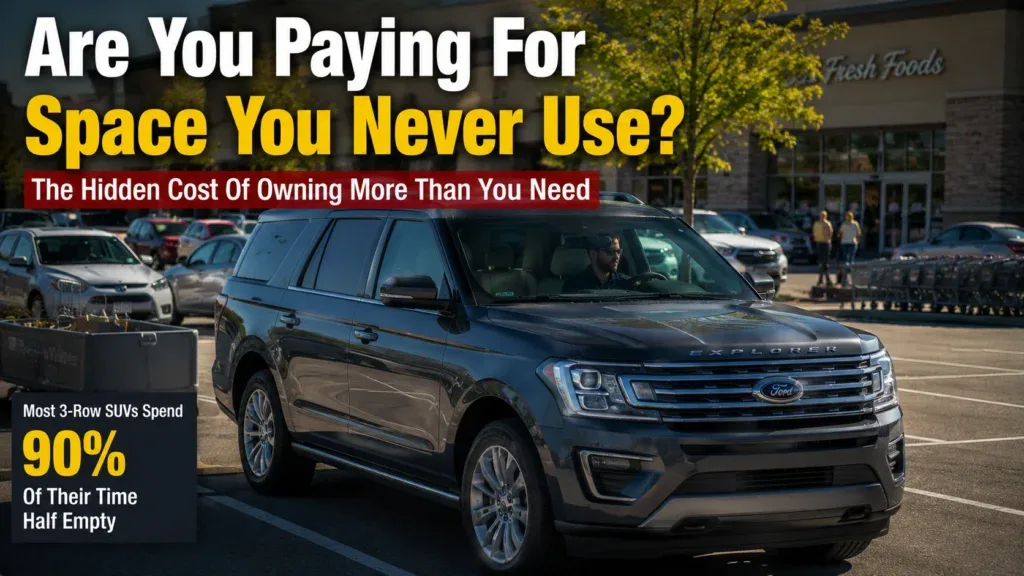
Watch a large SUV pull into a grocery store parking lot.
There’s often one driver.
Maybe two passengers.
An enormous cargo area.
And a third row that hasn’t been used in weeks.
The SUV isn’t failing.
It’s simply underutilized.
For years, buyers assumed bigger automatically meant better.
Now many are asking a different question.
“Am I paying for space I never use?”
That’s a powerful question.
Because once someone starts asking it, they often start shopping differently.
The Cost Of Extra Space
The interesting thing about large SUVs is that their advantages are obvious.
The costs are not.
Everyone notices the extra room.
Fewer people think about the larger tires.
The higher fuel bills.
The increased insurance costs.
The higher purchase price.
Those expenses don’t arrive all at once.
They arrive slowly.
Quietly.
Month after month.
Which makes them easy to ignore.
Until someone compares ownership costs with a smaller vehicle and realizes how much money they’ve been spending for capability they rarely use.
Families Are Becoming More Practical
This trend isn’t about people suddenly disliking SUVs.
America still loves SUVs.
That hasn’t changed.
What’s changing is how families evaluate them.
Instead of asking:
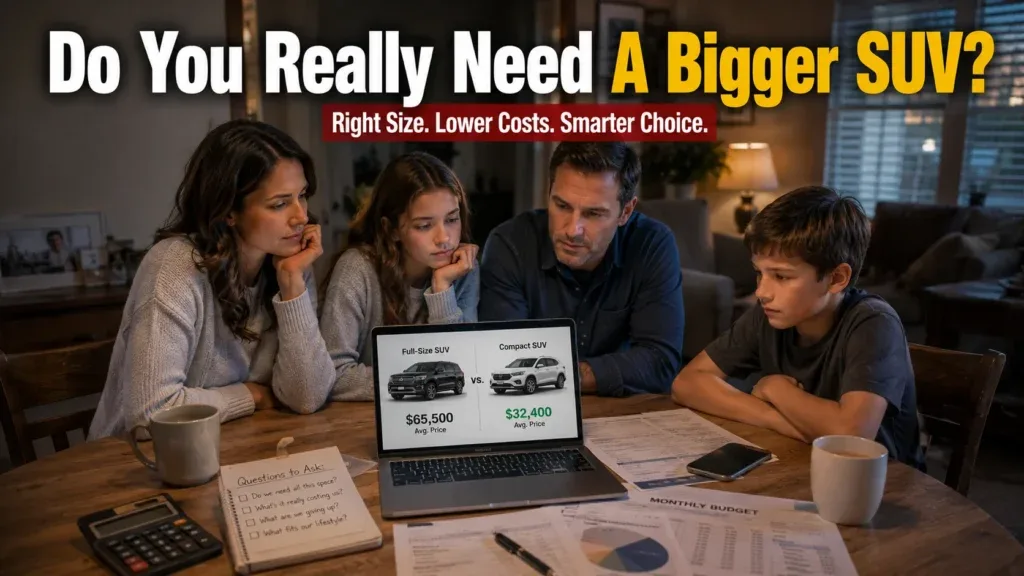
“What’s the biggest SUV I can afford?”
More buyers are asking:
“What’s the smallest SUV that still works for my life?”
Those are very different conversations.
And they often lead to very different purchases.
Hybrid SUVs Accelerated The Shift
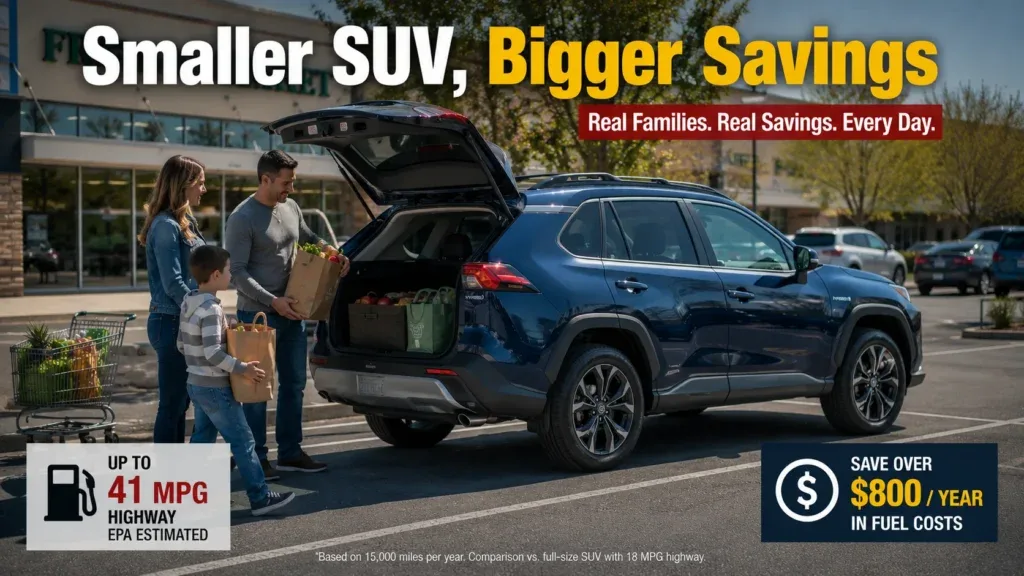
The rise of hybrid SUVs played a major role here.
Vehicles like the Toyota RAV4 Hybrid, Honda CR-V Hybrid, Hyundai Tucson Hybrid, and Kia Sportage Hybrid proved something important.
Families could get excellent fuel economy without sacrificing practicality.
Suddenly the argument for oversized SUVs became less convincing.
Many buyers realized a well-designed compact hybrid SUV handled nearly everything they needed.
School runs.
Road trips.
Grocery shopping.
Weekend trips.
Daily commuting.
The list goes on.
The result?
Many families stopped moving up.
And started staying put.
Also Read:
https://driveglobalnews.in/the-family-suv-americans-keep-buying-even-when-better-options-exist/ – Why one family SUV continues dominating American driveways despite growing competition.
The Three-Row Reality
Here’s something dealerships rarely talk about.
Many three-row SUVs spend most of their lives functioning as two-row SUVs.
The third row stays folded down.
It becomes cargo space.
That’s not a criticism.
It’s reality.
For large families, the extra seating remains valuable.
For everyone else, the calculation becomes more complicated.
Some buyers eventually realize they’re carrying around extra size every day for situations that happen only a few times each year.
Once they see that, downsizing starts making sense.
Younger Buyers Think Differently
Millennials and younger families are entering the market with a different perspective.
Many prioritize flexibility.
Efficiency.
Technology.
Value.
They’re often less interested in making a statement through vehicle size.
Instead, they want a vehicle that fits their budget and daily life.
That shift is influencing the entire industry.
Manufacturers are paying attention.
Because consumer behavior always shapes future products.
Bigger Isn’t Going Away
Let’s be clear.
Large SUVs aren’t disappearing.
Far from it.
There will always be buyers who genuinely need them.
Large families.
Frequent travelers.
People who tow boats or trailers.
For those owners, larger SUVs remain excellent tools.
The trend isn’t about eliminating big SUVs.
It’s about more buyers questioning whether they personally need one.
And questioning assumptions often leads to market changes.
Why Automakers Are Watching Closely
This trend matters because it affects future vehicle development.
If buyers continue prioritizing efficiency and practicality, manufacturers will respond.
More compact hybrids.
More efficient powertrains.
Smarter packaging.
Better use of interior space.
The companies that recognize shifting consumer priorities earliest often gain an advantage.
That’s why this trend is getting attention inside the industry.
Even if many consumers haven’t noticed it yet.
Also Read:
https://driveglobalnews.in/the-hidden-cost-of-owning-a-large-suv/ – The ownership expenses many buyers underestimate until years later.
The Real Story Isn’t About SUVs
The most interesting part of this trend has very little to do with vehicles.
It’s about behavior.
For years, consumers assumed more was automatically better.
More space.
More features.
More capability.
Now many are becoming more selective.
More intentional.
More practical.
That mindset extends beyond the automotive world.
It’s showing up in housing decisions.
Travel decisions.
Spending decisions.
Vehicle choices simply happen to be one of the clearest examples.
What Happens Next?
Nobody knows exactly where the market goes from here.
Maybe fuel prices rise.
Maybe they fall.
Maybe new technology changes everything.
But one thing seems increasingly clear.
A growing number of Americans are realizing that the best vehicle isn’t necessarily the biggest one.
It’s the one that solves the most problems while creating the fewest new ones.
That’s a subtle shift.
Yet it’s powerful.
Because trends don’t usually begin when everyone notices them.
They begin when enough people quietly start making different decisions.
And right now, all across America, many families are doing exactly that.
Not by buying larger SUVs.
But by deciding they don’t need one anymore.