
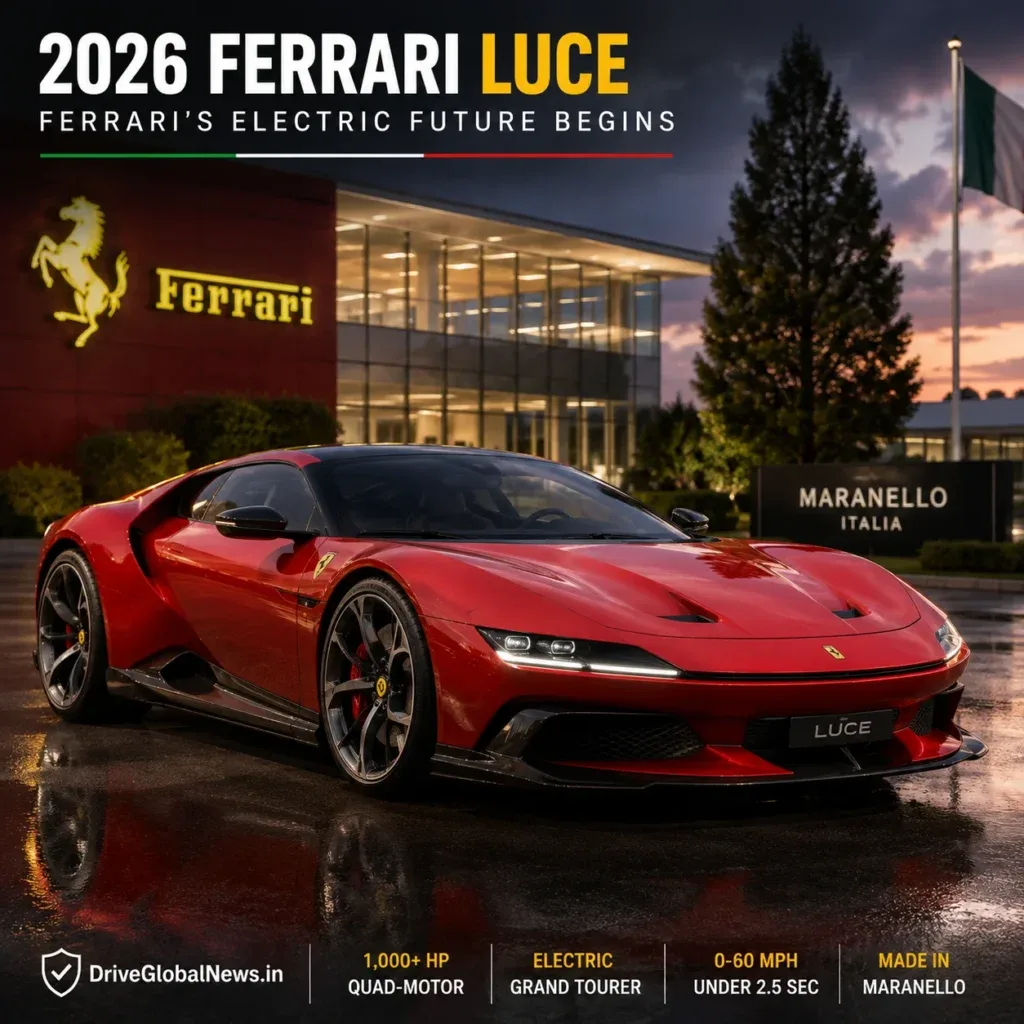
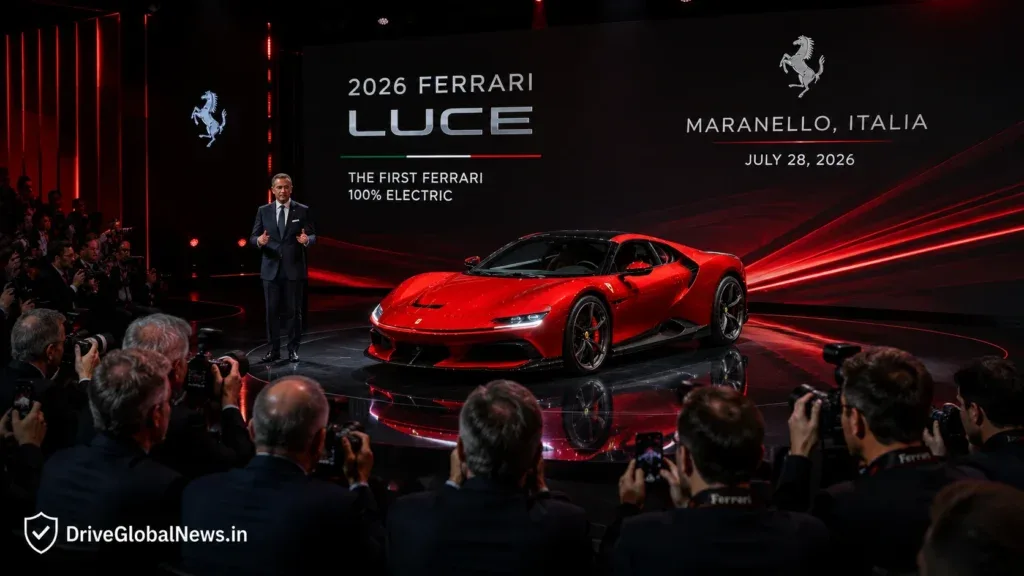
On May 25, 2026, Ferrari premiered the Luce — its first battery-electric vehicle — at a world premiere event in Maranello.
The car was extraordinary. $640,000. Quad-motor. 1,000-plus horsepower. A Jony Ive interior featuring micro-LED technology that Apple spent $10 billion developing and then abandoned. A design unlike anything Ferrari had ever built.
Ferrari shares fell the next day.
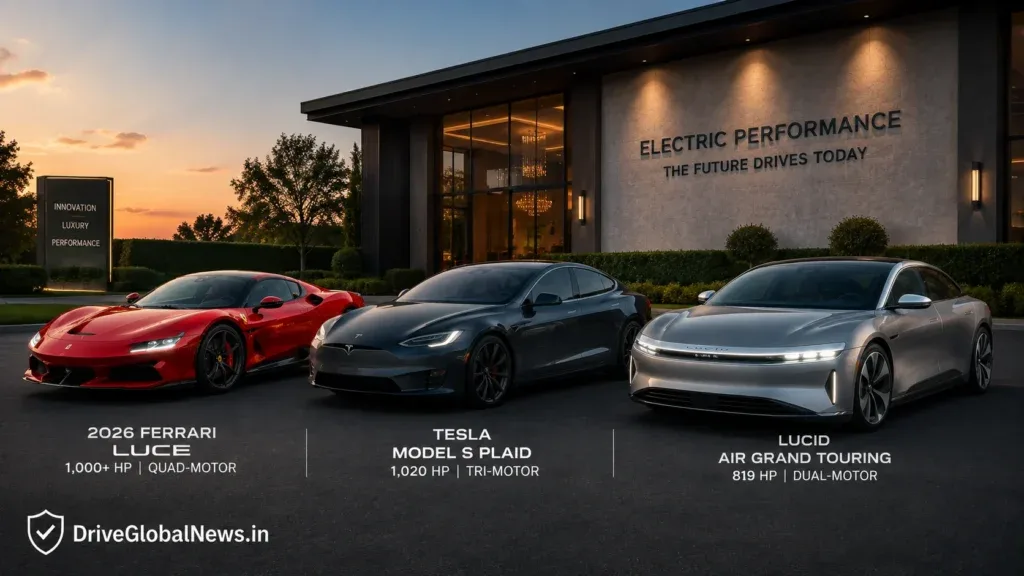
Wall Street’s analysis was logical: the Luce does 0-60 in 2.4 seconds, but the $97,000 Tesla Model S Plaid does it in 1.99 seconds. The Lucid Air Grand Touring achieves 516 miles of range at $138,000 — nearly half the Luce’s price. Investors ran the numbers and concluded that even Ferrari’s brand premium couldn’t fully justify a 6x price multiplier over the closest competitor on raw performance metrics.
The investors were wrong.
As of August 2, 2026 — just 60 days after the Luce’s premiere — Ferrari confirmed that the car has reached its entire 2026 sales target. The Drive reported it this week: “Things are looking rosy at Ferrari, with the Luce EV reaching its 2026 sales target in just two months, and the automaker raising its full-year revenue estimate.”
Two months. Full year target. Complete.
What Actually Happened
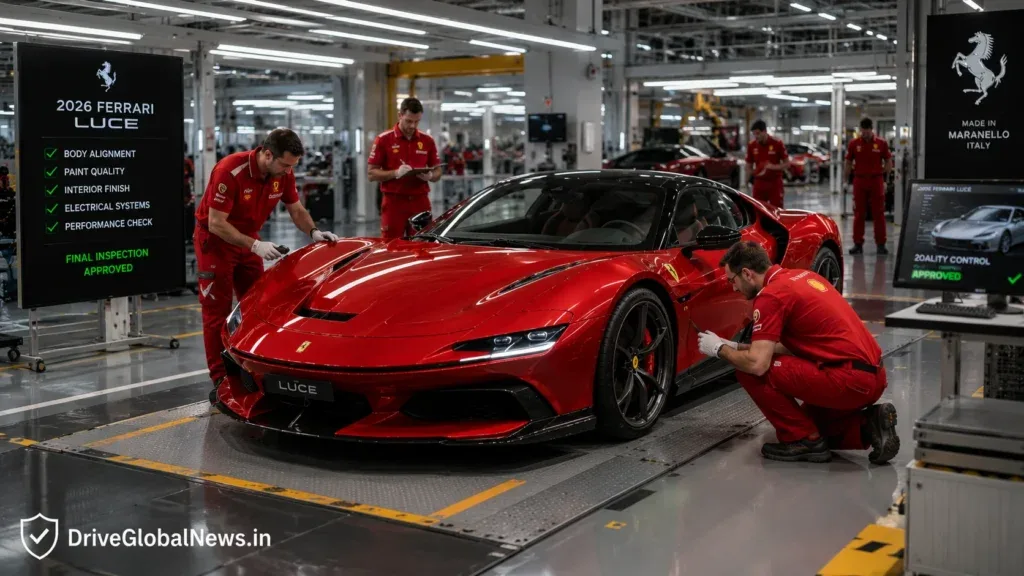
Ferrari manages its production deliberately and conservatively. This is not an accident — it is the core of the brand’s commercial philosophy. Ferrari produces fewer cars than the market wants, always. The waiting list is the product. Exclusivity is the feature.
The Luce’s 2026 production allocation was always going to be small. Ferrari doesn’t produce 50,000 units of anything. The annual production of all Ferrari models combined globally runs approximately 13,000-14,000 vehicles.
For the Luce’s first production year, Ferrari allocated a carefully managed number of build slots — enough to generate global presence and brand statement, not enough to satisfy all demand. When CEO Benedetto Vigna confirmed on May 30 that the order book extended toward the end of 2027, the writing was already visible.
By August 1, it was official: sold out for 2026. Revenue estimate raised. The stock market apology is unwritten but implicit in every subsequent Ferrari earnings update.
Why the Stock Market Got It Wrong
The analysts who sold Ferrari stock after the Luce premiere were applying a framework that works perfectly well for evaluating mainstream EVs — and doesn’t apply to Ferrari at all.
Comparing the Luce to a Tesla Model S Plaid on 0-60 time is like comparing a Hermès Birkin bag to a well-made leather bag from a department store because they both hold things. The comparison is technically accurate and commercially irrelevant.
Tesla’s buyer is purchasing transportation with performance metrics. Ferrari’s buyer is purchasing membership in a specific cultural category. The metrics don’t transfer.
Ferrari’s Luce buyers didn’t care that the Plaid is faster. They’re not cross-shopping Pladis and Luces the way a family researches Hyundai Tucson vs Toyota RAV4. They already own Porsches, McLarens, and previous Ferraris. They wanted a Ferrari EV. Ferrari made one. They bought it.
The brand premium is structural — not rationalizable, not negotiable, and not subject to the same price elasticity that governs mainstream EV purchasing decisions. Wall Street priced the stock as if Ferrari was entering a competitive market. Ferrari’s buyers don’t experience it as a competitive market.
What This Tells Us About the EV Market Right Now
Here’s what makes the Luce’s success actually interesting beyond the Ferrari bubble.
The narrative surrounding EV demand in 2026 has been predominantly negative. Sales fell 27.7% in Q1 after the federal tax credit expired. Multiple models got canceled. Stellantis wrote off $22 billion. Automakers retreated from EV commitments they had made with great fanfare two years earlier.
The Luce’s 60-day sellout is a data point that complicates that narrative.
At the highest price point — where buyers are insulated from tax credit changes, financing rate environments, and monthly payment anxiety — EV demand is not soft. It is exceptionally strong. The constraint isn’t buyer interest. It’s production capacity.
The weakness in the EV market is price sensitivity in the middle. The $35,000 Hyundai Ioniq 5 sells steadily because the value proposition is clear and the price is accessible. The $640,000 Ferrari Luce sells out in 60 days because its buyers are indifferent to price. The segment that struggles is $65,000-$90,000 EVs competing against German and American alternatives — where buyers are price-sensitive enough to notice the federal tax credit’s absence but aspirational enough to expect luxury-tier experiences.
Ferrari’s data doesn’t solve that middle market problem. But it does confirm that the technology itself isn’t the obstacle to EV adoption at the top end of the market.
The Revenue Raise and What Comes Next
Ferrari raising its full-year revenue estimate because the Luce sold faster than projected is not a surprise to anyone who understood the brand’s commercial model going in.
What comes next is more interesting.
Ferrari has confirmed two additional new models arriving before year-end 2026 — both described as significant departures from existing Ferrari products. Whether either involves electrification, hybridization, or a different kind of product expansion hasn’t been specified. Ferrari executives have historically been disciplined about not telegraphing product plans.
What’s clear is that the Luce’s success gives Ferrari management more commercial confidence in the electrification direction. A car that sells out in 60 days and forces upward revision of revenue estimates is not a car that management second-guesses.
The stock market that sold Ferrari shares after the Luce premiere has presumably noticed the last two months of data. The shares have recovered. The revenue estimate is higher. The lesson — that Ferrari’s commercial model doesn’t respond to competitive EV benchmarking the way mainstream brands do — is presumably better understood now than it was on May 26.
Ferrari has been defying conventional automotive wisdom for 75 years. The Luce’s two-month sellout is just the latest example.