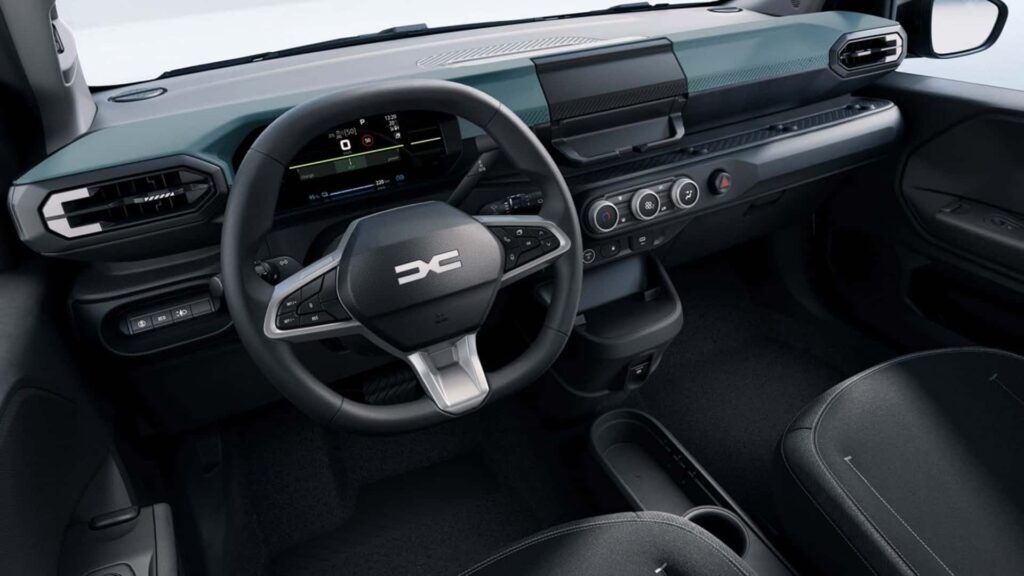
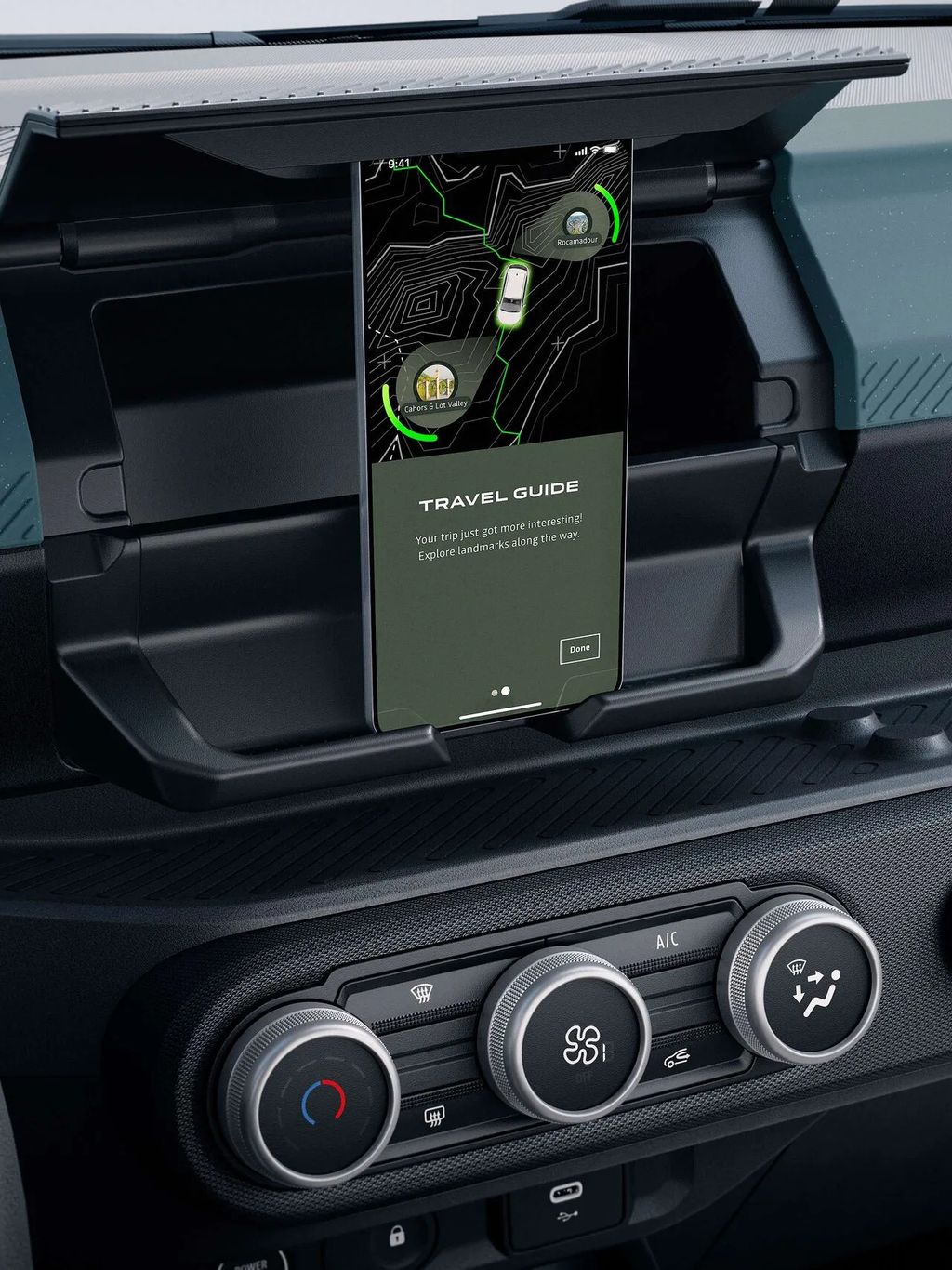
Dacia Spring: The Dacia Spring’s base trim will save you roughly €2,000 by ripping out the center touchscreen entirely, and that single decision tells you more about the European EV market than any press release ever will. Dacia calls it the Essential trim. I call it the most honest cost-cutting move in the electric car business right now. You get a 26.8 kWh battery, a 143-mile WLTP range, and a plastic mount on the dash where a screen used to live. No navigation. No built-in infotainment. Just a phone cradle and a prayer.
Dacia Spring: What Exactly Do You Lose When the Screen Disappears?
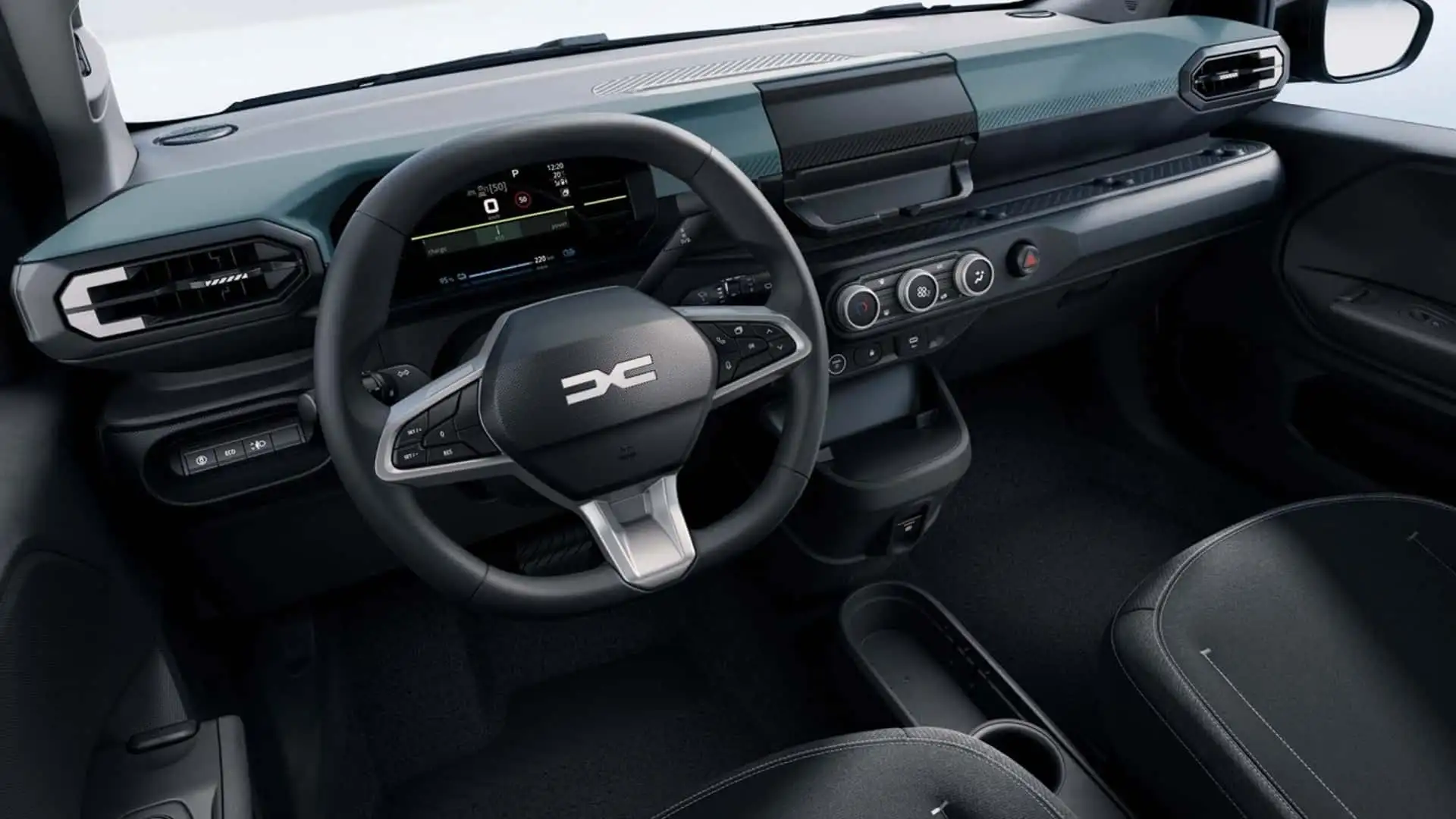
Everything you’ve been trained to expect from a modern car, basically. The Spring Essential deletes the 7-inch center display, which means no factory navigation, no embedded apps, no over-the-air updates for infotainment, and no rearview camera feed through a dedicated monitor. Dacia’s workaround is a smartphone docking system that mirrors your phone for media and calls. So your $800 iPhone becomes the brain of your $19,000 car.
Is that a dealbreaker or a liberation? Depends on your commute. If you’re doing 12 miles each way through Lyon or Milan traffic, Google Maps on your phone works fine. If you’re used to a 12-inch screen with wireless CarPlay and a 360-degree camera, this cabin will feel like a rental car from 2012. The bigger question nobody at Dacia wants to answer: how does the rearview camera display work without a screen? European regulations require reversing cameras on new cars, so either Dacia fits a tiny separate monitor or the car skips that safety feature entirely. That’s not a cost cut. That’s a potential regulatory headache.
The Range Number That Matters Isn’t 143 Miles
WLTP range figures are measured in a lab with the heater off and the lights dimmed. The Spring’s 143-mile rating will translate to somewhere between 85 and 105 miles in real winter driving with the heat on and headlights blazing. That’s a 30% haircut, which is normal for small-battery EVs. But on a 26.8 kWh pack, a 30% haircut leaves you with barely enough to cover a suburban errand loop twice.
Think about what that means in daily life. You plug in at home overnight, wake up with a full “tank,” and drive 40 miles round trip to work. You get home with maybe 45% left. Then you want to visit a friend 25 miles away. Now you’re doing mental math about whether you can make it without a public charger stop. That’s the reality of a sub-€20,000 EV with a tiny battery. It works perfectly for one specific buyer: the urban commuter who never exceeds 60 miles in a day and has a garage outlet. For anyone else, it’s a rolling anxiety generator.
Who Should Actually Buy This Thing?
If your household already has a gas car for road trips, the Spring Essential makes a compelling second vehicle. The monthly payment on a €19,000 EV in France or Germany, after local incentives, can land under €200. That’s cheaper than a monthly transit pass in some cities. For a retiree doing grocery runs, a delivery driver covering a tight urban zone, or a family that needs a cheap third car for a teenager, the math works.
But tech-savvy buyers should walk away immediately. No screen means no software updates, no built-in charging route planner, and no resale value protection as newer EVs flood the market. A 2024 Spring with a phone cradle will look ancient by 2027 when every competitor has a standard 10-inch display and 200 miles of range. Depreciation on early small-battery EVs has been brutal. You’re saving €2,000 upfront to lose €4,000 at trade-in. That’s not frugality. That’s a trap.
The Counterintuitive Case for Dumbing Down Your Dashboard
Here’s the part that makes me pause before dismissing the screenless Spring. Study after study shows that touchscreens increase driver distraction. Buttons you can feel without looking are safer than menus you have to scroll through at 70 mph. By deleting the center screen, Dacia forces you to mount your phone at eye level and use voice commands. That’s arguably safer than a built-in system that buries the heated seat control three menus deep.
There’s also a repair argument. A cracked 7-inch display costs $800 to $1,200 to replace. A phone mount costs $15. For a budget buyer who plans to keep this car for a decade, fewer electronics means fewer expensive failures. Dacia is betting that some buyers genuinely want less car, not more. The question is whether enough of them exist to justify the engineering. European deliveries start late 2024, and there’s no US launch planned, so American buyers can’t even make this choice. That’s probably fine. Our commutes are longer, our winters are colder, and our expectations for a $20,000 car include a screen that actually works.
My verdict: the Dacia Spring Essential is a brilliant urban appliance for a very narrow slice of buyers who prioritize low cost and low complexity above everything else. If you fit that profile and have a garage charger, buy it and ignore the tech snobs. If you don’t, spend the extra €2,000 on the trim with the screen, or better yet, wait 18 months for the used EV market to hand you a 200-mile car for the same money. The caveat is simple: this car only makes sense if you never plan to leave the city. The moment you do, you’ll wish you’d bought something else.