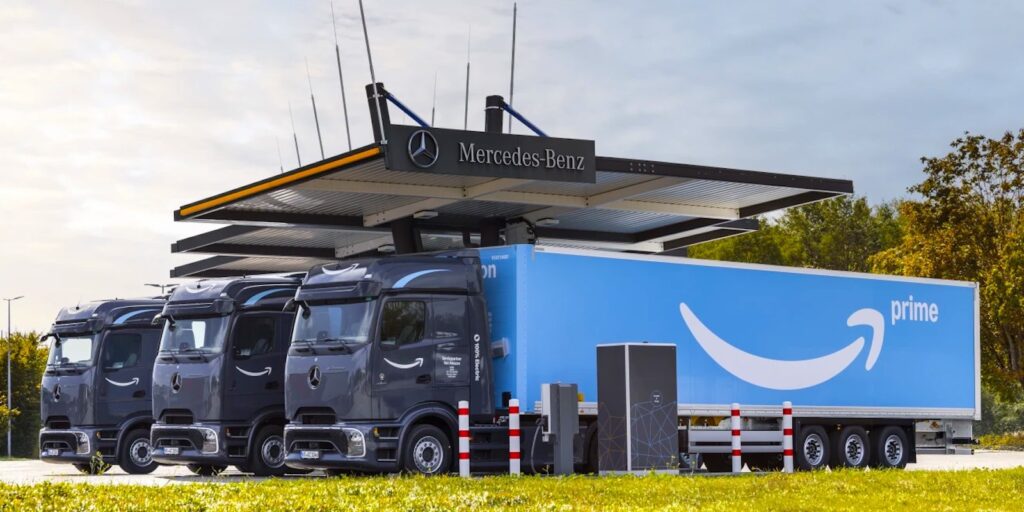
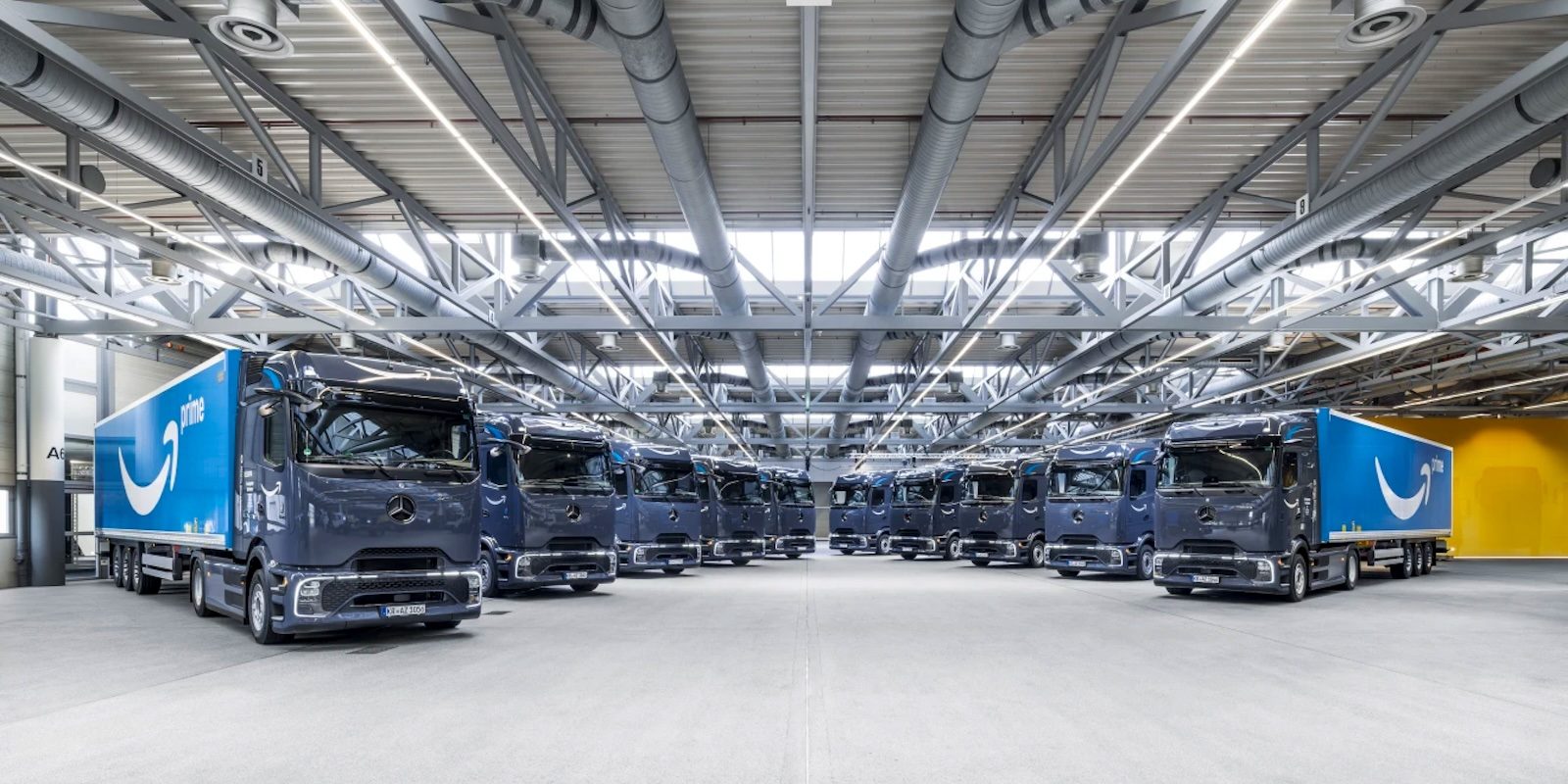
Mercedes Benz eActros: Fifty Mercedes-Benz eActros electric semis will be hauling Amazon packages across Germany before the end of 2026, and Mercedes still won’t tell you what one costs. That’s the headline buried under the press-release gloss: a fleet order with no public price, no lease rate, and no total cost of ownership figure attached to it. So if you run a trucking company — or you’re just the person who signs the monthly payment — the number that matters most is the one nobody printed. This is a launch story about a truck you cannot buy at a published price, deployed by a company that doesn’t need your help affording it.
Mercedes Benz eActros: The Claim, the Reality, and the Load You’re Actually Pulling
| Spec | Details |
|---|---|
| Price | Undisclosed (est. $250,000–$350,000) |
| Range | Up to 400 km (claimed) |
| Power | Not specified |
| Transmission | Single-speed |
| Deployment | 50 units for Amazon by end of 2026 |
Mercedes claims up to 400 km of range for the eActros. That’s Berlin to Hamburg with a little margin, or roughly Dallas to Waco and back if you’re translating it to American highway math. Now load it to the legal gross weight, run the heater in a Bavarian February, and climb a few grades, and you’re looking at 280 to 320 km before the battery is begging. That’s the difference between a single-shift truck and a truck that needs a mid-route charge while the diesel next to it is already on its second delivery loop.
From the driver’s seat, the eActros is a strange experience for anyone raised on a 12-liter diesel. The torque arrives before you’ve finished releasing the brake, pressing you into the seat back with none of the wait-and-shudder of a turbo spooling. At a depot exit, the truck simply moves — no rattle through the floor, no vibration climbing the steering column into your wrists. The silence at 50 km/h is the part that takes a week to trust. You hear the tires, the wind over the mirrors, and the whine of the drivetrain like a distant vacuum cleaner in the next room. That’s genuinely pleasant. It’s also not the reason fleets buy trucks.
The Short Answer, and Why It Might Be Wrong for You
The short answer: if you’re Amazon, or a fleet with your own depot, your own charging hardware, and a subsidy consultant on payroll, the eActros makes sense on paper you’ll never show anyone. The longer answer — and why the short answer might be wrong for you specifically — starts here. The economics only work when someone else is covering a chunk of the capital cost. Amazon isn’t buying 50 electric semis because the math beats diesel. Amazon is buying them because German and EU incentive programs, plus the green logistics branding, turn a money-losing truck into a marketing line item. Your balance sheet doesn’t have that column.
So ask yourself the buyer question directly: does this justify a premium that could run two to three times a comparable diesel tractor? At an estimated $250,000 to $350,000 per unit before incentives, a financed eActros could carry a monthly payment north of $3,000 — and that’s before you’ve paid an electrician to upgrade your yard’s service entrance.
What Shows Up After You Sign 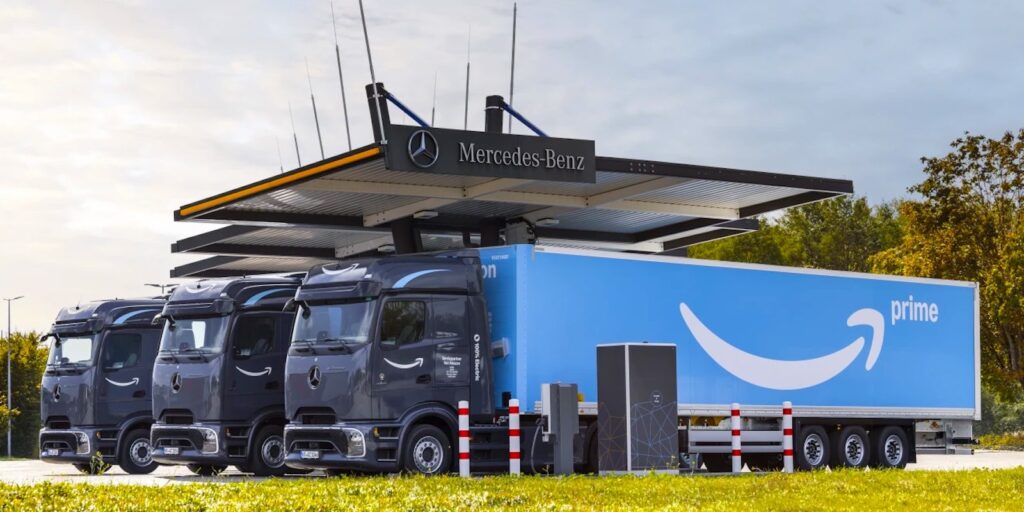
The first ownership reality is charging infrastructure, and it isn’t a one-time line item. A depot charger that can refill a 400-plus kWh pack overnight requires a service upgrade, a transformer, and in many cases a demand-charge structure that punishes you for pulling peak power at 6 p.m. Fleet managers discover this in month two, when the utility bill arrives and the “fuel savings” look smaller than the slide deck promised.
The second reality is tire and brake wear on a truck that weighs several tons more than its diesel twin. Regenerative braking saves the friction brakes, but the tires carry the battery mass, and drive-axle rubber on a loaded electric tractor wears faster than the spec sheet suggests. Neither of these are dealbreakers. They’re just the things no showroom mentions until after you sign.
eActros Versus Tesla Semi and Volvo FH Electric
Two competitors matter here: the Tesla Semi and the Volvo FH Electric. The decision point that determines 80% of purchases is total cost of ownership per mile, and around that single metric, everything else is noise. The Tesla Semi claims 500 miles of range at roughly $180,000, but production has been a moving target for years — you can’t run a route on a promise. The Volvo FH Electric delivers up to 300 km and is available now, priced in the same undisclosed neighborhood as the eActros.
On monthly payment, a Tesla Semi at the advertised price could undercut an eActros by $1,000 or more per month if you ever actually receive one. The Volvo and the Mercedes land close enough that the choice comes down to depot compatibility and dealer support, not the sticker. Choose the Tesla Semi if you can wait indefinitely and your route fits 500 miles. Choose the eActros or the Volvo if you need a truck this year and your routes fit 300 km. For most fleets, diesel still wins on cost per mile without subsidies, and that’s the part nobody wants to say out loud.
Which Variant, and Who Actually Belongs in This Truck
The eActros 300 is the base variant, and it’s for the operator running fixed, short depot-to-depot loops under 200 km with charging at both ends. If your routes stretch past that, skip it — the range anxiety will eat your dispatch margin alive. The eActros 400 is the one to buy if you’re buying at all: the extra range covers real-world degradation, weather, and the detour you didn’t plan for. Most fleets that can charge at the depot should stretch to the 400 and stop pretending the 300 will do.
The top-spec long-range configuration is where the honest calculation gets ugly. You’re paying a premium for battery capacity you’ll only use on the handful of days your route runs long, and that capacity adds weight you haul every single day. Unless your dispatch data shows those long runs happening weekly, the extra spend buys peace of mind, not profit.
Meet two buyers. Persona one: a 44-year-old logistics manager in Hamburg running 30 fixed urban delivery routes with a company-owned depot and access to EU subsidies — this truck is the exact right answer, and the numbers close. Persona two: a 52-year-old owner-operator outside Nashville pulling regional freight with no depot, no charger, and a diesel tractor that’s paid off — this truck is the wrong answer for that life, and no subsidy will fix it. The car is the same. The life is different.
Mercedes Benz eActros: Frequently Asked Questions
Q: What is the Mercedes-Benz eActros range and price?
The Mercedes-Benz eActros claims up to 400 km range, but real-world range may be 20-30% lower when fully loaded. Pricing is undisclosed, with estimates between $250,000 and $350,000 before incentives. Amazon will deploy 50 units in Germany by end of 2026.
Q: What are the maintenance costs of the Mercedes-Benz eActros?
Maintenance costs for the Mercedes-Benz eActros are expected to be lower than diesel due to fewer moving parts, but battery degradation and high replacement costs remain concerns. Without public data, fleet operators face uncertainty in budgeting long-term expenses.
Q: Should I buy the Mercedes-Benz eActros or wait?
If you operate a large fleet with depot charging and access to subsidies, the Mercedes-Benz eActros could work. However, for most fleets, waiting is wiser until pricing, real-world range, and charging infrastructure improve. Diesel remains cheaper for now.