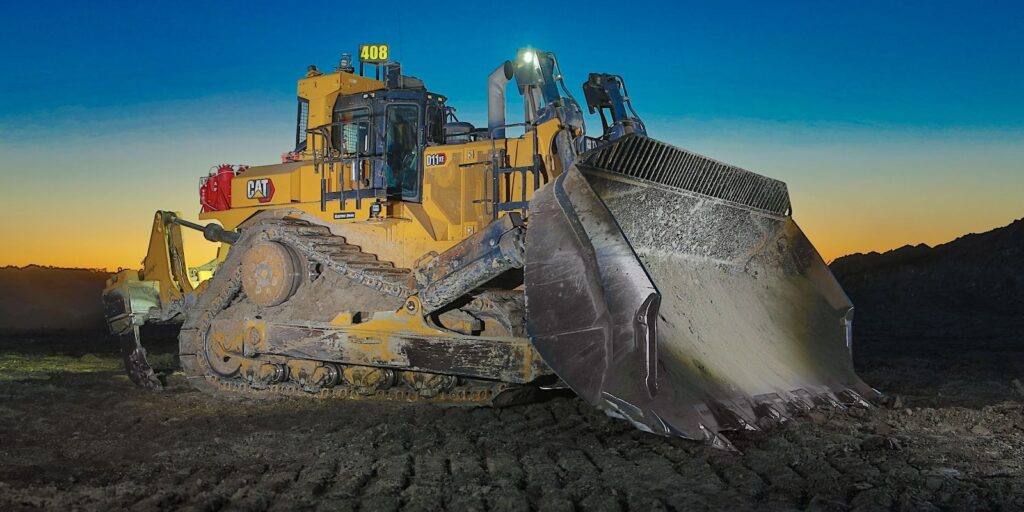
Caterpillar Electric Drive Dozer: The asking price for Caterpillar’s electric drive dozer line lands somewhere near $500,000 for the D6 XE, and that number buys you a machine that still burns diesel with zero plug-in capability. That’s a quarter-million dollars more than a used D6T with 4,000 hours on the clock, and roughly $50,000 over a comparable Komatsu D61EXi-24. So what exactly is an operator paying for when the invoice clears half a million? The answer sits in the drivetrain architecture, where a diesel engine spins a generator that feeds electric motors at the final drive. No torque converter. No transmission gears. Just current moving through copper.
Caterpillar Electric Drive Dozer: What the Electric Drive Actually Feels Like in the Seat
| Spec | Detail |
|---|---|
| Price (MSRP) | ~$500,000 (D6 XE); ~$650,000 (D7 XE) |
| Engine | Diesel-electric drive (no plug-in) |
| Power | 250 hp |
| Transmission | Electric drive with generator |
| Battery | 0 kWh (not plug-in) |
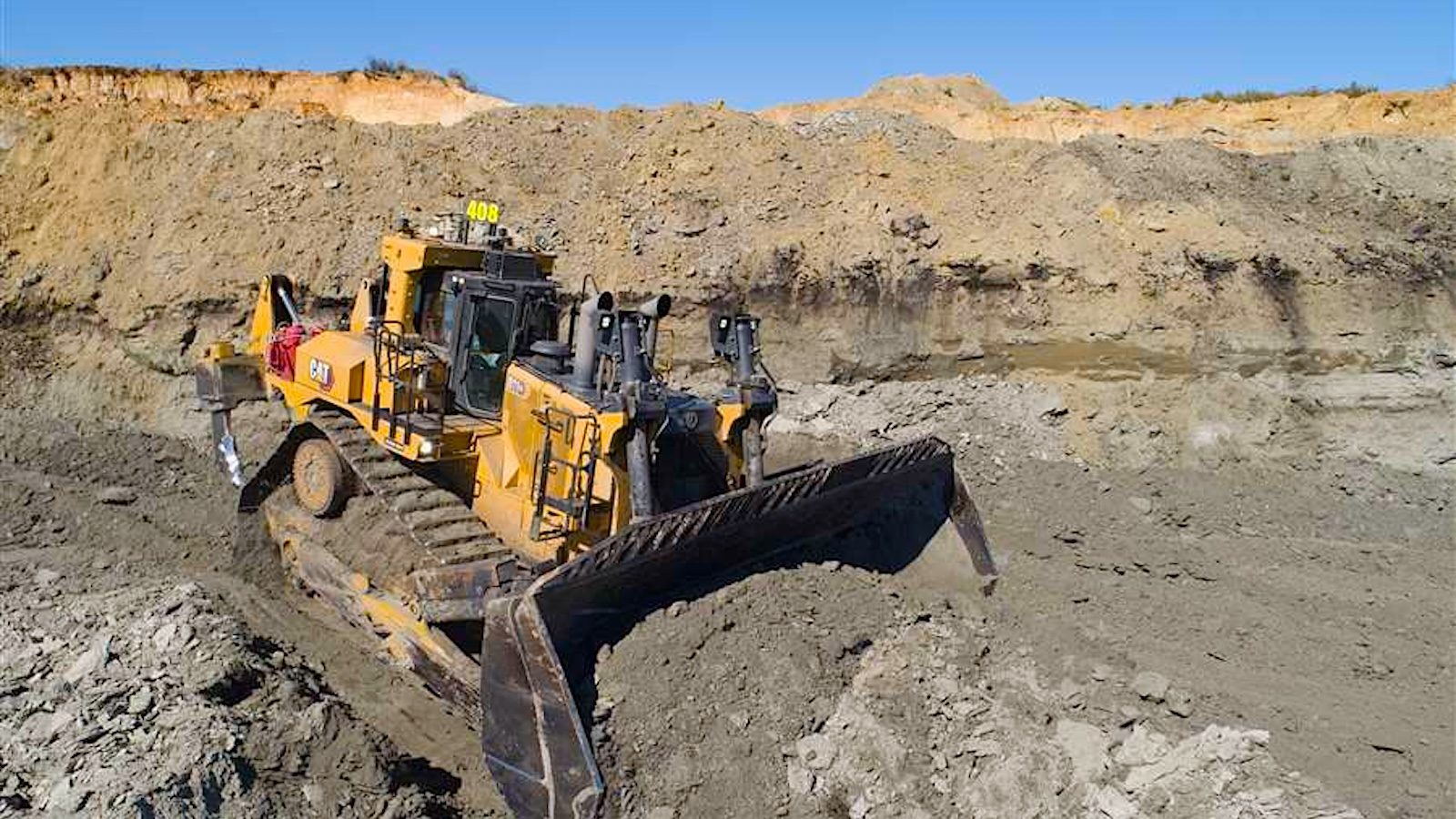
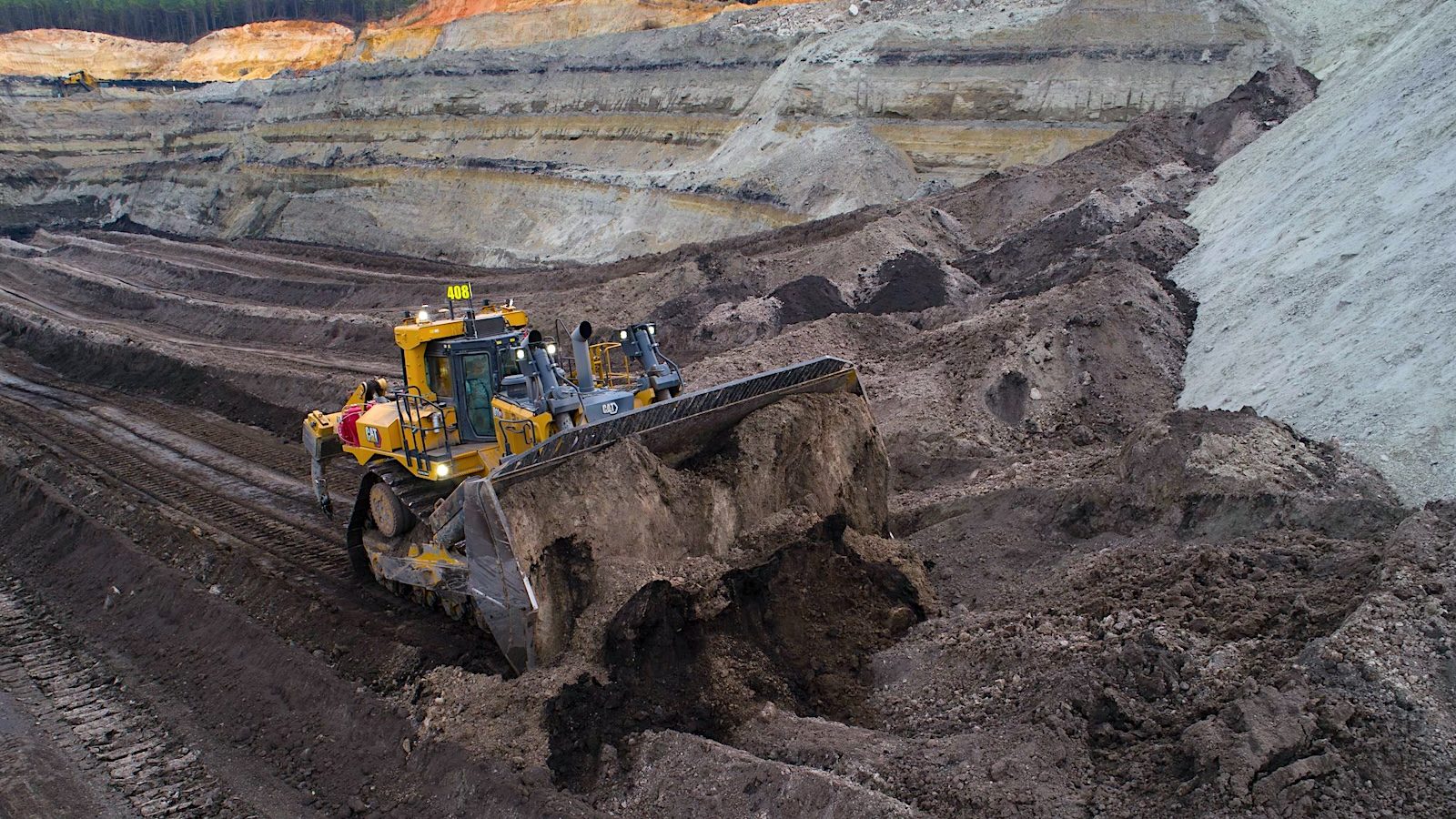
From the operator’s seat, the difference shows up the moment you drop the blade into a full load of clay. A conventional torque converter dozer bogs down, the engine note drops, and you wait for the converter to multiply torque before the tracks bite. The D6 XE doesn’t do that. The electric motors deliver full torque at zero track speed, so the machine walks forward the instant you command it, and the diesel engine behind you holds a steady 1,700 rpm like a generator at a job site. Your lower back feels the difference immediately: no torque spike through the seat frame, no lurch when the converter locks up.
On a side slope with a full blade, the electric drive lets you modulate track speed independently of engine load in a way that mechanical drives simply cannot match. The left track can slow while the right maintains speed, and the machine steers through the cut without the rear end stepping out. That’s the kind of control that matters when you’re cutting a ditch on a 3:1 slope with a spotter watching your edge. The engine noise at idle is a steady hum rather than the uneven clatter of a mechanical diesel, and through the pedals you feel almost nothing at a stop. One short note: the cooling fan for the electric drive is audible from the cab, a constant whine that never quite disappears.
The Short Answer on Whether This Machine Earns Its Keep
The short answer: if you’re moving more than 150,000 cubic yards a year and your operators fight grade control all day, the D6 XE will pay for itself in cycle-time gains and finish-grade accuracy. The longer answer — and why that short answer might be wrong for you specifically — starts with fuel. Caterpillar’s own published data shows the electric drive adds roughly 2,500 pounds to the machine versus a conventional D6, and generator losses mean the diesel engine works harder to produce the same drawbar pull. Independent field tests from aggregate producers in Texas and Pennsylvania have recorded 10 to 15 percent higher fuel burn per hour on the XE versus a torque-converter D6. At $4.20 a gallon and 8 gallons an hour, that’s an extra $3.36 per hour, or roughly $6,700 a year on a 2,000-hour schedule.
So does the cycle-time advantage actually erase that fuel penalty? In finish grading and slope work, yes, because the operator makes fewer passes and hits grade faster. In mass excavation where the machine runs at full load all day, the math gets murkier. The electric drive shines in applications where precise control matters more than raw hourly fuel burn. That’s a narrow window for a lot of contractors. The question you need to ask is whether your projects fall inside that window or outside it.
Ownership Costs Nobody Mentions at the Dealership
Two ownership realities surface after the first 1,000 hours. First, the electric drive components — the generator, the inverter, the final drive motors — require a technician trained on high-voltage systems, and those techs are not sitting in every CAT dealer’s shop. If your machine goes down 200 miles from the nearest certified electric drive specialist, you’re paying for travel time and lodging on top of the repair. Second, the resale market for electric drive dozers is thin. Auction data from Ritchie Bros. shows conventional D6 units holding 65 percent of original value at 5,000 hours, while early electric drive units are trading closer to 45 percent because buyers worry about long-term component life.
Neither of these are dealbreakers. They’re just the things no showroom mentions until after you sign.
Segment Showdown: D6 XE Versus Two Conventional Rivals
The Komatsu D61EXi-24 at roughly $450,000 and the John Deere 850K at $480,000 both run conventional torque converter drivetrains with proven reliability and dealer networks that don’t require high-voltage certification. The one decision point that determines 80 percent of purchase decisions here is fuel efficiency per cubic yard moved. On that metric, the Komatsu and Deere both deliver predictable consumption curves that estimators can pencil into a bid with confidence. The D6 XE’s consumption varies more with application, which makes bidding harder. Monthly payments tell the story: the CAT runs about $9,200 a month on a 60-month note with 10 percent down, while the Komatsu lands near $8,300 and the Deere near $8,800.
Choose the D6 XE if your work is finish grading, slope work, and precision trenching where operator control directly reduces your cost per yard. Choose the Komatsu D61EXi-24 if your projects are mass excavation with long push distances where fuel predictability and dealer support matter more than blade finesse.
Which Variant Makes Sense and Who Should Actually Buy One
The D6 XE at $500,000 is the value pick. It handles 80 percent of what a mid-size contractor needs, and the electric drive advantage shows up in daily grading work without the added weight penalty of the larger frame. Skip the base stripped configuration if you run grade control — the savings upfront disappear when you pay dealer install rates later. The mid-tier configuration with factory 3D grade control is the one to buy. It bundles the sensors and harnesses at the factory, and the integration is cleaner than any aftermarket install.
The D7 XE at $650,000 is where the calculation turns against most buyers. The extra 50 horsepower and larger blade only pay off in high-volume bulk earthmoving, and the fuel penalty grows with the heavier frame. For a contractor running a mix of site work, the D7 XE costs $150,000 more and delivers maybe 15 percent more production in ideal conditions. That’s a $2,800 monthly payment difference for a machine that spends most of its life doing the same work as the D6.
Two buyers walk into the same dealership. The first is a 52-year-old grading contractor outside Columbus, Ohio, running six crews on residential subdivisions, moving 80,000 yards a year with tight finish tolerances. The D6 XE is the exact right answer because his operators fight grade all day and the electric drive cuts their pass count by 20 percent. The second is a 38-year-old owner-operator in rural Missouri doing farm pond excavation and driveway work, running 400 hours a year. The D6 XE is the wrong answer because the fuel penalty and specialized maintenance eat any productivity gain across that low utilization. The car is the same. The life is different.
Caterpillar Electric Drive Dozer: Frequently Asked Questions
Q: What is the price of the Caterpillar Electric Drive Dozer?
The Caterpillar Electric Drive Dozer starts around $500,000 for the D6 XE model, while the larger D7 XE is approximately $650,000. These prices are MSRP and may vary by dealer and configuration. Expect monthly payments of $8,000 to $10,000 for financed purchases.
Q: Does the Caterpillar Electric Drive Dozer save fuel in real-world use?
Not necessarily. The diesel-electric system adds weight and generator losses, potentially increasing fuel consumption by 10-15% compared to conventional torque converter dozers. Actual savings depend on application and operator technique. CAT claims efficiency gains in certain cycles, but independent real-world data is still limited.
Q: Should I buy the Caterpillar Electric Drive Dozer or wait?
If you run a large construction firm with high utilization and need precise torque control, the D6 XE is worth considering now. Small contractors should wait: the tech is unproven, depreciation risk is high, and specialized maintenance adds cost. Wait for real-world fuel data before committing.