
The hype around Chinese EVs landing on American soil with verified safety ratings is deafening right now. Headlines scream about the coming wave of affordable electric transportation, painting a picture of showrooms packed with cutting-edge tech at bargain-bin prices. But before you start dreaming about a $30,000 crossover that undercuts the Tesla Model Y, let’s talk about the fine print that doesn’t fit in a press release.
Here’s the uncomfortable reality: a safety star doesn’t guarantee a smooth ownership experience. The financial stakes are massive, but the hidden friction—from import tariffs to service networks that exist only on paper—could turn your “savings” into a costly headache. Let’s be honest about what this sales report actually means for your driveway.
Chinese EVs: The Safety Stamp Isn’t a Free Pass
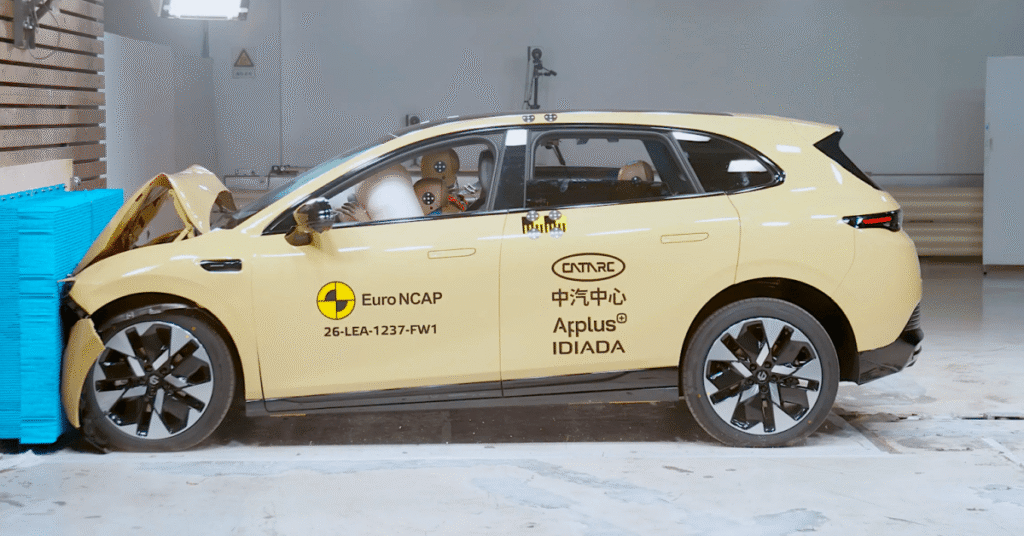
The recent crash-test verifications for GAC, Geely, and Leapmotor models are genuinely significant. It proves these manufacturers can build structures that protect occupants, matching the metal of established players. That’s a hurdle many skeptics assumed they’d fail. The engineering required to pass stringent safety protocols is expensive, and the fact they’ve cleared it suggests a level of maturity we haven’t seen before from these specific brands.
Except—and this is a big “except”—a crash test is a controlled laboratory event. It doesn’t measure how the car behaves after three years of salt-covered winter roads or whether the advanced driver-assistance systems will still function reliably at 75 mph on a cross-country haul. The test validates a moment in time, not the decade of ownership that follows. **The real question isn’t whether they’re safe in a crash; it’s whether they’re dependable when you’re stranded 200 miles from the nearest dealer.**
Tariffs, Taxes, and the Real Price Tag
Let’s talk dollars and cents, because that’s where the fantasy dies. The base MSRP of these Chinese EVs looks tantalizingly low on a spec sheet. But that price is calculated before the 100% import tariff currently levied on Chinese-made vehicles hits the dock. Suddenly, that budget-friendly commuter isn’t looking so budget-friendly anymore.
Do the math on the out-the-door price. Add in shipping, dealer preparation, and the inevitable market adjustment because supply is artificially constrained. You’re now staring at a figure that sits uncomfortably close to a Ford Mustang Mach-E or a base Tesla Model Y. And here’s the kicker: those competitors have established dealer networks, parts availability, and a resale market. Your Chinese EV? It’s a gamble on depreciation that could plummet faster than a lead balloon if the brand pulls out of the market—a very real possibility given the political winds.
The Service Nightmare You Haven’t Considered
Imagine this: a warning light flashes on your dashboard on a Tuesday morning. You call the nearest service center, only to find it’s a 300-mile round trip. That’s not speculation; that’s the current reality for owners of these vehicles in the US. The sales strategy is focused on coastal hubs, leaving vast swaths of the country without any support infrastructure.
And then there’s the software. These aren’t dumb cars; they’re rolling computers with over-the-air update capabilities. But those updates rely on cellular networks and servers located in China. If there’s a geopolitical spat or a regulatory crackdown on data privacy—which is already happening—your car’s connectivity could be severed remotely. You’d be left with a high-tech brick that can’t even update its navigation maps. The hidden friction isn’t just about finding a mechanic; it’s about whether the car’s brain will stay functional in a hostile political climate.
For the savvy American buyer, this sales report isn’t a buying guide; it’s a pressure gauge on the domestic market. The mere threat of competent, affordable Chinese competition is forcing Ford, Tesla, and Volkswagen to sharpen their pencils and improve their own safety and pricing structures. That’s a win for you, regardless of which badge you end up choosing.
So, who should actually sign the papers on a GAC, Geely, or Leapmotor? Only the early adopter living in a major metropolitan area with a confirmed service center, who plans to keep the car for a decade and doesn’t care about resale value. For everyone else—the vast majority of American drivers—the risk outweighs the reward. Walk over to the established competition. The lower stress, available parts, and predictable ownership experience are worth the extra upfront cost. Let the early adopters iron out the wrinkles; your hard-earned money deserves a safer bet.