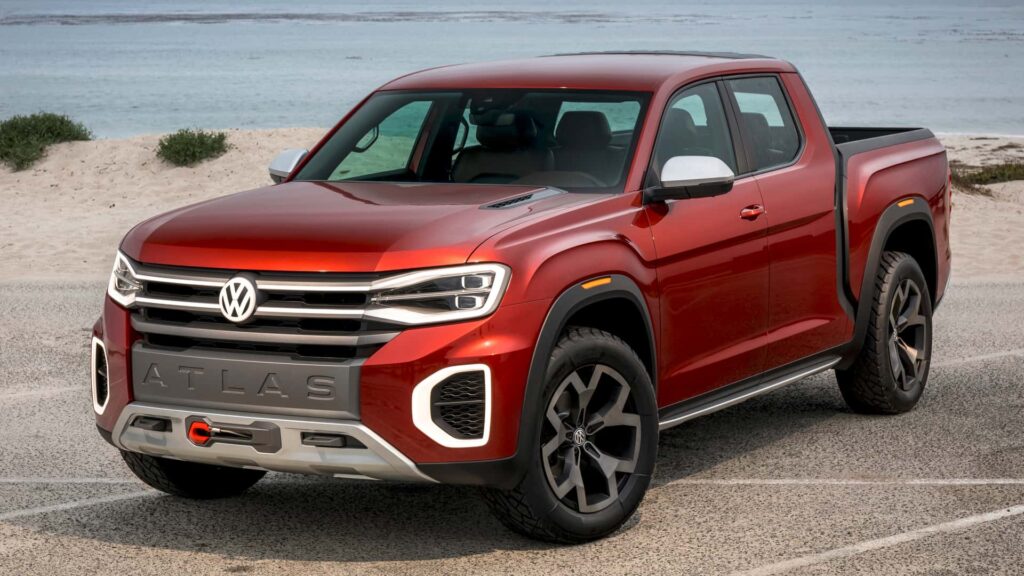
Volkswagen pickup: The rumor mill is already churning out renderings of a Volkswagen-badged midsize pickup prowling American highways, and the internet is doing what it does best—getting ahead of itself. Before you start measuring your garage for a German-engineered Tacoma fighter, let’s pump the brakes and look at the cold, hard reality. VW has been here before, and the scars from their last truck attempt in the US market are still fresh. The promise of a new contender is tantalizing, but the path from a spy scoop to a dealer lot is littered with broken promises, canceled platforms, and billions in sunk costs. Here’s the friction most outlets won’t tell you about.
Let’s be honest about Volkswagen’s track record on this side of the Atlantic. The last time they sold a pickup here, it was the rebadged Mitsubishi-built Rabbit Pickup, and that was decades ago. Since then, they’ve teased concepts like the Atlas-based Tanoak, which generated plenty of buzz at auto shows and then vanished into the corporate ether. The Amarok, their global midsize truck, was never deemed worthy of US certification. Why? Because the cost to engineer, certify, and market a vehicle for a segment dominated by the Big Three and Toyota is astronomical. VW’s leadership has publicly waffled on the idea, citing the sheer difficulty of making a business case that pencils out against the Tacoma’s cult-like following and the Ranger’s sheer volume. This isn’t a simple decision; it’s a multi-billion-dollar gamble that could easily go sideways.
And then there’s the platform question. Building a body-on-frame truck from scratch is a monumental undertaking, and VW doesn’t have a suitable US-market architecture sitting on a shelf. Sharing a platform with the Ford Ranger, as they did with the Amarok, is a possibility, but that comes with its own set of compromises and a bitter pill for brand purists to swallow. The alternative—a unibody “lifestyle” truck—would immediately draw scorn from buyers who actually tow and haul. The engineering team is caught between a rock and a hard place, and the clock is ticking.
The Tacoma and Ranger Problem
Assuming VW does pull the trigger, they’re not just entering a market; they’re walking into a knife fight. The Toyota Tacoma is the undisputed king of resale value and off-road credibility, with a TRD Pro trim that has a cult following deeper than the Mariana Trench. The Ford Ranger, now riding on the Ranger Raptor’s coattails, offers proven powertrains and a dealer network that stretches into every small town in America. And let’s not forget the Chevrolet Colorado, which just got a complete redesign and is arguably the most technologically advanced truck in the segment right now. Each of these trucks has years of owner loyalty, aftermarket support, and a proven reliability record. VW would be asking buyers to take a leap of faith on an unproven entity with a questionable support network for truck-specific parts and accessories.
Here’s the thing about the midsize truck buyer: they are fiercely loyal and deeply skeptical of newcomers. They want to know that the frame won’t rust, the transmission won’t shudder, and the dealer actually knows how to service a four-wheel-drive system. VW’s current dealership network is geared toward selling Golfs and Tiguans, not trucks that get muddy on the weekends. The service bays might not have the specialized equipment, and the parts counters won’t stock the heavy-duty components. That’s a massive operational hurdle that no amount of marketing hype can overcome. The average midsize truck buyer keeps their vehicle for over seven years, and they demand parts availability for a decade or more.
The Price of Admission
Do the math on what it would cost to make this truck competitive. You need a robust frame, a proven powertrain with at least 300 horsepower, a sophisticated four-wheel-drive system, and a cabin that doesn’t feel like a penalty box. Then you have to certify it for US crash and emissions standards, which is a costly and time-consuming process. Add in the cost of marketing, dealer training, and a warranty program that can match the competition, and you’re looking at a vehicle that would need to start in the high-$30,000 range just to break even. That puts it squarely in the crosshairs of a fully-loaded Ranger or a mid-tier Tacoma, both of which have established reputations. VW would have to undercut them on price or out-feature them to get any traction, which eats into their already thin margins.
And then there’s the depreciation question. A new entrant with no track record will likely see steeper initial depreciation than a Tacoma, which holds its value like a precious metal. That’s a hard pill for buyers who finance over six or seven years to swallow. The financial stakes are enormous, and a misstep here could tarnish the VW brand in the US for a generation. They’ve spent years rebuilding their image after the diesel scandal, and a failed truck launch would be a catastrophic setback. Analysts estimate the midsize truck segment is worth over $30 billion annually in the US alone, and VW wants a slice, but the cost of entry is brutal.
Who Should Wait, Who Should Walk
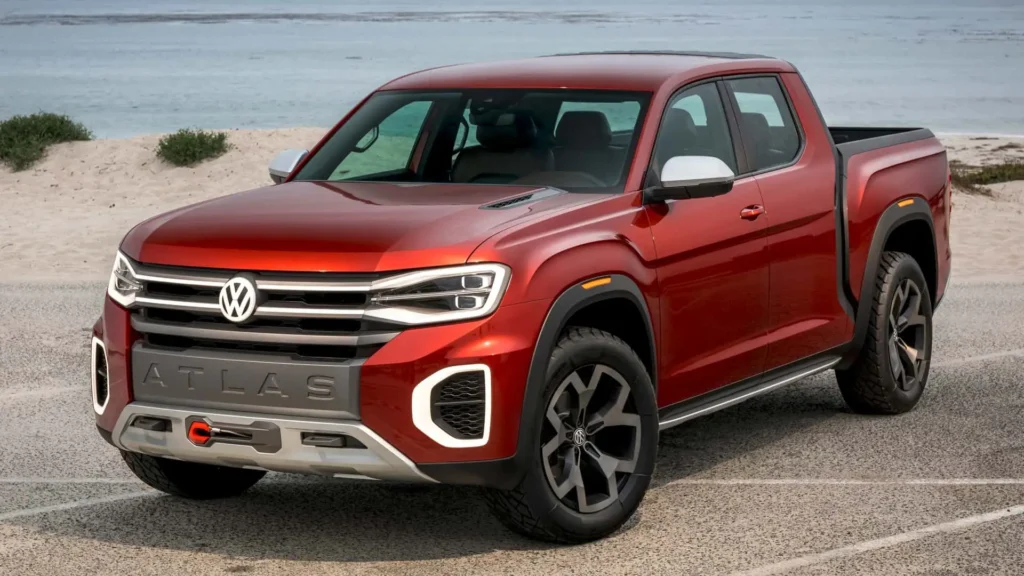
So, who should hold out hope for this mystery VW pickup? If you’re a die-hard VW enthusiast who wants a German-flavored alternative to the Japanese and American offerings, and you’re willing to be an early adopter with all the associated risks, then keep your ear to the ground. But understand that you’re likely looking at a 2027 or 2028 model year at the earliest, and that’s if the project gets the green light tomorrow. The spy shots and speculative renderings are just that—speculation. The corporate boardroom hasn’t even signed off on the final business case, and the timeline could easily slip or the entire project could be shelved, just like the Tanoak concept.
For everyone else, the smart money is on the established players. If you need a truck today or in the next 18 months, the Ford Ranger, Toyota Tacoma, and Chevrolet Colorado are all excellent choices with proven reliability, strong resale values, and a vast aftermarket ecosystem. Don’t let the hype of a potential newcomer delay your purchase or cloud your judgment. The grass might look greener on the other side of the fence, but in the truck world, the old adage “better the devil you know” rings truer than ever. VW has to earn your trust, and right now, they haven’t even built the truck. Walk into a Ford or Toyota dealership today, and you’ll drive out in a vehicle that’s ready to work. That’s a certainty VW can’t offer.