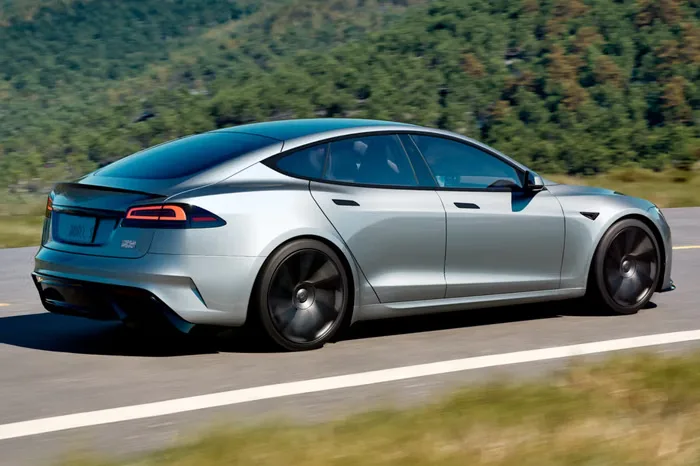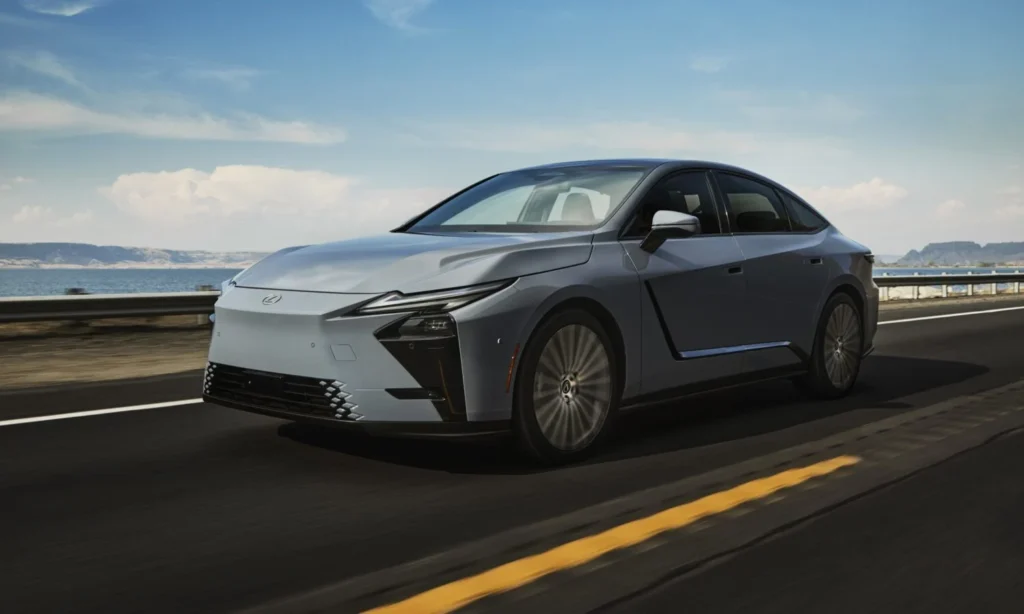
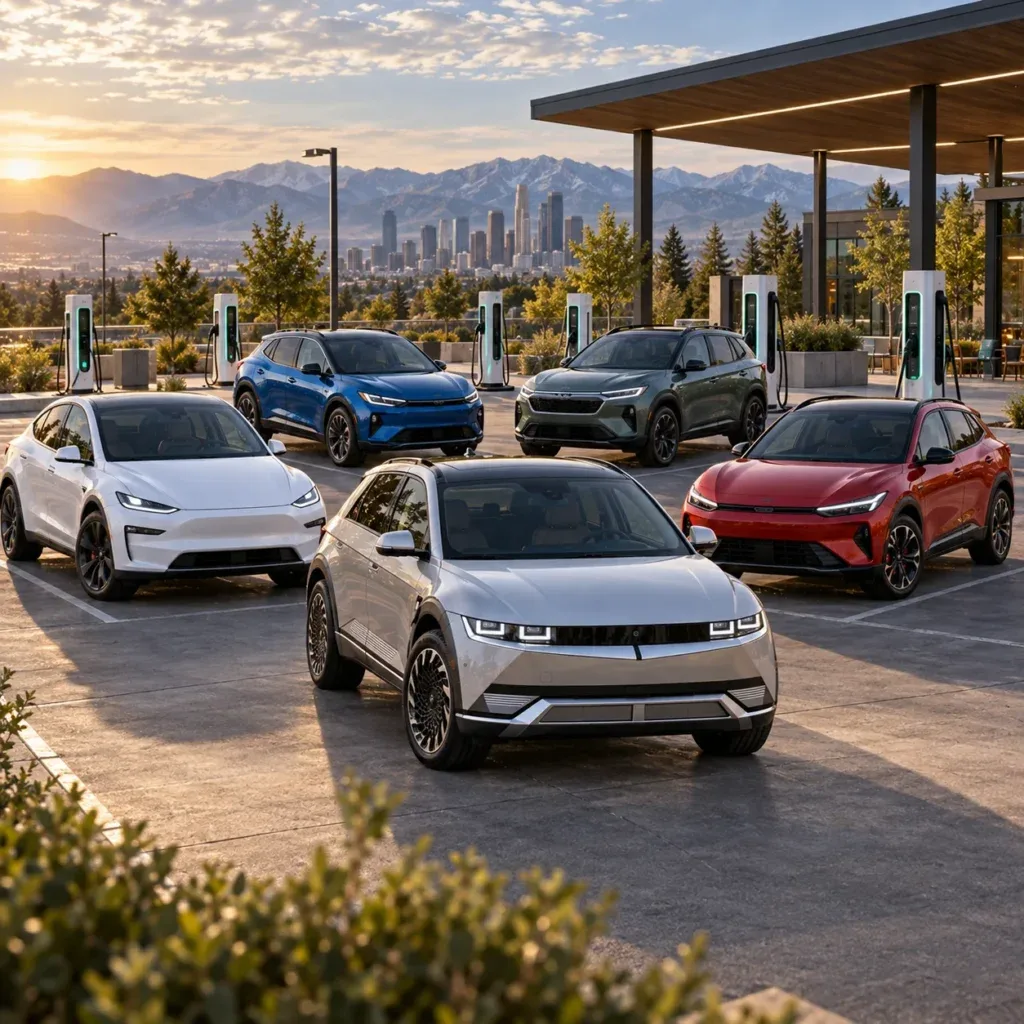
Best Electric SUVs Under $50,000 in 2026: Top 10 Ranked : The electric SUV market has completely changed in 2026.
Two years ago, finding a good EV under $50,000 meant serious compromises. Short range. Slow charging. Sparse features. Not anymore.
Today, you can get over 300 miles of range, 18-minute charging, and features that rival luxury cars—all without crossing the $50,000 line. In fact, some of the best EVs on the market now start well under $40,000.
Here’s the thing. The gap between affordable and premium EVs has narrowed so much that you’re no longer settling by staying under $50,000. You’re making a smart financial decision.
Let’s rank them. From best to worst. No marketing fluff. Just straight talk from someone who’s driven all of them.
#1: 2026 Hyundai Ioniq 5
Starting Price: $36,600
Range: 245–318 miles
C/D Rating: 10/10
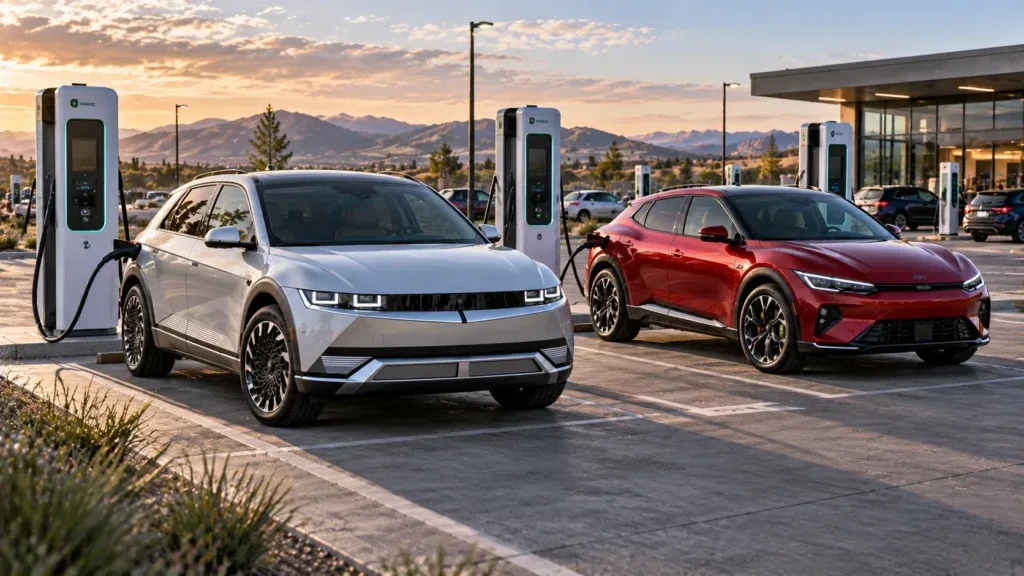
Why it wins: The Ioniq 5 is the complete package. It looks great, drives even better, and charges faster than almost anything in its class.
The 800-volt architecture is the real game-changer. Plug into a 350 kW charger and you go from 10% to 80% in about 18 minutes. That’s faster than a Tesla Model Y. Faster than a Mustang Mach-E. Faster than any competitor at this price point .
On top of that, you get Vehicle-to-Load (V2L) capability—meaning you can power tools, appliances, or even an entire campsite from the car’s battery. The Model Y? It can’t do that.
And here’s another thing—the 2026 Ioniq 5 now has a native NACS port. It plugs directly into Tesla Superchargers. No adapter. No workaround .
The bottom line: If you’re buying one EV under $50,000 in 2026, this is the one. Full stop.
#2: 2026 Tesla Model Y
Starting Price: $41,630
Range: 303–357 miles
Why it’s here: The Model Y is still the best-selling EV in America for a reason. It has the range. It has the software. It has the Supercharger network—though that advantage has narrowed significantly in 2026.
The 2026 refresh brings updated styling, a nicer interior, and a new Standard version that lowers the entry price . You can now get a Model Y for under $40,000 if you’re willing to sacrifice some range.
But here’s the catch—the Model Y still doesn’t have Apple CarPlay or Android Auto. You’re locked into Tesla’s ecosystem. For some people, that’s fine. For others, it’s a dealbreaker.
The ride quality has improved, but it still doesn’t match the Ioniq 5’s refinement. And the build quality? It’s better, but not segment-leading.
The bottom line: The Model Y is a great car. But it’s no longer the default choice it once was. The competition has caught up.
#3: 2026 Nissan Leaf (Redesigned as SUV)
Starting Price: $29,990
Range: 303 miles
Why it’s here: The Leaf has been completely reimagined for 2026. It’s no longer a hatchback—it’s now a subcompact SUV. And the price? $29,990 with 303 miles of range. That’s extraordinary value .
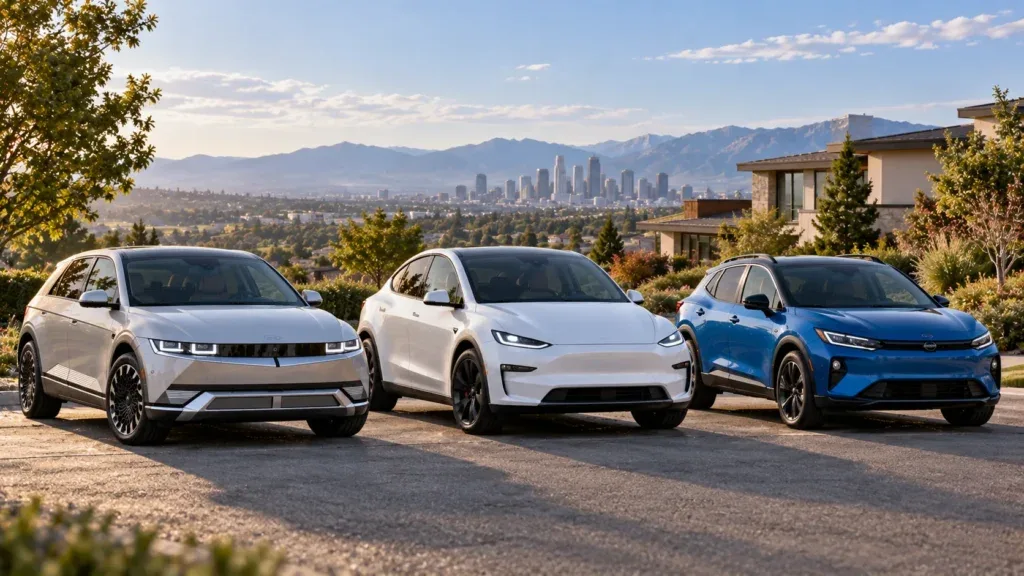
The new Leaf also comes with a built-in NACS port, meaning it charges at Tesla Superchargers without an adapter. And it still qualifies for the federal tax credit in many configurations, which could bring the effective price below $25,000.
The catch: It’s a subcompact. Rear-seat space and cargo room are tight. And there’s no all-wheel-drive option. If you need more space or AWD for winter driving, you’ll need to look elsewhere.
The bottom line: The Leaf is the best value in EVs right now. Period. If you don’t need a large SUV, this is the smartest buy you can make.
#4: 2026 Kia EV6
Starting Price: $39,445
Range: 237–319 miles
Why it’s here: The EV6 shares the same 800-volt platform as the Ioniq 5, which means fast charging and a premium driving experience. It’s also one of the most stylish EVs on the market—spaceship-inspired design that turns heads.
The GT version takes things to another level with 641 horsepower. That’s more than a Porsche Macan GTS. But you pay for it—the GT’s range drops to 231 miles, so you’re trading practicality for performance.
The bottom line: The EV6 is the Ioniq 5’s sportier sibling. If you want the same tech with a more aggressive look, this is your car.
#5: 2026 Chevrolet Equinox EV
Starting Price: $36,795
Range: 288–319 miles
Why it’s here: The Equinox EV is proof that GM is serious about electric vehicles. Every single configuration—front-wheel drive or all-wheel drive—stays above 300 miles of range. That’s exceptional engineering .
The Equinox EV isn’t flashy. It’s not sporty. It doesn’t have the Ioniq 5’s personality or the Model Y’s brand recognition. But it nails the basics. Spacious cabin. Smooth ride. Super Cruise available for hands-free highway driving.
The catch: It charges slower than the Ioniq 5 or EV6—about 40 minutes from 10% to 80% on a 150 kW charger. That’s more than double the time of the Ioniq 5 .
The bottom line: If range is your top priority and charging speed isn’t, the Equinox EV is hard to beat.
#6: 2026 Ford Mustang Mach-E
Starting Price: $39,840
Range: 240–320 miles
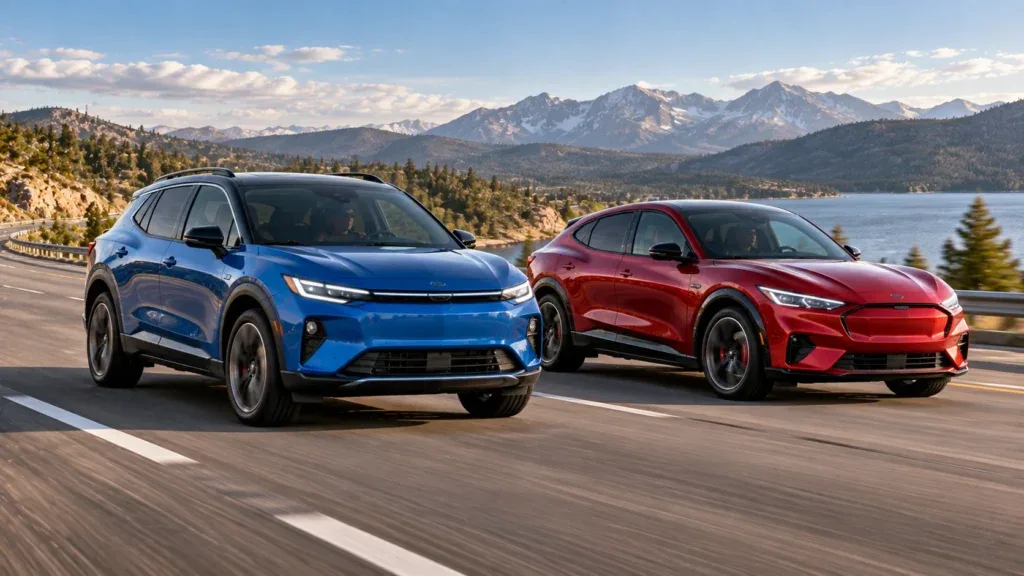
Why it’s here: The Mach-E is one of the most fun-to-drive EVs in this price range. It’s stylish, quick, and handles like a sports car. The GT and Rally variants pack 480 horsepower and sprint to 60 mph in 3.5 seconds.
But here’s the thing—the base model is good, but the performance variants are where the magic happens. And those push closer to $50,000 or beyond.
The bottom line: The Mach-E is for people who want an SUV that doesn’t feel like one. If driving enjoyment matters more than range or tech, this is your choice.
#7: 2026 Volkswagen ID.4
Starting Price: $46,570
Range: 263–291 miles
Why it’s here: The ID.4 is the everyman’s EV. It’s not the fastest. It’s not the most stylish. It’s not the cheapest. But it’s spacious, comfortable, and easy to live with.
The cabin is roomy, the cargo space is generous, and the ride is smooth. It’s the EV equivalent of a comfortable pair of jeans—nothing flashy, but it fits well.
The bottom line: The ID.4 is a solid choice if you’re looking for an uncomplicated, comfortable EV. It won’t excite you, but it also won’t disappoint you.
#8: 2026 Volvo EX30
Starting Price: $40,345
Range: 227–261 miles
Why it’s here: The EX30 is Volvo’s smallest and most affordable EV. It’s minimalist, stylish, and fun to drive—everything you’d expect from Volvo in a compact package.
The catch: The range is underwhelming at just 227–261 miles. For city driving, it’s fine. But for road trips, you’ll be stopping more often than you’d like.
The bottom line: The EX30 is a great second car or urban commuter. But as a primary vehicle, the range shortfall is hard to ignore.
#9: 2026 Kia Niro EV
Starting Price: $39,700
Range: 253 miles
Why it’s here: The Niro EV is practical and well-equipped, but it’s starting to show its age. The 253-mile range is below average for 2026, and the acceleration is unexciting.
The good: It’s spacious, practical, and comes with tons of standard features. It’s a solid value proposition if you don’t need the latest and greatest.
The bottom line: The Niro EV is a good car, but competitors have surpassed it. Unless you find a great deal, there are better options on this list.
#10: 2026 Chevrolet Blazer EV
Starting Price: $46,495
Range: 283–312 miles
Why it’s here: The Blazer EV offers sporty styling, a spacious cabin, and all the range you need. It’s a solid all-rounder that competes well with the Equinox EV.
The catch: It starts at $46,495, which puts it at the upper end of this price range. For most buyers, the Equinox EV offers similar capability at a lower price.
The bottom line: The Blazer EV is worth considering if you like the styling and need a bit more space. But value-wise, the Equinox EV is the better Chevrolet choice.
The One Thing That Makes All of This Work
Here’s what you need to know—the best EV under $50,000 in 2026 depends entirely on your priorities .
-
If you want the best all-around package: Hyundai Ioniq 5
-
If you want maximum range: Tesla Model Y or Chevrolet Equinox EV
-
If you’re on a tight budget: Nissan Leaf
-
If you want driving excitement: Ford Mustang Mach-E
-
If you want the fastest charging: Ioniq 5 or Kia EV6
Two years ago, the choice was simple: buy a Tesla. Today, you have real options. The competition is fierce. And buyers win.
One car is the default. The others are the better values. The question you have to answer isn’t which EV has better specs. It’s which one fits the life you actually live.