
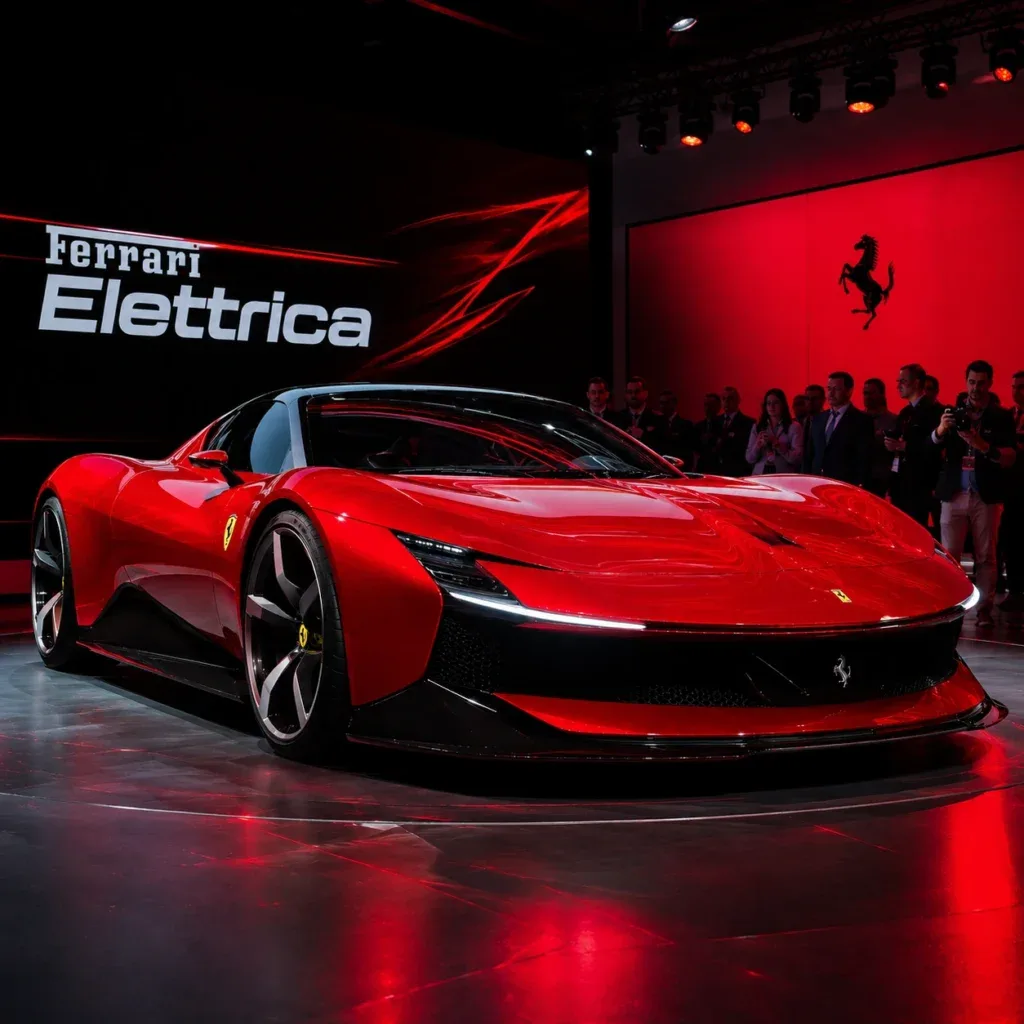
Today is the day Ferrari has been building toward for years.
The Ferrari Luce — the brand’s first battery-electric vehicle, priced at $645,000 — has its world premiere today. And before a single automotive journalist has driven it, the most interesting story about the Luce isn’t the performance numbers.
It’s the Apple connection.
The Technology Nobody Expected Ferrari to Use
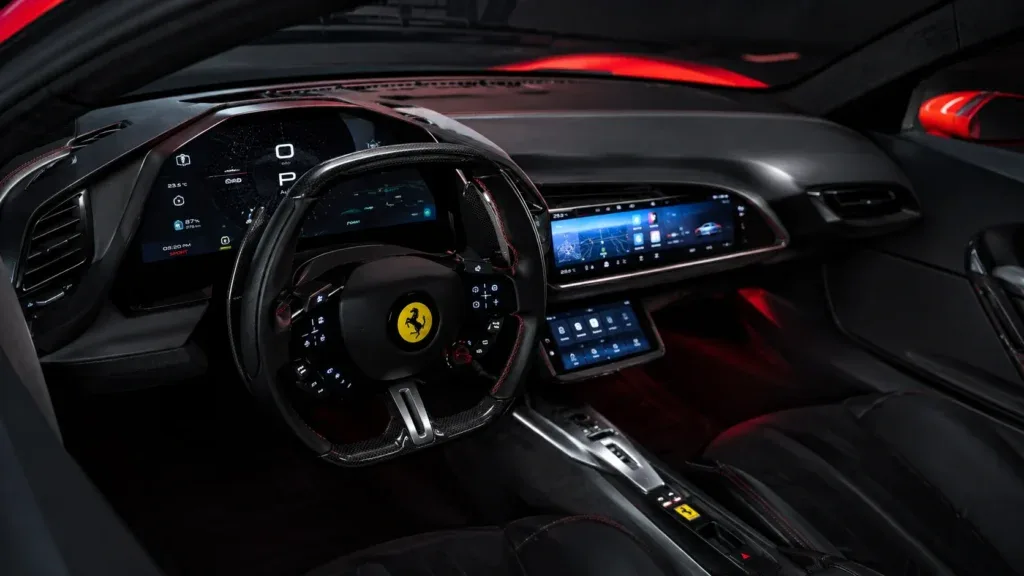
Ferrari’s Luce uses a micro-LED display system in its interior — the same display technology that Apple reportedly spent approximately $10 billion developing for its Apple Car project before scrapping both the display work and the car program in 2024.
Apple’s internal engineers developed micro-LED technology that offers dramatically better contrast, brightness, and energy efficiency than conventional OLED displays. The problem Apple couldn’t solve economically: manufacturing micro-LED at scale was extraordinarily expensive — far more costly than OLED at comparable screen sizes. Apple shelved the technology for consumer products, killed the car project, and wrote off the development costs.
Ferrari found a different answer. At $645,000 per vehicle with extremely limited production volumes — where cost per unit is irrelevant compared to the experience delivered — micro-LED’s manufacturing expense becomes justifiable. Ferrari can use technology that Apple couldn’t deploy profitably in a $1,000 iPhone and make it work in a $645,000 car where margins support it.
The result, according to early reports from Ferrari’s reveal: an interior display with visual quality that reviewers are describing as unlike anything they’ve seen in any vehicle at any price. The contrast. The viewing angle. The brightness in direct sunlight. Things that OLED screens struggle with — the micro-LED approach handles them differently.
It’s the most expensive display technology in any production car, in the most expensive Ferrari ever built. The math only works at this scale.
also read : https://driveglobalnews.in/kia-telluride-hybrid-vs-toyota-highlander-hybrid/
What Ferrari Actually Revealed at the Premiere
The Luce’s performance numbers are genuine and genuinely remarkable.
Quad-motor all-wheel drive. 1,000+ horsepower confirmed. Ferrari’s engineers described 0-60 in approximately 2.4 seconds — which would make it faster than a Ferrari SF90 Stradale, the brand’s current fastest road car, in the sprint.
Top speed above 200 mph. The aerodynamic package required to achieve and sustain that speed at this weight is one of the engineering stories Ferrari will tell in the coming months as more technical details are released.
Range: Ferrari targeted approximately 375+ miles of EPA-equivalent range — extraordinary for a 1,000 HP vehicle this heavy. The efficiency achievement required an entirely new approach to motor design and battery management.
Charging: The 850-volt architecture enables peak charging in the 350-400 kW range — among the fastest in any production vehicle.
Price: $645,000. Allocation is severely limited. Ferrari manages production volumes deliberately — they will not build enough Luce units to fully satisfy demand. Scarcity is part of the product. Existing Ferrari customers with established dealer relationships are being offered first right of refusal.
also read : https://driveglobalnews.in/used-ev-vs-new-gas-car-in-2026-with-price-parit/
Is It Slower Than the Tesla and Lucid It Competes With?
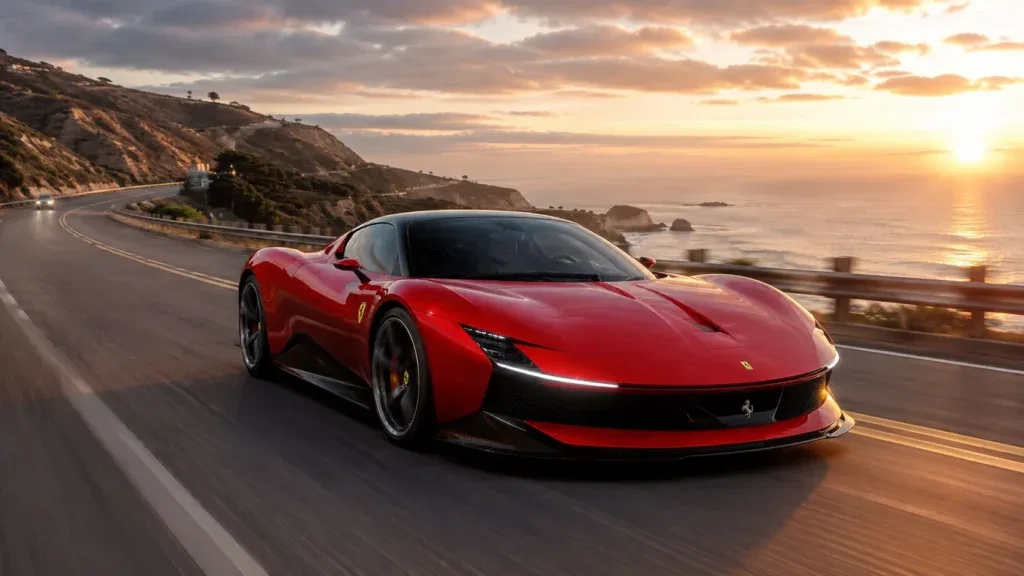
One automotive analysis making rounds today is blunt about a specific comparison: in straight-line acceleration, the Ferrari Luce — despite 1,000+ HP — is not faster than the Tesla Model S Plaid ($97,000) or the Lucid Air Sapphire ($250,000).
The Plaid does 0-60 in 1.99 seconds. The Air Sapphire does it in 1.89 seconds. The Luce at approximately 2.4 seconds is measurably slower in the metric most performance car buyers focus on first.
Ferrari’s response to this, stated explicitly at the premiere: that’s not the point.
A Ferrari has never been primarily about straight-line acceleration. The brand’s entire identity is built around driving feel — the way a car responds on a winding road, the feedback through the steering wheel, the way power is delivered in a corner rather than a drag strip. The Luce is being positioned as the car that makes electric driving feel like a Ferrari, not the car that wins a stoplight race against a Plaid.
Whether that positioning resonates with buyers who are being asked to spend $645,000 — roughly six times a Lucid Air Sapphire — is the commercial question that only actual sales will answer.
The Jony Ive Interior
Apple’s former Chief Design Officer, who designed the iPhone, the MacBook, and the Apple Watch, designed the Luce’s interior. His fingerprints are visible in every detail.
The surfaces are clean to the point of appearing empty until you need them. Controls are integrated into the material rather than applied to it. The micro-LED display occupies a sweeping portion of the dashboard — present but not dominating. The overall effect is less “Italian sports car cockpit” and more “object created by someone who has never accepted unnecessary complexity in any project they’ve touched.”
Some Ferrari purists hate it. Some design journalists are calling it the most significant automotive interior in a generation. Both reactions are probably appropriate.
The Luce is not trying to be a Ferrari from the 1960s. It’s trying to be what a Ferrari is, reimagined from first principles by designers who’ve never accepted that things have to look the way they’ve always looked.
Controversial. Expensive. Genuinely unlike anything else.
That’s always been Ferrari’s most reliable formula.