
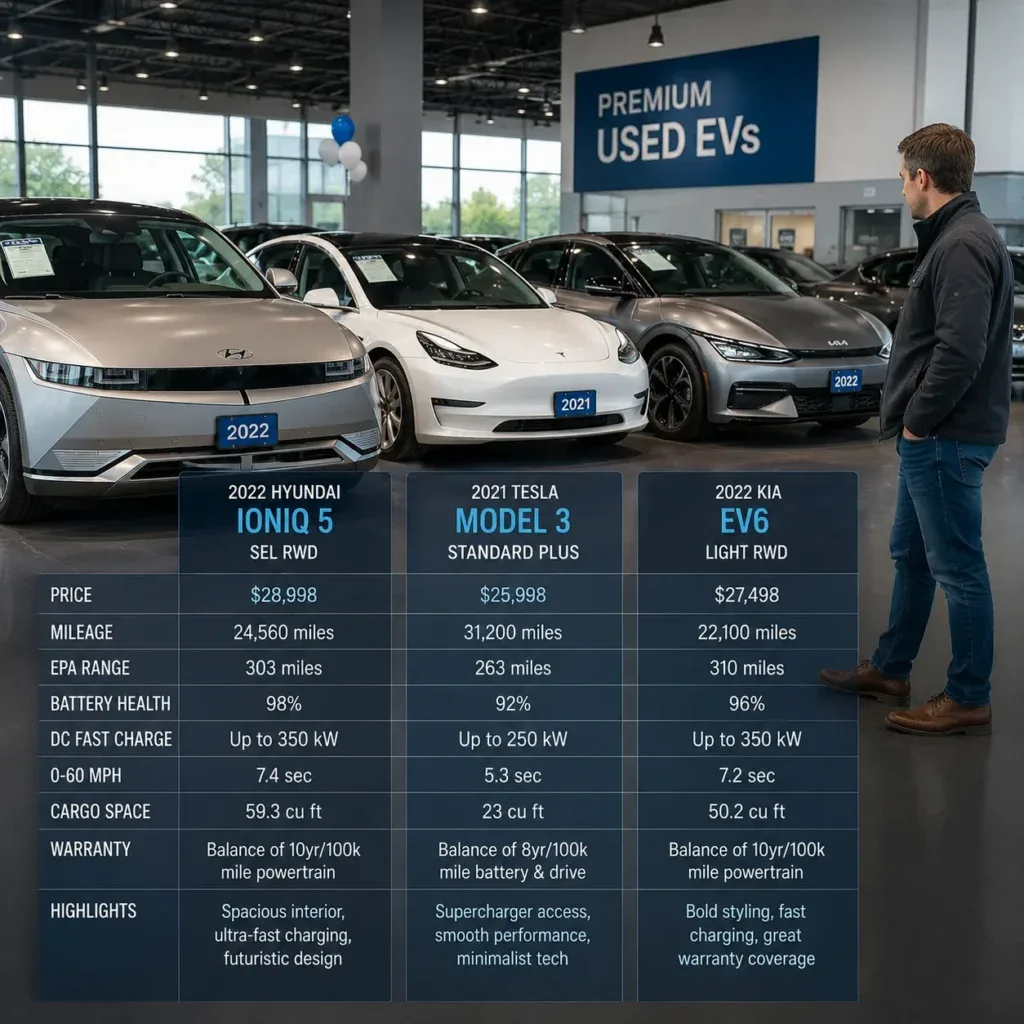
For years, the used EV pitch came with an asterisk.
Yes, a used Ioniq 5 or Model 3 saves you money upfront. But then buyers would whisper the concerns: battery degradation. Limited warranty. Unknown charging history. And most importantly — the price premium over a comparable used gas car made the math complicated.
That asterisk is disappearing.
In March 2026, the average used EV sold for $34,653 — just $1,102 more than the average used gas car at $33,641. A year ago, that gap was $3,923. The year before that, it was over $6,000.
Price parity between used EVs and used gas cars is genuinely close. Which raises a question that wasn’t worth asking two years ago:
Should you buy a used EV instead of a new gas car?
The Financial Case for a Used EV in 2026
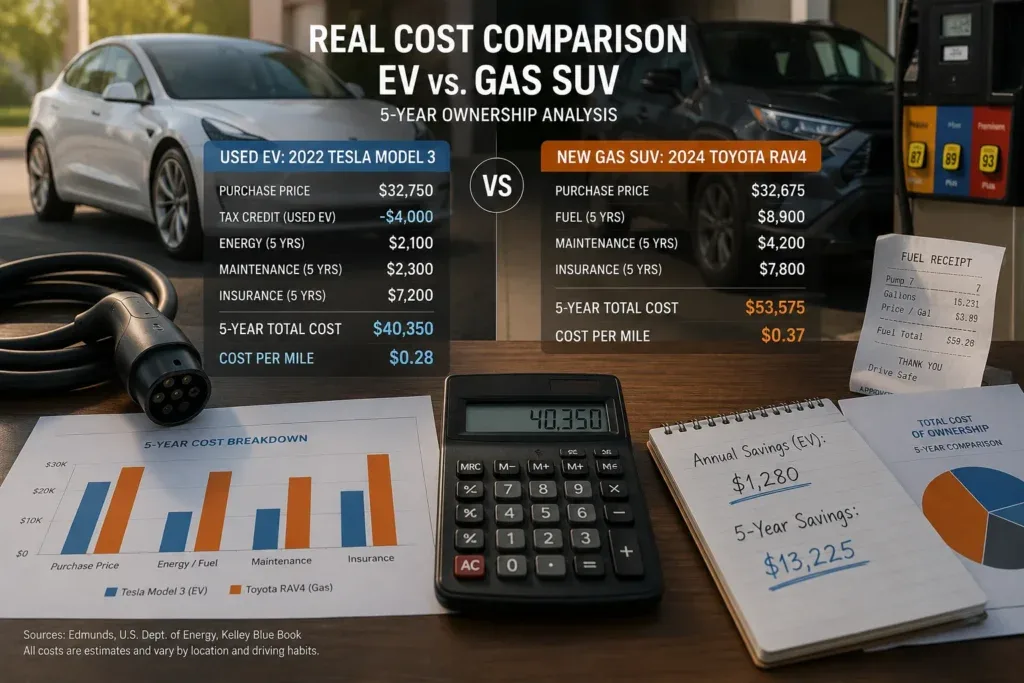
Let’s build the actual comparison.
Option A: Used 2023 Hyundai Ioniq 5 SE AWD, 35,000 miles Average asking price in May 2026: approximately $28,500-$31,000 Battery health at 35,000 miles: typically 92-96% of original capacity Charging: NACS port — full Supercharger access Remaining warranty: Hyundai’s 10-year/100,000-mile powertrain warranty transfers to second owners for battery coverage Fuel cost: $0.04/mile at home charging Annual fuel cost (15,000 miles): approximately $600
Option B: New 2026 Toyota RAV4 gas (non-hybrid, base LE) Purchase price: approximately $30,750 Fuel economy: 30 MPG combined Annual fuel cost (15,000 miles, $4.50 gas): approximately $2,250
At comparable purchase prices, the used Ioniq 5 saves approximately $1,650 per year in fuel versus the new gas RAV4. Over five years — $8,250 in fuel savings.
The used EV wins on total five-year cost by a significant margin — assuming the battery performs as expected and charging infrastructure meets your needs.
also read : https://driveglobalnews.in/the-new-2026-nissan-leaf-just-became-the-most/
When the Used EV Makes Clear Sense
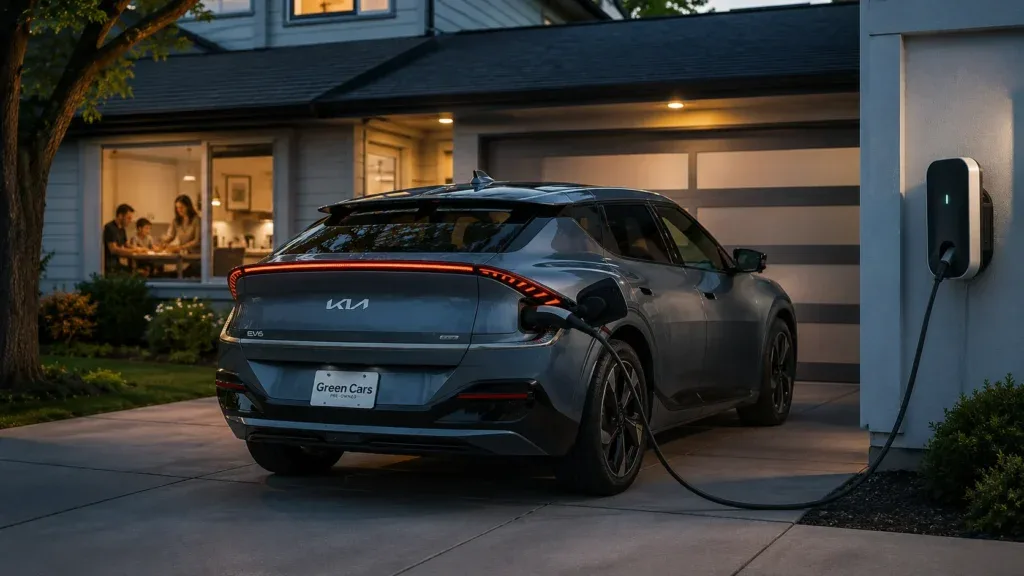
You have home charging. This is the non-negotiable prerequisite. A Level 2 home charger installation costs $400-$800 including equipment and labor. Without it, you’re dependent on public charging — which is more expensive, less convenient, and where the EV ownership experience is most frustrating. If you rent an apartment without charging access, the used EV math changes significantly.
Your daily driving is under 200 miles. Used EV batteries have typically lost 5-10% of their original capacity at 30,000-50,000 miles. A 2022 Ioniq 5 rated at 266 miles new might deliver 245-255 miles at 40,000 miles. For most American drivers covering 35-50 miles daily — that’s still plenty. For the driver who occasionally needs 300+ miles in a day without charging — the range reduction matters more.
You’re comfortable with the charging network. NACS ports on Korean and domestic EVs now mean Supercharger access. The network that was Tesla-only in 2022 is now broadly accessible. For most urban and suburban buyers in 2026 — the charging network is genuinely adequate.
When the New Gas Car Still Makes More Sense
You live in a rural area with limited charging infrastructure. The 150-mile stretches between fast chargers in rural Montana, North Dakota, or remote Texas are real. An EV whose range is 245 miles after some battery degradation creates genuine anxiety in regions where charging infrastructure hasn’t caught up to coastal America.
You tow regularly. Towing cuts EV range dramatically — sometimes by 40-50% at highway speeds. A used Ioniq 5 rated 245 miles that tows a small camper might do 130-150 miles between charges. A gas truck or SUV with a full tank tows 400+ miles without stopping.
Your budget requires the lowest possible monthly payment. The new gas RAV4 base model is $30,750 — financed at 6.5% over 60 months is approximately $600/month. A used Ioniq 5 at $30,000 from a private seller might be $580/month at similar terms. The payment difference is small, but if budget is the primary constraint, the new car’s warranty coverage for every component — not just the battery — provides more total protection.
You have no patience for occasional charging complexity. Public DC fast chargers still fail approximately 15-25% of the time due to maintenance issues, network outages, or payment system problems. That failure rate is improving but isn’t zero. Drivers who need absolute reliability for time-sensitive trips may find the occasional charging station failure more frustrating than the daily fuel savings justify.
also read : https://driveglobalnews.in/americans-are-spending-45-billion-extra-on-gas/
The Honest Bottom Line
The used EV vs new gas car comparison has shifted decisively toward used EVs for buyers who can charge at home.
$1,650 per year in fuel savings on a vehicle that costs approximately the same to purchase is a genuinely compelling financial argument. The battery degradation concern — real but often overstated — has been addressed by improving chemistry and the transferable warranty coverage on Korean brands.
For the buyer who owns their home, charges overnight, and drives predictable daily distances under 200 miles — a used 2022-2023 Ioniq 5, Kia EV6, or Tesla Model 3 at $28,000-$33,000 is the best total-cost-of-ownership vehicle purchase available in America right now.
For everyone else — the new gas car’s simplicity and flexibility remain genuinely valuable. Not every EV argument applies to every life.
Know which category you’re in. The financial math is clear once you do.
See your real 5-year ownership costs with our Car Ownership Cost Calculator.