The original Nissan Leaf changed everything in 2010. It was the first mainstream electric car that normal Americans could actually buy and drive without a second thought. No waiting list. No $100,000 price tag. Just a five-door hatchback that ran on electricity and started under $33,000.
Then it got old. Really old. The second generation improved things but never transformed them. The charging architecture aged badly. The range stayed modest. Rivals from Hyundai, Kia, and even Chevrolet moved past it.
The all-new 2026 LEAF is the reset that should have come years earlier. And the number that matters most: $31,000 for 303 miles of range.
That’s the cheapest 300-mile electric car in America right now. By a meaningful margin.
What’s Actually New — And It’s a Lot
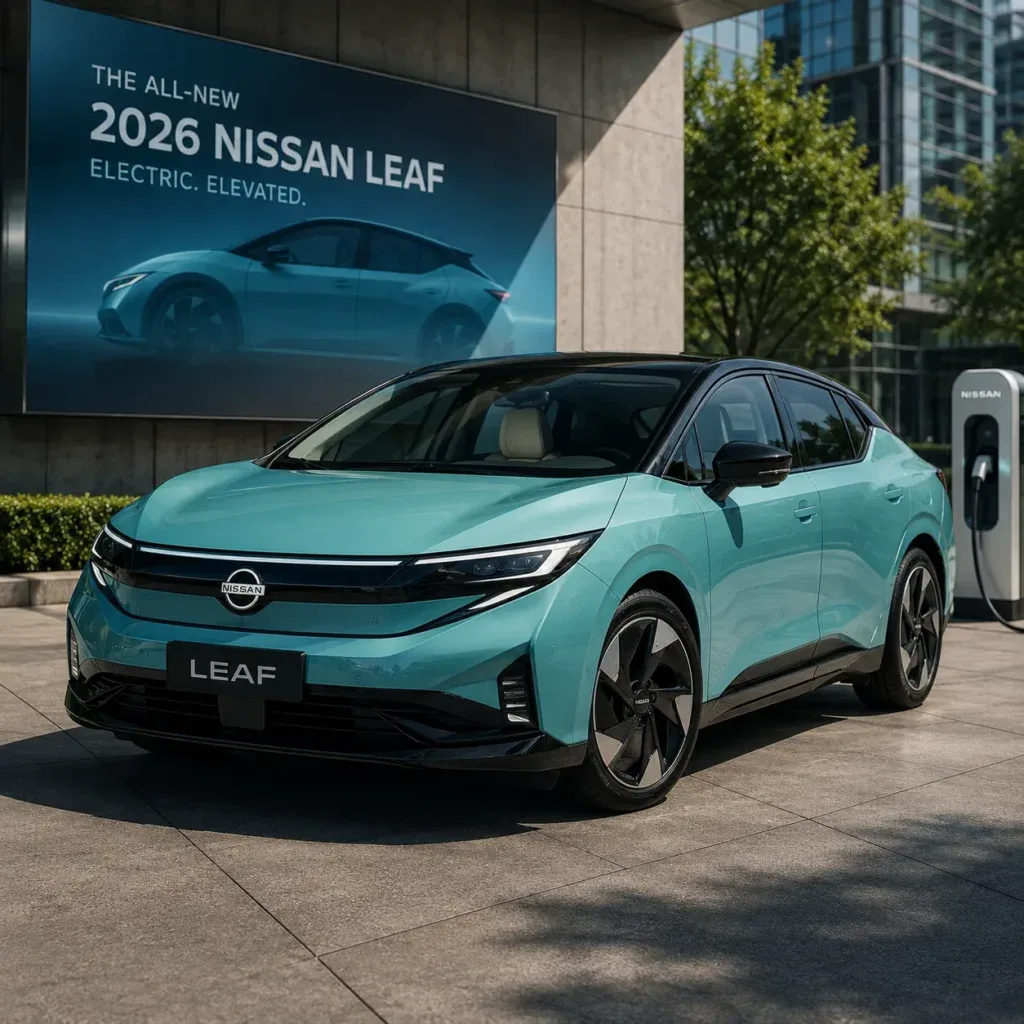
The 2026 LEAF shares almost nothing with its predecessor except the name and the hatchback format.
New platform. New battery architecture. New charging system. New interior. Nissan essentially shelved everything they learned about what didn’t work on the first and second generation LEAF and started over with the engineering brief for the third.
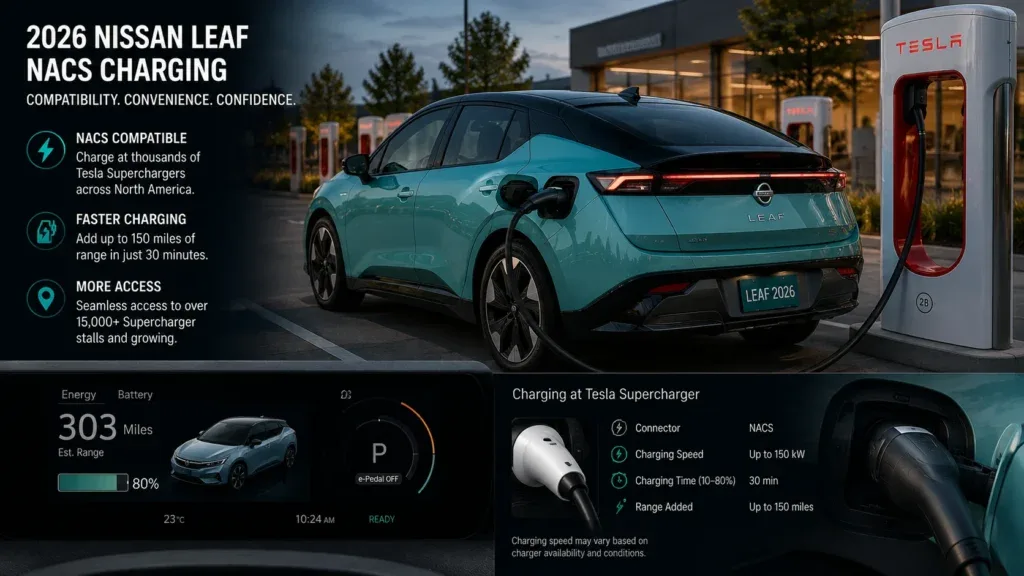
The result: 303 miles of EPA-rated range from a 63 kWh battery. For comparison, the second-generation LEAF topped out at 226 miles. The third generation improves that by 34% — enough to cross the psychological 300-mile threshold that has become the benchmark for mainstream EV acceptability.
The charging upgrade is even more dramatic. The old LEAF’s CHAdeMO fast charging port was abandoned by the rest of the industry years ago, leaving LEAF owners stranded at stations that only had CCS compatibility. The 2026 LEAF uses a NACS port — native Tesla Supercharger access, no adapter, no compatibility anxiety. Every new Supercharger station in America works with the new LEAF out of the box.
DC fast charging speed improved to 100 kW — not the 350 kW leader class, but a massive improvement over the old LEAF’s 50 kW maximum. Charging from 10% to 80% takes approximately 35-40 minutes. Adequate for most road trip stops.
also read : https://driveglobalnews.in/americans-are-spending-45-billion-extra-on-gas/
The One Decision That Hurt the LEAF
Nissan confirmed it canceled the smaller battery version of the new LEAF.
The original plan included a lower-range, lower-cost variant — something that would have pushed entry pricing even further below $30,000 and expanded the potential buyer base. That variant was dropped before launch.
The reasoning is practical: Nissan needed to keep development costs manageable, and the small-battery version would have required additional engineering for a segment already crowded by the Chevy Bolt at $27,600. With the Bolt undercutting even the canceled small-battery LEAF’s projected price — the math didn’t work.
The result is a LEAF lineup that starts at $31,000 with 303 miles of range. That’s excellent value. It’s just not the sub-$28,000 EV that some early reports had suggested was coming.
How It Compares to the Only Real Competition
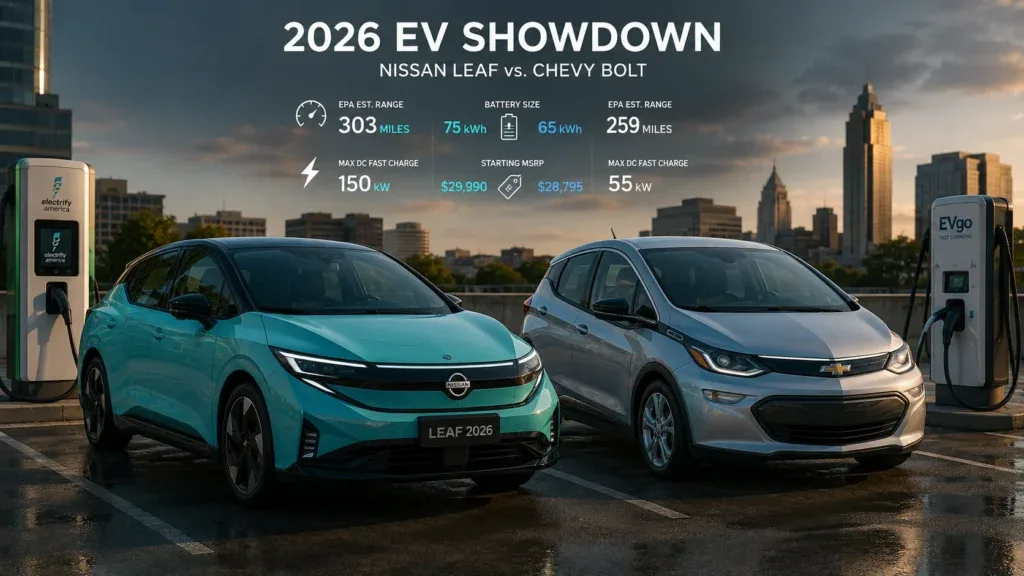
At $31,000, the 2026 LEAF’s direct competition is the Chevy Bolt at $27,600.
The Bolt is $3,400 cheaper. The LEAF has more range — 303 miles versus 300 miles, essentially identical. Both have NACS ports. Both are FWD only.
The LEAF’s advantages over the Bolt: slightly more interior room, a more refined ride quality, and Nissan’s dealer network that’s meaningfully larger than Chevrolet’s in many markets. The LEAF’s interior quality on upper trims is genuinely better than the Bolt’s value-focused cabin.
The Bolt’s advantages: $3,400 lower price, optional bidirectional home charging, and GM’s investment in the platform suggesting continued development.
At $31,000, the LEAF is excellent value. At $27,600, the Bolt is extraordinary value. For buyers choosing between the two — the $3,400 gap is the deciding factor for most. For buyers who find Nissan dealers more convenient or who specifically want the LEAF’s refinement advantage — the premium is defensible.
also read : https://driveglobalnews.in/subaru-outback-vs-toyota-rav4-in-2026-the-most/
Who Should Buy the 2026 LEAF
The buyer who has wanted an EV for years but couldn’t justify spending $40,000. The first-time EV buyer who wants 300 miles of range for genuine road trip confidence, a nationally recognized brand behind the service network, and a price that doesn’t require financial gymnastics.
For that buyer — the 2026 LEAF at $31,000 is the most significant new EV launch in the affordable segment since the original Bolt arrived in 2016. Sixteen years after the original LEAF proved EVs could be mainstream — the third generation finally proves they can be mainstream at the price point mainstream actually means.