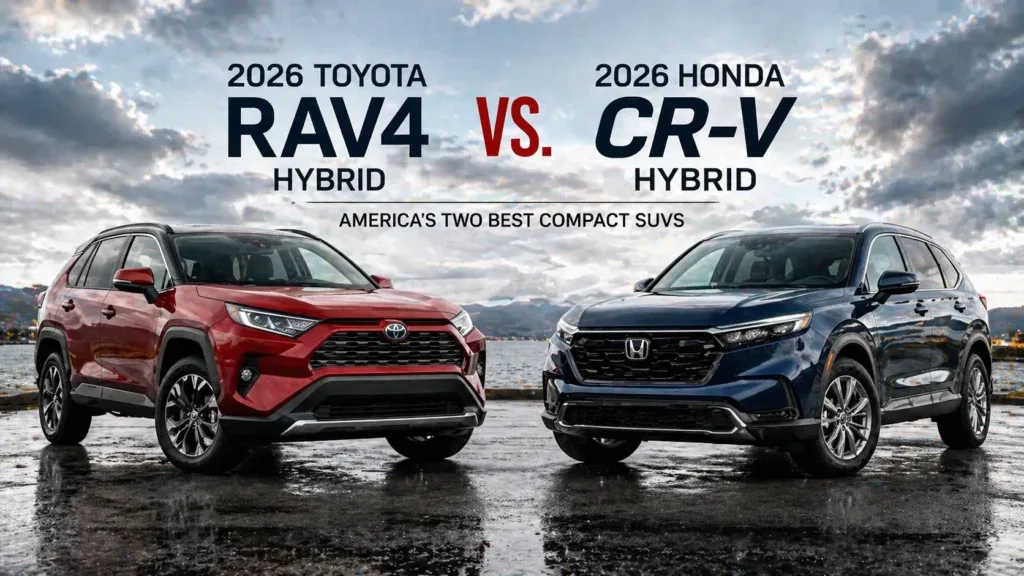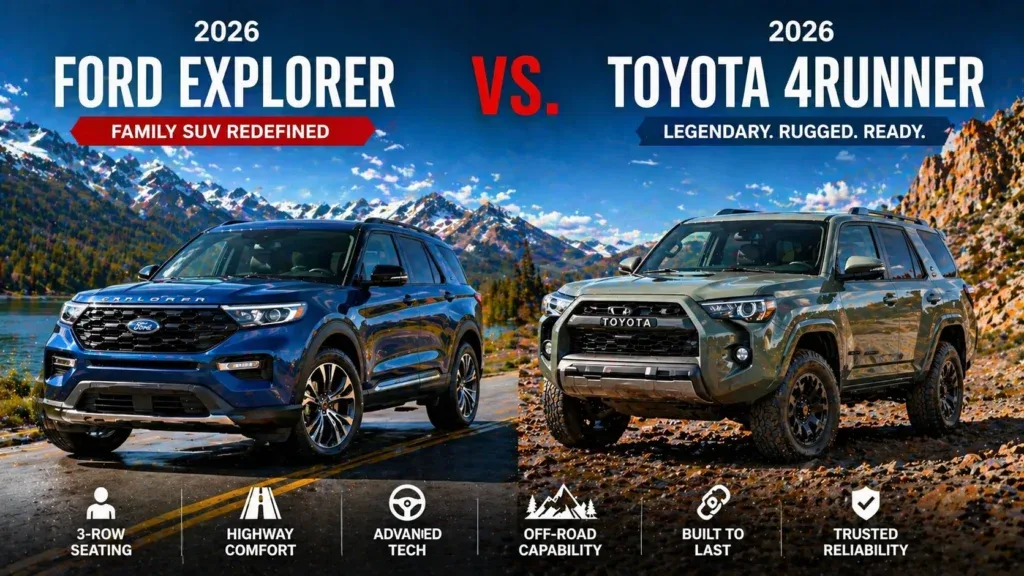

Two AWD SUVs. Both from brands that Americans trust more than almost any other for reliability. Both under $40,000. Both consistently appearing on “best compact SUV” lists year after year.
And yet the buyers for each one live genuinely different lives.
The Subaru Outback is for the buyer who goes places. Trails. Mountain roads. Beach access points. Campgrounds that aren’t quite paved the whole way there.
The Toyota RAV4 Hybrid is for the buyer who prioritizes cost efficiency. 40 MPG. Better resale value. Lower long-term fuel cost. The financially optimal choice in 2026’s gas price environment.
Put them side by side and the comparison is more interesting than most people expect.
also read : https://driveglobalnews.in/trump-just-threatened-25-tariffs-on-korean-car/
The Numbers
| 2026 Subaru Outback Wilderness | 2026 Toyota RAV4 Hybrid | |
|---|---|---|
| Starting Price | $38,495 | $33,700 |
| Fuel Economy | 25/30 MPG | 40 MPG combined |
| Horsepower | 260 HP (turbo) | 236 HP |
| Ground Clearance | 9.5 inches | 8.1 inches |
| AWD | Symmetrical standard | Standard |
| Towing | 3,500 lbs | 3,500 lbs |
| Cargo (seats up) | 75.7 cu ft (folded) | 37.8 cu ft (seats up) |
| Built | Indiana, USA | Georgetown, Kentucky |
| Insurance (avg/year) | $2,322 | ~$2,568 |
Two numbers define who wins this comparison for their specific buyer.
The Outback has 9.5 inches of ground clearance. The RAV4 Hybrid gets 40 MPG combined.
Everything else is a supporting argument for one of those two headline facts.
also read : https://driveglobalnews.in/toyota-rav4-hybrid-vs-kia-sportage-hybrid-2026/
The Subaru Outback — When Where You Go Matters More Than How Much Fuel You Burn

The Outback’s ground clearance story starts with what that number actually means.
9.5 inches clears rocks, ruts, and terrain obstacles that the RAV4’s 8.1 inches cannot. It’s the difference between driving around that flooded section of trail and driving through it. Between bottoming out on a steep driveway and clearing it cleanly. Between recommending a ski resort access road to your friends and warning them away.
The Wilderness trim specifically adds all-terrain Yokohama Geolandar tires from the factory — not the all-season highway tires most SUVs ship with. Those tires in mud, loose gravel, or snow are a different experience from the RAV4’s standard all-season rubber. Not off-road tires. Trail-capable tires. The distinction matters in real-world use.
Subaru’s Symmetrical AWD is mechanically connected — always active, always engaging all four wheels proportionally. Toyota’s RAV4 Hybrid AWD uses an electric rear motor that engages on demand. Both work well in normal winter conditions. In demanding traction scenarios — sustained mud, steep icy inclines, loose sand — the mechanical AWD tends to respond more consistently.
The 260 HP turbocharged engine on the Wilderness makes it genuinely quick for an SUV with this level of off-road hardware. The turbo’s mid-range torque — pulling hard from low RPM — is exactly what you want when climbing a grade with a loaded roof rack or towing a small camper.
The cheap insurance is an underrated argument. The Outback averages $2,322 per year in full coverage — one of the five cheapest vehicles to insure in America. The RAV4 runs about $2,568. Over seven years — $1,722 in insurance savings for the Outback. That closes some of the $4,795 price gap between them.
The honest weakness: 25/30 MPG is embarrassing in May 2026. At $4.50 gas and 15,000 annual miles, the Outback Wilderness costs approximately $2,250 per year in fuel. The RAV4 Hybrid costs $1,688. That’s $562 more every single year — over seven years, $3,934 more in fuel. The insurance savings offset some of that but not all.
Buy the Outback if: You genuinely go off-road or on unpaved roads regularly. You live somewhere with serious winter conditions. Ground clearance matters to your actual weekend use. Or you’re buying the standard Outback at $34,995 rather than the Wilderness — at 25/32 MPG with a cheaper sticker, the gap narrows.
The Toyota RAV4 Hybrid — When the Math Is the Point

The RAV4 Hybrid’s case is simpler and arguably more compelling for more buyers.
40 MPG combined at $4.50 gas is genuinely extraordinary for a compact SUV that also seats five comfortably, tows 3,500 pounds, and is built by the most reliable mass-market automaker in the world.
The fuel savings versus the Outback Wilderness: $562 per year. Over seven years: $3,934. Against the Outback’s $4,795 higher sticker price — the RAV4 Hybrid buyer is essentially even on total cost within about nine years, while spending $4,795 less upfront.
For buyers who care about cash flow — and in 2026’s inflation environment, most should — the RAV4’s lower purchase price plus lower fuel costs is a compelling total cost-of-ownership story.
Resale value further strengthens the RAV4’s financial case. A three-year-old RAV4 Hybrid currently trades at roughly 70% of original MSRP in private sales. Outback resale is good but not at RAV4 Hybrid levels. After three years, the RAV4 Hybrid owner who decides to sell or trade is recovering significantly more money than the Outback owner.
The honest weakness: The Outback goes more places. If you need to drive unpaved roads confidently, the RAV4’s 8.1 inches of clearance and highway-biased tires will have you wondering why you didn’t get the Subaru.
Buy the RAV4 Hybrid if: Your driving is primarily on paved roads. Fuel costs matter to your monthly budget. Long-term value retention is important. Or you live in a climate with normal winter weather rather than extreme mountain conditions.
The Verdict
You camp, hike, ski, or regularly drive unpaved roads: Outback. The ground clearance, all-terrain tires, and Symmetrical AWD character are built for exactly that life. Accept the fuel penalty. It’s worth it.
You drive mostly on pavement and want the most financially efficient reliable AWD compact SUV in America: RAV4 Hybrid. 40 MPG, better resale, same towing, same reliability. The math is hard to argue with.
The one wrong answer: buying the Outback Wilderness for a suburban commute and never taking it anywhere that justifies the extra ground clearance. You’d be paying a $4,795 premium plus an annual $562 fuel penalty for capability you never use.
Know your weekends. Then decide.
See how insurance costs compare for both vehicles with our Car Ownership Cost Calculator.