After three years of painful premium increases — 11.57% in 2023, 17.13% in 2024, and 7.56% in 2025 — American drivers are finally getting some relief.
The average full-coverage car insurance rate in 2026 is projected to rise just 0.67% nationally. That’s less than inflation. Less than a cup of coffee at most gas station prices. The smallest increase since before the post-pandemic insurance crisis began.
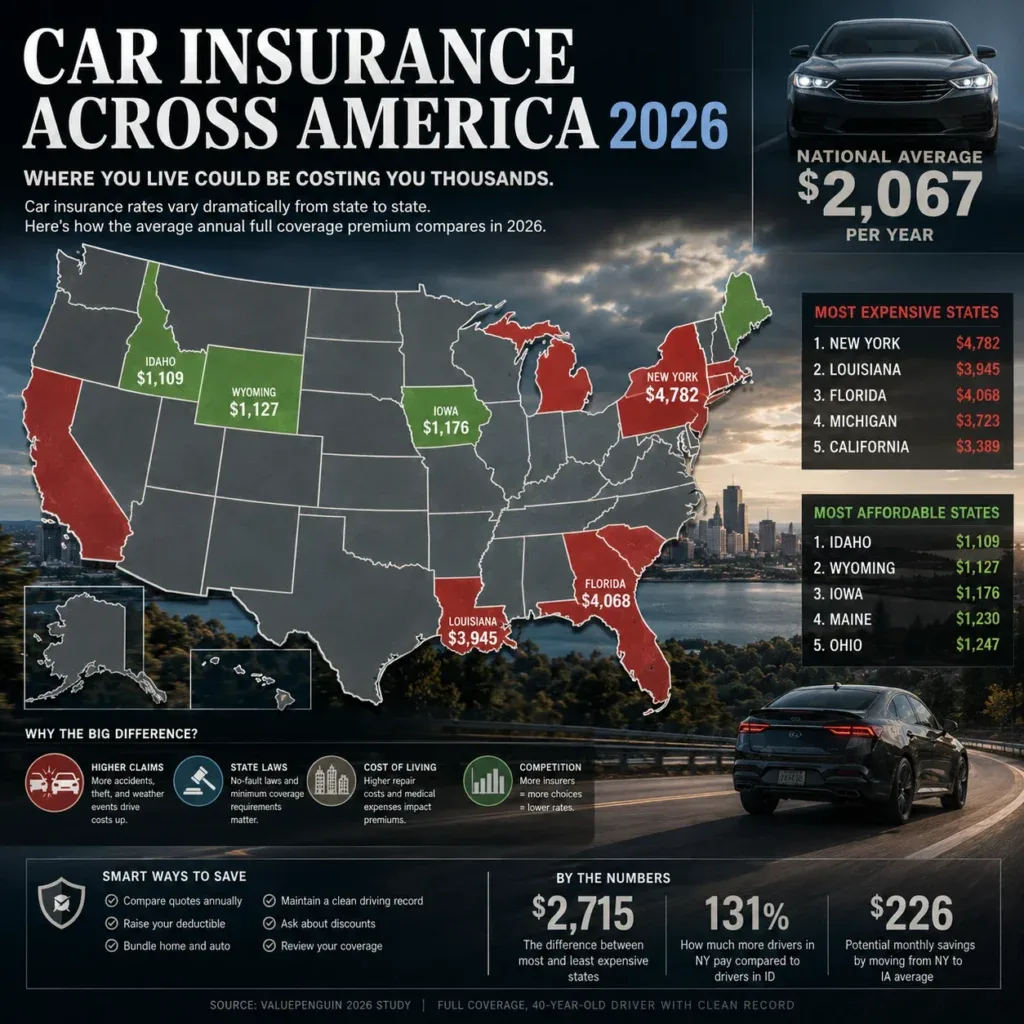
But here’s what that national average hides: your rate depends enormously on which state you live in. More than half of states are expected to see rates drop in 2026. And a few unlucky states are still getting hammered with double-digit increases.
Here’s the full picture — what’s actually happening, who’s winning, and what to do if you’re in a losing state.
also read : https://driveglobalnews.in/5-things-that-happen-to-your-car-insurance-when/
The States Where Insurance Is Getting Cheaper
Iowa — down 6.19% The biggest rate decrease of any state in 2026. Iowa drivers who renew their policies this year should see meaningful premium reductions at most major carriers. Low traffic density, low crime rates, stable weather, and a legal environment that doesn’t produce catastrophic jury verdicts combine to make Iowa one of the most insurer-friendly states in the country. That favorability is being passed to consumers in 2026.
Minnesota — down 5.29% Despite cold winters and ice-related accident risks, Minnesota’s overall claims environment has stabilized enough to produce rate decreases for most drivers this year. Minneapolis and Saint Paul drivers will see smaller reductions than rural Minnesota — urban density always commands a premium — but the statewide trend is down.
Arkansas — down 4.70% Arkansas saw some of the sharpest rate increases in 2023-2024 as severe weather events drove catastrophic claims. The insurance market has recalibrated, reinsurance costs have stabilized, and 2026 is delivering the correction that Arkansas drivers have been waiting for.
Wyoming — significant decrease continuing Wyoming led the nation in rate decreases in 2025 — down over 30% statewide at some carriers. 2026 continues the correction. Wide open roads, low population density, and an accident profile that justifies genuinely low premiums.
Idaho — consistently cheapest nationally Idaho isn’t seeing dramatic rate cuts like Iowa, but it’s maintaining its position as the cheapest state for full coverage car insurance in America — approximately $1,473 per year. If you live in Idaho and haven’t shopped your insurance recently, compare quotes — you may already have competitive pricing, but it never hurts to check.
also read : https://driveglobalnews.in/cheapest-car-insurance-companies-in-2026/
The States Getting Hit Harder

New Jersey — up 10.46% New Jersey was one of the few states with double-digit increases in 2025 — up roughly 20%. And 2026 is adding another 10.46% on top of that. The average New Jersey driver is now paying significantly more than the national average, and the trajectory isn’t improving quickly. Dense traffic, expensive repairs, high medical costs, and a legal environment favorable to large personal injury settlements all drive New Jersey’s persistently elevated rates.
Nevada — $335 per month At $335 per month — $4,020 annually — Nevada is among the three most expensive states for car insurance in America. Las Vegas accident rates, extreme heat that accelerates vehicle wear, and the high density of uninsured drivers on Nevada roads all compound into rates that are 61% above the national average.
Florida — $311 per month Hurricane exposure, fraud — particularly in South Florida — and the highest uninsured driver rate in the country keep Florida among the most expensive states. The ongoing property insurance crisis in Florida is also affecting auto rates as insurers managing both lines recalibrate their overall risk exposure in the state.
California — up over 5% California’s Proposition 103, which requires regulatory approval for rate increases, has historically kept insurance prices artificially low — leading to insurers leaving the market. As the regulatory environment shifts, some carriers are implementing catch-up increases, and California drivers in certain areas are seeing significant rate jumps.
Which Companies Are Cutting Rates — And Which Are Raising Them
The good news for most American drivers comes from the major carriers.
State Farm — cutting 4% State Farm is the biggest insurance company in America and reducing rates by an average of 4% in 2026. If you’re with State Farm and haven’t received notice of a rate reduction, check your renewal documents — the cut should appear at your next renewal date.
GEICO, Travelers, Progressive — largely stable Three of the four largest insurers are holding rates approximately flat in 2026, with modest variations by state. Stable rates from the largest carriers is itself good news after years of sharp increases.
Allstate — raising 1.98% Allstate is the outlier among major carriers — raising rates by an average of 1.98% nationally in 2026. If you’re an Allstate customer, your premium will increase modestly at renewal. Given that State Farm is cutting 4%, this creates a meaningful incentive to compare quotes at renewal time.
NJM — raising 21.18% NJM is the most aggressive rate increase from any major insurer in 2026. Primarily operating in New Jersey and surrounding states, NJM’s increase reflects the exceptionally challenging claims environment in the Garden State. If you’re an NJM customer, comparing quotes from Travelers, Progressive, and GEICO at renewal is essentially mandatory.
The One Thing That Hasn’t Hit Your Bill Yet — But Will
Here’s the warning that Insurify’s economists flagged in their 2026 report: the full cost of tariffs on imported auto parts hasn’t yet been fully reflected in insurance premiums.
When parts cost more to source and replace, repairs cost more. When repairs cost more, insurers pay more per claim. When insurers pay more per claim, they eventually charge higher premiums.
That chain of events is in progress but not complete. Insurers typically adjust for rising repair costs with a lag of 6-18 months. The 25% EU auto tariff was announced May 1. Korean auto parts tariffs were threatened and partially resolved. Import costs on steel and aluminum are elevated.
By late 2026 and into 2027, some of that cost pressure will begin appearing in renewal rates — particularly for European and Korean vehicles whose parts have become more expensive to source. If you drive a BMW, Mercedes, Hyundai, or Kia built outside the US — watch your renewal premium closely at your next renewal.
What to Do Right Now
If you’re in a state where rates are dropping — shop at renewal anyway. The state average going down doesn’t mean your specific carrier is giving you the discount. Get quotes from at least three companies.
If you’re in a state where rates are rising — shop aggressively. Moving from Allstate to State Farm right now saves you roughly 6% just on the announced rate trajectories — before accounting for any competitive pricing differences.
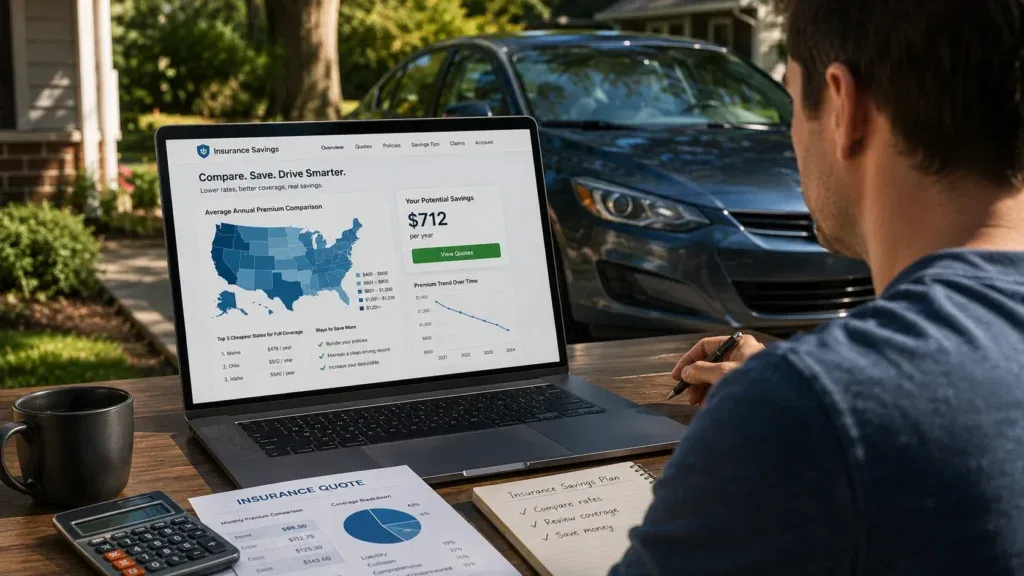
The record that matters most: Nearly 47.3% of all auto insurance policies in America were shopped at least once in the past 12 months — a record high, according to LexisNexis. Americans have figured out that shopping works. Average savings from switching: $700-$1,100 per year.
If you haven’t shopped in the past 12 months, you’re almost certainly in the half that’s overpaying.