

You know that feeling when a natural disaster on the other side of the world suddenly shows up in your local car market? That’s exactly what’s happening this week.
A powerful 7.1-magnitude earthquake hit Japan’s Kumamoto region on July 28. Honda has now been forced to idle some of its Japanese factories because parts suppliers in the area took a hit. The shutdowns are short for now, but they’re already affecting production of a few key models.
Here’s the straightforward version of what’s going on and which cars American buyers should keep an eye on.
What’s Actually Shutting Down
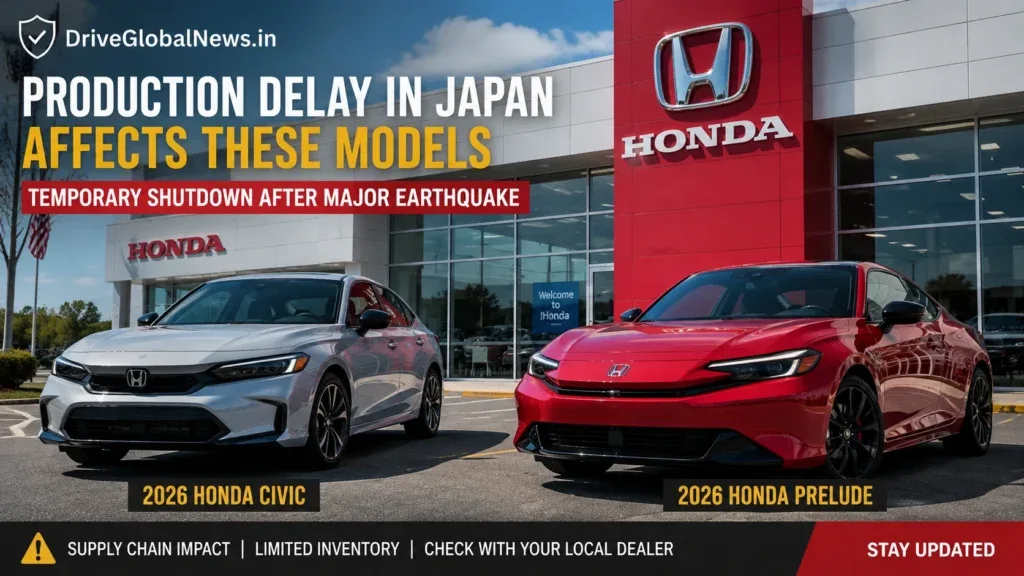
Honda is pausing production at two of its major Japanese car plants:
- Saitama plant (Yorii): Closed August 5–7. This factory builds the Civic and the new Prelude.
- Suzuka plant: Closed August 6–7. This one focuses more on vehicles for the Japanese market, including the N-BOX.
Honda’s Kumamoto plant, which makes motorcycles and power equipment, has also been offline since the quake and will stay closed through August 7 while they clean up water damage from sprinklers that went off during the shaking.
These are Japanese factories, not Honda’s U.S. plants in Ohio, Indiana, or Alabama. Most Hondas sold in America are already built in North America. But some models and parts still rely on the Japanese supply chain, so the effects can still show up here.
Which Cars Are Most Affected
The biggest name on the list is the Honda Civic. The Saitama plant builds a portion of Civic production, and any interruption there can tighten supply of certain trims, especially if dealers were already running lean on popular configurations.
The Honda Prelude is also built at Saitama. Since this is a lower-volume model, even a few days of lost production can create noticeable gaps at dealerships.
Other Honda vehicles that use parts from the affected supplier network could see minor delays, though the company has not announced widespread shortages yet.
What This Means for American Buyers
Right now the impact looks limited and short-term. Honda’s North American factories are still running, and the bulk of Civic, CR-V, Accord, and Pilot production for the U.S. market happens here. A three-day pause in Japan is unlikely to empty dealer lots overnight.
That said, if you’re shopping for a specific Civic or Prelude trim that was already in short supply, this could stretch wait times a bit. Dealers in some regions may see slower replenishment of certain colors or option packages over the next few weeks.
The Bigger Picture
This is another reminder of how tightly connected the global auto industry still is. Even when most of a car is built in the U.S., critical components often travel across the Pacific. Earthquakes, storms, or other disruptions in Japan can still ripple outward.
Honda has dealt with supply shocks before and usually recovers quickly once parts start flowing again. The current plan is to restart the affected lines after the short shutdown and the summer holiday period that follows.
The Bottom Line

Honda isn’t shutting down its American factories. It is temporarily idling a couple of Japanese plants because of the recent Kumamoto earthquake and the parts shortages that followed. The Civic and Prelude are the models most directly in the crosshairs for now.
If you’re in the market for one of those cars, it might be smart to lock in a deal sooner rather than later while inventory is still solid. For everything else in the Honda lineup, business as usual looks likely for the moment.
Before you sign anything, make sure you understand how your ZIP code affects car insurance rates in 2026 — the difference can be huge. And if you’re still shopping around, check our guide on best cars to buy in July 2026 for current deals.
Have you noticed any Civic or Prelude shortages at your local Honda dealer yet? Drop a comment and let the rest of us know what’s happening in your area.