Yesterday morning, during the Mexican president’s daily press conference, Kia’s Mexico managing director announced something that will directly affect American EV buyers by December.
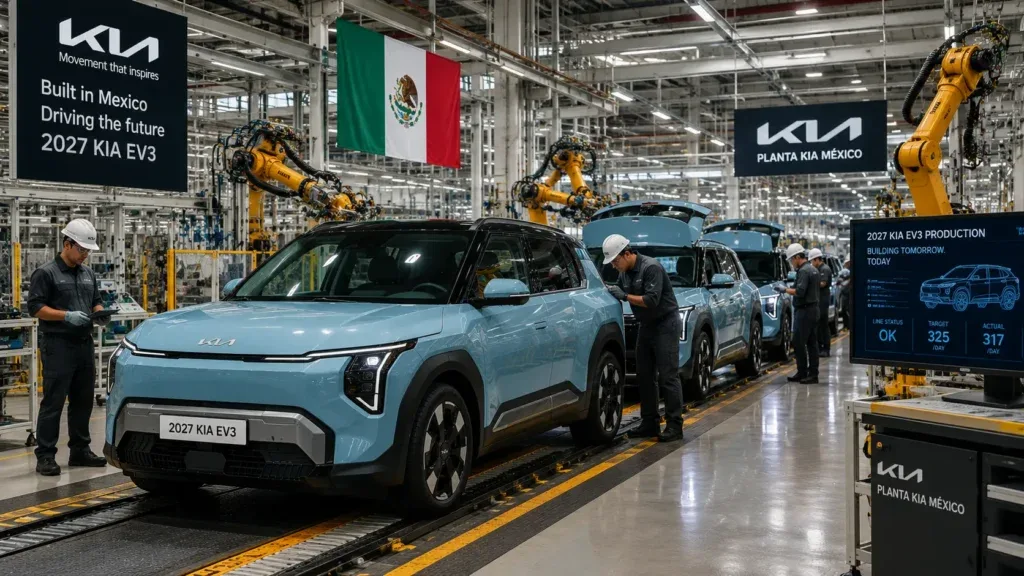
Kia is investing $649 million to produce electric vehicles in Mexico. Pre-orders for the EV3 — the most anticipated affordable EV of the year — opened the same day.
The car is coming to America. It will cost around $35,000. It will offer 320 miles of range. And it will be built in Mexico.
In July 2026, that last sentence is the complicated part.
What Kia Actually Just Announced
Let’s separate what happened yesterday from the months of speculation that preceded it.
Kia had been infuriatingly vague about EV3’s US timeline all year. The car debuted globally in 2024. It’s been selling in Europe and Korea. Americans have been watching from a distance, waiting for Kia to confirm the obvious — that the US would eventually get its version of the car that’s been winning awards everywhere else.
Yesterday’s announcement was the confirmation. Kia Mexico’s managing director stated publicly, in front of the Mexican president’s press conference audience, that Kia will invest $649 million to produce electric vehicles in Mexico — and opened pre-orders for the EV3 at the same event. Electrek confirmed: “Kia will launch the 2027 EV3 in the US by the end of the year.”
Done deal. Finally.
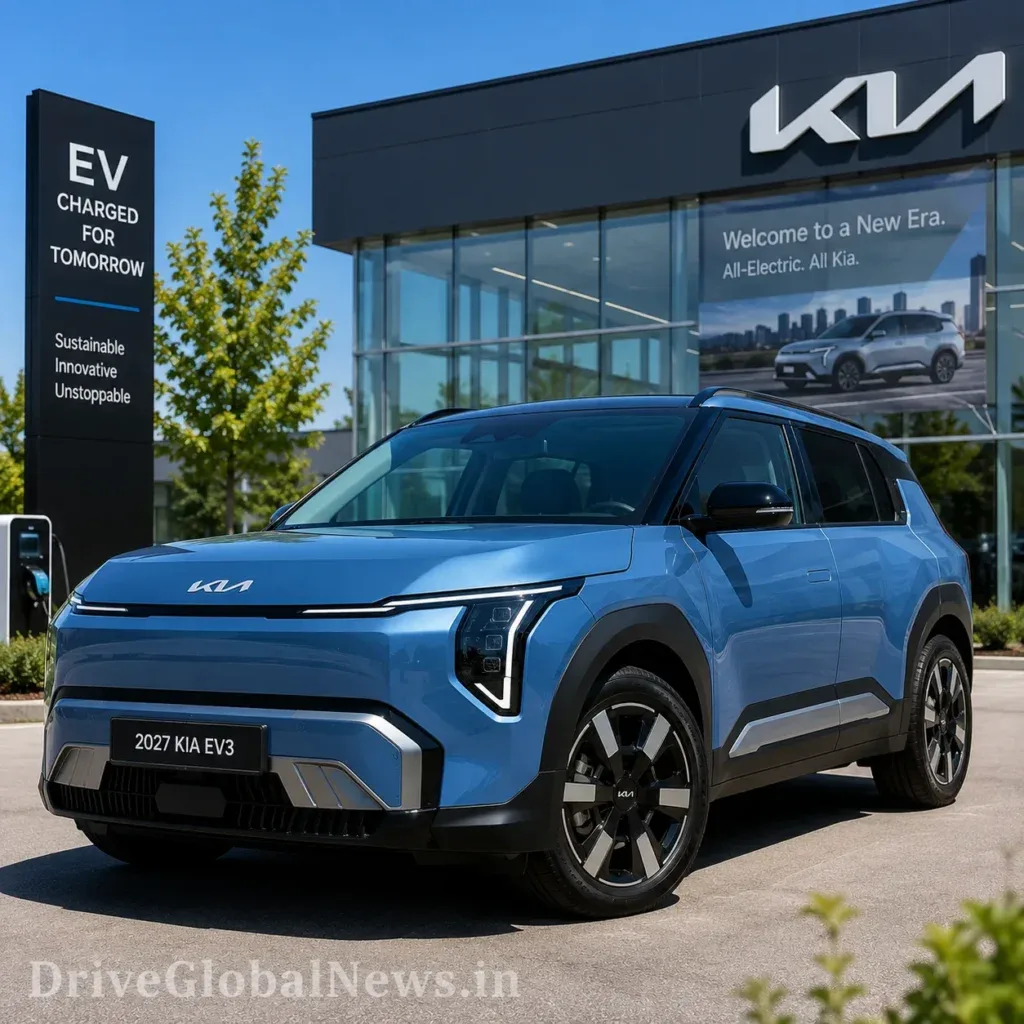
The car itself is the 2027 model year — arriving late 2026 for sale in the US. Standard Range uses a 58.3 kWh battery for an estimated 270 miles of range. Long Range uses an 81.4 kWh battery targeting 320 miles. Dual-motor AWD produces 261 horsepower. The GT performance trim makes 288 horsepower and adds sport-tuned suspension.
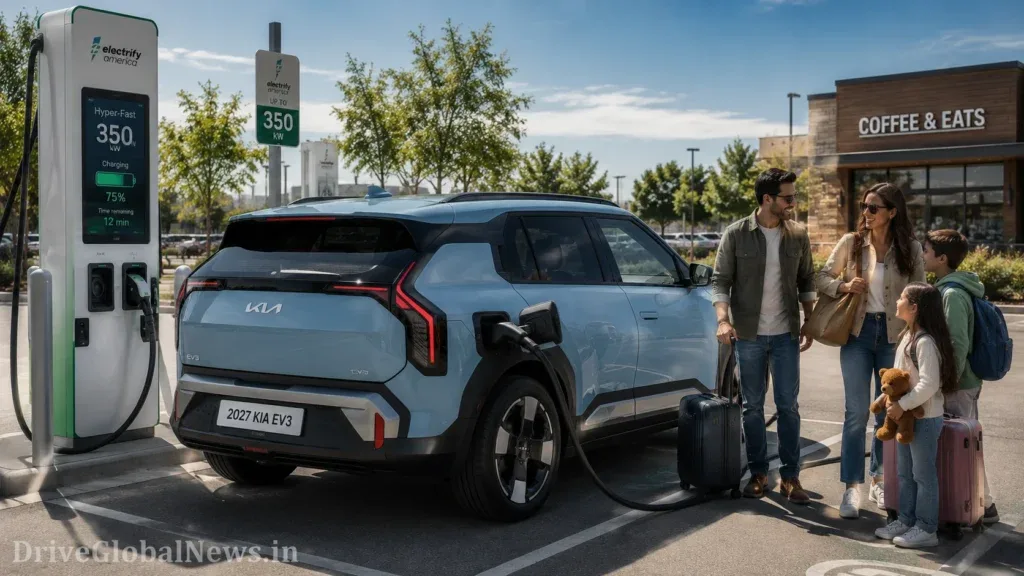
Charging from 10% to 80% on the larger battery: 31 minutes. Not class-leading — the Ioniq 5’s 350 kW system is faster. But for a $35,000 vehicle, adequate is actually fine.
The Specs That Make This Car Matter
The EV3 is not here to be the most exciting EV in America. It’s here to be the most accessible one.
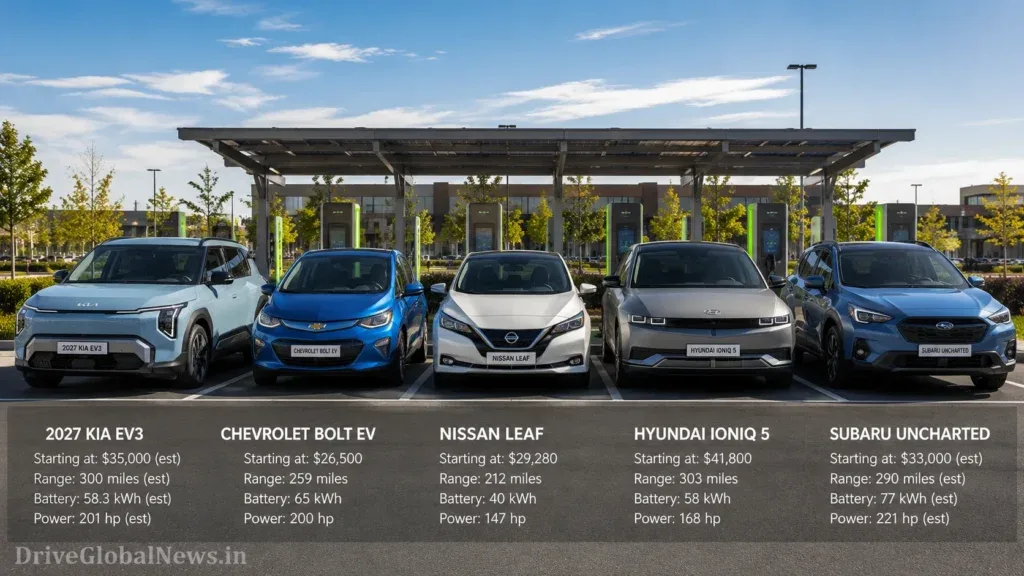
$35,000 starting price makes it one of only three EVs under $36,000 available in the US right now. The Chevy Bolt at $27,600 and the Nissan LEAF at $31,500 are the others. The EV3 lands between them on price while offering more interior quality, more technology, and more modern design than either.
169 inches long — 28 inches shorter than the Kia EV9. That shorter length means it fits in tight city parking without the turning radius anxiety of larger crossovers. For urban buyers who were priced out of the Ioniq 5 at $35,000 or found the Bolt’s interior too basic — the EV3 exists precisely for that gap.
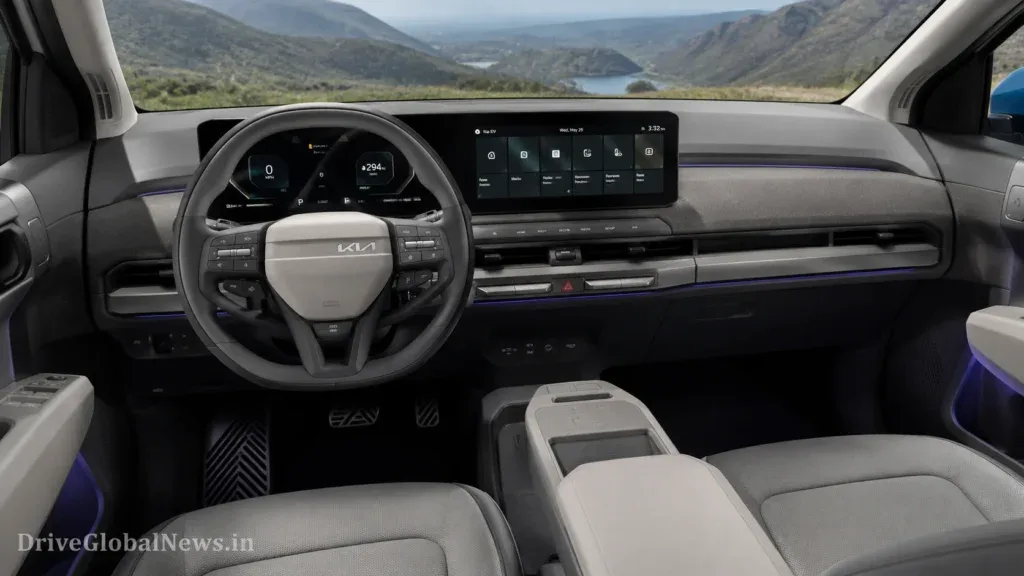
The interior is the unexpected story. A 12.3-inch touchscreen, 12.3-inch digital gauge cluster, and 5-inch climate control screen — Kia’s newest tech architecture, in a $35,000 vehicle. Harman Kardon audio available. Kia’s AI assistant. Vehicle-to-Load (V2L) standard — meaning the car can power laptops, camping gear, or appliances from its battery. V2L at this price point from the Bolt is a $2,371 option. In the EV3 it’s baked in.
Kia’s 10-year/100,000-mile battery warranty — the best in the industry — applies here. At $35,000 with 320 miles of range and the best EV warranty available, the EV3 is specifically designed to remove every legitimate objection to buying an affordable electric vehicle.
The Mexico Question
Here’s what most EV coverage glosses over and what every buyer in 2026 should understand clearly.
The EV3 built in Mexico for the US market does not face the 100% tariff that applies to Chinese-built EVs. Mexico manufacturing under the USMCA trade framework faces a different tariff calculation — one that Kia specifically chose Mexico to navigate.
But “built in Mexico” in July 2026 is not the same uncomplicated statement it was in 2022. The Cars.com American-Made Index this month found that 57% of Americans say they’re willing to pay more for a US-made vehicle. The Toyota Camry built in Kentucky and the Tesla Model 3 built in California rank highest on domestic content. The Kia EV3 built in Mexico will not.
This matters for two reasons that are both practical.
First: the tax deduction from last year’s legislation — up to $10,000 in interest deductions on new US-assembled vehicles — does not apply to the EV3. The deduction requires US assembly. Mexico-built vehicles are excluded. That’s $1,000-$1,500 in potential tax benefit that EV3 buyers leave on the table compared to buyers of the Chevy Bolt (Michigan-built) or the Hyundai Ioniq 5 (Georgia-built).
Second: tariff stability. USMCA has been relatively stable, but “relatively stable” in 2026’s trade environment is not the same as “guaranteed.” Korean automakers building in Mexico have more tariff exposure than Korean automakers building in Georgia. Whether that exposure becomes material for EV3 pricing is a question without a definitive answer today.
The Competition It’s Entering
The EV3 arrives into a more competitive affordable EV market than existed when Kia first announced it.
The Chevy Bolt at $27,600 is $7,400 cheaper. Built in Michigan. No tariff question. But the interior is noticeably more basic and the charging speed is slower.
The Nissan LEAF at $31,500 is $3,500 cheaper. The LEAF’s charging network access with NACS port is comparable. But the LEAF’s design feels less current than the EV3’s boxy-assertive styling.
The Subaru Uncharted at $36,000 is $1,000 more but offers AWD standard and Subaru’s outdoor brand identity.
The Hyundai Ioniq 5 at $35,000 — Georgia-built, 350 kW charging, US tax deduction eligible — is the most direct price competitor. For buyers choosing between the EV3 and Ioniq 5 at essentially the same price: the Ioniq 5 is larger, has faster charging, qualifies for the US assembly tax benefit, and has three years of American ownership data behind it. The EV3 is smaller, newer design, and has a sportier character in the GT trim.
What Actually Happens Next
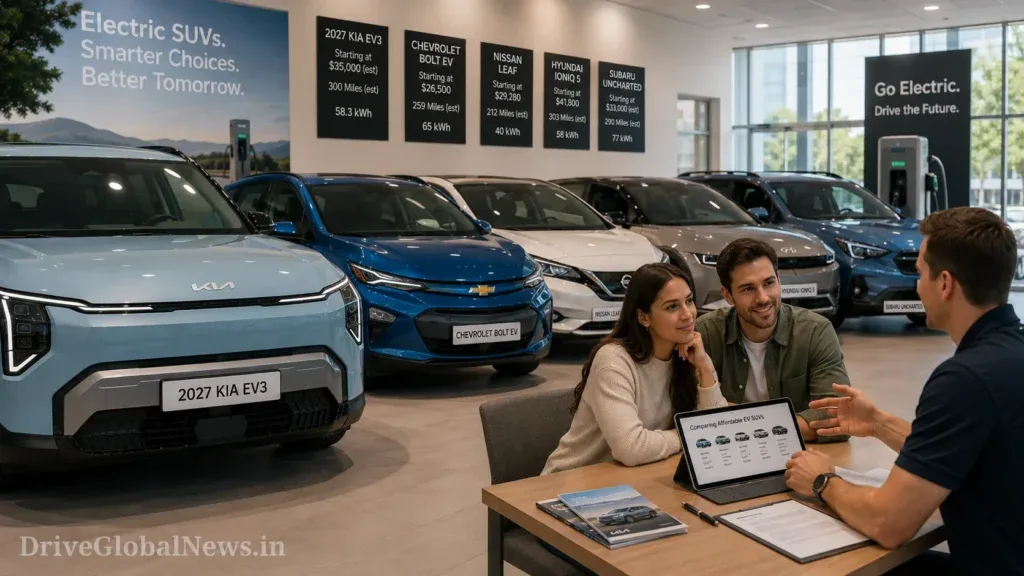
Kia opened Mexican pre-orders yesterday. US pre-orders and confirmed pricing come next — expected before year-end.
The car will be at US dealers in late 2026 as a 2027 model year vehicle. Given that it’s already in production for the Mexican market, the timeline is real rather than aspirational.
For buyers who have been waiting specifically for an affordable EV with modern design, solid range, and Kia’s warranty — the wait ends this year.
The Mexico manufacturing angle is worth knowing before you buy, not as a reason to avoid the car, but as context for understanding the tax benefit you won’t receive and the tariff risk that’s marginally higher than a US-assembled alternative.
The EV3 is a genuinely good car entering the market at a genuinely important price point. It just comes with an asterisk that Kia’s own marketing isn’t rushing to explain.