Drive a perfect car your entire life. Zero accidents. Zero tickets. Zero claims.
Move to Nevada.
Your car insurance bill just became $335 per month — for that exact same clean record in that exact same car.
Move to Vermont instead.
$98 per month. Same record. Same car. Same everything.
The difference between those two choices is $2,844 per year. Purely from geography. The insurance industry calls this “rating territory.” Most Americans call it unfair. Both things can be true simultaneously.
Insurify published its July 2026 state-by-state car insurance data this week. The numbers reveal something that most people know exists but few actually quantify: where you live is the single most powerful factor in your car insurance rate. More powerful than your age. More powerful than your car. In many cases, more powerful than your driving record.
Here’s the complete picture — what your state actually costs, which states are getting cheaper, which are getting worse, and what you can realistically do about it.
The National Picture in July 2026
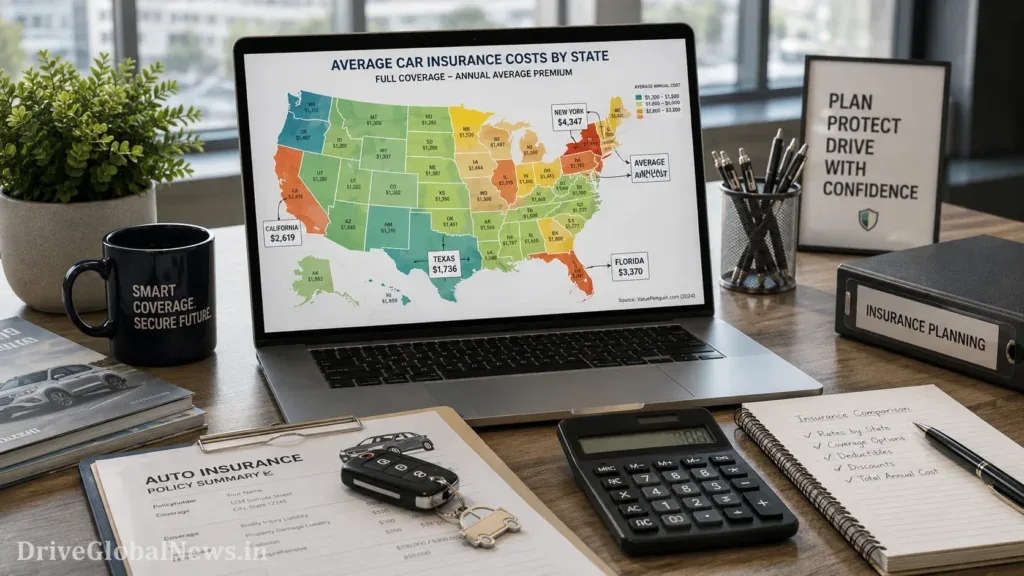
The national average for full coverage car insurance held steady at $186 per month through June, according to Insurify’s July data. Liability-only coverage stayed at $98 per month.
That stability is actually good news. After three years of brutal increases — 11.57% in 2023, 17.13% in 2024, 7.56% in 2025 — the market has settled. Insurify projects just a 1% national increase for all of 2026. The smallest projected increase since 2022.
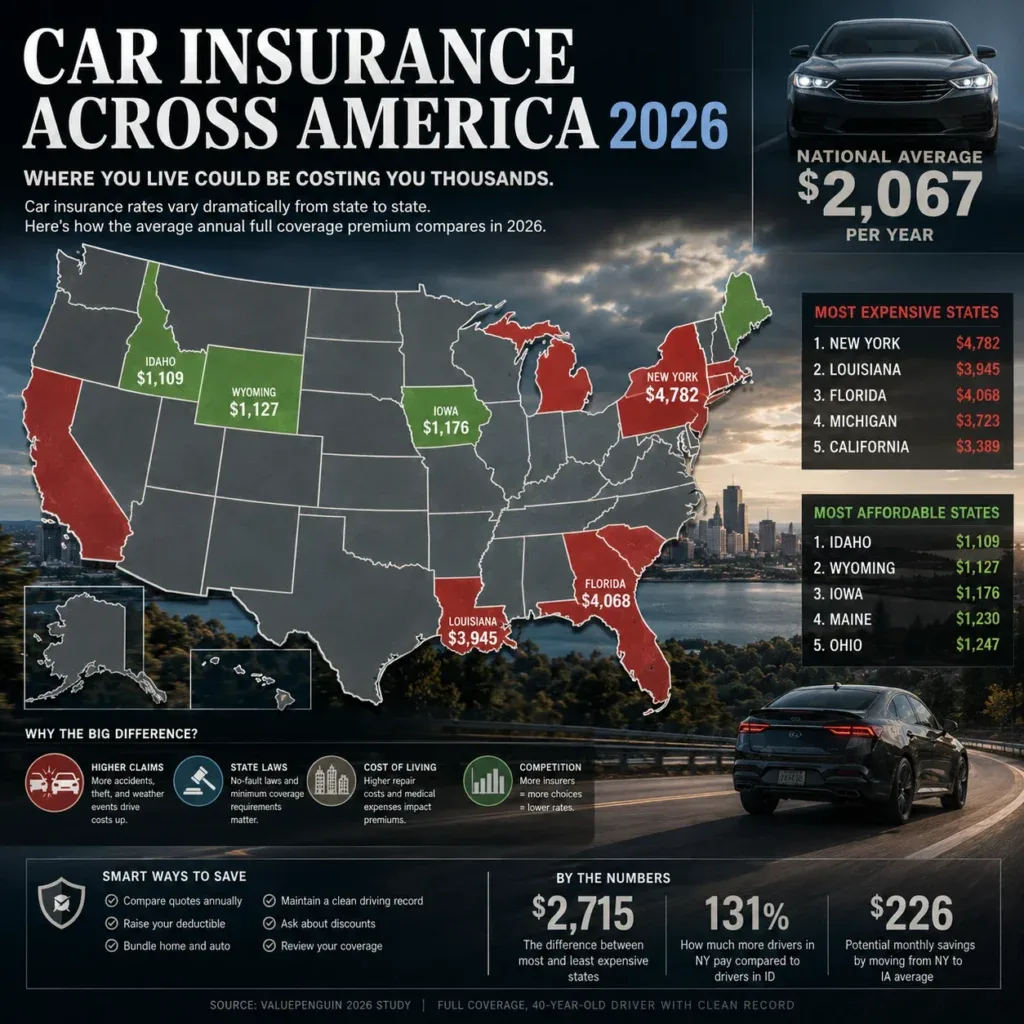
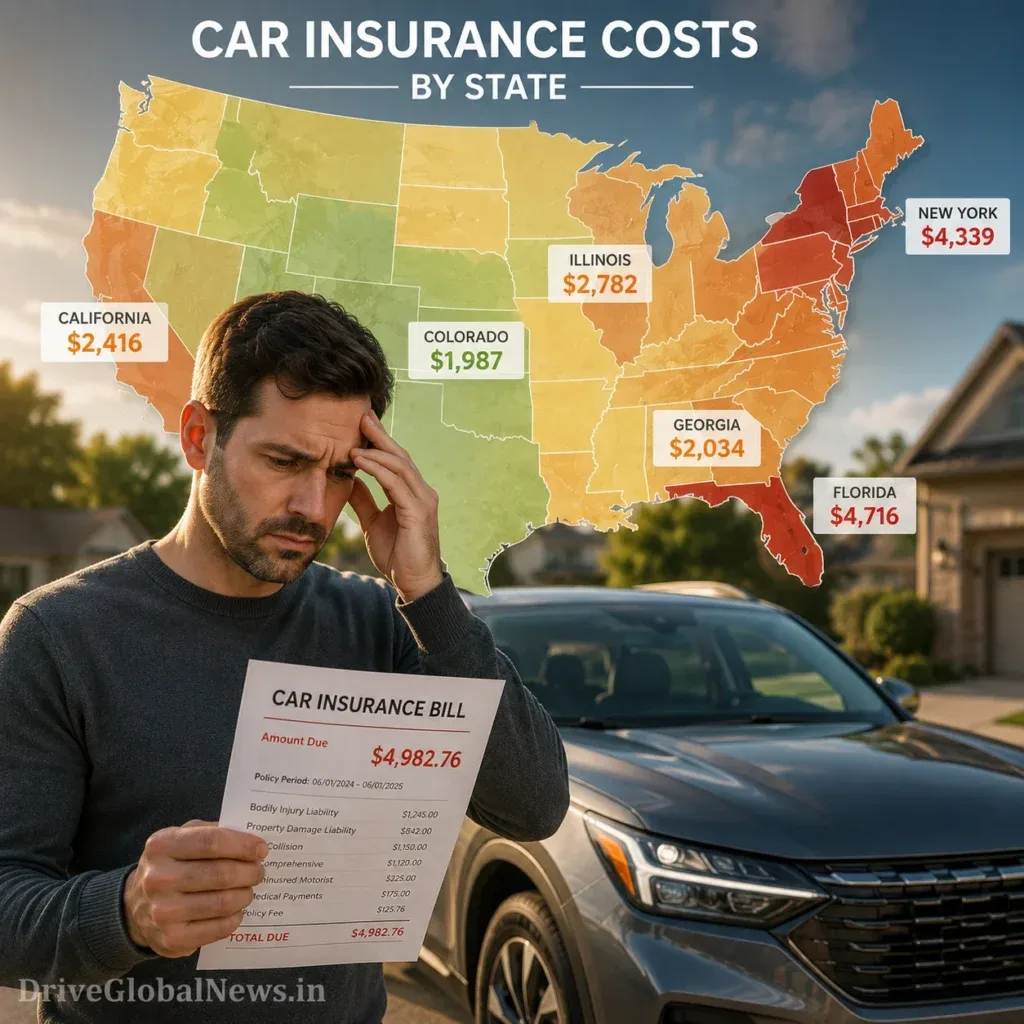
But “national average” hides the specific reality that every American driver actually lives with. The five most expensive states right now are Nevada, Louisiana, Florida, Connecticut, and Delaware — all averaging over $300 per month. Vermont, Maine, Wyoming, Iowa, and Idaho consistently sit under $120 per month.
The gap between the most and least expensive states is $237 per month. $2,844 per year. On the exact same coverage. The exact same driver. The exact same car.
The Most Expensive States — And Why They Got There

Nevada: $335 per month ($4,020 annually)
Las Vegas has among the highest accident rates of any major American city. Tourists unfamiliar with roads. Alcohol. Extreme heat that degrades tire performance. Dense traffic on the Strip that generates fender-benders constantly. High repair costs from luxury vehicle density in the market. And a significant uninsured driver population that pushes up costs for everyone else through uninsured motorist coverage.
None of this is the fault of a careful Nevada driver. But that careful driver pays for it every single month.
Louisiana: $327 per month ($3,924 annually)
Louisiana has been in the top three most expensive states for car insurance for 20 consecutive years. The formula is consistent and self-reinforcing: high uninsured driver rates, frequent severe weather events (hurricanes and flooding that total vehicles), and a legal environment where personal injury jury verdicts tend to be large. Insurers price for the environment they operate in. In Louisiana, that environment is expensive.
Florida: $311 per month ($3,732 annually)
The highest uninsured driver rate in the country — roughly 20% of Florida drivers carry no insurance. Every at-fault accident involving an uninsured driver gets paid by the insured driver’s own uninsured motorist coverage. Florida also has the highest rate of insurance fraud of any state, particularly in South Florida, where staged accidents and inflated medical claims cost insurers hundreds of millions annually. Those costs flow directly to policyholders.
New Jersey: 10.44% increase in 2026 — and still climbing
New Jersey was already expensive before this year’s projected 10.44% increase — the largest of any state in 2026. The Zebra confirmed New Jersey’s rate trajectory, noting that January 2026 brought the final phase of mandatory coverage limit increases. Higher required minimums mean higher baseline premiums. For a state that already ranked among the most expensive nationally, that increase lands particularly hard on middle-income families.
Washington D.C.: $4,017 per year — most expensive in America
Not technically a state, but included in all national analyses. D.C. drivers pay nearly double the national average. Dense urban driving, some of the worst traffic in America, high vehicle theft rates, and extremely expensive auto body repair costs in a high-wage market all compound into rates that shock people who move there from elsewhere.
The Cheapest States — And What They Have in Common
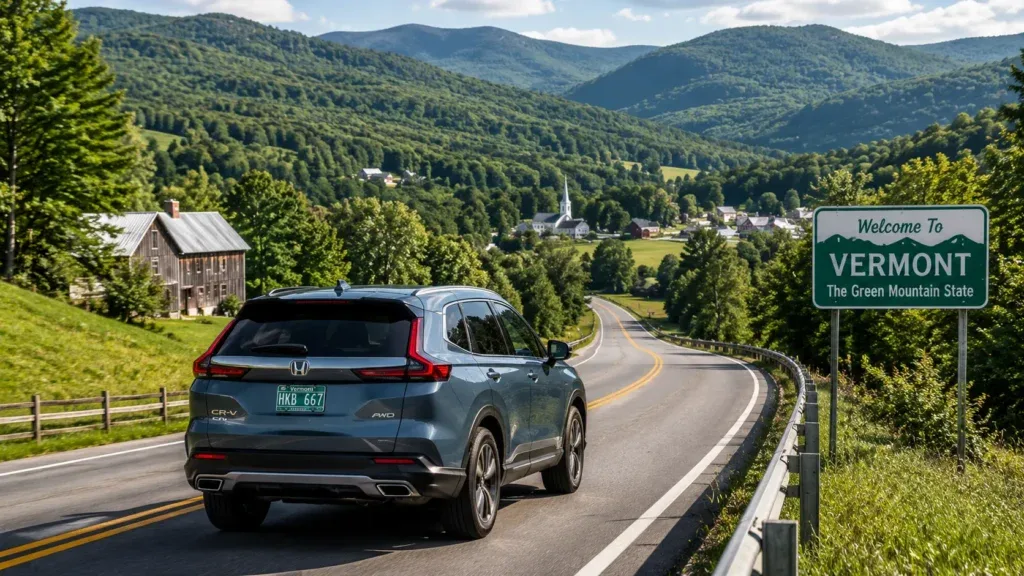
Vermont: $98 per month ($1,176 annually)
Vermont is the cheapest state for car insurance in America by most measures. The formula is the opposite of Nevada and Louisiana: low population density, minimal traffic congestion, low vehicle theft rates (rural states simply have less car theft), low accident frequency, and modest repair costs in a lower-wage market. Vermont also has a relatively low uninsured driver rate — the population tends to be compliant with mandatory insurance laws.
Maine: Under $120 per month
Similar profile to Vermont — rural, low-density, low-crime, low-accident-frequency. New England weather creates some winter risk, but the claims environment is manageable enough that insurers price Maine competitively.
Wyoming: Down 20%+ from 2025
Wyoming had the largest rate decrease of any state in 2025 — over 20% — and remains among the cheapest in 2026. Wide open roads, almost no traffic, minimal theft, and straightforward accident claims without litigation complexity keep Wyoming rates low. The 20% 2025 decrease came after insurers recalibrated rates that had been too high relative to actual claims experience.
Iowa: Down 6.19% in 2026
Iowa has the largest projected rate decrease of any state in 2026. Adding to rates that were already below average, the decrease makes Iowa one of the most significant beneficiaries of the 2026 insurance market correction.
Idaho: $1,244 per year
Low crime. Low density. Low litigation costs. Idaho appears near the top of “cheapest states” lists consistently and without drama. Nothing exotic about the formula — it’s just an environment where accidents are rarer and cheaper.
The States Getting Worse in 2026
The market correction that benefited 39 states in 2025 did not reach everyone. Several states are seeing rate increases in 2026 that stand out from the national trend:
Nevada: Projected increase on top of already-high rates.
California: Projected increase over 5% in 2026. The ongoing property insurance crisis in California is affecting auto markets as insurers recalibrate their overall California exposure.
New York: Increase above 5% projected.
Washington D.C.: Increase above 5% projected.
The pattern: dense, expensive urban markets with high litigation costs and significant uninsured driver populations are continuing to see rate pressure even as the national average stabilizes.
The One Question Nobody Asks Before Moving

Here’s the thing about car insurance geography that never comes up in relocation conversations.
People research home prices, school districts, commute times, and job markets before moving. Nobody researches car insurance rates.
A family moving from Iowa ($1,200/year insurance) to Nevada ($4,020/year insurance) for a job opportunity is absorbing a $2,820 annual increase in car insurance that they probably didn’t factor into their cost-of-living calculation. Over five years — $14,100 in additional insurance costs. Real money that should have been part of the decision.
This is not an argument against moving to Nevada. It’s an argument for knowing the full cost before you go.
What You Can Actually Control
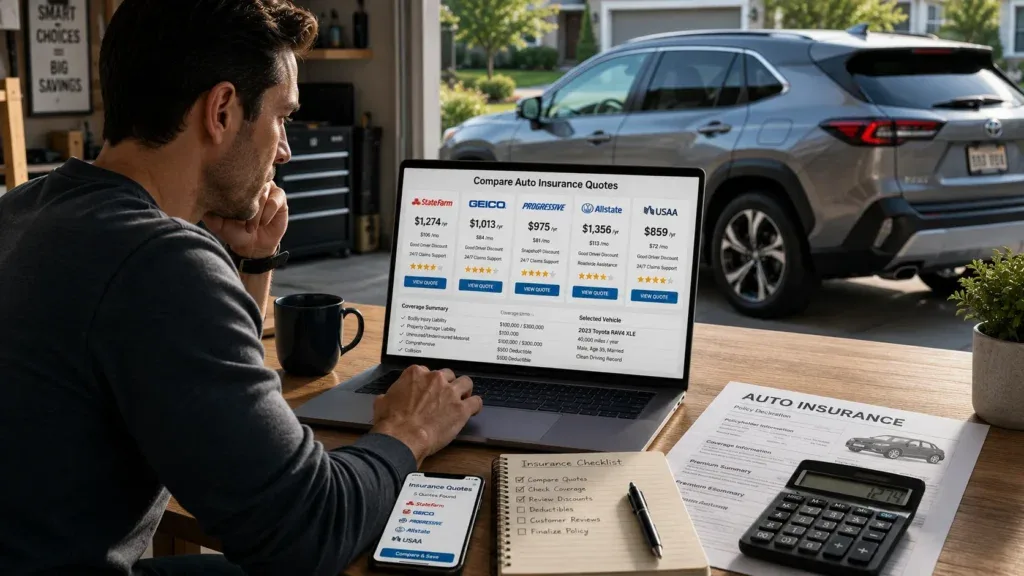
Geography is the most powerful factor but not the only one. Within your state, three things you control matter:
The insurer you choose matters enormously. The Zebra’s July data shows that within the same state, the same driver can pay dramatically different rates depending on company. Country Financial offers liability-only coverage starting at $42/month nationally — the lowest of any major insurer. Shopping between companies saves $700-$1,100 per year on average, according to multiple industry studies.
Your credit score matters in 47 states. Poor credit drivers pay 76-98% more than good credit drivers at the same insurer. Improving your credit score is the highest-leverage action available to most drivers whose geography isn’t negotiable.
Your deductible is adjustable today. Raising from $500 to $1,000 saves 10-15% on collision and comprehensive premiums. A phone call. Immediate savings.
Nevada will cost more than Vermont regardless of what you do. But within Nevada, a careful shopper with good credit and a sensible deductible pays significantly less than a careless shopper with poor credit and default settings.
The geography sets your floor. Everything else determines how far above that floor you end up.