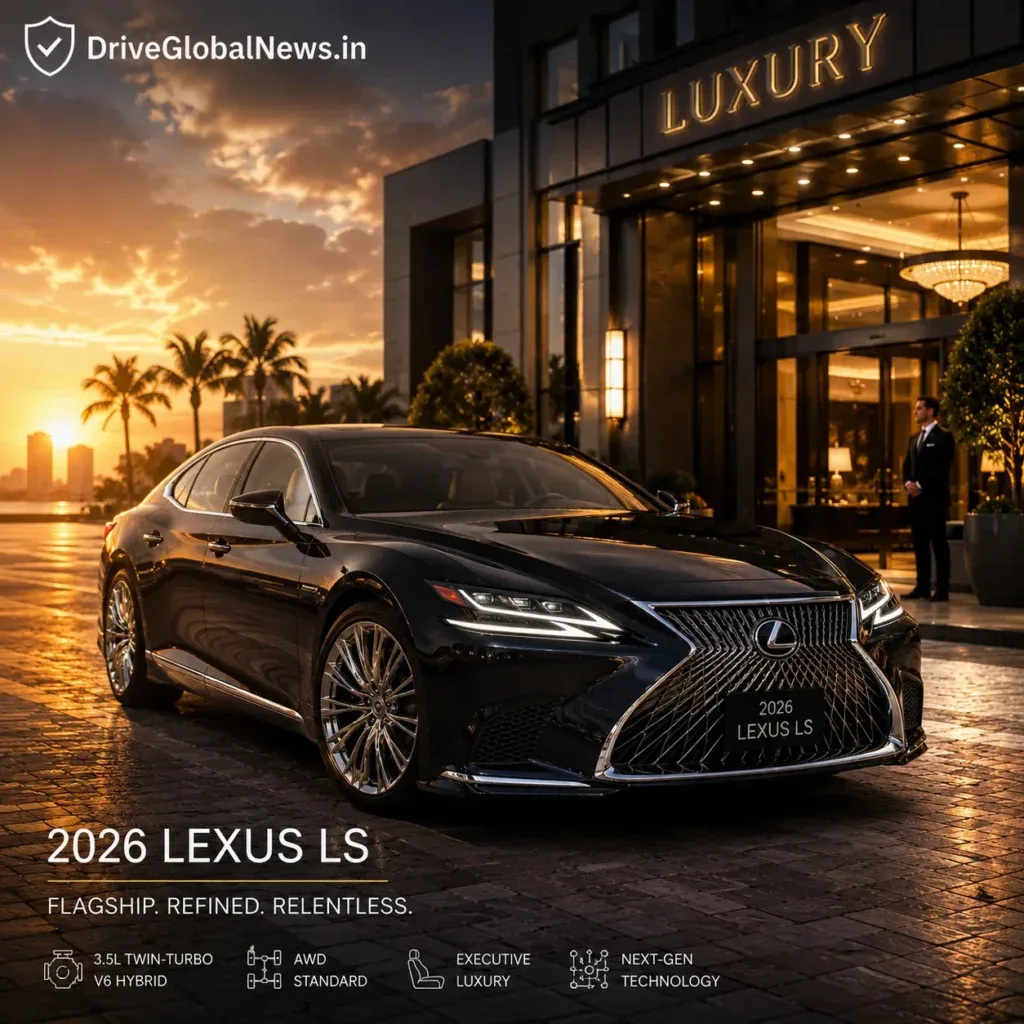
For 35 years, the Lexus LS was the answer to a specific question.
Which large luxury sedan can you buy with absolute confidence that it will never embarrass you — with reliability, with quality, with the quiet assurance of a vehicle that does everything correctly and nothing poorly?
The LS was that car. Four generations. The car that launched Lexus in America in 1989 by matching the Mercedes S-Class on quality and beating it on reliability. The car that Consumer Reports recommended consistently while European rivals scored below average. The car that Toyota built to prove that Japanese engineering could produce world-class luxury.
U.S. News confirmed it this week: 2026 marks the end of the line for the Lexus LS.
Not a pause. Not a generation gap before a replacement. The end. Lexus is discontinuing its flagship sedan entirely — and the reason tells a story about the luxury car market in 2026 that every buyer considering a large luxury vehicle needs to understand.
Why Lexus Is Killing the LS
The simplest explanation is sales. The LS was never a volume product — Lexus sold fewer than 3,000 units annually in recent years — but declining large sedan sales across every brand made the model increasingly difficult to justify financially.
The broader explanation is more interesting.
Luxury sedan buyers didn’t disappear. They migrated. The S-Class, 7 Series, A8, Panamera — all still sell to buyers who specifically want a large luxury sedan experience. But a growing portion of buyers who previously purchased large luxury sedans made a different decision in the last five years: they bought a Genesis G90 instead.
And paid $30,000 less for it.
The 2026 Genesis G90 starts at approximately $92,000. The Lexus LS 500 started at approximately $120,000 before its discontinuation. On U.S. News’s most recent scoring — both received 9.4 out of 10 overall. Same score. Thirty thousand dollars apart.
When two cars score identically on comprehensive independent evaluation and one costs $30,000 less — the more expensive one has a problem. The LS’s problem wasn’t quality. It was value in a market where a newcomer arrived and matched it precisely while charging dramatically less.
What the Genesis G90 Actually Offers
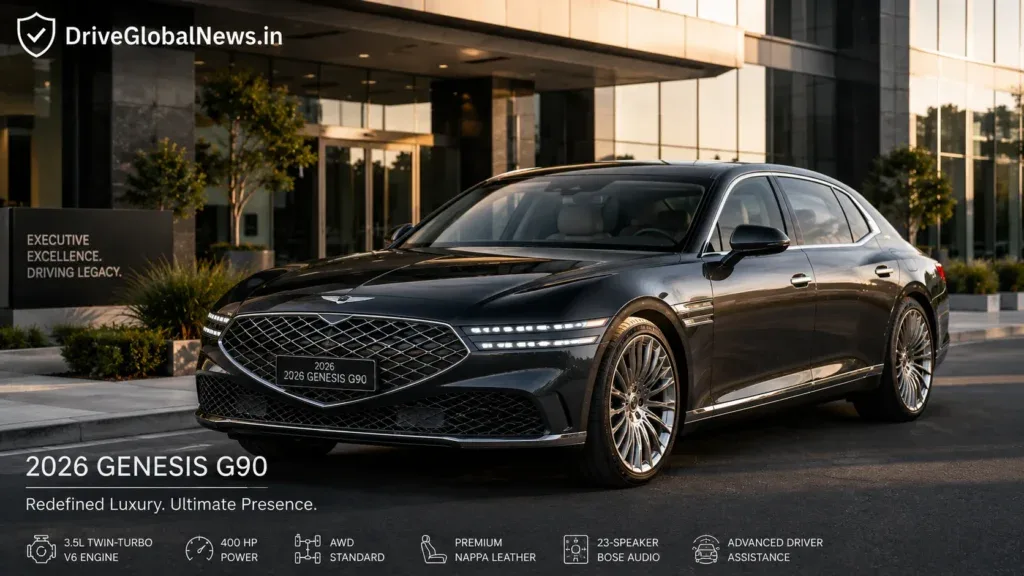
The G90 isn’t winning because it’s cheaper. It’s winning because it’s genuinely competitive on every dimension that matters to large luxury sedan buyers.
U.S. News describes it as offering “bold, powerful and exceedingly comfortable” performance that “goes head-to-head with the best of the luxury large car class.” The interior is described as one of the most opulent cabins in any production vehicle — Nappa leather, genuine wood trim, a rear seat experience that competes with the Mercedes S-Class’s famous passenger compartment.
The 3.5-liter twin-turbocharged V6 produces 375 horsepower in the standard configuration. A 3.5-liter turbocharged inline-six produces 420 horsepower in the Sport version. The ride quality — Genesis uses an electronically controlled suspension that adjusts continuously for road conditions — is consistently praised as among the best available in any sedan at any price.
Genesis’s warranty remains the industry’s strongest: 10 years/100,000 miles for the powertrain. Lexus offered a 6-year/70,000-mile powertrain warranty on the LS. Every G90 owner has 40% more coverage for 30% less of an initial investment.
The G90’s one historical limitation — Genesis’s relatively thin dealer and service network compared to Lexus’s established infrastructure — has been addressed over the past three years as Genesis accelerated its US dealer expansion. It’s not yet equal to Lexus’s national coverage, but it’s substantially better than it was when the G90 first arrived.
The Other Cars Competing in This Space
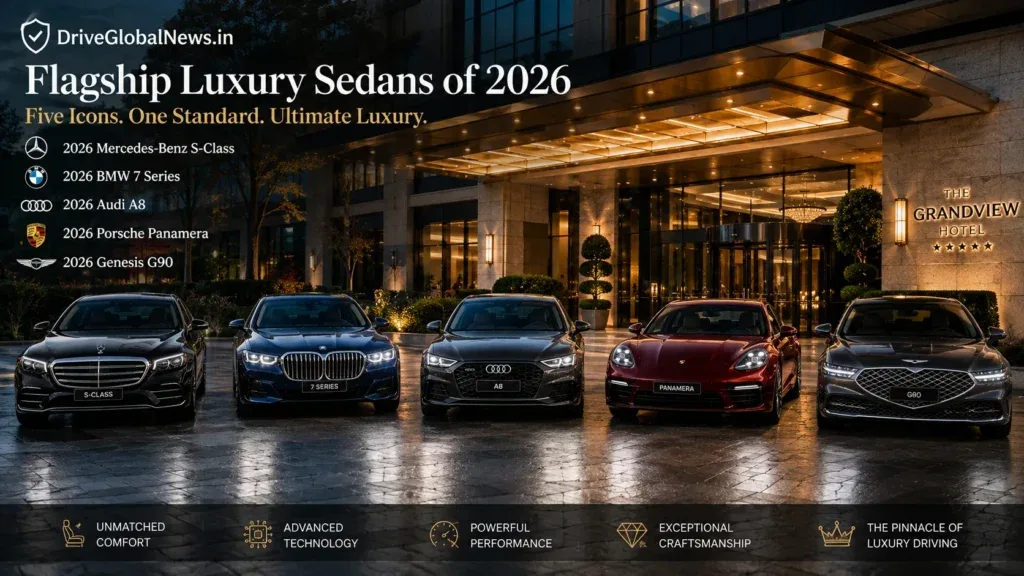
The G90’s competitive context extends beyond the discontinued LS.
Mercedes-Benz S-Class — U.S. News scored it 9.4/10 as well, tying the G90. “Every bit as luxurious as its reputation suggests,” per their assessment. Starts around $115,000. The benchmark for rear-seat luxury globally. Costs significantly more than the G90 for an identical overall score — the same value gap that hurt the LS.
BMW 7 Series — “Opulent and engaging but controversially styled” is U.S. News’s description of the 2026 7 Series. The i7 electric variant brings 70 MPG-equivalent efficiency in the most fuel-efficient version in its class. Starts around $105,000. Strong driver’s car credentials that neither the LS nor the G90 fully match.
Porsche Panamera — “Part sports car, part luxury sedan, something for everyone as long as you’re OK with its six-figure price.” The Panamera is the sports-focused alternative for buyers who want large luxury sedan practicality with sports car driving character. Starts over $100,000.
Audi A8 — A 9.4/10 from U.S. News as well, on par with the G90 and S-Class. The $72,000 A7 is described as the most affordable in the segment. But U.S. News notes 2026 marks “almost the final iterations” of the A8 — suggesting discontinuation may follow Lexus’s path.
The pattern is becoming clear. Large luxury sedans from German and Japanese brands are aging out of their lineups as SUV demand dominates. The cars that are surviving and growing are the ones with either unmatched driving dynamics (Porsche Panamera), unmatched prestige (Mercedes S-Class), or compelling value (Genesis G90).
What Buyers Should Do With This Information
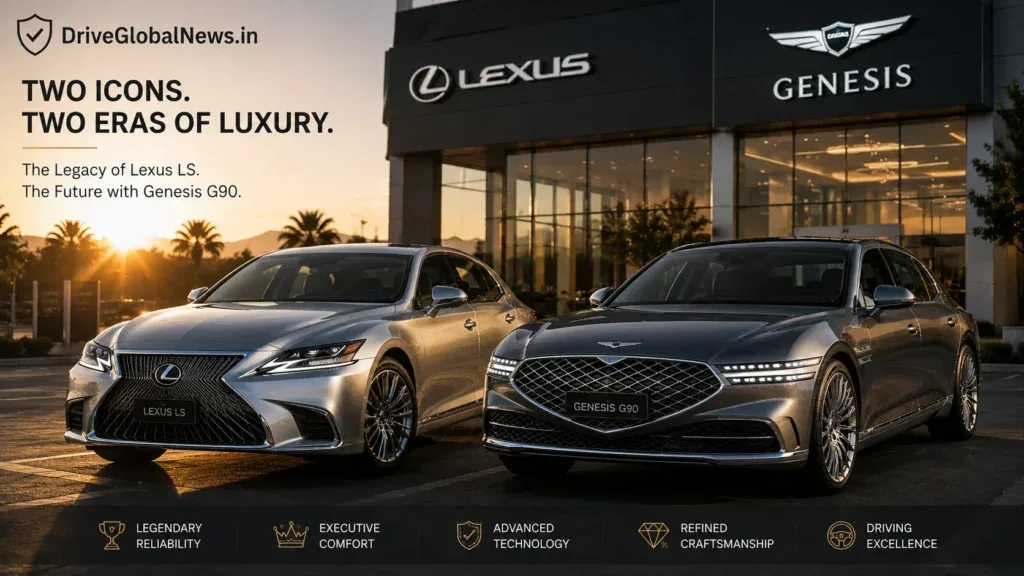
If you have been cross-shopping large luxury sedans and the Lexus LS was on your list — it’s no longer an option for new purchases. Used examples will be available and may represent value for buyers who specifically want the LS’s famous reliability in an older generation. The 2021-2023 LS 500 with under 40,000 miles is a legitimate used luxury bargain at current pricing.
If you’re buying new in August 2026 and want the large luxury sedan experience: the Genesis G90’s combination of 9.4/10 scoring, $92,000 starting price, and 10-year warranty makes it the most financially rational choice in the segment. The Mercedes S-Class remains the prestige benchmark if brand identity justifies the $23,000 premium. The BMW 7 Series is the driver’s choice.
The Lexus LS deserved better than its ending. But the ending makes sense in a market where Genesis figured out how to deliver the same objective quality for $30,000 less — and buyers noticed before Lexus could respond.