
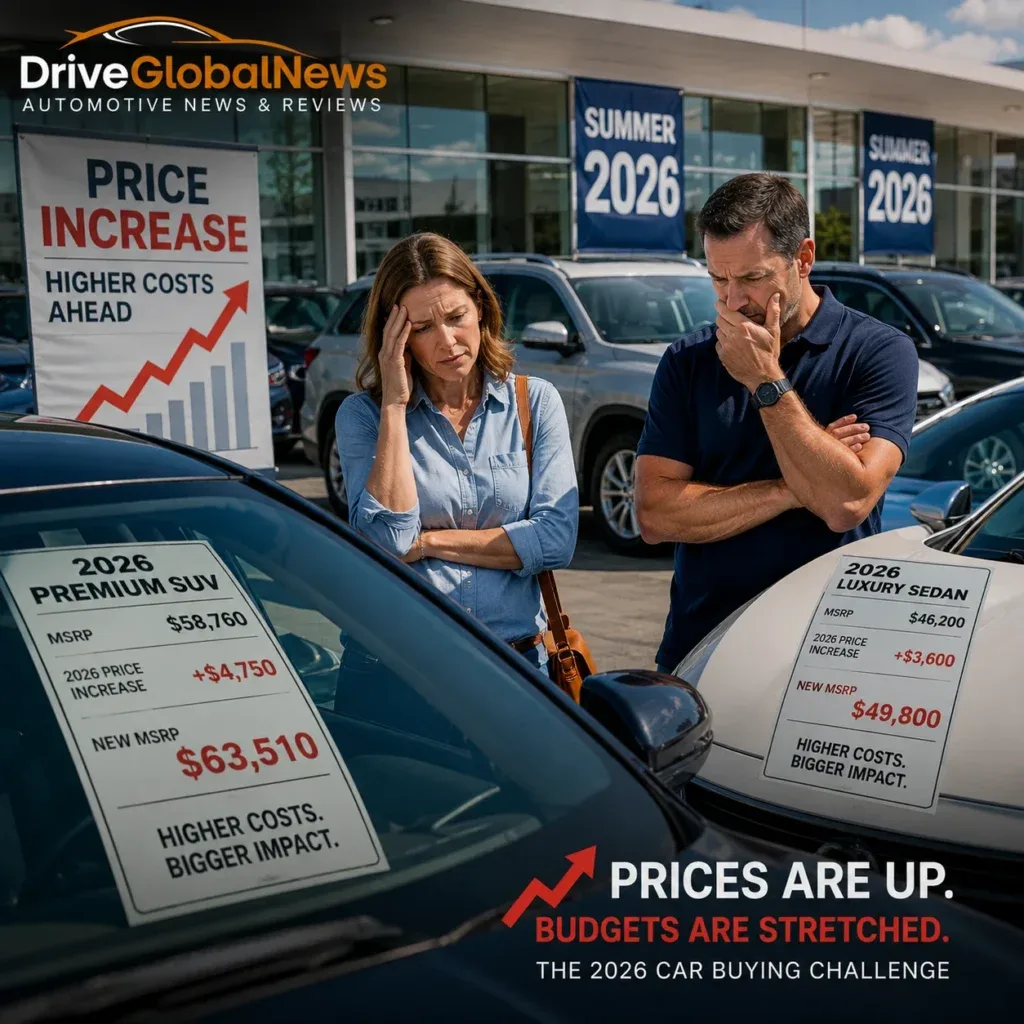
A year ago, buying a new car was already painful.
The average new car was approaching $49,000. Interest rates were high. Monthly payments averaged $812. Most middle-class American families were already stretching to afford new vehicles.
Then tariffs happened.
Cox Automotive — the parent company of Kelley Blue Book — just released the most comprehensive analysis of what tariffs have done to car prices in America. The headline number is brutal: 10.4% average price increase across the entire new car market in one year. The auto industry absorbed an estimated $30 billion in additional costs. And not a single cent of that came from anywhere except the pockets of American car buyers.
Here’s exactly what changed, what it costs you, and what to do about it.
The Numbers That Should Anger Every Car Buyer
Cox Automotive is not an alarmist organization. They’re the data company behind KBB valuations, Autotrader listings, and Dealer.com — companies that have financial incentives to keep car buying active. When they publish a report this stark, it’s because the numbers left them no choice.
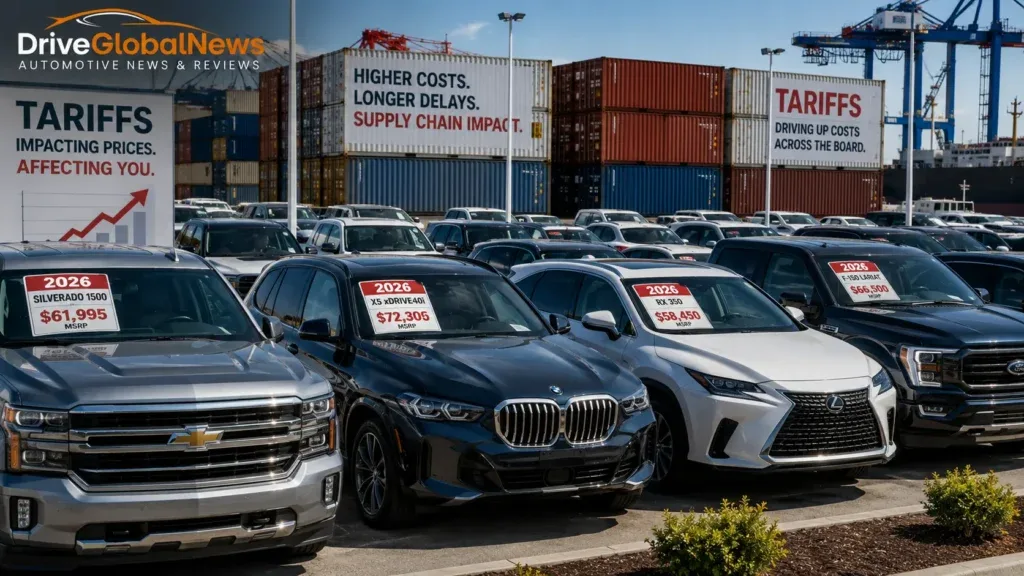
Imported vehicles: $5,000 to $8,900 more expensive per vehicle compared to last year.
Domestically assembled vehicles: $1,600 to $2,000 more expensive — not because they were built with imported materials. Because they use imported steel, aluminum, and components. Even a Kentucky-built Toyota uses steel from mills that pay tariff-affected raw material costs. The tariff ripple effect doesn’t stop at the border.
Destination fees — the hidden tax nobody talks about: Domestic brand destination fees jumped 25% in one year. That’s on top of the MSRP increase. GM increased destination fees on the Chevrolet Silverado by 40% in a single year — generating an estimated $748.8 million in additional revenue from that one truck alone. The Silverado’s destination fee now sits at $2,795 on most configurations.
Total new vehicle supply is down 3.5% from a year ago. Less supply plus higher prices equals a market that is genuinely hostile to buyers right now.
Why “American-Made” Doesn’t Protect You Anymore
This is the part that most people — including politicians who promoted these tariffs — didn’t explain clearly.
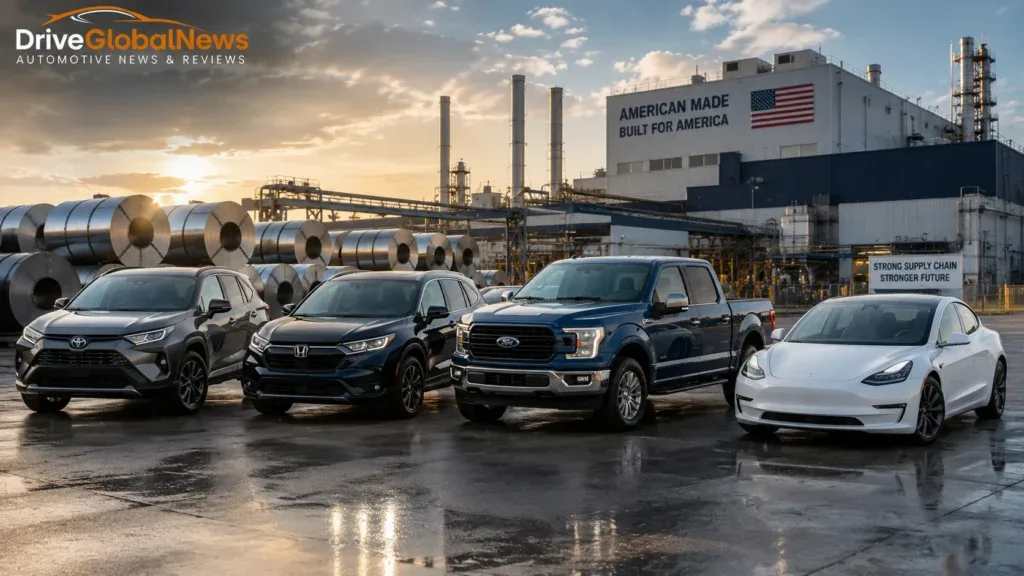
A car assembled in Georgetown, Kentucky is not made entirely of parts sourced in Kentucky. Or even entirely in America. The steel in the frame may come from mills that use imported ore. The aluminum in the body panels comes from global supply chains that include tariffed materials. The semiconductors in the electronics were almost certainly produced in Asia.
Tariffs on raw materials — steel (25%), aluminum (25%) — ripple through every vehicle regardless of where final assembly happens. Cox Automotive’s Jonathan Gregory put it plainly: “Automakers aren’t shifting production out of goodwill — the tariff made the alternative unsustainable.”
The result: even the “most American” cars on the market are $1,600-$2,000 more expensive than they were a year ago. The buyer who specifically chose a domestic vehicle to avoid tariff price increases still absorbed $1,600-$2,000 in tariff-driven cost.
The difference between domestic and imported is real — $1,600-$2,000 more for domestic versus $5,000-$8,900 more for imported. But “domestic” no longer means “protected from tariff costs.” It means “less exposed.”
The One Tax Break That Sounds Good But Isn’t Enough
Congress included a provision in last year’s legislation — the One Big Beautiful Bill Act signed July 4, 2025 — that allows a tax deduction of up to $10,000 in interest paid on loans for new, US-assembled vehicles.
This is a deduction, not a credit. The actual financial benefit depends entirely on your tax bracket.
For a buyer in the 22% tax bracket financing $40,000 over five years, the deduction is worth roughly $1,000 to $1,500 over the life of the loan.
The math: $1,000-$1,500 in tax benefit versus a $5,000-$8,900 price increase on an imported vehicle. The deduction doesn’t come close to offsetting the tariff impact. And for buyers of domestically assembled vehicles facing $1,600-$2,000 increases — the deduction approximately covers the extra cost, but only for buyers who itemize their taxes, which a declining share of Americans do.
What This Means For Buyers Right Now in July 2026
The tariffs have no sunset clause. They cannot be reversed until the next presidential administration changes course or a court intervenes. Cox Automotive specifically called this a “structural” shift — not a temporary pricing blip. These prices are not coming down on a predictable timeline.

That context changes how to think about buying a car in July 2026.
If you need a new car this month:
Used cars are genuinely worth reconsidering. Cox’s own data shows used vehicle values holding strong or climbing — because buyers priced out of new cars are competing for used inventory. But the used market hasn’t absorbed the same 10.4% price increase as new. A 2-3 year old version of the vehicle you want costs meaningfully less than the new equivalent — and in most categories, the technology and reliability gap between a 2024 and 2026 model is modest.
The vehicles where used makes the most sense right now: any imported model where the new version is $5,000-$8,900 more expensive than last year. A 2023-2024 European or Korean import purchased used avoids the tariff premium entirely.
If you specifically want a new car:
Domestic-assembly vehicles are the financially rational choice under current conditions. The RAV4 Hybrid built in Kentucky. The Honda CR-V built in Ohio. The Tesla Model 3 built in California. The Ford F-150 built in Michigan. These vehicles absorbed $1,600-$2,000 in tariff costs — painful but manageable compared to $5,000-$8,900 on an import.
Manufacturer incentive programs are your lever. Toyota, Hyundai, and Ford have all run tariff-relief pricing programs to absorb some of the cost rather than pass it entirely to buyers. Ask your dealer specifically: “What manufacturer incentive programs are currently available on this model?” The answer matters more in July 2026 than it did in July 2024.
The worst thing you can do: Rush into a new car purchase on a model that doesn’t fit your budget because a dealer creates artificial urgency. Supply is tight. Dealers have leverage. The car you’re being pressured to buy today will still be available next month — possibly with a different incentive program.
The tariff situation is not going away. But neither is your ability to negotiate, comparison shop, and choose the vehicle that actually makes financial sense for your household rather than the one a dealer needs to move before end of month.