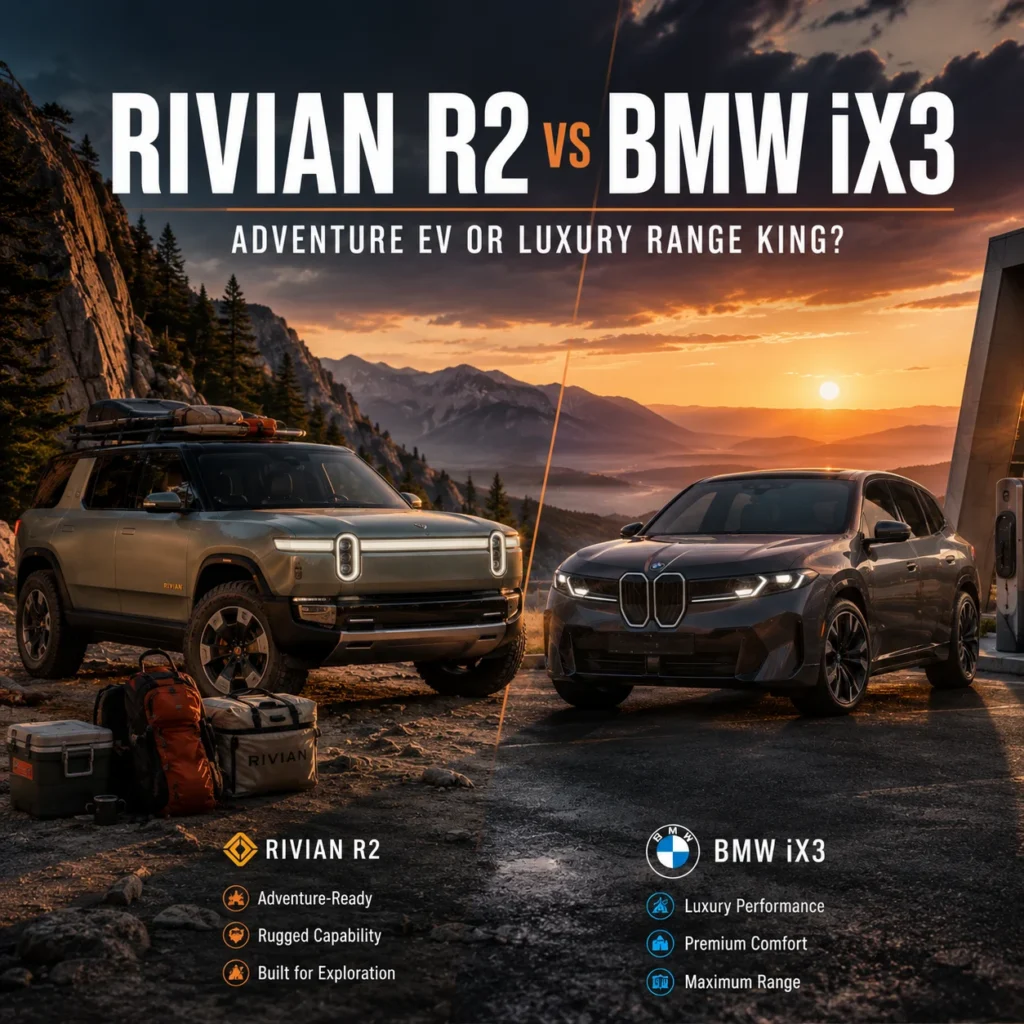
Two electric SUVs. Both launching in 2026. Both priced around $57,000-$60,000. Both receiving genuinely enthusiastic early reviews.
And yet putting them side by side is almost amusing — because they represent completely opposite answers to the question “what should an electric SUV be?”
The Rivian R2 thinks an electric SUV should go off-road, carry adventure gear, and thrill its driver on empty desert roads.
The BMW iX3 thinks an electric SUV should ride quietly, look refined, and demonstrate that electricity can carry a century of driving sophistication into a new era.
Both are right. For different people.
The Numbers
| Rivian R2 Performance | BMW iX3 xDrive50 | |
|---|---|---|
| Starting Price | $57,990 | ~$60,000 |
| Horsepower | 656 HP | 463 HP |
| 0-60 mph | 3.6 seconds | 4.4 seconds |
| EPA Range | 330 miles | 400 miles |
| Peak Charging | 217 kW | 195 kW |
| Ground Clearance | 9.6 inches | ~7.5 inches |
| Off-Road Capability | Genuine | Limited |
| Platform | Purpose-built EV | BMW Neue Klasse |
| Built | Normal, Illinois | Munich, Germany |
Two numbers jump out. The R2 has 193 more horsepower. The iX3 goes 70 miles further per charge.
Neither gap is small. And both matter enormously depending on what you actually do with your car.
also read : https://driveglobalnews.in/volkswagen-id-buzz-vs-chrysler-pacifica-hybrid/
The Case for the Rivian R2
The R2’s 656 HP, 3.6-second 0-60 time is genuinely extraordinary for a compact family SUV. Not exotic car fast — it IS exotic car fast. Numerically equal to many Porsches and faster than most BMWs in the company’s entire lineup.
But acceleration is the least interesting thing about the R2.
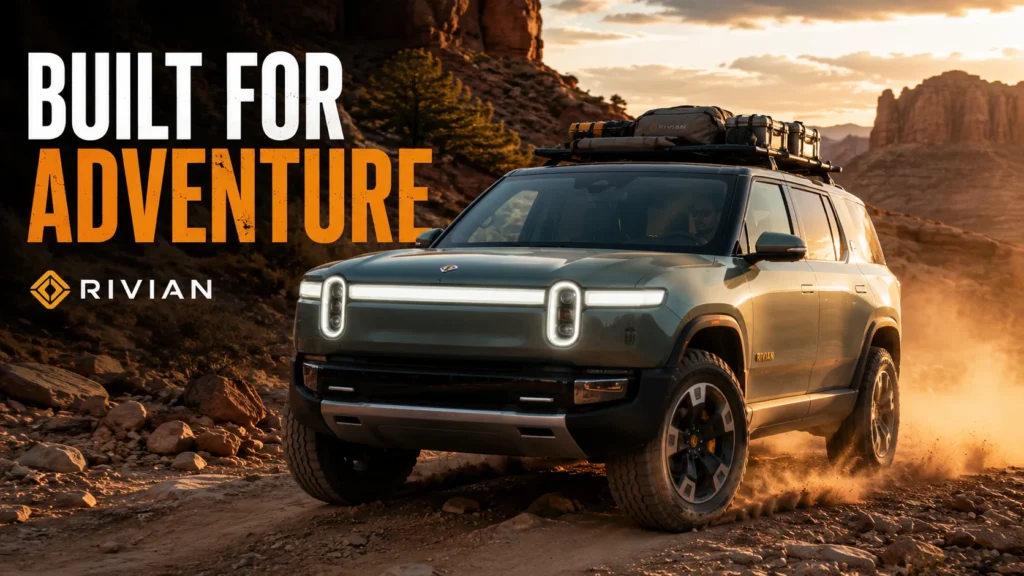
The 9.6 inches of ground clearance — just 0.1 inch less than a Jeep Wrangler 4-door — combined with semi-active suspension, multiple terrain drive modes including Sand, Snow, and Rock, and genuine all-weather AWD capability make the R2 the first sub-$60,000 electric SUV that can actually follow a 4Runner down an unpaved trail with confidence.
The exterior design is unmistakably Rivian — the oval headlights, the clean body, the upright liftgate. It looks like an outdoor product that takes itself seriously. In a world where most compact electric SUVs look like they were designed for urban school runs, the R2 communicates something different.
Rivian’s software and Over-The-Air updates are genuinely excellent — the company updates features regularly, something that owners of first-generation EVs from traditional brands rarely experience. The R2 you buy today will be meaningfully better a year from now through software alone.
The honest weakness: 217 kW peak charging is competitive but not class-leading. The BMW charges at 195 kW — not much difference. But the Hyundai Ioniq 5 at $35,000 charges at 350 kW. If maximum charging speed matters most to you, neither the R2 nor the iX3 is the right answer.
Buy the R2 if: Adventure capability matters. Driving feel and performance are priorities. You want American manufacturing. You believe your EV should be able to go wherever your weekend plans take you.
The Case for the BMW iX3
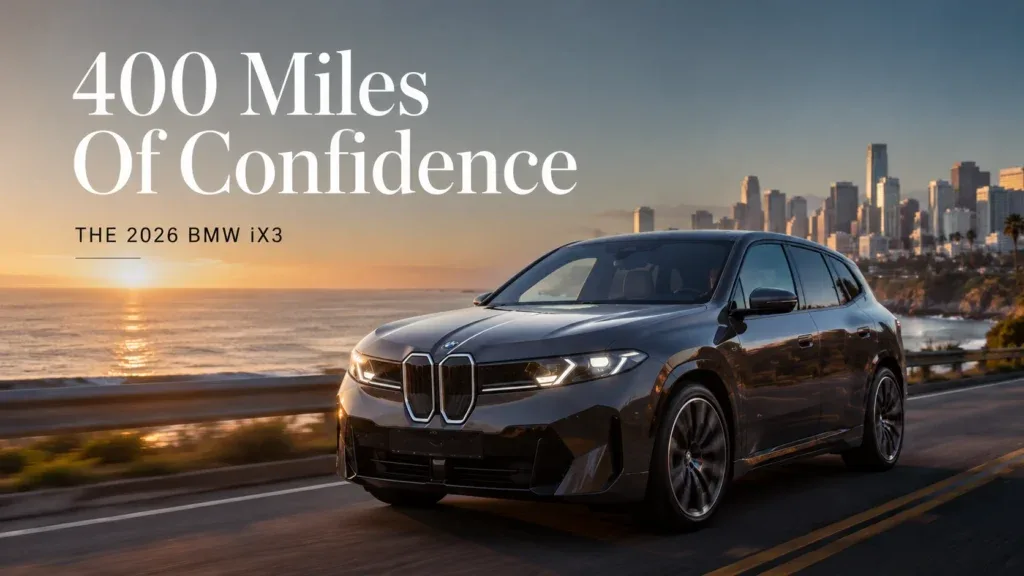
400 miles of range. In an electric compact SUV under $65,000. That number alone reframes the conversation.
The BMW iX3 is the first vehicle on the Neue Klasse platform — BMW’s most significant engineering undertaking in decades. Every decision in its development was made for electric vehicles specifically, with no compromises from shared gas-car architecture. The result is an EV that feels like a BMW in ways that previous BMW EVs didn’t quite achieve.
The Panoramic Vision head-up display — projecting information across the lower windshield rather than requiring the driver to look at a separate cluster — is genuinely transformative after one day of use. Early reviewers who drove the iX3 in Germany consistently called it one of the most significant interface advances in recent BMW history.
400 miles of range eliminates charging anxiety for virtually any real-world driving scenario. The driver who does 70-mile highway commutes, takes road trips twice a month, and occasionally drives long distances will almost never need to think about charging during a trip. That psychological freedom is underrated in EV buying decisions.
The German build quality is palpable. Materials, fit and finish, and NVH insulation — the iX3 feels expensive in the way that justifies paying European luxury prices. It doesn’t feel like a technology product that drives. It feels like a car that uses technology well.
The honest weakness: It’s built in Germany, subject to the new 25% EU auto tariff. Existing dealer inventory at pre-tariff pricing is the safe window. New orders may arrive at higher prices as the tariff works through the supply chain.
Buy the iX3 if: Maximum range is your priority. You value driving refinement over raw performance. The BMW badge matters. You want the brand’s first truly purpose-built EV platform. And you want to act before new tariff-adjusted inventory arrives.
also read : https://driveglobalnews.in/gas-just-hit-4-52-per-gallon-and-trump-wants/
The Verdict
This comparison has a clear winner for each buyer type — and that’s actually the most useful outcome.
You’re an adventure driver: R2. No competition. 656 HP, 9.6 inches clearance, American-built, trail-capable. The iX3 doesn’t belong on that road.
You’re a highway driver or road tripper: iX3. 400 miles. Refined. Excellent range on long drives. The R2’s extra 70 miles of capability over the Ioniq 5 isn’t the point — it’s the 70 miles less than the iX3 that matters for your use case.
You care about American manufacturing: R2 wins — built in Normal, Illinois. The iX3’s German origins mean tariff exposure.
You want the driving experience that feels most like a proper luxury car: iX3. BMW has 100 years of chassis engineering behind this vehicle’s character. Rivian has 8.
Pick based on what your weekends look like. That’s all the guidance you need.
Compare 5-year total ownership costs between both with our Car Ownership Cost Calculator — the gas savings at $4.52/gallon make both look even better.