There are two ways to look at the auto industry right now.
The first is through headlines.
The second is through what people are actually buying.
The headlines usually talk about electric vehicles.
Artificial intelligence.
Robotaxis.
Autonomous driving.
The future.
The second story is less exciting.
At least on the surface.
But it may end up being far more important.
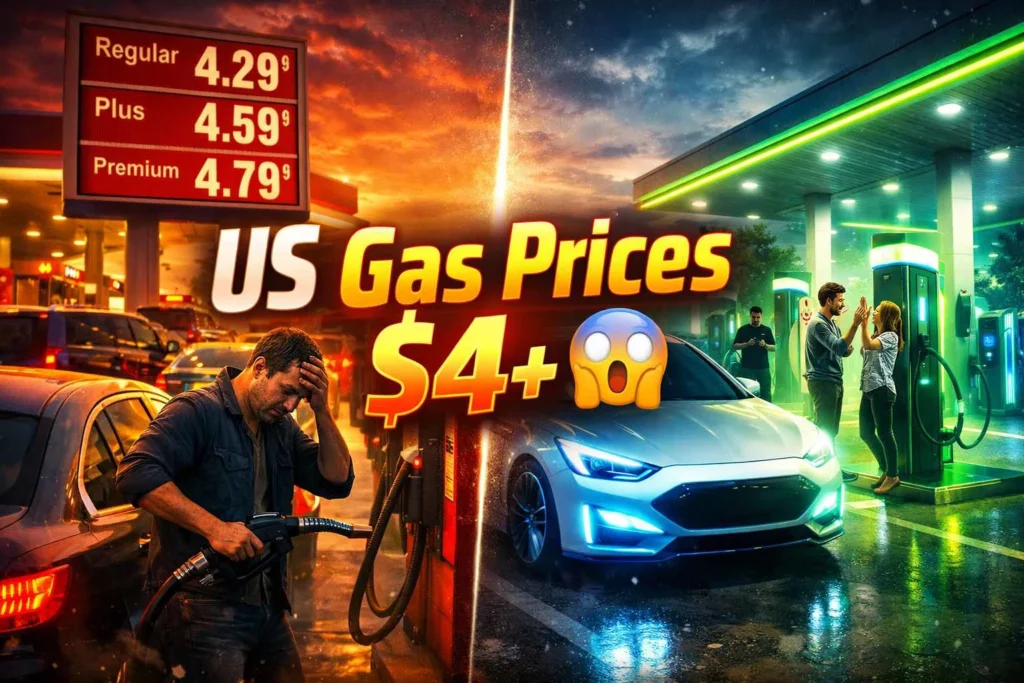
Because while the industry keeps talking about where transportation is going, millions of Americans are quietly making decisions based on where their monthly budget is today.
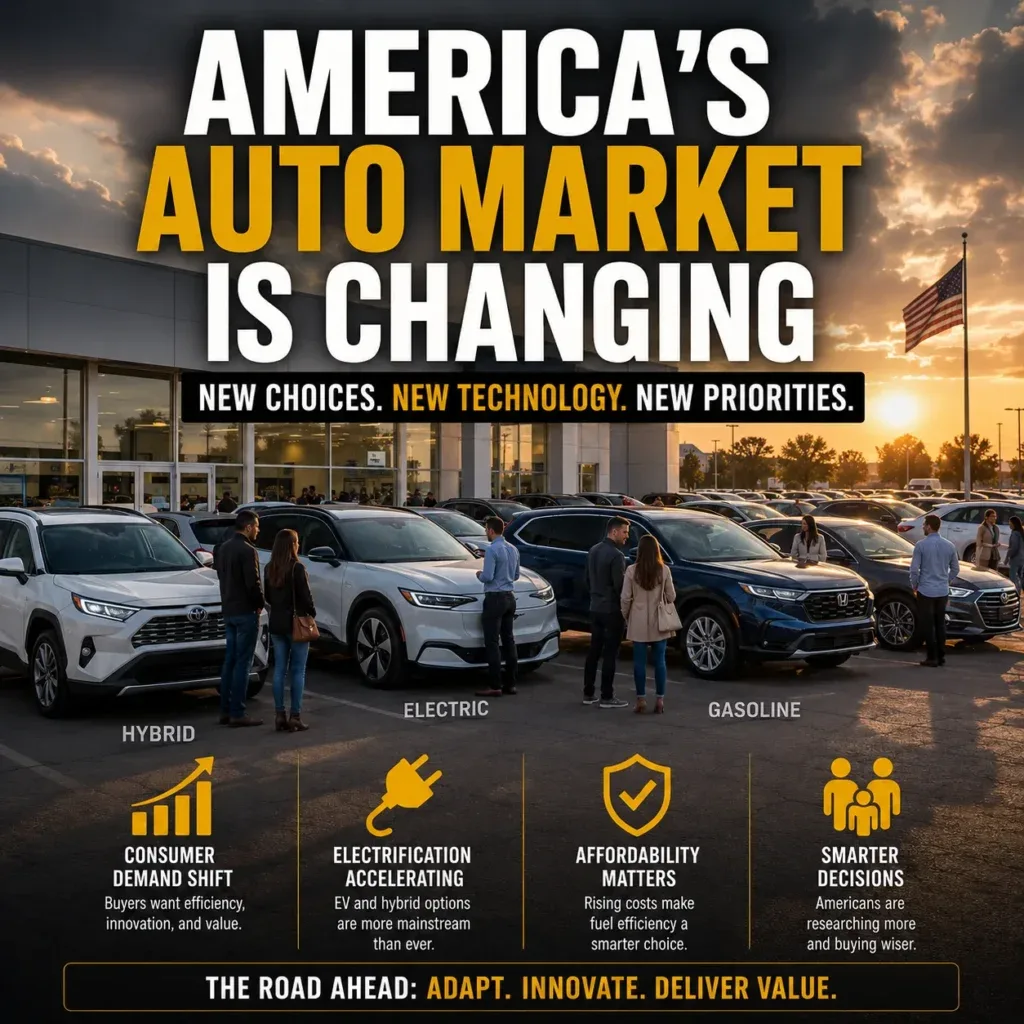
And that gap between industry expectations and consumer reality is becoming one of the most important stories in the automotive business.
Not next decade.
Next year.
The Industry Thought The Conversation Was Over
A few years ago, many people believed the future had already been decided.
Electric vehicles would replace gasoline vehicles.
Consumers would rapidly transition.
Automakers would follow.
End of story.
The reality turned out to be messier.
Not because EVs failed.
They didn’t.
Not because consumers rejected technology.
They haven’t.
The reality is that buyers move differently than analysts expected.
Slower.
More cautiously.
More practically.
And that’s changing the direction of the industry.
Americans Are Shopping Differently
Walk into a dealership today and you’ll notice something interesting.
Buyers are asking different questions than they were three years ago.
Not:
“What’s the newest technology?”
But:
“What’s my monthly payment?”
Not:
“What’s the fastest option?”
But:
“How much will insurance cost?”
Not:
“What’s the future?”
But:
“What’s the smartest decision for my family right now?”
That shift may sound subtle.
It isn’t.
It’s huge.
Because consumer priorities eventually shape the entire market.
The Rise Of The Practical Buyer
For years, automakers competed by offering more.
More horsepower.
More screens.
More features.
More technology.
Now many consumers are focused on something else.
Ownership costs.
Fuel economy.
Reliability.
Long-term value.
The practical buyer is becoming increasingly important.
And practical buyers often make different decisions than enthusiastic early adopters.
They aren’t necessarily looking for the newest solution.
They’re looking for the most sensible one.
That distinction matters.
A lot.
Hybrids Are Quietly Changing The Market
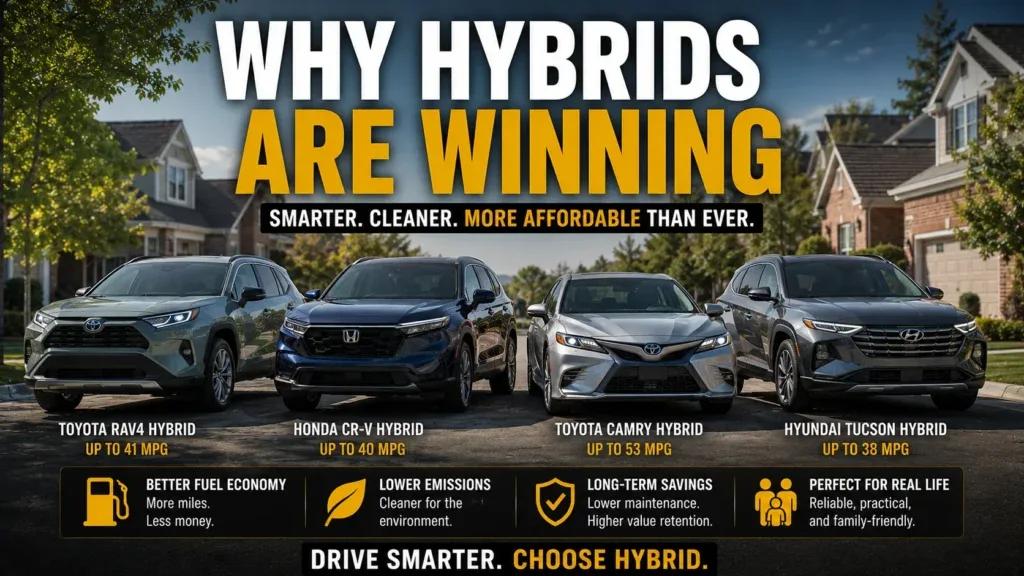
This might be the trend that defines the next year.
Not because hybrids are exciting.
Because they’re easy.
Consumers understand them.
They require no lifestyle change.
No charging schedule.
No range calculations.
No learning curve.
Just better fuel economy.
That’s why many buyers who aren’t ready for a full EV are moving toward hybrids instead.
And automakers are paying attention.
Very close attention.
Also Read:
https://driveglobalnews.in/9-hybrid-vehicles-that-make-the-most-sense-in-2026/ – The hybrid vehicles delivering the best combination of efficiency, reliability, and value.
The SUV Market Is Changing Too
Americans still love SUVs.
That hasn’t changed.
What is changing is the type of SUV people are buying.
For years bigger seemed better.
Now many buyers are becoming more selective.
They’re questioning whether they really need the largest vehicle available.
They’re looking harder at ownership costs.
Fuel expenses.
Insurance premiums.
Long-term value.
The result is a market that’s becoming more thoughtful.
Not smaller.
Just smarter.
Why Automakers Are Paying Attention
Car companies don’t survive by predicting the future perfectly.
They survive by understanding customers.
And customers are sending a message.
Flexibility matters.
Affordability matters.
Practicality matters.
That’s why we’re seeing manufacturers expand hybrid offerings, improve efficiency, and focus more heavily on value.
They’re responding to demand.
Because demand always wins.
Eventually.
The Story Isn’t EVs Versus Gas Cars
This is where many people misunderstand what’s happening.
The biggest story next year probably won’t be EVs versus gasoline vehicles.
That’s too simple.
The real story is likely to be choice.
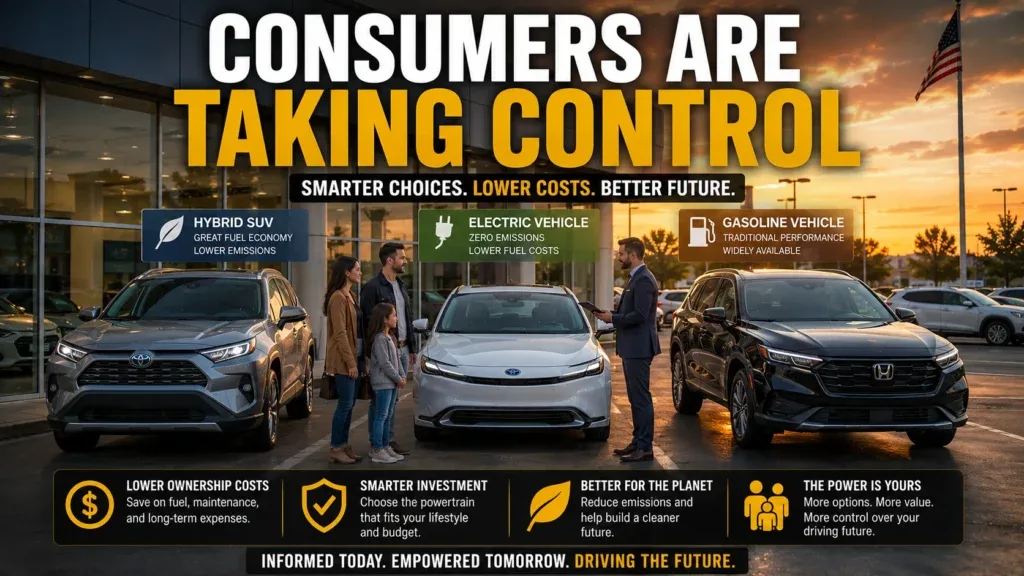
Consumers want options.
Some want EVs.
Some want hybrids.
Some still prefer traditional vehicles.
The companies that succeed will be the ones that offer solutions instead of ultimatums.
That’s where the market appears to be heading.
Toward flexibility.
Not extremes.
Also Read:
https://driveglobalnews.in/why-more-americans-are-delaying-ev-purchases/ – The surprising reasons many consumers are waiting before making the switch to electric vehicles.
The Real Reason This Matters
Most automotive trends come and go.
This one feels different.
Because it isn’t really about vehicles.
It’s about consumer behavior.
And consumer behavior changes slowly.
But when it changes, entire industries follow.
What we’re seeing today isn’t a rejection of innovation.
It’s a demand for practicality.
Consumers still want better technology.
They still want efficiency.
They still want progress.
They simply want it on terms that make sense for their lives.
That may sound obvious.
Yet it has become one of the most important lessons in the industry.
The Story Everyone Will Be Talking About
By this time next year, people will still be talking about EVs.
They’ll still be talking about AI.
They’ll still be talking about autonomous driving.
But the story quietly shaping the market may be something much simpler.
Consumers taking back control of the conversation.
Choosing what works.
Ignoring what doesn’t.
And forcing automakers to adapt.
Because at the end of the day, the future of the auto industry isn’t decided in boardrooms.
It’s decided in driveways.
One purchase at a time.
And right now, those purchases are telling a story the entire industry is learning to listen to.