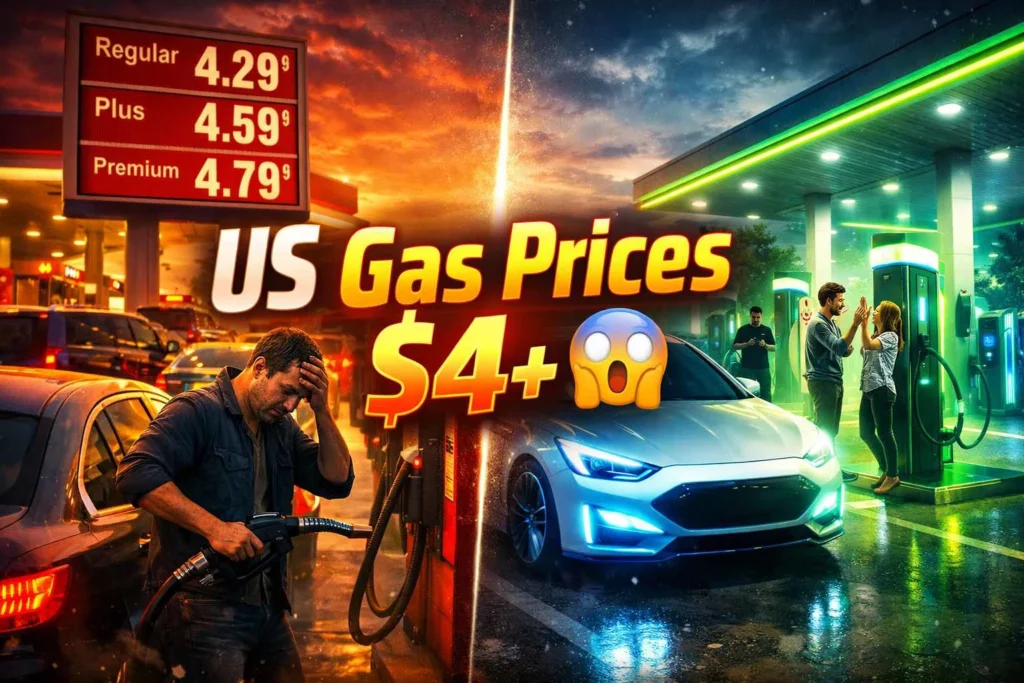

Why More Americans Are Delaying EV Purchases : There are two kinds of people talking about electric vehicles right now.
The first group thinks everyone will be driving an EV within the next few years.
The second group thinks the EV revolution is falling apart.
The truth, as usual, sits somewhere in the middle.
Because Americans aren’t rejecting electric vehicles.
They’re waiting.
And that difference matters.
A lot.
If you spend enough time online, you’d think the automotive industry is facing a simple question.
Do people want EVs or not?
But that’s not the real question anymore.
The real question is this:
Why are so many Americans interested in electric vehicles while simultaneously refusing to buy one today?
That’s the story quietly unfolding across the country.
And it’s becoming one of the most important trends in the automotive industry.
also read : https://driveglobalnews.in/8-suvs-with-the-lowest-insurance-costs-in-ameri/
Americans Like EVs More Than The Headlines Suggest
Let’s start with something that often gets lost in the debate.
Many Americans actually like electric vehicles.
They like the instant acceleration.
They like skipping gas stations.
They like lower maintenance costs.
They like the idea of driving something modern.
In fact, most people who own EVs report positive ownership experiences.
That’s not the problem.
The problem is that liking something and buying something are two completely different decisions.
Especially when that purchase costs $40,000, $50,000, or even $60,000.
Interest remains high.
Confidence remains lower.
And that’s creating a growing group of buyers who keep saying the same thing.
“Maybe next year.”
The Technology Is Moving Faster Than Buyers Are Comfortable With

Imagine spending $50,000 on an electric vehicle today.
Now imagine a newer version arrives 18 months later with more range, faster charging, better software, and improved battery technology.
That possibility makes some buyers nervous.
Nobody wants to feel like they purchased a smartphone the week before a major upgrade.
And that’s part of what’s happening in the EV market.
The technology keeps improving.
Which sounds positive.
But it also creates hesitation.
Some consumers believe waiting another year might get them a significantly better vehicle.
That mindset doesn’t stop purchases entirely.
It delays them.
also read : https://driveglobalnews.in/10-most-reliable-suvs-americans-can-buy-in-2026/
Charging Is Still A Bigger Concern Than Automakers Expected
Most EV owners charge at home.
Most potential EV buyers don’t.
That’s the gap.
People who already own electric vehicles understand how charging fits into daily life.
People who don’t own them yet often focus on worst-case scenarios.
Road trips.
Long weekends.
Holiday travel.
Unexpected detours.
Even buyers who drive only 30 miles per day often worry about the one day they might need to drive 300.
It’s not always rational.
But consumer behavior isn’t always rational.
Peace of mind matters.
And for many Americans, gasoline still provides a level of convenience they’re reluctant to give up.
At least for now.
The Price Problem Hasn’t Completely Disappeared
Electric vehicles have become more affordable.
But many buyers don’t feel that way.
A family comparing a traditional SUV with an electric alternative often notices something immediately.
The monthly payment.
And monthly payments remain one of the most powerful forces in the automotive market.
Even when long-term ownership costs favor an EV, the higher purchase price can create hesitation.
That’s particularly true in an economy where affordability has become one of the biggest concerns facing American households.
Many buyers aren’t saying no to EVs.
They’re saying not yet.
Hybrid Vehicles Are Giving Buyers An Easier Option
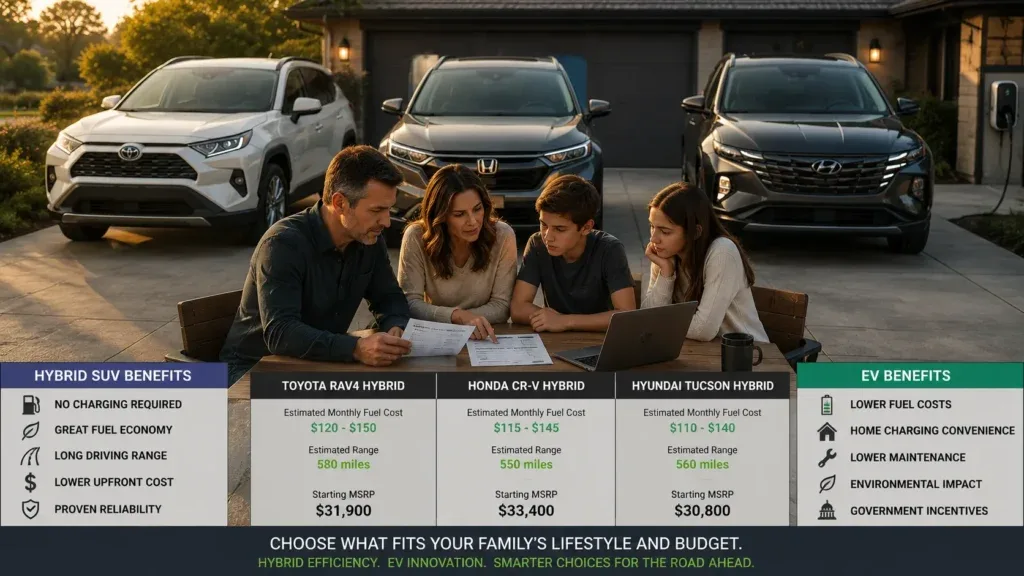
This may be one of the biggest reasons EV adoption has slowed among some consumers.
Hybrids got better.
Much better.
A few years ago buyers often felt forced to choose between a gas vehicle and a fully electric future.
Now there’s a middle option.
And it’s a good one.
Modern hybrid SUVs can deliver impressive fuel economy without requiring charging infrastructure.
No range anxiety.
No charging schedule.
No lifestyle adjustment.
Just better efficiency.
For many Americans, that’s exactly the compromise they were looking for.
Which helps explain why hybrid demand continues rising across the country.
Buyers Are Thinking About Resale Value
Nobody likes talking about depreciation.
Until they’re trading in a vehicle.
Then suddenly it’s the only thing they want to discuss.
Electric vehicles have experienced significant price adjustments over the past few years.
Some models have seen values change rapidly as manufacturers reduced prices and competition increased.
That uncertainty makes some buyers cautious.
People want confidence that their vehicle will hold value.
And right now, some consumers aren’t completely sure what the long-term EV resale market will look like.
Waiting feels safer.
The EV Revolution Isn’t Stopping
This is where many headlines get the story wrong.
Delaying isn’t the same as rejecting.
Americans delayed smartphones.
They delayed streaming services.
They delayed online banking.
Eventually many adopted all of them.
The same pattern may be unfolding with electric vehicles.
Consumers often move more slowly than technology companies expect.
That doesn’t mean the technology failed.
It simply means adoption takes time.
More time than investors want.
More time than automakers planned.
And sometimes more time than headlines suggest.
The Real Story
The most interesting thing happening in the EV market isn’t opposition.
It’s hesitation.
Millions of Americans are watching.
Researching.
Comparing.
Waiting.
They’re interested enough to pay attention.
But not convinced enough to buy today.
That’s a very different situation than outright rejection.
And it’s why the future of electric vehicles may look less dramatic than either side expects.
The transition isn’t stopping.
It’s slowing down.
At least temporarily.
Because most Americans aren’t asking whether electric vehicles are the future anymore.
They’re asking something much simpler.
“Is this the right time for me to buy one?”
And for a growing number of buyers, the answer remains the same.
Not yet.
But maybe soon.