Why Depreciation Costs : A friend of mine once called me in a panic because his SUV needed a $1,600 repair.
You would have thought the engine had exploded.
For three days, he talked about nothing else.
The repair bill.
The frustration.
The inconvenience.
The unfairness of it all.
Then I asked him a simple question.
“How much value did your SUV lose last year?”
Silence.
He had no idea.
Most people don’t.
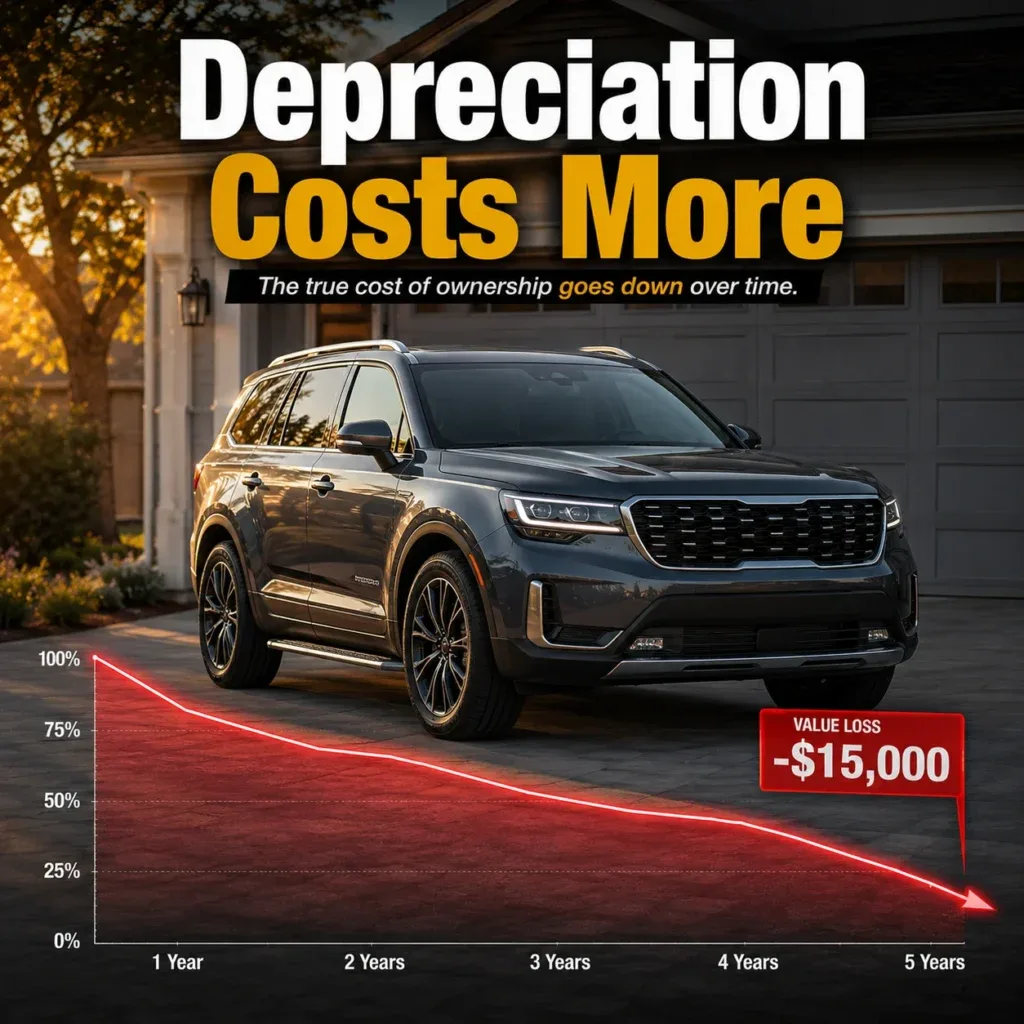
And that’s interesting because the value his SUV lost that year was more than double the repair bill he was worried about.
That’s the strange thing about car ownership.
People fear repairs.
But depreciation is usually the expense quietly emptying their wallet.
The difference is that repairs are visible.
Depreciation is invisible.
And invisible costs are easy to ignore.
The Bill You Never Receive
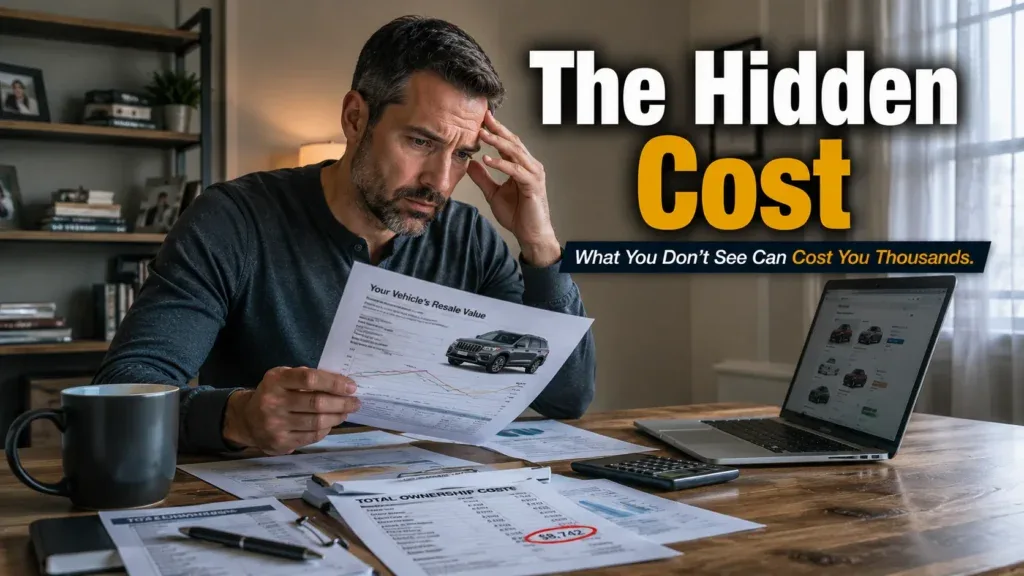
Imagine checking your mailbox tomorrow and finding a letter that says:
“Your vehicle lost $3,500 in value this year.”
People would be furious.
They’d talk about it nonstop.
Yet that’s essentially what happens every year.
The only difference is that nobody sends the letter.
Depreciation happens quietly.
The vehicle sits in your driveway looking exactly the same.
It starts normally.
Drives normally.
Functions normally.
Meanwhile, its market value keeps moving in the opposite direction.
Out of sight.
Out of mind.
Why Repairs Feel Worse
Human beings are emotional creatures.
A repair bill creates pain immediately.
You see the number.
You pay the number.
You remember the number.
Depreciation doesn’t work that way.
Nobody asks you to swipe a credit card for depreciation.
So it feels less real.
Even though it’s often far more expensive.
A $1,200 repair feels dramatic.
A $4,000 loss in vehicle value often goes unnoticed.
That’s a fascinating psychological trick.
And it influences how people think about ownership.
The First Few Years Are Brutal
Most depreciation happens early.
Very early.
The moment a new vehicle leaves a dealership, its value begins changing.
Over the first several years, that process can be surprisingly aggressive.
The exact numbers vary by vehicle.
Some hold value better than others.
But the general principle remains the same.
The biggest ownership cost for many vehicles isn’t maintenance.
It’s depreciation.
That’s one reason smart buyers pay attention to resale value before making a purchase.
Not after.
Why Toyota And Honda Keep Appearing In Ownership Conversations
This is where reputation matters.
A lot.
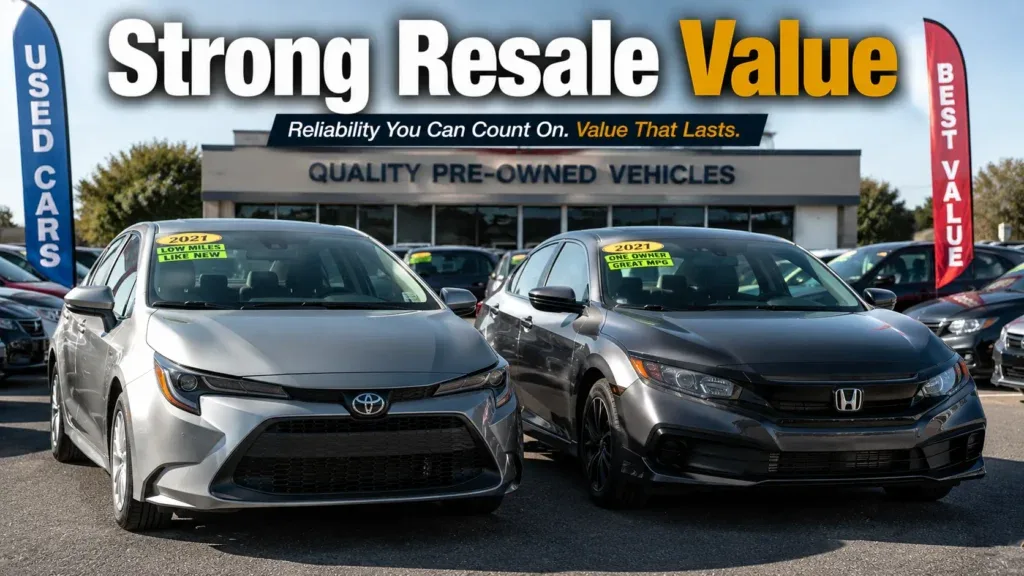
Vehicles known for reliability often maintain stronger resale values.
People trust them.
Used-car buyers seek them out.
Demand remains strong.
That’s why certain Toyota and Honda models consistently perform well in long-term ownership discussions.
Their reliability doesn’t just reduce repair concerns.
It often helps protect value.
And protecting value can save far more money than avoiding a few repairs.
Also Read:
https://driveglobalnews.in/toyota-corolla-vs-honda-civic-the-smarter-long-term-buy/ – Why long-term ownership often matters more than first impressions.
The New Vehicle Trap
Many buyers focus heavily on avoiding repairs.
Which makes sense.
Nobody enjoys unexpected expenses.
But that mindset sometimes creates a costly mistake.
A vehicle needs a repair.
The owner panics.
They trade it in.
They buy a newer vehicle.
The repair cost disappears.
But depreciation returns.
In many cases, the owner avoids a $2,000 repair and replaces it with thousands of dollars in additional depreciation.
That doesn’t always make financial sense.
Yet it happens every day.
The Most Expensive Part Of A New Vehicle
Ask most people what the most expensive ownership cost is.
You’ll hear answers like:
Fuel.
Insurance.
Maintenance.
Repairs.
Sometimes financing.
The real answer often surprises them.
Depreciation.
Because unlike fuel or repairs, depreciation affects every mile driven.
Every month owned.
Every year passed.
Whether you notice it or not.
Why Older Vehicles Sometimes Become Cheaper To Own
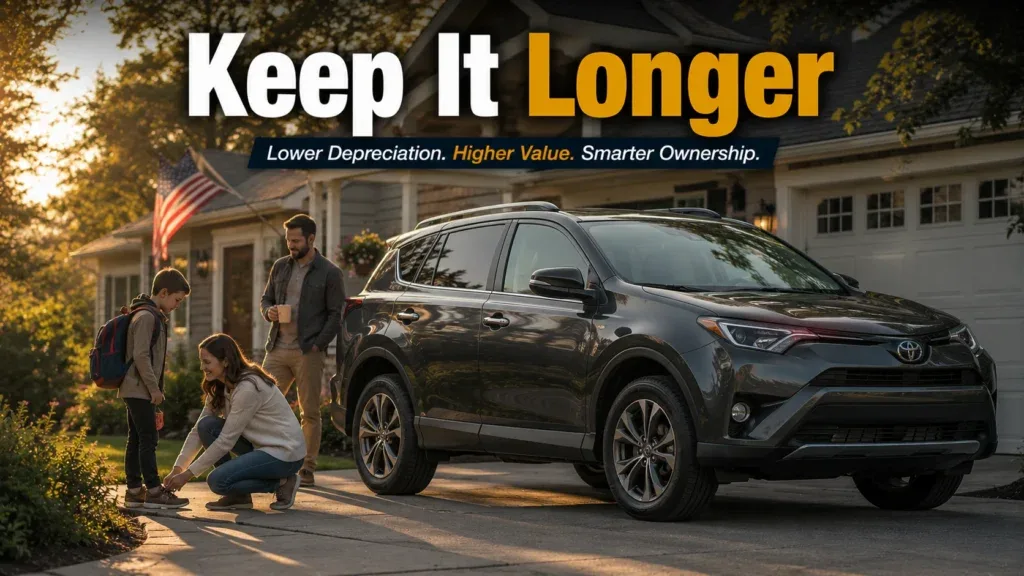
This is one reason many Americans are keeping vehicles longer.
Once a vehicle passes through its steepest depreciation years, the financial picture changes.
Value loss slows.
Ownership costs become more predictable.
The vehicle may require occasional repairs.
But those repairs are often smaller than the depreciation associated with replacing it.
That’s an important realization.
And it’s changing buying behavior across America.
Also Read:
https://driveglobalnews.in/why-more-americans-are-keeping-their-cars-past-200000-miles/ – Why millions of owners are choosing longevity over replacement.
The Vehicle Everyone Thinks Is Expensive
And The One That Actually Is
Imagine two owners.
One spends $1,500 repairing a five-year-old vehicle.
The other trades into a new vehicle and avoids the repair.
Most people assume the second owner made the smarter decision.
Sometimes they’re right.
Sometimes they’re very wrong.
Because the new vehicle may lose several thousand dollars in value over the next year alone.
Meanwhile, the repaired vehicle continues serving its owner.
That’s why ownership decisions require looking beyond the immediate expense.
The obvious cost isn’t always the largest one.
The Smartest Owners Think Differently
Experienced vehicle owners often ask a different question.
Not:
“How much does this repair cost?”
But:
“What does replacing the vehicle cost?”
Those are two very different calculations.
And they frequently produce very different answers.
The Number Nobody Talks About
The funny thing about depreciation is that it rarely becomes part of everyday conversation.
People compare gas prices.
Insurance premiums.
Repair bills.
Almost nobody sits around discussing resale value loss.
Yet it’s often the largest expense attached to vehicle ownership.
The largest bill is also the quietest bill.
That’s why so many owners underestimate it.
A Vehicle Doesn’t Care About Its Book Value
Every morning, your vehicle wakes up with the same job.
Start.
Drive.
Get you where you’re going.
It doesn’t know what a pricing guide says.
It doesn’t know how much value it lost this year.
It doesn’t care.
Only owners care.
And that’s exactly why depreciation is so sneaky.
The vehicle feels exactly the same while its financial value changes behind the scenes.
The repair bill gets all the attention.
The depreciation does most of the damage.
And once you understand that difference, you start looking at vehicle ownership in a completely different way.
Because sometimes the most expensive part of owning a car isn’t the money you spend fixing it.
It’s the money you lose while doing absolutely nothing at all.