It’s one of the questions every EV buyer eventually asks — and almost nobody gives a straight answer.
Does an electric car cost more to insure than a gas car?
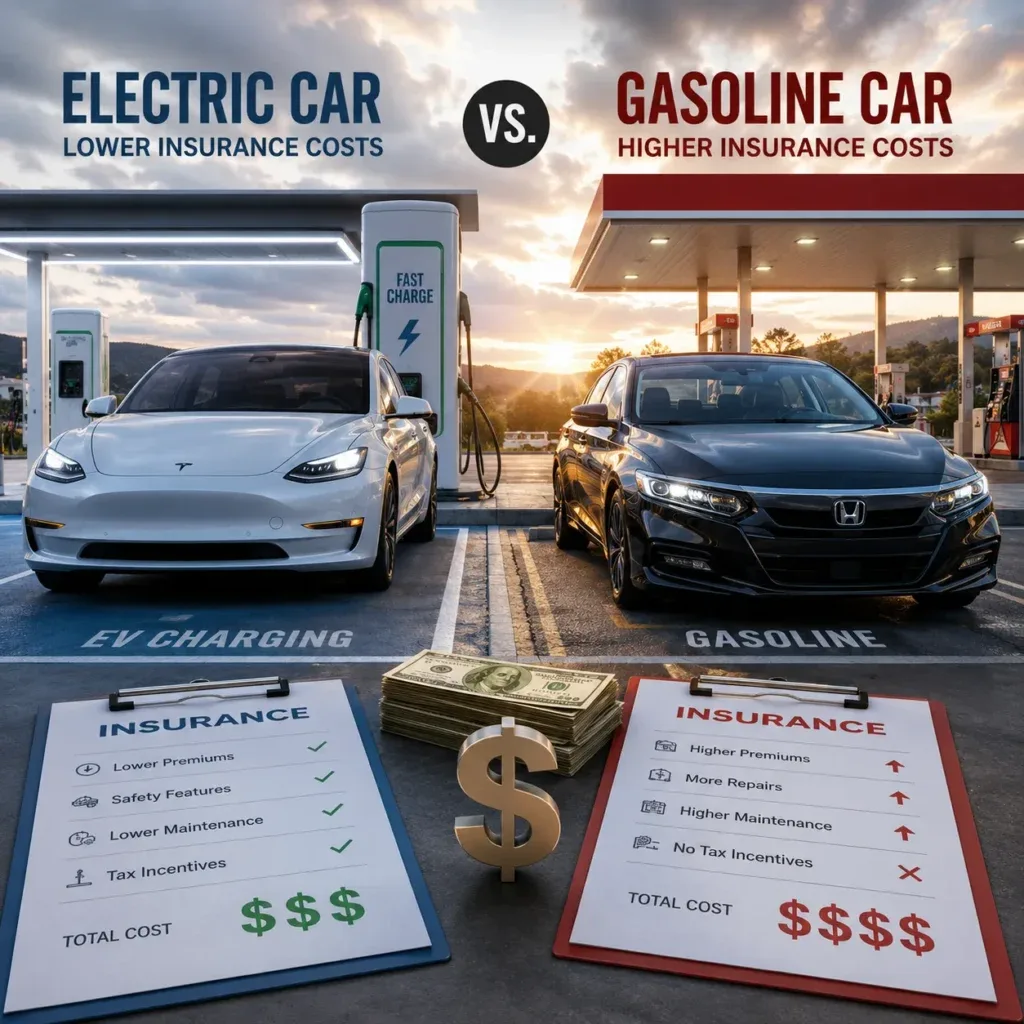
The honest answer: yes, usually. But the gap is smaller than most people assume, it’s narrowing every year, and for some EVs it’s essentially disappeared. Here’s the real data — not industry estimates, not ranges, actual 2026 figures.
The National Average Gap
According to CarInsurance.com’s 2026 rate analysis, the average annual full-coverage premium for an electric vehicle in America is approximately $3,100-$3,400 per year — compared to roughly $2,638 per year for the average gas vehicle.
That’s a gap of roughly $500-$800 per year. Not nothing. But also not the $2,000+ difference that some EV skeptics claim.
And that average includes some EVs — particularly high-performance Tesla variants and German luxury EVs — that are genuinely expensive to insure and pull the average up significantly. When you look at mainstream EVs specifically, the picture is more nuanced.
also read : https://driveglobalnews.in/car-insurance-cost-2026-state-by-state/
Real Insurance Costs — Specific EVs vs Comparable Gas Cars
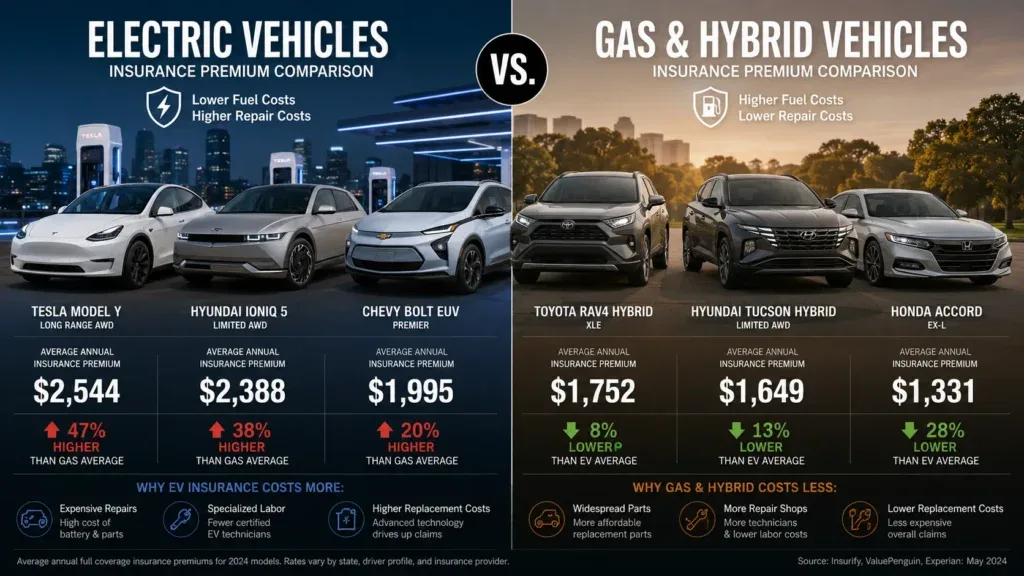
Here’s where the comparison gets actually useful. These are CarInsurance.com’s 2026 figures for full coverage on specific vehicles with the same driver profile — 35-year-old, clean record, suburban location:
Tesla Model Y vs Toyota RAV4 Hybrid Tesla Model Y: approximately $2,280/year Toyota RAV4 Hybrid: approximately $2,568/year
Wait — the Tesla is cheaper to insure? Yes, for this specific comparison. The RAV4 Hybrid’s higher value pushes its insurance above the base Model Y’s. As Tesla has brought down prices and the industry has accumulated claims data on Model Y specifically — rates have normalized significantly from the early days when Tesla insurance was notably expensive.
Hyundai Ioniq 5 vs Hyundai Tucson Hybrid Ioniq 5: approximately $2,640/year Tucson Hybrid: approximately $2,100/year
Here the EV costs more — about $540 per year. The Ioniq 5’s higher purchase price relative to the Tucson means more comprehensive and collision premium. The repair costs for EVs — particularly battery systems and specialized electronics — are also higher, which insurers price for.
Kia EV6 vs Kia Sportage Hybrid EV6: approximately $2,820/year Sportage Hybrid: approximately $2,190/year
Similar gap — about $630 per year more for the EV. The EV6 is a performance-oriented vehicle with higher horsepower claims than the Sportage, which factors into risk pricing.
Audi e-tron GT vs BMW M5 (most expensive EVs) Audi e-tron GT: $6,413/year — the fifth most expensive vehicle to insure in America BMW M5: $6,593/year — third most expensive
High-performance, high-value, expensive-to-repair vehicles — electric or gas — cost a lot to insure. The e-tron GT’s extraordinary repair costs for its high-voltage battery system and specialized components place it among the priciest in the industry.
Why EVs Cost More to Insure — The Real Reasons
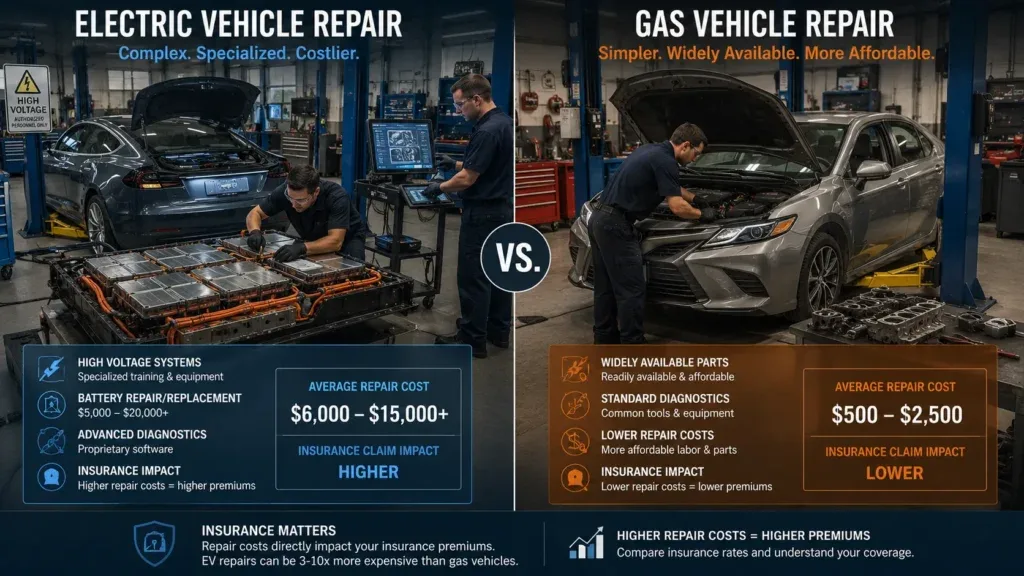
Repair costs are genuinely higher. A fender bender on a Tesla Model 3 that triggers battery management system recalibration costs significantly more to repair than the same fender bender on a Camry. EV repair requires specialized tools, trained technicians, and — in some cases — battery components that cost thousands of dollars. Insurers price for average repair cost per model based on actual claims data.
Parts availability is tighter. When a gas car needs a bumper, every Toyota dealer and aftermarket supplier has one. When an EV needs a specific battery module or motor component — the supply chain is narrower and the wait is longer. Labor costs during the wait accumulate.
Higher purchase prices. A $45,000 Ioniq 5 costs more to insure than a $32,000 Tucson Hybrid simply because comprehensive and collision coverage is partly based on vehicle value. More expensive car = more expensive to replace = higher premium.
Less historical data. Insurance pricing is fundamentally actuarial — what has happened to similar cars in similar situations. EVs have fewer years of claims data than gas vehicles. When insurers have less data, they price more conservatively (higher). As EV claims data accumulates, rates normalize. This is already happening — Tesla insurance is notably cheaper now than it was in 2022.
The One EV That’s Actually Cheap to Insure
The Chevrolet Bolt is the notable exception to the EV insurance premium.
At $27,600 starting price — the cheapest EV in America — its lower value means lower comprehensive and collision premiums. The Bolt’s full-coverage insurance runs approximately $2,100-$2,300 per year — comparable to similarly priced gas compact cars. If insurance cost is a significant factor in your EV decision, the Bolt’s combination of low purchase price and reasonable insurance is worth noting.
The Bottom Line — What EV Buyers Should Do
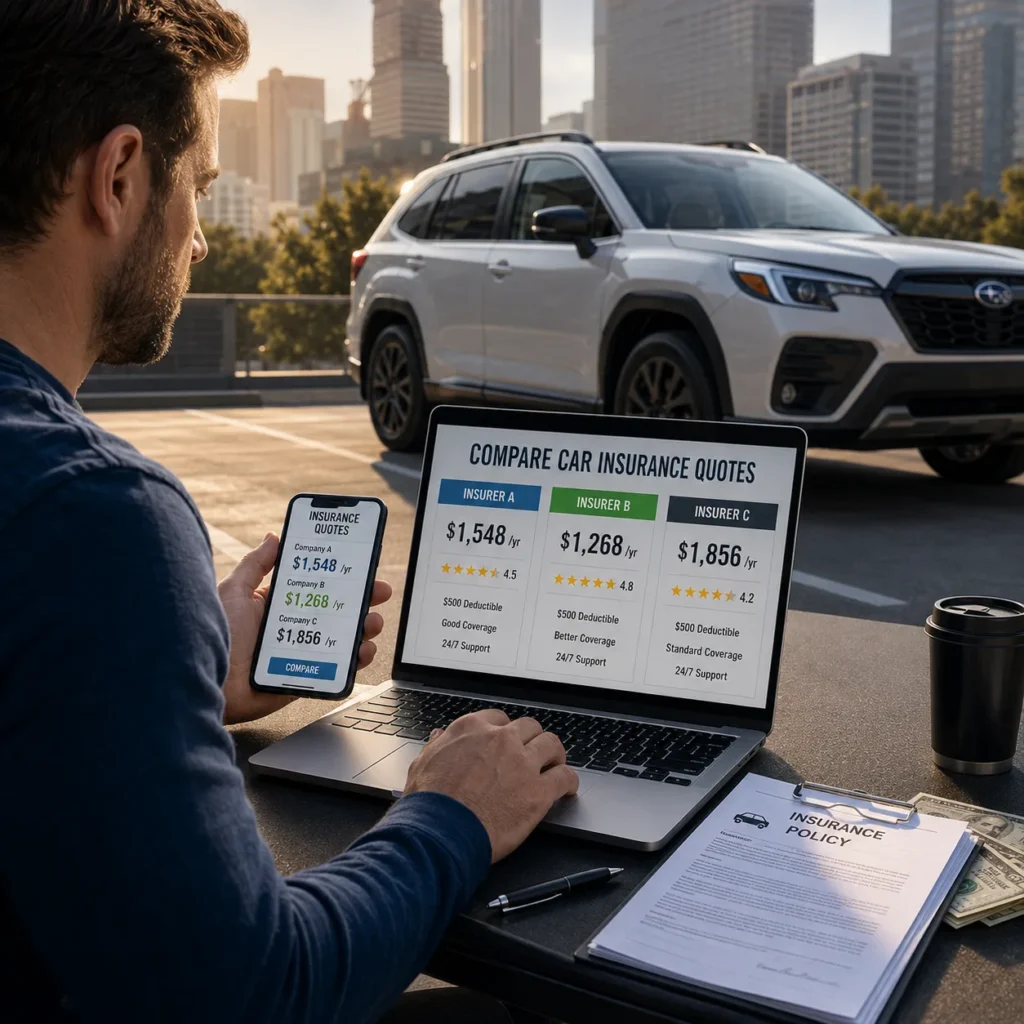
Get quotes before you buy. Insurance costs vary significantly by ZIP code, driving history, credit score, and specific vehicle. The national averages above are starting points, not your personal rate. Get actual quotes from Travelers, GEICO, Progressive, and State Farm specifically for the EV you’re considering before you sign.
Consider Tesla Insurance for Teslas. Tesla’s own insurance product — available in most states — is often 15-30% cheaper than third-party options for Tesla vehicles. If you’re buying a Model Y or Model 3, getting a Tesla Insurance quote alongside traditional options is worth doing.
Factor insurance into total cost of ownership. If an EV costs $500 more per year to insure but saves $1,200 per year in fuel — you’re still ahead by $700 annually. Run the complete math, not just the sticker price or the insurance number in isolation.
The fuel savings usually still win. Even with higher insurance costs, most mainstream EVs in 2026 come out ahead on total cost of ownership versus comparable gas vehicles — particularly at current $4.50+ gas prices.
The insurance premium for EVs is real. It’s also smaller than the headlines suggest, narrowing as claims data matures, and typically outweighed by fuel savings for most American drivers.