
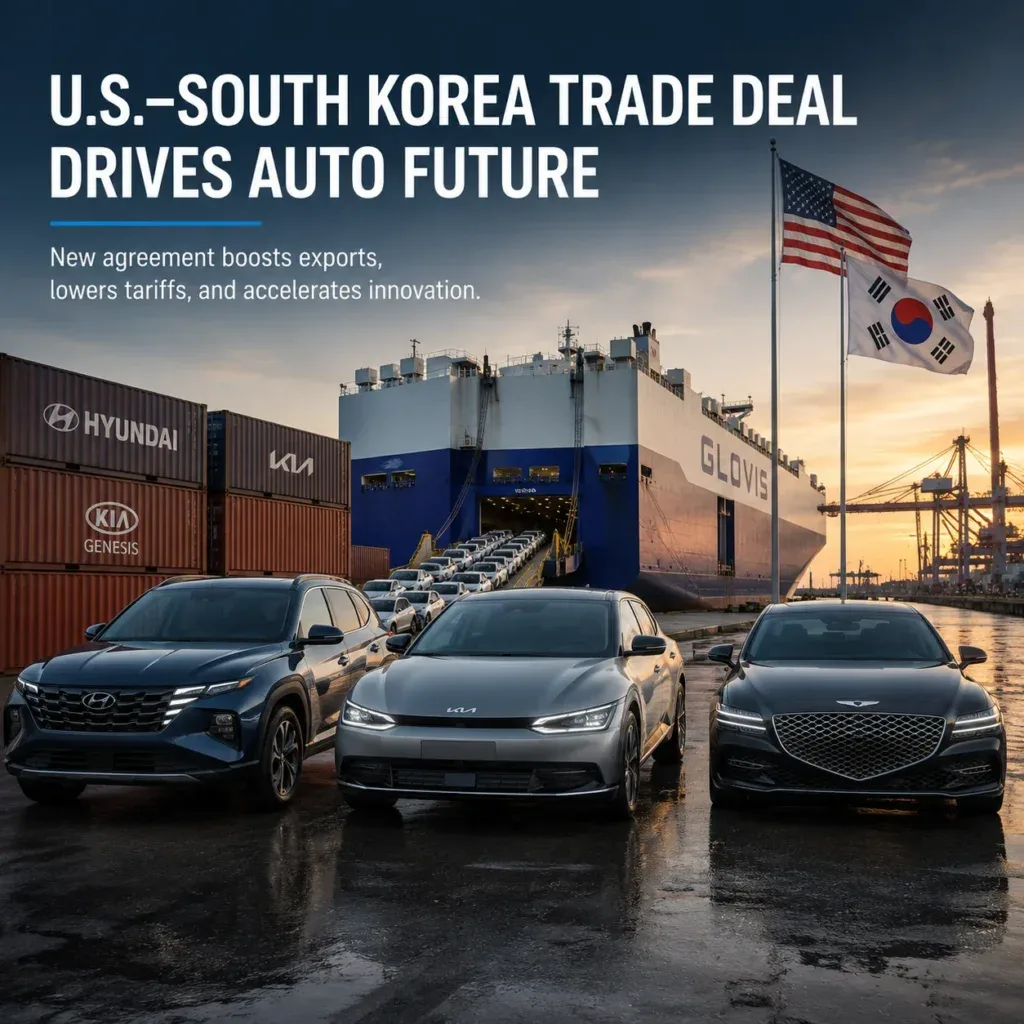
Two days ago, buyers shopping Hyundai, Kia, and Genesis vehicles were staring down the possibility of a 25% tariff that could have added thousands of dollars to sticker prices within weeks.
Today, that threat is gone.
The United States and South Korea announced a trade deal on May 23, 2026, setting the tariff on South Korean-made cars at 15% — the same framework that was negotiated earlier with Japan and now forms the baseline for Trump’s auto trade policy with Asian partners.
For American car buyers who were confused, anxious, or waiting to see what happened — here’s exactly what this means.
also read : https://driveglobalnews.in/subaru-outback-vs-toyota-rav4-in-2026-the-most/
What the Deal Actually Is
The US-South Korea agreement mirrors the structure of the US-Japan deal announced earlier this month. Instead of the 25% tariff that Trump threatened Monday — which would have significantly increased the cost of Korean-built Hyundai, Kia, and Genesis vehicles — both countries agreed to a 15% tariff rate on Korean car imports.
That 15% rate is not zero. Korean-built vehicles still face a meaningful import duty that their US-assembled competitors don’t pay. But it’s half of what Trump threatened. And it replaces what was a period of genuine uncertainty — during which some buyers were accelerating purchases and others were waiting nervously on the sidelines.
The deal was reached quickly. This is typical of how these negotiations have been playing out in 2026: dramatic threat, urgent negotiation, resolution within days. The pattern has been remarkably consistent: US demands leverage, trading partner offers concessions, a middle-ground tariff rate emerges.
For Korean automakers, 15% is manageable. Not free, not painless, but workable.
What It Means for Korean Car Prices
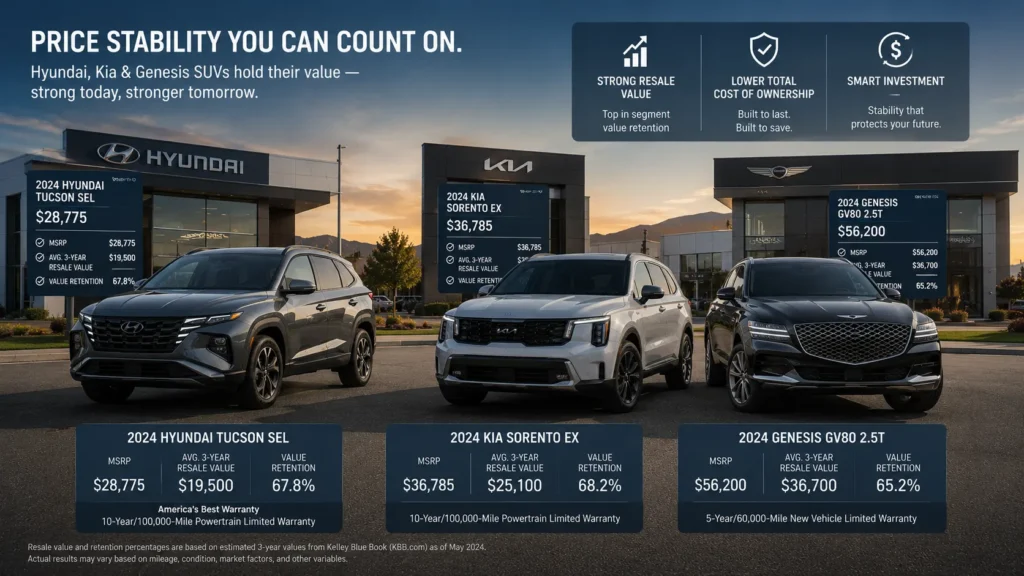
The 15% tariff on Korean-built vehicles is not new — it was the effective rate that existed before Trump’s Monday threat to go to 25%. So the deal essentially confirms the status quo rather than changing it.
Prices on Korean-built vehicles — the Tucson, Santa Fe, Sorento, Carnival, G80, GV80 — will not jump because of tariffs in the near term. Hyundai and Kia have been managing the 15% tariff in their pricing structures throughout 2026. That math doesn’t change.
What this means practically: the price stability that buyers have seen on Korean vehicles continues. No emergency price increases. No rush to buy before a tariff deadline. The urgency that Monday’s 25% threat created has been resolved.
also read : https://driveglobalnews.in/trump-just-threatened-25-tariffs-on-korean-car/
The Bigger Picture — 15% Is Now the New Normal
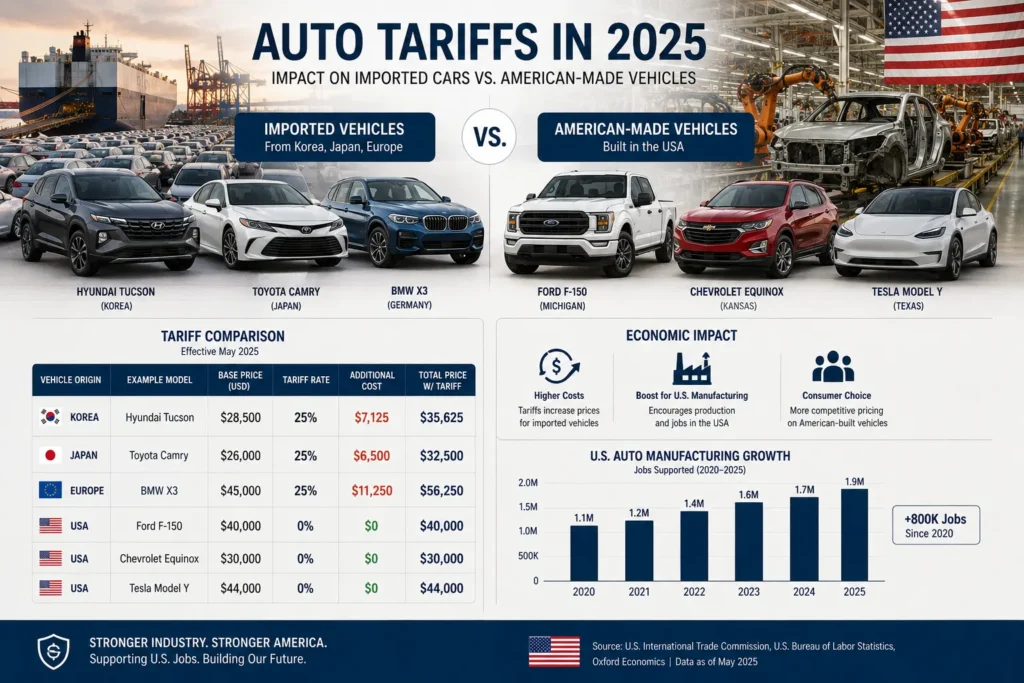
Here’s something worth noticing. The auto tariff framework that’s emerging from Trump’s trade negotiations has a consistent pattern:
- EU cars: 15% (reduced from 25% earlier this week in a separate EU deal)
- Japanese cars: 15%
- Korean cars: 15%
- Chinese cars: 100% (unchanged and unlikely to change soon)
- US-built cars: 0%
A 15% tariff on imported vehicles is lower than the 25% emergency tariff but higher than the near-zero rates that existed under previous trade frameworks. It’s becoming the settled baseline for non-Chinese import pricing.
For American buyers, that 15% is already baked into the pricing of European, Japanese, and Korean vehicles. You’re paying it whether you see it on the sticker or not — it’s embedded in the manufacturer’s cost structure and passed through partially to retail pricing.
The answer, for buyers who want to avoid tariff exposure entirely, remains consistent: buy a vehicle assembled in the United States. The Hyundai Ioniq 5 in Georgia. The Toyota RAV4 in Kentucky. The Honda CR-V in Ohio. These vehicles face zero import tariff and represent the most pricing-stable options in the current environment.
For Anyone Who Was Waiting to Buy a Korean Vehicle
The tariff-threat urgency is gone. You don’t need to rush.
The 15% framework is settled and stable. Korean car prices aren’t about to spike. Take the time you need to make the right vehicle decision rather than a panicked purchase driven by tariff fear.
For buyers who specifically want a Georgia-built Ioniq 5, EV6, EV9, or Ioniq 9 — the tariff situation was never your concern anyway. Buy based on what’s right for your needs.
The trade drama of the past 72 hours is over. The car market goes back to its regularly scheduled programming.